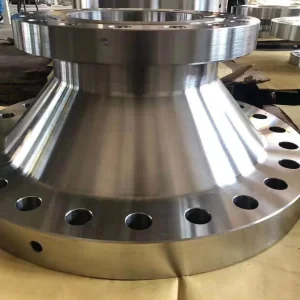
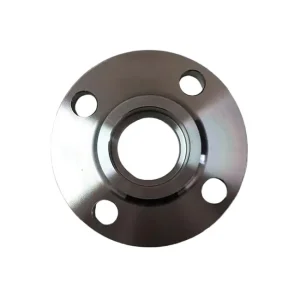
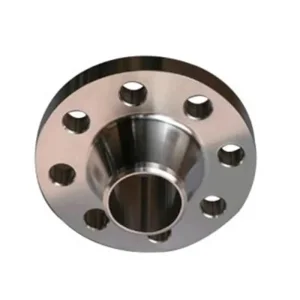
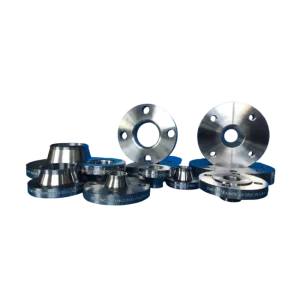
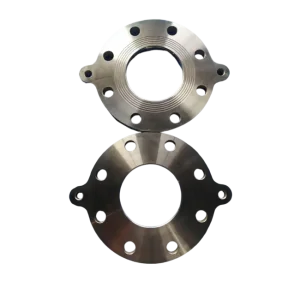
Direct OEM factory supply forged according to ASME B16.5, B16.47, EN 1092-1, and DIN specifications.
Optimizing Fluid Dynamics, Structural Footprint, and Bolted Joint Integrity in Pressure Piping Systems.
In modern industrial piping design, transitioning between different nominal pipe sizes (NPS) while maintaining pressure containment is a recurring challenge. Traditional configurations require joining a standard pipe flange (such as a Weld Neck Flange or Slip-On Flange) to a butt-weld pipe reducer. While functional, this conventional two-piece approach introduces additional stress intensification factors (SIF), increases line weight, and adds high-risk thermal fatigue zones at the weld heat-affected zone (HAZ).
Shanxi Yuxin Casting & Forging Co., Ltd., operating from China’s premier forging hub in Dingxiang, Shanxi since 1992, manufactures high-integrity forged reducer flanges engineered to resolve these space, weight, and fluid-dynamic bottlenecks.
Reducer flanges are available in two primary geometric configurations, each specified based on flow orientation and phase dynamics:
Designed with a symmetric centerline transition. Ideal for vertical liquid lines and continuous gas flow systems where uniform flow acceleration is required without dead-leg velocity drops. Concentric designs prevent localized wall shear stress concentrations during high-velocity laminar-to-turbulent transitions.
Engineered with an offset flat-side wall. Essential for horizontal pump suction lines to prevent vapor pocket accumulation (cavitation protection) and in multiphase slurry lines to ensure bottom-drainability without fluid pooling during plant shutdowns.
| Performance Parameter | Forged Reducer Flange (Single-Piece) | Standard Flange + Pipe Reducer Assembly |
|---|---|---|
| Weld Seams Required | 1 Butt Weld (Weld Neck) or 0 (Threaded/Slip-On) | 2 Butt Welds (Flange-to-Reducer + Reducer-to-Pipe) |
| Spatial Length (Lay-Length) | Compact (Standard ASME B16.5 Flange Thickness) | Extended (Flange Length + ASME B16.9 Reducer Length) |
| NDE / Radiography (RT) Cost | Reduced by 50% | Standard Dual-Weld Scope |
| Stress Intensification (SIF) | Smooth forged transition contour; lower SIF | Dual weld joints create localized stress concentration |
| Pressure Rating Scope | Class 150 to Class 2500 / PN6 to PN400 | Limited by weakest component weld rating |
Strict Compliance with ASME, EN, DIN, JIS, and NACE Sour Service Specifications.
ASTM A105 / A350 LF2 Class 1/2: Forged carbon steel for ambient and low-temperature applications (-46°C Charpy V-Notch tested). Standardized for municipal water, HVAC, and oil refining.
ASTM A182 F11, F22, F91: High-chromium molybdenum alloys designed for extreme thermal creep resistance in boiler headers, power generation steam lines, and hydrocracker units.
ASTM A182 F304/304L, F316/316L, F321: Austenitic stainless steel with low-carbon variants to eliminate intergranular carbide precipitation during field welding.
UNS S31803 (F51) / UNS S32750 (F53): Dual-phase ferritic-austenitic structure providing exceptional pitting resistance equivalent numbers (PREN ≥ 40) for offshore subsea environments.
Inconel 625, Hastelloy C276, Monel 400: Ultra-corrosion-resistant alloys engineered for aggressive chloride, hydrofluoric acid, and hot concentrated sulfuric acid processing.
NACE MR0175 / ISO 15156: Heat treatment controlled hardness (≤ 22 HRC) to mitigate Hydrogen-Induced Cracking (HIC) and Stress Corrosion Cracking (SCC).
According to ASME B16.5 Section 6.8, the pressure-temperature rating of a reducing flange is determined by the smaller bore size for slip-on or threaded types, but governed by the larger mating flange face dimensions and bolt circle diameter (BCD). For example, a 6" x 4" Class 300 Weld Neck Reducer Flange features the outer bolt circle of a 6" Class 300 flange, while its hub and bore dimensions transition smoothly down to accept a 4" Schedule 40 or Schedule 80 pipe connection.
Shanxi Yuxin Casting & Forging Co., Ltd. routinely manufactures reducer flanges under the following global manufacturing standards:
Cross-Sector Engineering Applications Where Reducer Flanges Ensure Zero-Leakage Performance.
Modular offshore topsides suffer from severe spatial limitations. Reducer flanges allow direct mating of large manifold isolation valves to smaller line distribution piping without needing long taper pipe reducers, preserving skid footprint and reducing structural steel weight.
High thermal cycles in ethylene and ammonia reactors place severe strain on circumferential pipe welds. Utilizing one-piece forged reducer flanges eliminates vulnerable heat-affected zones, reducing thermal fatigue cracking risks in line size transitions.
Green hydrogen transport systems require high-pressure containment (up to 700 bar) with extremely low gas permeability. Yuxin's precision CNC-machined ring-type joint (RTJ) reducer flanges provide gas-tight mechanical seals for molecular hydrogen lines.
Main steam line feed manifolds operating under ASME Section I Pressure Vessel Codes utilize high-chrome alloy reducer flanges (F91/F22) to handle continuous superheated steam expansion and vibration damping.
Shipboard ballast systems, fuel transfer networks, and cooling loops rely on compact Socket Weld Reducer Flanges to maintain laminar flow in confined engine rooms.
Custom forged reducer flanges with specialized bolt hole patterns serve as high-pressure fluid headers for heavy excavation machinery and industrial hydraulic presses.
Why Global EPCs Partner with Shanxi Yuxin Casting & Forging Co., Ltd.
Located in Dingxiang County, Shanxi Province—officially designated as the “Hometown of Forging in China”—Yuxin leverages a localized, integrated supply chain ecosystem. Raw steel billets, certified heating furnaces, heavy forging presses, precise CNC machining mills, and accredited testing laboratories operate within a 15-kilometer radius. This geographic cluster eliminates logistical friction, ensuring rapid raw material sourcing and shorter production cycles.
Yuxin’s 10,000-ton annual output facility operates closed-die forging hammers, hydraulic press units, and automated ring-rolling equipment capable of forging seamless rings up to 3,000 mm (120 inches) in diameter. Unlike lower-cost cast alternatives, closed-die hot forging continuously refines the internal metallic grain structure, aligning grain boundaries along the contour of the reducer flange face and hub for superior impact toughness and burst strength.
Every reducer flange manufactured at Yuxin undergoes rigorous quality gates throughout the production workflow:
Innovations Shaping Next-Generation Flange Engineering (2025–2035).
Integration of piezoresistive acoustic emission sensors and strain gauges micro-embedded into reducer flange bodies. Enables real-time bolt pre-load decay monitoring and predictive leak detection in remote subsea or toxic gas lines.
3D Laser Powder Bed Fusion (LPBF) and Wire Arc Additive Manufacturing (WAAM) combined with conventional forging. Allows internal corrosion-resistant alloy (CRA) cladding (Inconel 625) over carbon steel backing at lower total material cost.
Transitioning factory heating furnaces from natural gas to green hydrogen and electric induction systems, lowering the embedded carbon footprint of exported piping components to meet European Union CBAM regulations.
Strategic Procurement Criteria for International EPC Buyers and Stockists.
While the initial purchase cost of a forged reducer flange may appear comparable to a flange-plus-reducer weldment, analyzing Total Cost of Ownership (TCO) reveals major cost efficiencies:
International procurement managers demand complete documentation compliance. Every shipment from Yuxin includes:
Direct Answers from Our Engineering & Metallurgy Desk.
Explore our full line of industrial forged flanges and specialty pressure components.
Our Senior Metallurgical Engineers respond within 24 hours with feasibility analysis, 3D models, and transparent factory-direct pricing.