Precision-forged ASME, EN, DIN, and Custom Expansion Joint Flanges engineered for extreme environments.
In high-pressure, thermal-cyclic, and corrosive piping installations, rigid flange connections often fail to accommodate the complex multi-axial mechanical stresses generated by thermal expansion, pressure surges, dynamic fluid movement, and structural foundation settling. Expansion joint flanges act as critical pressure-retaining mechanical interfaces designed specifically to integrate flexible bellows (elastomeric, metallic, or PTFE) into rigid pipeline networks. They serve as the primary containment element while transferring mechanical loads to adjacent supports.
Selecting an expansion joint flange supplier requires looking beyond basic dimensional compliance (such as ASME B16.5 or EN 1092-1). It requires evaluating forged grain alignment, flange-face micro-finish (AARH serration parameters), load-bearing hub yield strength, and non-destructive examination (NDE) protocols to prevent catastrophic gasket blowout or stress-corrosion cracking (SCC) over a 30-year operational lifecycle.
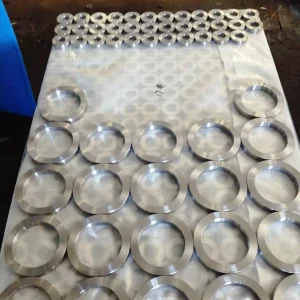
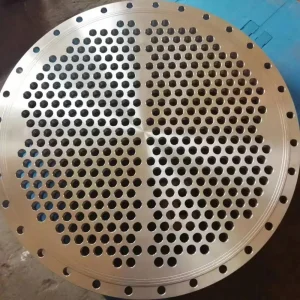
As globally certified manufacturers based in Dingxiang, Shanxi—the recognized epicenter of heavy forging in China—Shanxi Yuxin Casting & Forging Co., Ltd. (YUXIN Flange) provides complete engineering integration for custom expansion joint flanges, tube sheets, ring-type joint (RTJ) flanges, and precision-machined forged components.
Expansion joint flanges are categorized by their mechanical connection mode, pressure containment profile, and internal movement absorption capabilities. Understanding these structural variations is vital when developing piping and instrumentation diagrams (P&IDs) for heavy industrial process plants.
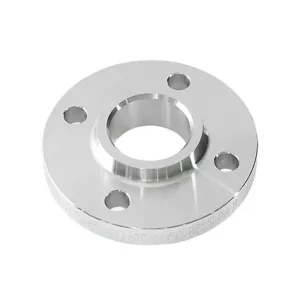
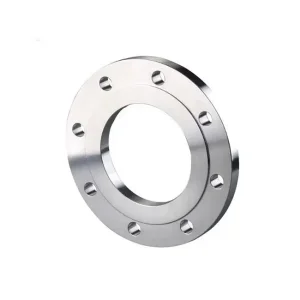
Utilized primarily in rubber expansion joints, these flanges feature an internal recess or bevel tailored to lock the elastomeric bead into position. Loose, rotating outer flanges allow effortless bolt-hole alignment during field installation without transmitting torsional torque to the flexible bellows element.
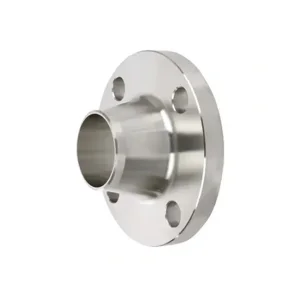
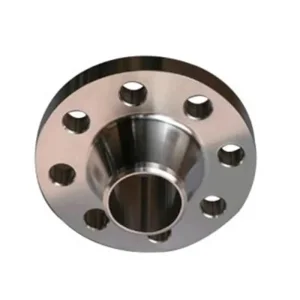
Forged with an extended weld neck (bevelled per ASME B16.25 or EN 12627), these units are directly butt-welded to multi-ply stainless steel or Inconel corrugated bellows. The tapered hub mitigates thermal fatigue and redistributes bending moments away from the heat-affected zone (HAZ).
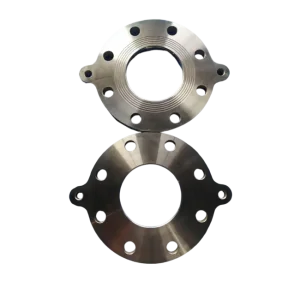
Designed with extended outer ears or integrated lug plates, these specialized flanges accommodate tie-rods, limit bolts, and control units. They prevent excessive elongation or compression under unexpected pressure surges, safeguarding structural integrity.
Material selection determines an expansion joint flange's fatigue life, thermal tolerance, and resistance to environmental cracking. Shanxi Yuxin maintains complete raw material heat traceability, utilizing strictly normalized carbon steel, low-alloy structural steel, and austenitic or duplex stainless steels.
| Material Grade | Standard Ref. | Yield Strength (MPa) | Tensile Strength (MPa) | Operational Temperature Range | Primary Industrial Application |
|---|---|---|---|---|---|
| ASTM A105 / Q235B | ASME B16.5 / EN 1092-1 | ≥ 250 | 485 - 655 | -29°C to +425°C | Ambient water, low-pressure HVAC, general utility lines. |
| ASTM A350 LF2 Class 1 | ASME B16.5 | ≥ 250 | 485 - 655 | -46°C to +425°C | Low-temperature gas processing, cryogenic support pipelines. |
| ASTM A182 F304 / F304L | ASME B16.5 / EN 1092-1 | ≥ 205 / 170 | ≥ 515 / 485 | -196°C to +816°C | Food & beverage, mild chemical processing, marine utility. |
| ASTM A182 F316 / F316L | ASME B16.5 / EN 1092-1 | ≥ 205 / 170 | ≥ 515 / 485 | -196°C to +816°C | Sour gas service, petrochemical processing, chloride exposure. |
| Duplex F51 (UNS S31803) | ASTM A182 | ≥ 450 | 655 - 880 | -50°C to +300°C | Offshore oil platforms, marine desalinization, high-chloride media. |
| Super Duplex F53 / F55 | ASTM A182 | ≥ 550 | 750 - 1000 | -50°C to +250°C | Extreme sour service, subsea manifolds, aggressive acid piping. |
Different industrial sectors demand vastly different physical properties and regulatory documentation. Below is an engineering overview of how YUXIN's expansion joint flanges address macro-level challenges across global infrastructure projects.
Challenge: Hydrocarbon lines experience extreme thermal expansion combined with volatile organic compounds (VOCs) and H2S sour gas environments.
YUXIN Solution: We supply NACE MR0175/ISO 15156 compliant forged weld-neck expansion joint flanges with Ring Type Joint (RTJ) grooves, tested for micro-crack prevention via ultrasonic and magnetic particle examination.
Challenge: High-pressure steam turbine exhaust and feedwater headers subject flange connections to severe cyclic thermal shocks and vibration.
YUXIN Solution: Heavy-wall forged low-alloy steel flanges (ASTM A182 F11/F22) normalized and tempered to maintain creep-rupture strength over extended operational lifespans.
Challenge: Hull flexing and constant salt spray accelerate galvanic corrosion and mechanical stress on engine cooling manifolds.
YUXIN Solution: Hot-dip galvanized plate flanges and duplex stainless steel expansion flanges certified under PED 2014/68/EU and major marine classification guidelines.
Exporting engineered components globally requires unwavering adherence to international manufacturing standards, strict third-party inspections, and comprehensive documentation packages.
YUXIN operates a fully integrated quality system audited to ISO 9001:2015, PED 2014/68/EU, and AD 2000-Merkblatt W0. Every production lot undergoes rigorous chemical spectrographic analysis, mechanical tensile testing, and Charpy V-notch impact validation.
We provide complete material test reports (MTR) accompanying every shipment. Each expansion flange is permanently stamped with raw steel heat numbers, dimensional tolerances, pressure ratings, and material grade for complete field auditability.
Beyond standard catalogue items, our engineering facility utilizes multi-axis CNC machining centers to forge non-standard expansion flanges according to customer-provided CAD drawings, STEP files, or legacy physical samples up to 3,000 mm in outer diameter.
As global industrial infrastructure transitions toward smart factories, higher pressure regimes, and green hydrogen transportation, the design and production of expansion joint flanges must evolve alongside these technological shifts.
Integration of Finite Element Analysis (FEA) software during die design allows YUXIN engineers to model stress concentrations under multi-axial cyclic bending before forging, reducing weight while maximizing yield thresholds.
Development of smart expansion flange assemblies equipped with embedded strain gauges and temperature-monitoring fiber optic sensors, enabling real-time predictive maintenance for critical oil & gas headers.
Weld overlay cladding (Inconel 625 or Hastelloy C276 applied via automated plasma arc welding) onto carbon steel flange faces to offer maximum corrosion protection at a fraction of solid-alloy material costs.
Detailed answers to critical technical questions encountered by procurement managers, piping engineers, and quality assurance inspectors.
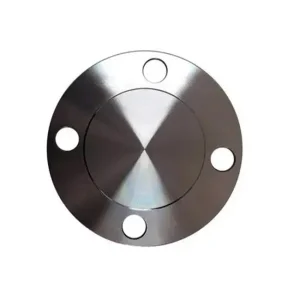
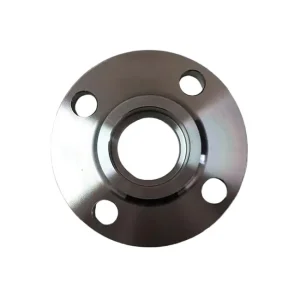
Explore our full range of blind flanges, socket weld flanges, tube sheets, and heavy-duty pipe components.