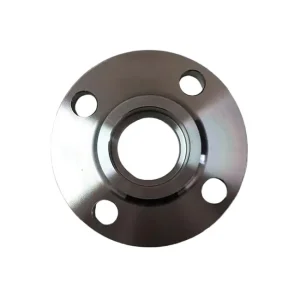
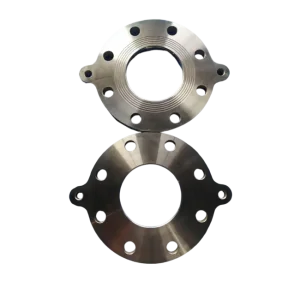
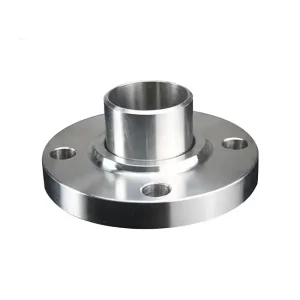
Explore our export-ready forged steel plain flanges, slip-on plates, stub ends, and specialty connections manufactured under certified ISO 9001 & PED quality management systems.
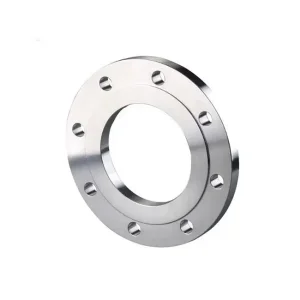
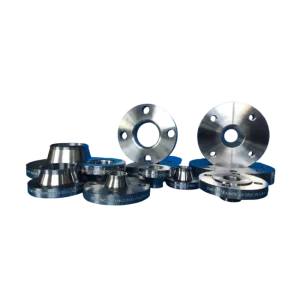
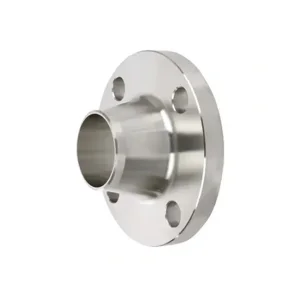
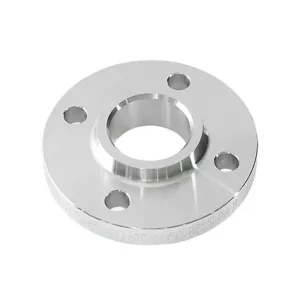
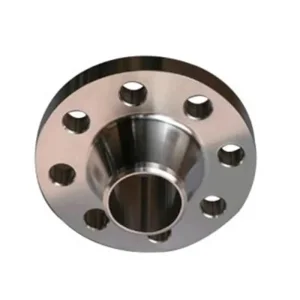
A plain flange—frequently specified as a flat flange, plate flange, EN 1092-1 Type 01, or DIN 2576 flange—represents one of the most versatile and cost-effective mechanical joining elements in modern process piping and fluid containment infrastructure.
Unlike hubbed weld neck flanges (EN 1092-1 Type 11) that transition bending stress into the adjacent pipe wall through a tapered neck, a plain flange is a flat ring welded directly onto the exterior of a pipe section. The pipe penetrates the inner bore of the flange, allowing fillet welds to be applied on both the inner and outer diameters of the flange ring. This dual fillet-weld configuration ensures robust mechanical retention and leak-tight joint integrity across low-to-medium pressure installations.
While industry terminology occasionally blurs plain flanges with Slip-On (SO) flanges, standard specifications maintain strict distinction: Plain Flanges (EN 1092-1 Type 01 / Plate Flanges) feature a completely flat profile without a hub, offering maximum compactness and material efficiency. Slip-On Flanges (Type 12 / ANSI B16.5 SO) incorporate a raised hub that provides stress relief under cyclic mechanical fatigue. Selecting between plate plain flanges and hubbed slip-on flanges depends directly on operating pressure ratings, vibration spectrums, and bending moment loads.
Engineering procurement teams must match exact dimensional tolerances and surface finishes with design codes such as ASME BPVC Section VIII, EN 13480, or DIN standards. The table below delineates the standard manufacturing envelope for industrial plain flanges:
| Standard Code | Type / Designation | Nominal Size Scope | Pressure Class / PN | Flange Facing Options | Machining Tolerance |
|---|---|---|---|---|---|
| EN 1092-1 | Type 01 (Plate Flange for Welding) | DN10 to DN2000 | PN2.5 / PN6 / PN10 / PN16 / PN25 / PN40 | Type A (Flat Face), Type B1 (Raised Face Ra 3.2-12.5µm) | ±0.5 mm (DN≤300), ±1.0 mm (DN>300) |
| ASME B16.5 | Plate Flange / Slip-On Plate | ½" to 24" (NPS) | Class 150 / Class 300 | Flat Face (FF), Serrated Raised Face (RF 125-250 AARH) | Per ASME B16.5 Dimensional Tables |
| DIN Standards | DIN 2573 (PN6), DIN 2576 (PN10) | DN10 to DN1000 | PN6 / PN10 / PN16 | Form B (Smooth Face), Form C (Tongue & Groove) | DIN 2519 Tolerances for Forged & Machined Steel |
| ASME B16.47 | Series A / Series B Large Diameter | 26" to 60" (NPS) | Class 75 / Class 150 | Raised Face (RF), Flat Face (FF) | Strict Compliance with MSS SP-44 / API 605 |
| JIS B2220 | SOP (Slip-On Plate Flange) | 10A to 1500A | 5K / 10K / 16K / 20K | Flat Face (FF), Raised Face (RF) | JIS B2220 Precision Tolerances |
The ultimate reliability of a plain flange under operational hoop stress, thermal expansion cycles, and internal hydraulic pressures stems directly from the raw material synthesis and forging methodology employed during production.
At Shanxi Yuxin Casting & Forging Co., Ltd., premium plain flanges are manufactured from hot forged billets and ring-rolled blanks rather than raw flame-cut plate scrap. High-tonnage hydraulic forging presses realign the steel's internal crystalline grain flow along concentric circumferential paths. This eliminates micro-voids, gas porosity, and laminar inclusions, resulting in superior impact toughness, elevated yield strength, and exceptional fatigue resistance.
Commodity plain flanges produced by flame-cutting un-forged structural steel plate exhibit linear directional grain boundaries across the flange radius. Under high bolt torque or thermal shock, flame-cut plate flanges are susceptible to edge cracking, heat-affected zone (HAZ) embrittlement, and premature joint leakage due to localized stress concentration.
We forge plain flanges across a full spectrum of carbon, low-alloy, stainless, and special duplex steel grades, precisely heat-treated to meet project parameters:
ASTM A105 / C21: Standard high-temperature forged carbon steel.
S235JR / Q235B: Economical plain carbon steel for HVAC & municipal water.
ASTM A350 LF2 (Class 1/2): Low-temperature forged steel with Charpy V-notch impact testing down to -46°C.
ASTM A182 F304 / F304L (1.4301 / 1.4307): Excellent corrosion resistance for food, beverage, and general chemical handling.
ASTM A182 F316 / F316L (1.4401 / 1.4404): Molybdenum-bearing alloy for marine environments and acidic process media.
UNS S31803 / S32205 (F51 / 1.4462): Dual-phase ferritic-austenitic structure delivering high yield strength and superior resistance to chloride stress corrosion cracking.
UNS S32750 (F53 / 1.4410): Super duplex for offshore subsea & aggressive chemical plants.
ASTM A182 F11 / F22 / F91: Chromium-molybdenum alloy steels engineered for high creep strength in power station steam headers and thermal cracking units.
When procurement executives, EPC contractors, and OEM plant managers evaluate plain flange suppliers, the total cost of ownership (TCO) extends far beyond the FOB per-piece purchase price.
Modern industrial projects in Western Europe, North America, the Middle East, and Southeast Asia demand rigorous compliance frameworks, zero-defect quality control, and uninterrupted logistics delivery. Below are the core pillars global enterprise buyers require when selecting a plain flange manufacturing partner:
Plain flanges installed in pressure-retaining systems within Europe must comply with the Pressure Equipment Directive (PED 2014/68/EU) and AD 2000-Merkblatt W0. Suppliers must hold audited ISO 9001:2015 certificates issued by recognized notification bodies such as TÜV CERT, alongside compliance to NACE MR0175/ISO 15156 for sour gas environments.
Every single batch of plain flanges must be accompanied by an authentic EN 10204 Type 3.1 Mill Test Certificate (MTC) issued directly from the forge mill. MTCs must record heat numbers, optical emission spectroscopy (OES) ladle chemical analysis, tensile strength, yield point, elongation, hardness values, and Charpy impact energy figures. Independent 3.2 third-party inspection (Lloyd's Register, DNV, SGS, Bureau Veritas) must be available upon request.
Flange joint leak integrity relies entirely on surface roughness compliance. Plain flanges require strict control over face serrations: phonographic continuous spiral or concentric grooves machined to 125–250 µin AARH (Ra 3.2–6.3 µm) for standard soft gaskets, or smooth finish (Ra < 1.6 µm) for custom metallic seals.
Located in the Zhuangli Enclave Industrial Zone of Dingxiang County, Shanxi Province—recognized globally as the “Hometown of Forging in China”—Shanxi Yuxin Casting & Forging Co., Ltd. has established an integrated manufacturing ecosystem since its inception in 1992.
Dingxiang County hosts China’s most densely concentrated industrial cluster for steel forging, heat treatment, and precision flange machining. By controlling every phase of manufacturing inside our 10,000-ton capacity plant, Yuxin provides global buyers with distinct structural advantages:
From raw billet inspection, sawing, heating, closed-die hammer forging, ring rolling, programmable heat-treatment furnaces (normalizing/annealing), to CNC lathe turning, drilling, and anti-corrosion coating—zero sub-contracting ensures absolute heat-number continuity and quality control.
Direct proximity to China's primary high-grade steel mills (such as Taiyuan Iron & Steel Group - TISCO) combined with localized raw billet supply chains allows us to eliminate internal freight overheads and pass substantial cost savings directly to international procurement teams.
Export orders ship with non-fumigation ISPM-15 compliant plywood crates, heavy-duty plastic cap protectors on flange faces, VCI anti-rust paper wrapping, and black varnish or transparent yellow rust-inhibitive oil coatings designed to withstand up to 60 days of ocean freight shipping.
The industrial valve, pipe, and fitting (PVF) sector is undergoing rapid technological evolution driven by decarbonization, green hydrogen energy conversion, and digitalized quality control.
Leading EPC contractors now require plain flanges stamped with laser-etched QR codes or 2D Data Matrix codes. Scanning the flange directly links the site engineer to the cloud-hosted EN 10204 3.1 MTC, UT test reports, and 3D coordinate measuring machine (CMM) dimensional logs.
In response to the EU Carbon Border Adjustment Mechanism (CBAM), top-tier Chinese manufacturers are transitioning raw material procurement toward Electric Arc Furnace (EAF) steel produced with clean energy, reducing embedded carbon footprints by up to 40% compared to traditional blast furnace routes.
As green hydrogen infrastructure expands, plain flanges installed in gaseous hydrogen transport pipelines undergo specialized vacuum degassing and ultra-fine mirror lathe finishing to prevent hydrogen embrittlement and micro-gaseous leakage.
Plain flanges are deployed across diverse global infrastructure projects where mechanical reliability, standardized fitment, and speed of assembly are critical parameters.
Application: High-volume water intake mains, reverse osmosis (RO) skid manifolds, and sewage discharge lines.
Flange Spec: EN 1092-1 Type 01 PN10/PN16 Carbon Steel (Q235B / S235JR) with hot-dip galvanizing or fusion-bonded epoxy (FBE) coating up to 300 microns to prevent biological fouling and rust.
Application: Low-pressure auxiliary lines, cooling tower water loops, instrument air distribution, and low-pressure steam headers.
Flange Spec: ASME B16.5 Class 150 Slip-On Plate / Flat Flanges in ASTM A105 or ASTM A182 F316L with raised face (RF) phonographic finish.
Application: Shipboard ballast systems, fuel transfer lines, and seawater cooling networks.
Flange Spec: JIS B2220 10K / EN 1092-1 Type 01 in Duplex 2205 or Stainless Steel 316L, providing maximum resistance to pitting corrosion in saltwater environments.
Application: Chilled water plant headers, boiler connections, and thermal expansion loops in large commercial developments.
Flange Spec: DIN 2576 PN10 / DIN 2573 PN6 Flat Flanges manufactured from forged carbon steel with zinc phosphate primer coating.
Detailed technical answers to common queries submitted by piping engineers, project managers, and global procurement buyers.
EN 1092-1 Type 01 is a plain plate flange without a hub that slips over the pipe end and is secured via two fillet welds (one internal, one external). It is designed primarily for low-to-medium pressure systems (typically PN6 to PN40 depending on size). EN 1092-1 Type 11 is a weld neck flange featuring a long tapered hub that is butt-welded directly to the pipe. Type 11 flanges transfer stress into the pipe itself, making them suitable for high-pressure, high-temperature, cyclic loading, and cryogenic applications.
Forged plain flanges undergo heavy mechanical compression at elevated temperatures, which refines the steel's internal crystalline grain structure and aligns grain flow concentrically along the ring. Flame-cut plate flanges are cut from flat structural steel plate, exposing directional grain boundaries along the edge. Forging eliminates internal voids, micro-cracks, and laminar segregation, delivering significantly higher impact strength, superior pressure containment, and zero risk of flange wall splitting under bolt torque.
Standard plain flange seal faces are machined per design codes: ASME B16.5 requires a continuous spiral or concentric serrated finish of 125–250 µin AARH (Ra 3.2–6.3 µm) for raised face (RF) flanges. EN 1092-1 Type B1 specifies a turning finish with Ra 3.2–12.5 µm for PN6 to PN40. For soft rubber or PTFE gaskets, smooth flat faces (FF) are often supplied to avoid gasket pinching or tearing during torqueing.
Every raw steel billet entering the YUXIN plant is color-coded and stamped with its original mill heat number. During forging, heat numbers are transferred to job traveler cards. After final CNC machining, each flange is hard-stamped on the outer rim with company logo, size, pressure rating, material grade, standard, and unique Heat Number. This heat number corresponds exactly to the EN 10204 3.1 Mill Test Certificate issued for that production batch.
For standard carbon steel plain flanges (EN 1092-1 Type 01, ASME B16.5 Plate) in sizes DN15–DN600, common forged blanks are stocked, enabling quick shipment within 7 to 15 days. For custom drawing-based non-standard flanges or special stainless/duplex alloys, typical lead times range from 20 to 35 days. We maintain flexible MOQ policies to support sample trials, project stock replenishment, and full container load (FCL) shipments.
Yes. Shanxi Yuxin operates an in-house tooling and CNC programming center capable of forging and machining non-standard plain flanges up to 3,000 mm (120 inches) outer diameter. We work directly from DWG, STEP, or PDF engineering drawings, supporting specialized bolt hole patterns, non-standard thickness, custom bores, and specialized anti-corrosion surface treatments (galvanizing, epoxy coating, electro-polishing).
Discover our broader range of engineered flange solutions, including socket weld, lap joint, expansion joint, and custom weld neck configurations for high-pressure industrial systems.