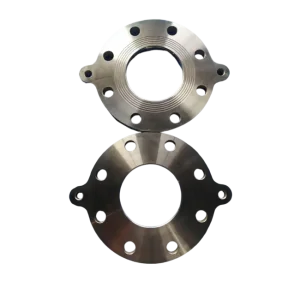
Precision-machined forged flanges manufactured under ISO 9001 and PED certifications, engineered specifically for high-stress piping networks in East Africa.
As the economic engine of East and Central Africa, Kenya is undergoing a rapid industrial transformation driven by the national vision "Kenya Vision 2030". Key sectors including geothermal energy generation along the Great Rift Valley, downstream petroleum distribution via the Kenya Pipeline Company (KPC) network, marine fuel transfer hubs at the Port of Mombasa, and extensive municipal water transfer schemes are generating unprecedented demand for high-integrity piping components.
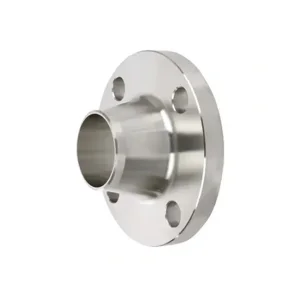
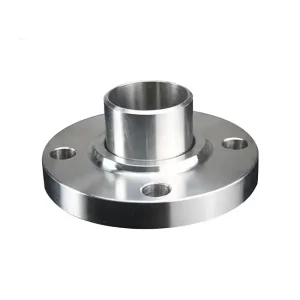
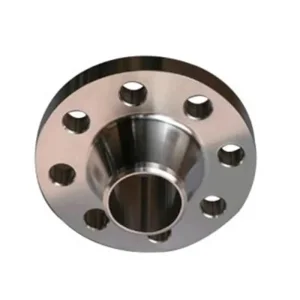
Among all pipe connection components, Weld Neck Flanges (also known as Hubbed Weld Neck flanges or EN 1092-1 Type 11 flanges) hold a pivotal position in critical applications. Unlike standard slip-on or socket weld flanges, weld neck flanges feature a long tapered hub that transitions smoothly from the flange ring thickness to the pipe wall thickness. This geometric taper provides essential mechanical reinforcement, distributing bending moments and thermal stresses across the joint rather than concentrating stress at the weld root.
In regions like Olkaria, Menengai, and Suswa, high-enthalpy geothermal steam carries dissolved hydrogen sulfide (H2S), carbon dioxide (CO2), and abrasive silica particles at elevated pressures and temperatures up to 300°C. Weld neck flanges forged from ASTM A182 F316L stainless steel or alloy grades ensure zero leakage under severe thermal cycling and sour gas environments.
From the Kipevu Oil Terminal (KOT 2) in Kilindini Harbor to inland storage depots in Nairobi, Nakuru, and Kisumu, petroleum transport demands ASME B16.5 Class 300 to Class 1500 weld neck flanges with Ring Type Joint (RTJ) or Raised Face (RF) configurations to guarantee absolute fluid containment under pressure surges.
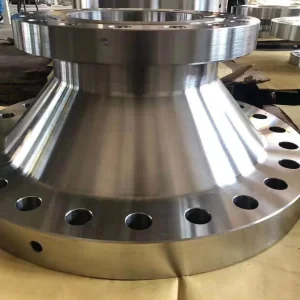
Major hydro projects, such as the Northern Collector Tunnel and regional irrigation schemes across Nakuru and Kilifi counties, rely on large-diameter EN 1092-1 Type 11 weld neck flanges (DN500 to DN2400) rated PN10 to PN40 to withstand hydraulic water hammer effects over decades of operational life.
To assist engineering, procurement, and construction (EPC) contractors in Kenya, our engineering office provides a detailed comparison of international manufacturing standards, material selection metrics, and facing finishes suitable for local operating conditions.
| Standard | Type / Class | Material Grades | Typical Kenya Industry Application | Key Engineering Advantage |
|---|---|---|---|---|
| ASME / ANSI B16.5 | Class 150 to Class 2500 | ASTM A105, A350 LF2, A182 F316L | Oil refineries, fuel pipelines, cross-border terminals | High pressure/temperature ratings, standardized RTJ/RF dimensions |
| EN 1092-1 | Type 11 (PN6 to PN400) | P245GH, P280GH, 1.4404 (316L) | Geothermal steam mains, municipal water infrastructure | European metric compatibility, precise bore alignment for reduced turbulence |
| ASME B16.47 Ser. A/B | Class 75 to Class 900 (NPS 26"-60") | ASTM A105, A182 F11, F22 | Geothermal power station manifold headers, bulk crude storage | Heavy-duty structural integrity for large-bore high-pressure piping |
| DIN Standards | DIN 2631 to DIN 2638 | St37.2, C22.8, 1.4571 | German-engineered industrial machinery & beverage plants | Strict alignment with legacy European machinery imported into East Africa |
Kenya presents unique environmental and operational conditions that affect flange service life. In coastal zones near Mombasa, high atmospheric chloride levels require proper external corrosion protection, such as yellow anti-rust paint, black varnish, or hot-dip galvanizing. In geothermal zones like Naivasha and Baringo, low-alloy steels (ASTM A182 F11/F22) or austenitic stainless steels (F316L/F321) are specified to prevent Stress Corrosion Cracking (SCC) caused by moist H2S environments.
The gradual thickness reduction from the flange hub to the butt-weld bevel eliminates stress concentrations. This design makes weld neck flanges resistant to repeated bending stresses caused by pipeline thermal expansion and ground movement—a critical feature for long-distance pipelines running across the Great Rift Valley's seismic zones.
Weld neck flanges are joined to pipe ends via full-penetration V-bevel butt welds. This design allows 100% Non-Destructive Testing (NDT) via Radiographic Testing (RT) or Ultrasonic Testing (UT), satisfying the safety mandates enforced by the Energy and Petroleum Regulatory Authority (EPRA) in Kenya.
For Kenyan contractors, achieving project deadlines within budget requires a dependable international supply chain. As a premier flange manufacturer located in Dingxiang County, Shanxi Province—the world-renowned "Hometown of Forging in China"—Shanxi Yuxin Casting & Forging Co., Ltd. has delivered high-integrity forged flanges to global markets since 1992.
We operate high-capacity hydraulic forging presses and ring-rolling machines capable of producing weld neck flanges up to 3,000 mm (120 inches) in diameter. Internal grain flow refinement during forging ensures superior toughness and fatigue resistance.
Equipped with multi-axis CNC vertical lathes, our workshop maintains strict tolerances on flange thickness, hub taper angle, bolt circle diameter (BCD), and flange face roughness (125-250 µin AARH stock finish per ASME B16.5).
Every heat of steel undergoes chemical analysis, mechanical tension testing, Charpy V-notch impact testing at sub-zero temperatures, ultrasonic flaw detection (UT), and positive material identification (PMI) prior to shipment.
Explore our broader range of ANSI, DIN, EN, and custom-machined pipe fittings engineered for East African industrial applications.
Importing steel components into Kenya requires strict adherence to regulatory guidelines established by the Kenya Bureau of Standards (KEBS). Shanxi Yuxin provides a streamlined export documentation process to ensure smooth customs clearance through the Port of Mombasa or Nairobi Inland Container Depot (ICD).
Under the Pre-Export Verification of Conformity (PVoC) to Standards Program, our factory coordinates directly with authorized inspection agencies (such as SGS, Intertek, or Bureau Veritas) in China. We issue the mandatory Certificate of Conformity (CoC) before shipment to avoid clearance delays or penalties at Mombasa port.
Every consignment of weld neck flanges is accompanied by an EN 10204 3.1 Mill Test Certificate detailing ladle chemical analysis, heat numbers, tensile strength, yield point, percentage elongation, and hardness test values. Independent third-party inspection (3.2 certification by Lloyd's Register or TÜV) is available upon request.
To safeguard flange raised faces and weld bevels during tropical ocean transit, all products undergo anti-corrosion oiling or rust-proof painting. Bevel ends are protected with plastic caps, and flanges are packed inside ISPM-15 compliant fumigation-free plywood cases or heavy-duty steel framed pallets.
Clear engineering and commercial responses regarding weld neck flange procurement in East Africa.
Supply your Kenyan engineering projects with high-integrity, KEBS-compliant weld neck flanges engineered to international standards. Contact our technical sales desk for immediate inquiries, MTC requests, or competitive price estimates.
Send Inquiry Now