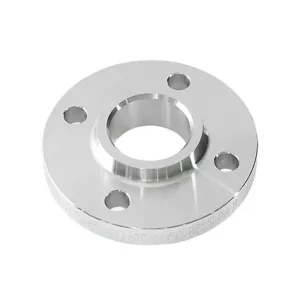
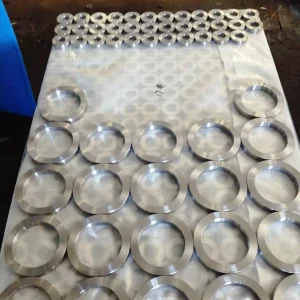
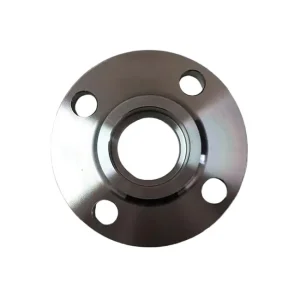
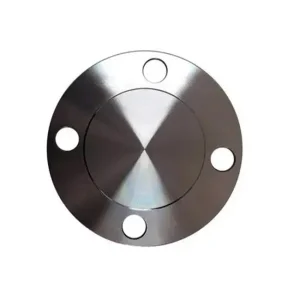
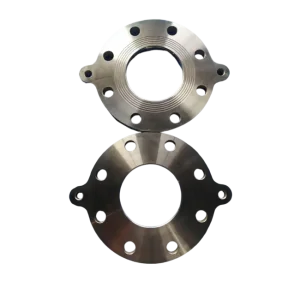
Direct factory supply of certified forged pipe flanges conforming to Australian Standard AS 2129, ASME B16.5, and EN 1092-1 specifications.
Australia's industrial backbone—spanning the mineral-rich Pilbara region in Western Australia, the Bowen Basin coal operations in Queensland, offshore LNG fields on the North West Shelf, and extensive municipal water grids operated by SA Water and Sydney Water—requires ultra-reliable piping components designed to endure harsh mechanical loads and aggressive atmospheric conditions.
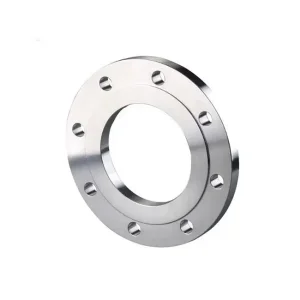
Slip-On Flanges (SO Flanges) serve as a core structural element across low-to-medium pressure industrial piping networks throughout the Australian continent. Preferred for their ease of alignment, reduced cutting precision requirements on pipe runs, and lower upfront component cost, Slip-On flanges slide directly over the outer diameter of the pipe and are secured via internal and external fillet welds. However, specifying Slip-On flanges for Australian projects involves navigating stringent standards compliance, such as AS 2129 (Tables D, E, F, H), AS 4087 (Water Industry), and international standards like ASME B16.5 and EN 1092-1.
Procurement managers and piping engineers serving the Australian market must frequently evaluate dimensional standard alignment. While American projects primarily utilize ASME B16.5 Class 150 to Class 2500, legacy and regional infrastructure in Australia relies heavily on AS 2129 and AS 4087 bolt patterns.
| Standard / Specification | Common Pressure Ratings | Facing Types | Typical AU Industry Application | Material Grade Options |
|---|---|---|---|---|
| AS 2129 (Tables D, E, F, H) | Table D (700 kPa), Table E (1.4 MPa), Table H (3.2 MPa) | Flat Face (FF), Raised Face (RF) | Legacy Mining, General Industrial, Slurry Lines | Carbon Steel A105, Q235B, S235JR |
| AS 4087 (Water Supply) | PN16, PN21, PN35 | Flat Face (FF) for Cast Iron/PVD Mating | Municipal Water Treatment, Desalination Plants | ASTM A105N, Stainless 316L, Epoxy Coated |
| ASME B16.5 (Global Industrial) | Class 150, 300, 600, 900 (SO up to 1500) | Raised Face (RF), Ring Type Joint (RTJ) | Oil & Gas Processing, CSG-to-LNG Plants, Refining | A105N, A350 LF2, A182 F304L/F316L/F51 |
| EN 1092-1 (Type 12 Slip-On) | PN6, PN10, PN16, PN25, PN40 | Type A (Flat), Type B (Raised Face) | European OEM Machinery, Chemical Skids | P250GH, 1.4404 Stainless, Duplex 2205 |
The structural integrity of a Slip-On flange connection depends entirely on correct welding execution. According to ASME Section VIII and AS 1210 pressure vessel codes, Slip-On flanges must be welded both on the inside (internal fillet weld) and the outside (external fillet weld).
For Australian marine and chemical offshore installations, flange face finish is critical to prevent fugitive emissions. YUXIN manufactures Slip-On flanges with precise spiral serrated or concentric serrated machine finishes (125–250 micro-inches AARH / Ra 3.2–6.3 µm) compliant with ASME B16.5 standards.
Procuring heavy industrial forgings from Australian domestic stockists often incurs extreme lead-time delays and premium markups due to localized manufacturing limits. Situated in Dingxiang, Shanxi—the recognized global capital of forging—Shanxi Yuxin Casting & Forging Co., Ltd. provides Australian engineering buyers with an optimal balance of factory-direct pricing, massive capacity, and uncompromised quality assurance.
We source prime steel billets exclusively from top-tier state mills (such as Baosteel and Taiyuan Iron & Steel). Every forging batch is issued an EN 10204 3.1 Inspection Certificate specifying heat numbers, chemical ladle analysis, yield strength, tensile testing, and Charpy V-notch impact values.
All Slip-On flange bores are CNC turned to strict micro-tolerances (+0.5mm / -0mm), guaranteeing smooth slide-on fitment over Schedule 40, Sch 80, Sch 160, and XXS pipe walls without binding or excessive gap slop during field welding.
Located within convenient rail and highway distance to Qingdao and Tianjin ports, YUXIN offers streamlined sea freight direct to Fremantle (Perth), Port Adelaide, Melbourne, Sydney (Port Botany), and Brisbane within 14–21 sailing days.
Different Australian geographical sectors demand distinct material specifications to resist unique environmental hazards ranging from extreme desert heat to hyper-saline ocean air.
Mining operations in the Pilbara region require heavy-wall Slip-On flanges capable of enduring severe abrasive wear from iron ore slurries and highly corrosive saline groundwater used in mineral processing.
Engineered Solution: Forged ASTM A350 LF2 Class 1 carbon steel flanges with anti-corrosion black bituminous or epoxy yellow safety coatings, combined with full UT (Ultrasonic Testing) per SEP 1921 to ensure internal homogeneity.
Coal Seam Gas (CSG) pipelines feeding the major LNG export terminals on Curtis Island operate under continuous mechanical vibration and gas pressure fluctuations.
Engineered Solution: Forged ASTM A105N normalized carbon steel and ASTM A182 F316L stainless steel SO flanges complying with NACE MR0175 / ISO 15156 for H2S sour gas environment resistance.
Desalination facilities providing potable water to Adelaide and Perth subject piping systems to extreme chloride pitting and galvanic corrosion hazards.
Engineered Solution: Duplex Stainless Steel UNS S31803 / S32205 and Super Duplex S32750 Slip-On flanges offering high PREN (>40) pitting resistance ratings, machined precisely for EPDM rubber-lined piping systems.
Urban water utilities replacing legacy infrastructure demand strict adherence to AS 4087 standards for PN16 and PN21 pressure rating compatibility.
Engineered Solution: Flat Face (FF) forged Slip-On flanges manufactured with non-toxic blue polymeric fusion-bonded epoxy coatings, certified lead-free and fit for potable water contact.
As Australia accelerates toward its target of becoming a global renewable hydrogen export powerhouse (driven by mega-projects in Western Australia's Mid West and Queensland's Hydrogen Hubs), pipe flange manufacturing techniques are evolving.
Hydrogen molecules, being the smallest of all elements, exhibit high permeability and can induce hydrogen embrittlement in low-alloy carbon steels. YUXIN is at the forefront of this industrial shift, supplying specialized ultra-low carbon stainless steel (316L with controlled Nickel equivalent) and high-density forged alloys engineered to mitigate hydrogen-induced micro-cracking.
Integration of 3D optical coordinate measuring machines (CMM) guarantees that bolt circle diameters (BCD), flange thickness, and hub tapers comply 100% with drawing tolerances before export shipping.
All shipments destined for Sydney, Melbourne, or Fremantle are packed in heat-treated, fumigation-free heavy-duty plywood crates lined with anti-moisture VCI plastic wrapping to resist sea-spray oxidation.
By utilizing modern electric heating furnaces and energy-efficient die forging presses, YUXIN has reduced the carbon footprint per ton of steel forging by over 22% since 2021.
Direct answers to standard technical, compliance, and logistics questions from Australian engineers and purchasing officers.
No, they are generally not directly interchangeable. While the nominal pipe sizes (NPS) may match, the Bolt Circle Diameter (BCD), number of bolt holes, and bolt hole sizes differ between AS 2129 Table E and ASME B16.5 Class 150 for most pipe diameters. For instance, a 4-inch (DN100) AS 2129 Table E flange uses 8 bolt holes on a 178mm BCD, whereas an ASME B16.5 Class 150 4-inch flange uses 8 bolt holes on a 190.5mm BCD. YUXIN manufactures flanges strictly according to your specified standard or can custom-machine dual-drilled transition flanges upon request.
Every shipment is accompanied by a full EN 10204 3.1 Material Test Certificate (MTC) direct from our quality testing laboratory. This includes heat number identification, chemical analysis (C, Si, Mn, P, S, Cr, Ni, Mo, etc.), mechanical properties (yield point, tensile strength, elongation, hardness), heat treatment history, and NDT test results (Ultrasonic and Magnetic Particle Testing). EN 10204 3.2 third-party inspection certificates witnessed by TÜV, SGS, or Lloyd's Register are available upon project requirement.
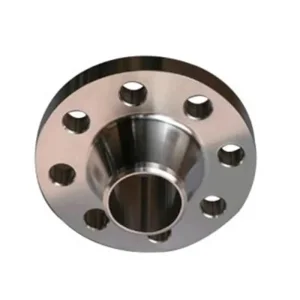
Slip-On flanges offer three primary practical advantages in field operations: 1) Lower initial purchasing cost: They require less forged material than long tapered Weld Neck hubs. 2) Easier field alignment: Because the flange slips over the pipe, pipe ends do not require precise beveling or exact length cutting prior to fit-up. 3) Reduced storage footprint: Compact hub height makes them easier to store on remote Australian mine sites. However, for extreme high-pressure (>Class 1500) or high cyclic vibration lines, Weld Neck flanges remain the recommended engineering choice.
To resist salt-air rust during ocean transport and job-site storage, YUXIN provides multiple surface finishing options: transparent anti-rust varnish, black rust-inhibiting paint, yellow lacquer, hot-dip galvanizing (HDG per AS/NZS 4680), electro-galvanizing, and high-performance fusion-bonded epoxy (FBE) coatings for buried water pipelines.
For standard carbon steel (ASTM A105 / A350 LF2) and stainless steel sizes (1/2" to 24"), manufacturing and CNC machining typically take 15 to 25 days depending on order volume. Direct ocean freight from Qingdao/Tianjin to Fremantle (Perth) takes approx. 14 days, and to Sydney/Melbourne takes approx. 18-21 days. Express air-freight options are also supported for urgent mine breakdown shutdowns.
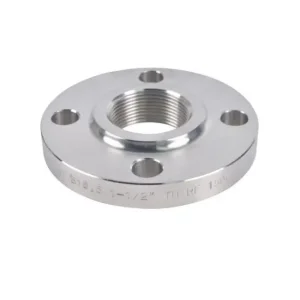
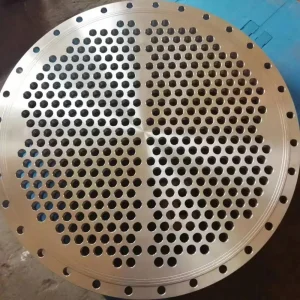
Explore our expanded range of industrial forged flanges, tube sheets, and specialized pipe connectors engineered for global infrastructure standards.
Get direct access to factory pricing, fast technical drawings review, and full EN 10204 3.1 material certification. Our engineering team responds within 24 hours.