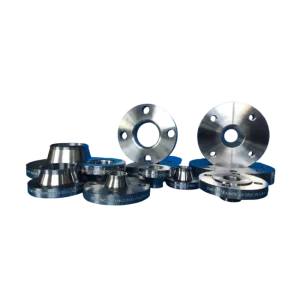
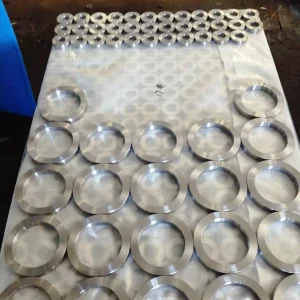
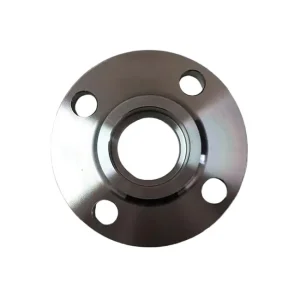
Inspected and certified in accordance with ASME B16.5, EN 1092-1, and DIN standards for immediate deployment across Aliaga, Gebze, Izmit, and Tuzla projects.
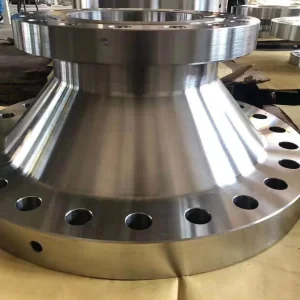
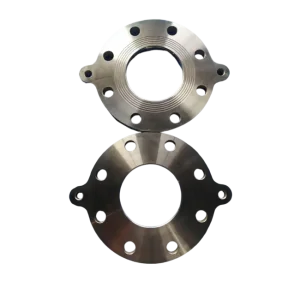
Technical Whitepaper: Operational dynamics, fluid mechanics, and supply chain synergy between Chinese high-precision forging and Turkish industrial mega-projects.
Turkey stands at the geographic and economic crossroads of Europe, Asia, and the Middle East. Positioned as a critical intercontinental bridge, the Republic of Türkiye has rapidly evolved into one of the world's most dynamic industrial hubs and strategic energy corridors. Key mega-projects—such as the Trans-Anatolian Natural Gas Pipeline (TANAP), the expansion of the TÜPRAŞ Refineries (İzmit, İzmir, Kırıkkale, Batman), the modern SOCAR STAR Refinery in Aliağa, and expanding geothermal stations in Denizli and Aydın—require piping infrastructure built to uncompromising international engineering standards.
Within these highly complex process industries, fluid dynamics management at pipe transition points is critical. Piping systems frequently encounter abrupt changes in line velocity, line pressure, and directional flow requirements. Standard concentric or eccentric pipe reducers joined by standard flanges often add multiple field welds, increasing installation costs, weight, and joint integrity risks. This is precisely where specialized Reducer Flanges (Flanş Redüksiyon / Redüksiyon Flanşı) serve as an essential engineering component. By integrating the pipe size reduction directly into a single forged flange body, piping designers in Turkey can save valuable spatial footprint, cut field welding times by 50%, and drastically lower stress intensity factors across pump suction lines, compressor headers, and vessel nozzle connections.
Refining complexes in İzmit and Aliağa demand extreme corrosion-resistant forged reducer flanges capable of handling high temperature hydrocarbon cracking and sour gas service per NACE MR0175.
Turkey's national gas transit grid mandates ASME B16.5 and EN 1092-1 high-pressure Class 600# to Class 2500# forged reducer flanges to guarantee zero-leakage gas compression.
Maritime yards build high-tech chemical tankers and OSVs requiring space-optimized DIN/EN slip-on and lap joint reducer flanges certified by IACS member classification societies.
Understanding bore transition geometries, boundary layer turbulence mitigation, and pressure rating compliance under ASME B16.5 and EN 1092-1.
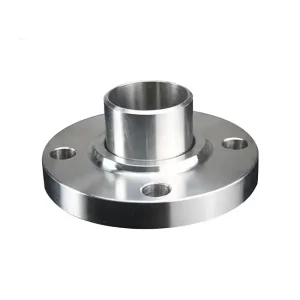
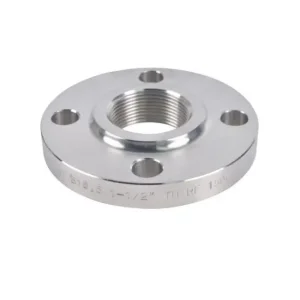
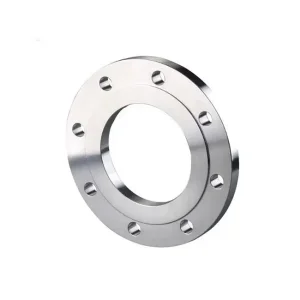
A Reducer Flange is designed to join pipes of different nominal sizes cleanly and securely. The flange mating face (e.g., NPS 8” Class 300#) corresponds to the larger line or equipment nozzle, while the bore (e.g., NPS 4”) is machined to match the wall thickness and internal diameter of the smaller connecting pipe.
In a Concentric Reducer Flange, the smaller bore is machined precisely on the center axis of the larger flange face. This symmetry ensures uniform fluid velocity distribution across the conical transition zone. Concentric configurations are universally deployed in vertical piping runs, pump discharge lines, and chemical dosing headers where fluid stratification is not a primary concern.
In an Eccentric Reducer Flange, the bore is offset from the center axis, creating one flat side aligned parallel to the outer piping wall. In horizontal liquid lines—particularly pump suction inlets in refineries—eccentric reducer flanges (installed flat-side-up) prevent the accumulation of trapped gas bubbles, which would otherwise cause pump cavitation and severe impeller degradation. Conversely, in horizontal steam and gas lines, eccentric reducer flanges installed flat-side-down prevent condensate pooling.
| Specification Parameter | ASME B16.5 Standard Standard | EN 1092-1 / DIN European Standard | Custom Forged OEM Capabilities |
|---|---|---|---|
| Nominal Size Range | 1/2" to 24" (NPS) / Up to 60" (ASME B16.47) | DN 15 to DN 1500 | Up to 3,000 mm Outside Diameter |
| Pressure Ratings | Class 150, 300, 600, 900, 1500, 2500# | PN 6, PN 10, PN 16, PN 25, PN 40, PN 63, PN 100 | Up to PN 400 / 10,000 PSI Working Pressure |
| Facing Types | Raised Face (RF), Flat Face (FF), Ring Type Joint (RTJ) | Type A (Flat), Type B1/B2 (Raised), Type C/D (Tongue/Groove) | Specialized O-Ring Grooves & Custom Serrations |
| Material Grades | ASTM A105, A350 LF2, A182 F304/F316L, F11, F22, F51 (Duplex) | P245GH, P280GH, 1.4404, 1.4462, 1.0460 (C22.8) | Inconel 625, Monel 400, Titanium Grade 2 Clad |
| Machining Tolerances | Strict adherence to B16.5 dimensional limits | Tolerances compliant with EN 1092-1 Annex e | CNC Tight Tolerance machining within ±0.05 mm |
A common pitfall for Turkish procurement teams is navigating dual-standard facilities where older installations use DIN standard dimensions while newer expansion phases adopt ASME B16.5 piping classes. Our engineering department specializes in manufacturing dual-certified or transitional flange reducers that ensure leak-proof mechanical coupling between European (PN rated) and American (Class rated) piping modules without requiring expensive field spools.
How our Shanxi Dingxiang Smart Forging Ecosystem guarantees raw material purity, rapid turnaround, and landed cost advantages for Turkish EPC contractors.
Located in Dingxiang County, Shanxi—globally recognized as the official "Hometown of Forging in China"—our facility leverages an integrated industrial ecosystem. Raw billet sourcing, closed-die hammer forging, ring rolling, heat treatment, and precision CNC machining happen within a 15-kilometer radius. This eliminates internal logistical overhead, allowing us to offer Turkish importers unbeatable pricing without compromising metallurgical integrity.
Our Industry 4.0 production lines utilize automated optical pyrometers during forging to enforce exact forging temperature windows (1150°C to 850°C). Every forged reducer flange undergoes automated computerized heat treatment (Normalizing, Tempering, or Solution Annealing) with continuous thermocouple logging. Each flange is micro-stamped with a unique heat number tied directly to its EN 10204 3.1 Mill Test Certificate.
For Turkish procurement officers dealing with fluctuating European steel pricing and extended lead times, our China Industry 4.0 supply model offers absolute predictability. Direct sea freight routes from Tianjin and Qingdao ports to major Turkish maritime entry points—including Mersin, Haydarpaşa (Istanbul), Ambarlı, Gemlik, and Aliağa—ensure standard stock shipments arrive within 22 to 28 days, backed by full customs tariff compliance (Form A / Certificate of Origin support).
Deploying engineered reducer flanges in high-stress, regional infrastructure projects throughout the Republic of Türkiye.
The Marmara manufacturing belt relies heavily on robust industrial utility systems. Our A105 carbon steel slip-on reducer flanges are extensively specified in utility steam loops, high-pressure hydraulic presses, and automotive paint shop compressed air headers in Dilovası and Organized Industrial Zones (OSB).
In corrosive marine refineries, reducer flanges face saline sea air externally and aggressive hydrocarbons internally. We supply ASTM A182 F316L and Duplex F51 RTJ reducer flanges specifically designed to handle corrosive naphtha, hydrogen desulfurization (HDS), and coastal seawater cooling circuits.
Turkey ranks among top global producers of geothermal energy. Geothermal steam contains dissolved hydrogen sulfide, silica, and high-temperature brines. Our forged alloy steel (A182 F11/F22) weld neck reducer flanges provide long-term fatigue resistance under high cyclic thermal stresses.
Delivering verifiable safety and compliance for critical pressure vessel and piping applications in Turkey.
Every single batch of forged steel processed in our facility undergoes rigorous non-destructive and destructive testing before being approved for machining. We recognize that in pressure piping, a single material defect can cause catastrophic line failure.
Our quality management framework is fully audited and recognized by leading European and international inspection authorities:
Answers to common procurement, compliance, shipping, and engineering questions regarding reducer flange imports into Turkey.
Explore our full line of ISO & PED certified forged flanges engineered for global energy, shipbuilding, and industrial plant projects.