Precision-engineered forged components strictly compliant with EN 1092-1 and ASME B16.5 standards, pre-inspected for Dutch North Sea offshore and inland energy infrastructure.
As the Netherlands transitions toward a decarbonized industrial baseline—anchored by the Port of Rotterdam's massive hydrogen transition, North Sea offshore wind power conversion platforms, and the Chemelot Chemical Innovation Park in Limburg—the demand for ultra-reliable, zero-emission piping connections has never been higher.
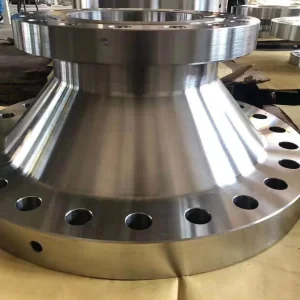
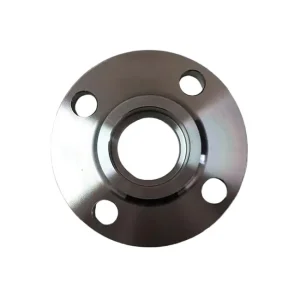
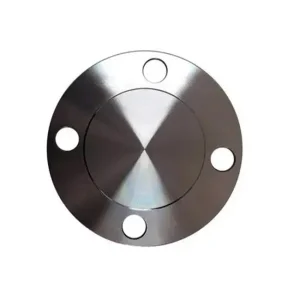
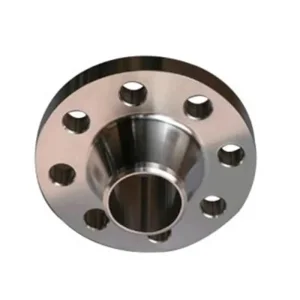
A Reducer Flange is a specialized piping component designed to connect pipes of varying nominal diameters within a single flanged joint, eliminating the need for a separate pipe reducer butt-welded to a standard flange. In space-constrained offshore platforms, FPSO hulls built in Vlissingen, and dense petrochemical manifolds along the Nieuwe Waterweg, reducer flanges optimize mechanical real estate, decrease overall weld count, and streamline non-destructive testing (NDT) workflows.
Dutch engineering procurement contractors (EPCs) working under strict NEN-EN and PED (Pressure Equipment Directive 2014/68/EU) guidelines mandate that reducer flanges possess seamless internal flow transition zones to mitigate turbulence, localized pressure drop, and cavitation risks during high-velocity fluid transfer.
Historical Dutch pressure vessel standards (Dienst voor het Stoomwezen) have evolved into mandatory adherence to European Norms (EN 1092-1) and international ASME standards (ASME B16.5 / ASME B16.47). Reducer flanges imported into the Netherlands must strictly comply with:
Technical Insight for Dutch Engineers: Concentric reducer flanges maintain a shared centerline for vertical fluid runs, whereas eccentric reducer flanges incorporate an offset bore to keep the bottom of the pipe level (Flat-on-Bottom / FOB). In Dutch suction pump lines handling volatile liquids at Rotterdam terminals, eccentric reducer flanges prevent vapor pockets from collecting at the high point, safeguarding pumps against catastrophic cavitation.
Selecting the optimum steel grade for reducer flanges requires balancing mechanical yield strength, pitting resistance equivalent number (PREN), sub-zero impact toughness, and total cost of ownership across severe Dutch marine and industrial micro-climates.
| Material Grade | Standard Specification | Yield Strength (Min) | Operating Temp Range | Primary Netherlands Application Field |
|---|---|---|---|---|
| ASTM A105 / P250GH | ASME B16.5 / EN 1092-1 Type 11 | ≥ 250 MPa | -29°C to 425°C | Inland Dutch utility lines, steam distribution, municipal water treatment in Utrecht/Amsterdam. |
| ASTM A350 LF2 Class 1 | Low-Temp Carbon Steel (LTCS) | ≥ 250 MPa | -46°C to 345°C | North Sea offshore platforms, liquefied natural gas (LNG) bunkering in Maasvlakte II. |
| ASTM A182 F316L / 1.4404 | Austenitic Stainless Steel | ≥ 205 MPa | -196°C to 815°C | Chemelot chemical processing, coastal seawater cooling systems, green hydrogen electrolyzer skids. |
| Duplex 2205 / F51 (1.4462) | Ferritic-Austenitic (PREN ≥ 34) | ≥ 450 MPa | -50°C to 280°C | Offshore wind subsea substations, high-salinity splash zones in Scheveningen/IJmuiden. |
| Super Duplex 2507 / F53 | High-Alloy Duplex (PREN ≥ 42) | ≥ 550 MPa | -50°C to 250°C | Aggressive chemical acid wash pipelines, deep-sea subsea tie-backs, carbon capture & storage (CCS). |
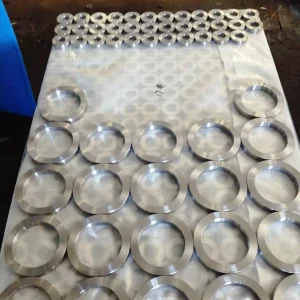
Unlike cheap plate-cut flanges machined directly from flat rolled steel, our reducer flanges are manufactured via precision closed-die forging. This hot forging process aligns the metal's internal grain flow radially along the contour of the flange hub and neck, maximizing resistance against high-frequency line vibrations and thermal fatigue cycle loads.
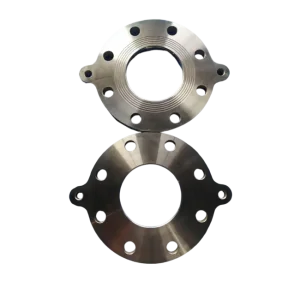
Available in Raised Face (RF), Flat Face (FF), and Ring Type Joint (RTJ) profiles. Our CNC lathes execute precise serrated spiral or concentric grooves per ASME B16.5 (125–250 µin AARH / Ra 3.2–6.3 µm) to ensure optimal gasket seating, preventing soft-gasket blowout under high line pressures.
Every reducer flange batch underwent 100% Positive Material Identification (PMI) using X-ray fluorescence spectrometers. Non-destructive examination includes Ultrasonic Testing (UT) per EN 10228-3 for internal void detection and Magnetic Particle Inspection (MPI) or Liquid Penetrant Inspection (LPI) for surface integrity.
From complex onshore chemical mega-clusters to hostile North Sea maritime installations, our forged reducer flanges are engineered for seamless operational longevity.
In Europe’s primary refining corridor, our reducer flanges connect large-diameter main crude delivery lines to smaller pump inlets and secondary bypass valves. Standardized to ASME Class 300 through Class 1500, these flanges resist hydrocarbon degradation, cyclic pressure pulses, and high operational temperatures in hydrocrackers and catalytic reformers.
The transition of existing gas pipelines to pure hydrogen transmission requires high-purity forging materials with ultra-low gaseous permeability. Our ASTM A182 F316L and Duplex reducer flanges undergo specialized surface electro-polishing and helium leak testing to guarantee zero hydrogen embrittlement or micro-seepage along critical distribution junctions.
Offshore converter platforms located miles off the coast of Borsele and Hollandse Kust rely on heavy-duty liquid cooling circuits to regulate transformer temperatures. Our high-alloy concentric reducer flanges connect variable-diameter coolant piping, coated with marine-grade 3-layer epoxy systems to withstand intense salt-spray atmospheric corrosion.
In maritime vessel engine rooms and trailing suction hopper dredger hydraulic systems, space efficiency is critical. Eccentric reducer flanges allow pipe runs to sit flush against bulkheads and decks, facilitating tight pipe routing without sacrificing hydraulic pressure stability or increasing weight profile.
As European environmental regulations tighten under the EU Green Deal and ISO 15848-1 fugitive emission mandates, reducer flange manufacturing is undergoing a technological revolution.
Next-generation reducer flanges feature embedded piezoelectric bolt-tension sensors and fiber-optic micro-strain gauges inside the flange rim. These smart components transmit real-time flange face deflection, thermal stress, and bolt torque degradation data directly to plant SCADA systems, enabling predictive maintenance across unmanned offshore substations.
Traditional flange joints account for a significant percentage of fugitive volatile organic compound (VOC) and methane leaks. Advanced machining techniques now achieve precision micro-finished groove geometries paired with expanded graphite-metal serrated gaskets, satisfying TA-Luft (German Clean Air Act) and ISO 15848-1 Class AH tightness criteria.
To reduce raw material consumption while handling extreme corrosive fluids (such as offshore carbon capture and storage wet CO2 mixtures), manufacturers are deploying laser cladding technology. High-strength carbon steel flange bodies are internally clad with a 3mm layer of Inconel 625, offering premium corrosion protection at a fraction of full-alloy costs.
Harmonizing American (ANSI/ASME) and European (EN/DIN) piping standards for smooth cross-border procurement in Dutch projects.
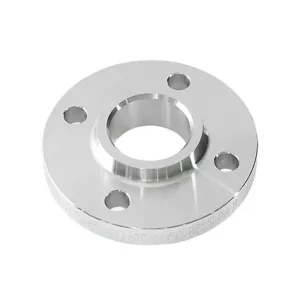
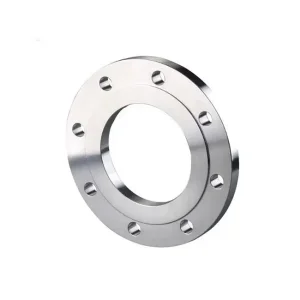
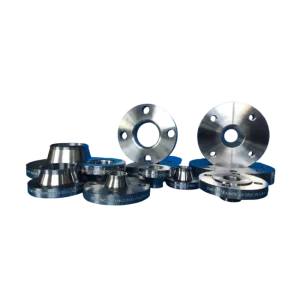
Explore our full range of certified industrial flanges, available for fast export dispatch with complete EN 10204 3.1 mill testing documentation.
Addressing essential technical inquiries regarding compliance, metallurgy, shipping logistics, and custom engineering for Dutch imports.
A single forged Reducer Flange eliminates one complete circumferential butt weld in the piping assembly. This drastically reduces total installation time, reduces labor cost, lowers non-destructive examination (RT/UT) requirements, and minimizes potential leak paths. Furthermore, in space-restricted environments such as Dutch offshore platforms and maritime vessels, reducer flanges provide an ultra-compact footprint compared to conventional two-component assemblies.
Use Eccentric Reducer Flanges on horizontal pump suction lines. Installing them with the flat side on top (Flat-on-Top / FOT) prevents air or gas bubbles from accumulating at the high point, which could enter the pump impeller and cause severe cavitation. Use Concentric Reducer Flanges on vertical pipe runs or pump discharge piping where symmetrical fluid flow is desired and gas entrapment is not an issue.
Yes. Shanxi Yuxin Casting & Forging Co., Ltd. holds valid ISO 9001 and PED 2014/68/EU certificates audited by TÜV Rheinland. Every flange lot exported to the Netherlands is accompanied by an EN 10204 3.1 Mill Test Certificate (MTC) stating raw material heat numbers, chemical melt analysis, tensile strength, yield strength, elongation, hardness, and sub-zero Charpy V-notch impact test values.
Absolutely. Our in-house tooling facility and advanced CNC machining centers allow us to forge non-standard reducer flanges up to 3,000 mm (120 inches) in diameter. We work directly from customer-supplied CAD files (DWG, STEP, PDF), tailoring outer diameters, bolt circle dimensions, thickness, and custom facing profiles to fit proprietary heat exchangers, vessel nozzles, and skid units.
All flange machined faces are treated with heavy rust-preventive oil, transparent varnish, or black anti-corrosion paint depending on client preference. Flange bevels and raised faces are protected with plastic end caps or wooden covers. Shipments are packed in seaworthy, fumigation-free ISPM-15 compliant plywood cases or reinforced steel-banded pallets designed for safe fork-lift handling in Dutch warehouses.
Standard carbon steel sizes held in semi-finished forged stock can be machined and shipped within 7 to 15 days. Custom forged-to-order high-alloy or duplex flanges generally require 20 to 35 days for complete heat treatment, NDT testing, and third-party inspection witnessing.
