+86-350-6071768 [email protected] Dingxiang, Shanxi, China · Forging since 1992
Industrial Engineering & Global Supply Whitepaper

Reducer Flange Manufacturer & Manufacturers in Portugal

Technical Specification, Iberian Industrial Market Dynamics, and Precision Chinese Forging Solutions for High-Pressure Piping Systems

Send Inquiry Now Read Technical Whitepaper
Featured Piping Components

Precision Reducer Flanges & Companion Fittings

Engineered to ASME B16.5, EN 1092-1, and DIN standards for Portuguese refineries, shipbuilding hubs, and energy infrastructure projects.
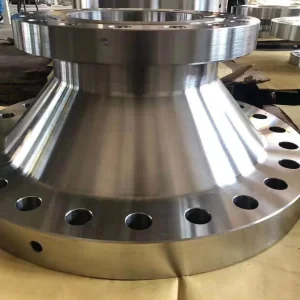
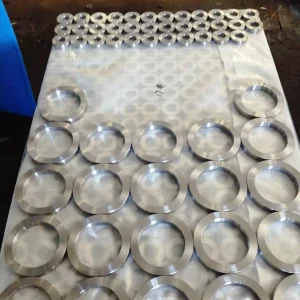
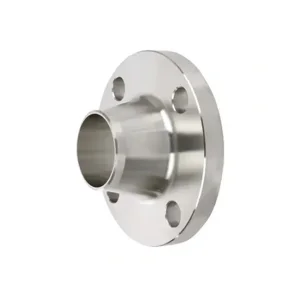
Discount China Export Reducer Flange
Discount China Export Reducer Flange | Competitive Price & Reliable Supply
View Details & Spec
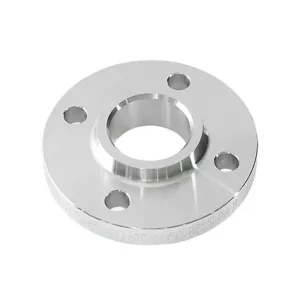
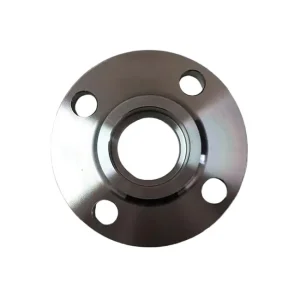
Discount China Socket Weld Flanges
Discount China Socket Weld Flanges | High-Quality Suppliers for Portugal
View Details & Spec
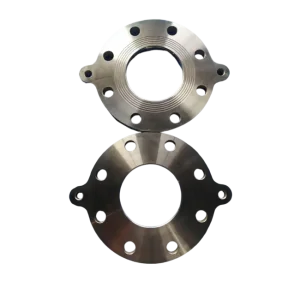
China Slip-On Flanges SO Flanges
China Slip-On Flanges (SO Flanges) - ANSI/DIN Standard Industrial Fittings
View Details & Spec
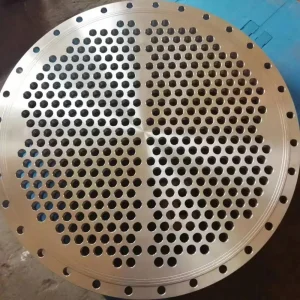
Custom Tube Sheets Heat Exchangers
Best Custom Tube Sheets | Precision Manufacturing for Portuguese Boilers
View Details & Spec
33+
Years Forging Expertise
10,000
Annual Tonnes Capacity
EN 10204
3.1 / 3.2 Full Traceability
100%
CNC Hydro-Tested Precision
Technical Deep-Dive

Engineering Fundamentals of Reducer Flanges

Understanding mechanical flow dynamics, concentric vs. eccentric geometry, and standard compliance for process engineering.

What is a Reducer Flange and How Does It Optimize Piping?

A reducer flange (also known as a reducing flange) is a specialized piping component designed to connect pipes of differing nominal bore sizes without the need for an intermediate inline pipe reducer fitting. Unlike standard weld neck or slip-on flanges that connect pipes of uniform diameter, a reducer flange features a mating diameter (bolt circle and outer flange dimensions) corresponding to a larger pipe size, while the inner bore and hub match a smaller pipe diameter.

By eliminating the requirement for a separate pipe reducer welded between two standard flanges, reducer flanges significantly reduce total joint count, minimize potential leakage pathways, decrease overall piping envelope space, and lower fabrication labor costs in complex process plants across Portugal and Western Europe.

Concentric vs. Eccentric Reducer Flanges

Concentric Reducer Flanges: The centerlines of both the larger and smaller diameters are collinear. Commonly applied in vertical piping runs or high-pressure gas lines to maintain uniform fluid velocity profiles.

Eccentric Reducer Flanges: The bore is offset from the center of the flange circle, creating a flat side. Essential in horizontal pump suction lines (such as those in Sines LNG terminals or Matosinhos chemical plants) to prevent gas bubble accumulation and cavitation damage.

Manufacturing Standards Compliance

Reducer flanges manufactured for export to European markets must comply strictly with international dimensional and metallurgical frameworks:

  • ASME B16.5: Pipe Flanges and Flanged Fittings (NPS ½ to NPS 24). Reducer flanges are covered under Section 6.11, establishing wall thickness, pressure-temperature ratings, and facing tolerances.
  • EN 1092-1: European Standard for steel flanges (PN6 to PN400). Specifically Type 11 (Weld Neck) and Type 01 (Plate Slip-On) customized reducing bores.
  • AD 2000-Merkblatt W0 / PED 2014/68/EU: Mandatory safety standard compliance for pressure equipment operating within Portugal and the EU.

Reducer Flange Dimensional & Material Parameter Matrix

Standard Nominal Size Range Pressure Classes / Ratings Primary Material Grades Typical Facing Options
ASME B16.5 NPS ½" x ¾" up to 24" x 20" Class 150, 300, 600, 900, 1500, 2500 ASTM A105, A350 LF2, A182 F304/F316L, F51 Duplex Raised Face (RF), Flat Face (FF), Ring Type Joint (RTJ)
EN 1092-1 DN15 x DN20 up to DN600 x DN500 PN6, PN10, PN16, PN25, PN40, PN63, PN100 P250GH, P280GH, 1.4404 (316L), 1.4307 (304L), 1.4462 Type A (Flat), Type B1/B2 (Raised Face), Type C/D (Tongue/Groove)
DIN Standards DN15 to DN1000 Custom Bores ND6 to ND160 Bar/Pressure ratings C22.8, RST37-2, 1.4571 (316Ti), Alloy 625 Form C, Form D, Form E (DIN 2526 facing profiles)
Custom Non-Standard Up to Ø3000 mm Outer Diameter Tailored to customer calculation sheets Inconel 625, Monel 400, Hastelloy C276, Titanium Gr. 2 O-Ring Grooves, Precision Serrated (125-250 µin AARH)
Regional Market Dynamics

Portugal’s Industrial Modernization & Demand for Reducer Flanges

Examining key infrastructure expansion projects driving high-specification flange procurement across the Iberian Peninsula.

Green Hydrogen & Sines Energy Hub

Portugal’s strategic commitment to becoming a European clean energy leader—centered around the Deepwater Port of Sines and major green hydrogen projects (MTR, H2Sines)—requires specialized stainless steel (316L, Duplex 2205) reducer flanges capable of resisting hydrogen embrittlement under high pressures (PN100+).

Refining & Petrochemical Complexes

Galp Energia’s ongoing upgrades at the Matosinhos and Sines refining facilities demand heavy-wall ASTM A105 and A182 F11/F22 alloy forged reducer flanges for hydrocracking, desulfurization, and high-temperature utility piping systems operating under rigorous thermal cycling.

Maritime & Naval Shipbuilding

With major shipyards situated in Lisbon, Setúbal, and Viana do Castelo (West Sea Shipyards), marine engineers require seawater-resistant Cu-Ni 90/10 and AISI 316L reducing flanges for ballast water management systems, bilge networks, and offshore platform piping modules.

Industrial Water Treatment & Pulp Industry Requirements in Aveiro & Figueira da Foz

Portugal’s extensive pulp and paper sector—led by industry giants like The Navigator Company and Altri—operates major facilities in Covo, Figueira da Foz, and Setúbal. These paper mills utilize chemical recovery boilers and chlorine-bleaching lines that mandate highly corrosion-resistant alloy reducer flanges. Furthermore, municipal water utility contracts issued by EPAL (Empresa Portuguesa das Águas Livres) require epoxy-coated carbon steel EN 1092-1 reducing plate flanges to expand regional clean water transmission networks.

Competitive Procurement Edge

Why Portuguese EPCs & Stockists Partner with Chinese Manufacturers

Combining Dingxiang’s world-renowned forging cluster efficiency with strict European Quality Assurance.

Dingxiang: The Global Capital of Precision Forging

Our manufacturing base in Dingxiang County, Shanxi Province, offers an unprecedented industrial ecosystem. With direct access to premium raw material billets, automated hydraulic forging presses (up to 8,000 tons), and ring rolling mills, we deliver unmatched economies of scale. Portuguese buyers gain access to direct factory pricing, bypassing multiple European trading intermediaries without sacrificing quality.

Rigorous Quality Assurance & Certification

We eliminate global procurement risk by backing every export order with comprehensive testing protocols aligned with European pressure vessel rules:

  • EN 10204 3.1 & 3.2 Material Traceability: Complete chemical heat analysis and mechanical impact test reports.
  • Non-Destructive Testing (NDT): 100% Ultrasonic Testing (UT) to detect internal forging voids, plus Magnetic Particle (MT) or Dye Penetrant (PT) surface checks.
  • Dimensional Verification: CNC automated coordinate measuring machines (CMM) ensuring exact bolt-hole spacing and face alignment.
Future Trends & Engineering Innovation

Next-Generation Technologies in Reducer Flange Production

How advanced metallurgy, digital twin simulations, and green manufacturing redefine component reliability.

Grain Flow Optimization

Modern closed-die closed-loop forging processes force continuous grain flow along the inner reducing hub contours. This eliminates grain directional weakness common in cheap flame-cut plate flanges, elevating fatigue resistance under cyclic pressure spikes in marine propulsion systems.

Anti-Corrosion Surface Treatments

For high-salinity installations like offshore wind sub-stations off the coast of Figueira da Foz, reducer flanges are treated with multi-layer Fluoropolymer (Xylan) coatings, yellow/blue rust-preventive varnish, or hot-dip galvanizing per EN ISO 1461 standards.

Smart Material Traceability

Integrating direct 2D DataMatrix laser engraving onto flange rims allows maintenance crews in Portuguese plants to instantly scan QR codes with mobile devices, accessing raw material heat numbers, MTC PDF files, and inspection records in real time.

Supply Chain Optimization

Strategic Procurement Guide for Iberian Piping Contractors

Mitigating logistical lead times, tariff considerations, and custom drawing execution.

Optimized Maritime Shipping Routes to Leixões & Sines

Efficient supply chain planning is vital for maintaining construction timelines on EPC contracts in Portugal. Our dedicated export department coordinates direct ocean freight lines from Chinese major ports (Tianjin/Qingdao/Ningbo) to Port of Sines and Port of Leixões (Porto) with standard transit times of 28 to 35 days.

To support emergency shutdown maintenance and short-notice project revamps, we maintain a rolling buffer stock of standardized carbon steel (A105) and stainless steel (316L) forged raw blanks ready for CNC machining and dispatch within 7 days.

5-Step OEM Custom Flange Workflow

  1. Engineering Consultation: Review customer CAD/PDF drawings and service parameters (pressure, media, temp).
  2. 3D Finite Element Analysis (FEA): Stress distribution simulation on custom non-standard reducing hub profiles.
  3. Precision Die Forging: Hot forging billet at controlled temperatures to refine grain structure.
  4. CNC Precision Turning & Drilling: Computer-controlled machining of gasket faces and bolt hole pitch circles.
  5. Export Seaworthy Packaging: Anti-rust oiling, plastic end cap protection, and heat-treated fumigation-free wooden case packing.
Complete Product Catalog

Full Range of Industrial Forged Flanges & Components

Direct factory supply for distributors, stockists, and engineering project contractors in Portugal.
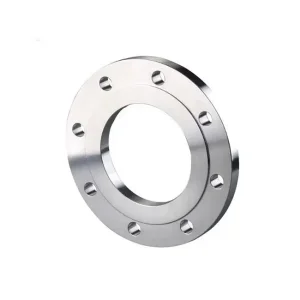
China Plain Flange Manufacturer
China Plain Flange Manufacturer | Quality Slip-On Flanges for Portugal
View Details & Spec
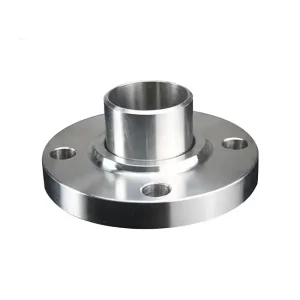
Discount Lap Joint Flanges
Discount Lap Joint Flanges for Industrial Use | Competitive Factory Pricing
View Details & Spec
Discount SO Flanges ANSI DIN
Discount SO Flanges - ANSI/DIN Standard - Reliable Export Solutions
View Details & Spec
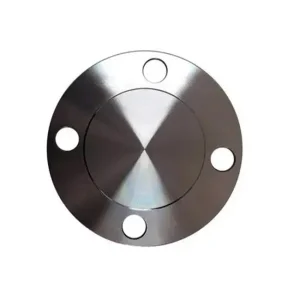
Best CNC Machined Blind Flanges ASTM A105
Best CNC-Machined Blind Flanges | ASTM A105 | Bulk Factory Discounts
View Details & Spec
China Factory for Plain Flanges
China Factory for Plain Flanges – High-Quality Slip On Flange Supplier
View Details & Spec
EN 1092-1 Type 34 Custom Ring Flanges
Best China EN 1092-1 Type 34 Custom Ring Flanges - Reliable OEM/ODM Factory
View Details & Spec
China Custom Weld Neck Flanges EN 1092-1
China Custom Weld Neck Flanges EN 1092-1 | High-Quality Manufacturing
View Details & Spec
China Custom Expansion Joint Flanges
China Custom Expansion Joint Flanges - Reliable Piping System Solutions
View Details & Spec
Technical Knowledge Base

Frequently Asked Questions (FAQ) for Reducer Flange Procurement

In-depth responses curated for procurement officers, piping engineers, and stockists in Portugal and Europe.

1. What is the difference between a Reducer Flange and a Standard Pipe Reducer welded to a flange?
A single reducer flange replaces a configuration that would otherwise require three separate components: a standard flange, a butt-weld concentric or eccentric pipe reducer, and a second standard flange. By combining the size transition directly inside a single forged flange body, you eliminate two circumferential butt welds, significantly compress installation length in tight spatial setups (e.g., naval vessels or offshore skid modules), and drastically reduce non-destructive examination (NDE) inspection costs.
2. How do I specify a Reducer Flange correctly according to ASME B16.5 standards?
When ordering per ASME B16.5, you must specify the flange by specifying the larger size first (which determines the outside diameter, thickness, and bolt circle), followed by the smaller bore size. For example: "Flange, Reducing, NPS 6 x NPS 3, Class 300, Weld Neck, Schedule 80, ASTM A105, RF Facing." If the bore is eccentric, this must be explicitly noted on the purchase order alongside the required pipe schedule of the smaller connecting pipe.
3. Which material grades are recommended for offshore hydrogen or sour gas applications in Portugal?
For hydrogen energy projects in Sines or sour service gas infrastructure, materials must comply with NACE MR0175 / ISO 15156. We recommend forged low-alloy steel ASTM A350 LF2 Class 2 (for low-temperature toughness), Dual-Certified Stainless Steel ASTM A182 F316/316L, or Duplex Stainless Steel ASTM A182 F51 (UNS S31803 / 1.4462). These grades provide superior resistance to sulfide stress cracking (SSC) and hydrogen induced cracking (HIC).
4. Can your factory supply European EN 10204 3.2 Third-Party Witness Inspection certificates?
Yes. While our standard export shipments include complete EN 10204 3.1 Mill Test Certificates issued directly by our ISO 9001 certified plant, we regularly coordinate third-party witness inspection for EN 10204 3.2 certification. We partner with internationally recognized agencies operating in China including TÜV Rheinland, TÜV SÜD, Bureau Veritas (BV), Lloyd's Register (LR), and DNV.
5. What are the typical lead times for custom-forged non-standard reducer flanges to Lisbon or Leixões?
For standard ANSI/EN stock sizes machined from pre-forged blanks, dispatch occurs within 7 to 15 days from order confirmation. For custom drawing-based non-standard reducer flanges requiring custom tooling or special heat treatment (e.g., solution annealing or quench & temper), manufacturing takes 20 to 30 days. Direct sea freight to Portuguese ports takes approximately 30 days, while urgent samples can be air-freighted via Lisbon Airport (LIS) within 5-7 days.
6. How do you prevent flange surface damage and corrosion during ocean transport?
All flange raised faces and gasket grooves are protected with plastic snap-on covers or heavy-duty wooden disc caps after receiving a coat of transparent rust-preventive oil, black rust-proof paint, or yellow lacquer. Flanges are securely strapped inside ISPM-15 compliant, fumigation-free plywood cases lined with waterproof plastic sheeting to withstand humidity variations during transit through maritime routes.

Partner with a Leading Reducer Flange Manufacturer

Whether you are designing a green hydrogen pipeline in Sines, upgrading a paper mill in Aveiro, or stocking industrial fittings in Porto, our engineering team is ready to deliver precision forged solutions certified to European standards.

Send Inquiry Now