High-precision forged flanges manufactured to ANSI, DIN, and ABNT standards for immediate export dispatch to Brazilian ports.
Navigating the technical requirements of Latin America's largest industrial economy.
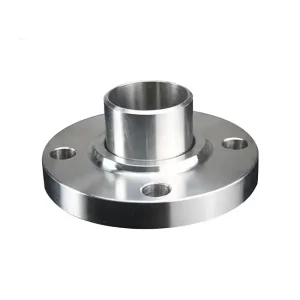
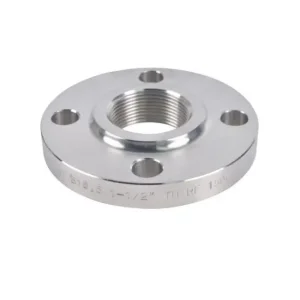
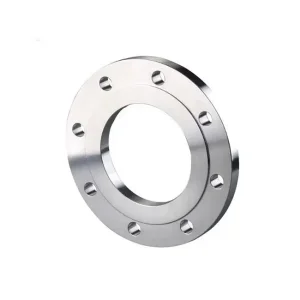
As Brazil accelerates its infrastructure expansion across the Santos Basin Pre-Salt oilfields, Vale mining corridor projects in Minas Gerais and Pará, and the massive sugarcane-based ethanol biorefineries throughout São Paulo state, the structural integrity of fluid transport networks has taken center stage. Plain flanges (frequently designated as plate flanges, flat flanges, or slip-on plate flanges under ASME B16.5, EN 1092-1 Type 01, and ABNT NBR specifications) constitute the primary structural joint component in medium-to-low pressure fluid processing, utility loops, water intake lines, and chemical processing facilities.
Offshore processing demands plain flanges capable of resisting severe salt-fog corrosion. We supply carbon steel (ASTM A105) and low-temperature alloy (A350 LF2) flanges with specialized epoxy and hot-dip galvanized finishes designed for marine utility lines.
In heavy iron-ore slurry transportation across Minas Gerais, piping lines face high mechanical vibration and abrasive fluid flow. Our heavy-wall plain plate flanges provide enhanced rigidity and reduced thermal distortion.
Brazil's sugar-energy sector operates extensive organic acid and steam evaporation circuits. Stainless steel (ASTM A240 304L/316L) plain flanges prevent fluid contamination while resisting acidic corrosion during continuous crushing cycles.
Forged grain structure integrity vs. basic plate cutting for severe pressure service.
A frequent error made by cost-sensitive procurement teams is purchasing flame-cut or laser-cut plate flanges made from low-grade structural steel plate (e.g., A36). While adequate for non-critical structural drainage, flame-cut plate material suffers from center-line segregation, directional anisotropy, and micro-cracking along the thermal cut edge.
Our factory utilizes closed-die forging and ring-rolling technology starting from solid round steel billets (ASTM A105, Q235B, SS304/316). The forging process realigns the internal metal grain flow along the circumferential geometry of the flange ring. This produces superior hoop stress resilience, higher impact toughness (Charpy V-notch tested down to -46°C for LF2), and absolute internal gas tightness.
| Standard & Type | Nominal Size (DN / NPS) | Pressure Rating | Material Grades Available | Facing Types |
|---|---|---|---|---|
| ASME B16.5 Slip-On / Flat Face | ½" to 24" (DN15 - DN600) | Class 150 to Class 1500 | ASTM A105, A350 LF2, A182 F304/L, F316/L | RF (Raised Face), FF (Flat Face) |
| EN 1092-1 Type 01 (Plate Flange) | DN10 to DN2000 | PN6 to PN100 | P245GH, P250GH, S235JR, 1.4307, 1.4404 | Type A (Flat Face), Type B1 (Machined) |
| ABNT NBR 7675 / NBR 15827 | DN50 to DN1200 | PN10, PN16, PN25 | Ductile Iron, Carbon Steel A105, Stainless 316 | FF (Flat Face for Gasket Uniformity) |
| ASME B16.47 Series A / B | 26" to 60" (DN650 - DN1500) | Class 75 to Class 900 | ASTM A105, A350 LF2, High-Yield A694 F52-F70 | RF, RTJ (Ring Type Joint) |
All plain flanges manufactured for export to Brazil undergo dual-axis CNC lathe turning. Flange face finish options are matched to the specific gasket profile specified by your EPC contractor:
Mitigating customs risk and meeting Brazilian national quality standards.
Brazil's NR-13 (Norma Regulamentadora) mandates strict inspection and traceability protocols for pressure vessels and industrial piping boilers. Our plain flanges ship with full chemical heat number stamping, mechanical destruction test logs, and non-destructive examination (NDE/UT) reports compatible with NR-13 audit dossiers.
Every shipment is accompanied by a certified EN 10204 3.1 MTC directly from our ISO 9001 quality department. For major municipal water projects or Petrobras third-party witness requirements, we coordinate independent inspections through SGS, TÜV Rheinland, or Bureau Veritas (EN 10204 3.2).
To avoid delays at Brazilian customs (Receita Federal), products are classified accurately under NCM/HS Code 7307.91.00 (Steel Flanges). Flanges are coated with anti-rust varnish, fitted with plastic flange protectors, and packed into ISPM-15 compliant fumigated plywood crates.
Why global engineering leaders partner with our Shanxi manufacturing operations.
Located in Dingxiang County, Shanxi Province—recognized globally as the “Hometown of Forging in China”—our industrial facility benefits from an end-to-end industrial ecosystem. From local access to high-purity raw steel billets to fully integrated heat-treatment power systems, our vertical integration delivers distinct commercial advantages to Brazilian buyers:
Tailored commercial models designed for supply chain resilience.
EPC contractors managing multi-billion dollar projects in Brazil cannot afford pipeline installation downtime. We offer guaranteed production slot reservation, milestone video inspection updates, and strict adherence to agreed FOB/CIF shipping dates.
Whether you need a full 20ft container of standard A105 EN 1092-1 PN16 plain flanges or a low-MOQ batch of non-standard high-alloy plain flanges for maintenance turnarounds, our flexible production scheduling accommodates your exact scope.
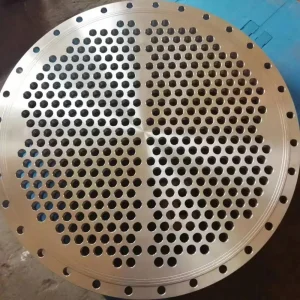
Beyond off-the-shelf ANSI and DIN dimensions, our technical office works directly from customer CAD/PDF blueprints to engineer custom plain flanges, extended hub ring plates, and specialized tube sheets.
Leading the next generation of sustainable and digitalized flange manufacturing.
In response to global Scope 3 emission mandates and sustainability initiatives across Brazil's energy sector, our factory is integrating clean electric-induction heating furnaces and sourcing green-certified raw steel billets to minimize carbon intensity per ton forged.
Replacing manual flaw detection, our automated NDT ultrasonic scanning systems utilize machine-learning algorithms to verify internal billet density, automatically identifying micro-porosity and inclusions before final precision turning.
Engineered reliability where operational failure is not an option.
Location: Campos & Santos Basins (Offshore Rio de Janeiro)
Application: Compressed air, sea water cooling, and low-pressure drainage loops on offloading vessels.
Solution: ASTM A105 / A350 LF2 plain flanges with hot-dip galvanizing (HDG) to prevent galvanic marine atmospheric corrosion.
Location: Mariana / Brumadinho Mining Corridors (Minas Gerais)
Application: Dewatering and tailings discharge pipelines operating under continuous hydraulic pulsing.
Solution: Heavy-duty ASME B16.5 Class 300 Flat Face plain flanges forged with high yield strength to withstand line shock.
Location: Ribeirão Preto & Piracicaba Hubs (São Paulo)
Application: Fermentation vapor lines and organic wash evaporator juice loops.
Solution: Stainless Steel ASTM A240 316L plain plate flanges providing high pitting resistance against organic acids.
Location: Greater São Paulo & Rio de Janeiro Systems (Sabesp / CEDAE)
Application: Large-diameter raw water intake and treated water distribution trunklines.
Solution: Large-diameter EN 1092-1 Type 01 PN10/PN16 plain flanges up to DN2000 with food-grade epoxy protective coating.
Explore our broader product portfolio available for consolidated shipment to Brazil.
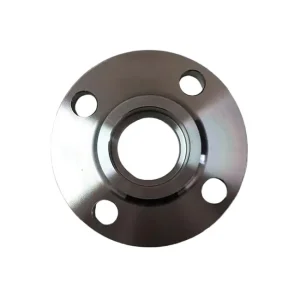
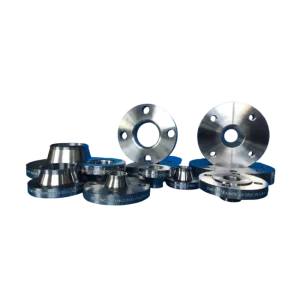
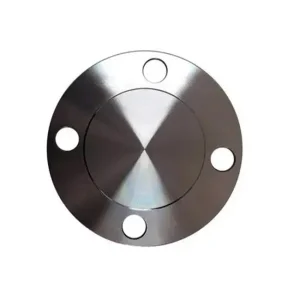
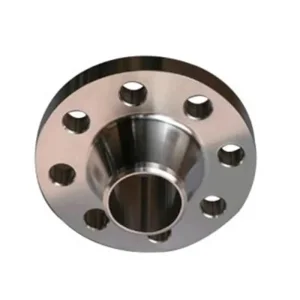
Clear, expert answers covering standards, documentation, customs, and technical specifications.
While often used interchangeably in commercial requests, a Plain Flange (or Plate Flange / Flat Flange) typically refers to a ring cut or forged with a flat face and internal bore designed to slip over a pipe end without an elevated hub. A standard Slip-On Flange (ASME B16.5) includes a tapered hub that provides structural reinforcement. Plain flanges under EN 1092-1 Type 01 are flat plate rings ideal for lower-pressure systems (PN6–PN40), offering reduced weight and lower fabrication costs.
Yes. We regularly forge and machine flanges to ABNT NBR 7675, NBR 15827, as well as international standard equivalents such as ASME B16.5, ASME B16.47, EN 1092-1, and DIN. Our CNC programming can adapt bolt-circle diameters (PCD), bolt hole counts, and flange thickness precisely to your local engineering specifications.
Every lot shipped to Brazil is accompanied by a certified EN 10204 3.1 Mill Test Certificate detailing chemical ladle analysis, mechanical tension/yield testing, hardness values, and heat treatment heat numbers. Non-destructive examination reports (UT flaw detection, Magnetic Particle NDT) and EN 10204 3.2 third-party inspection certificates (SGS, BV, TÜV) are available upon request for NR-13 compliance files.
Maritime transit across tropical climate zones to ports like Santos or Paranaguá presents severe humidity exposure. We apply high-performance protective anti-rust coatings including black rust-inhibitive paint, transparent yellow varnish, or hot-dip galvanizing. Machined flange sealing faces are protected with plastic end caps and wrapped in moisture-barrier VCI foil inside ISPM-15 compliant wooden cases.
Manufacturing completion for standard carbon steel plain flanges takes approximately 15–25 days depending on batch quantity. Direct ocean transit from main Chinese ports (Qingdao/Tianjin/Shanghai) to Port of Santos or Paranaguá generally takes 30–38 days. Express air-freight options are available for urgent refinery maintenance emergency parts.
Steel pipe flanges are classified under NCM (Nomenclatura Comum do Mercosul) code 7307.91.00. We assist Brazilian importers by issuing clear commercial invoices, packing lists with net/gross weights, and Certificate of Origin documents to ensure smooth customs clearance through Receita Federal.
Get factory-direct pricing, certified EN 10204 3.1 quality assurance, and dedicated engineering support tailored for Latin American procurement demands.