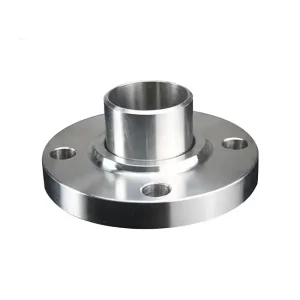
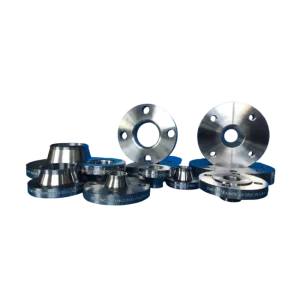
Direct factory supply of precision-forged lap joint and specialized piping flanges engineered to SS-EN 1092-1 and ASME B16.5 standards.
Sweden represents one of Europe's most technologically advanced industrial landscapes. Driven by stringent environmental legislation, ambitious decarbonization timelines (such as Sweden's goal of net-zero greenhouse gas emissions by 2045), and a highly developed process manufacturing framework, the nation's demand for high-integrity piping systems has shifted dramatically toward long-life, low-maintenance components.
From the major industrial corridors around Gothenburg, Stockholm, Malmö, Norrköping, and Luleå, Swedish EPCs (Engineering, Procurement, and Construction companies), valve manufacturers, and process plant operators demand piping fittings that balance structural flexibility, superior corrosion resistance, and total cost of ownership (TCO). In this context, Lap Joint Flanges (loose plate flanges assembled over a stub end) have emerged as a critical architectural choice across multiple key Swedish sectors:
Sweden’s massive forest industry requires extensive liquid handling systems for bleaching agents, black liquor, and steam. Stainless steel (316L, 254 SMO) stub ends paired with carbon steel backing lap joint flanges optimize material expenditure by up to 45% compared to solid stainless flanges.
Projects like HYBRIT (Hydrogen Breakthrough Ironmaking Technology) in northern Sweden require high-purity gas pipelines capable of handling thermal expansion and frequent maintenance disassembly. Lap joint flanges allow rapid bolt-hole alignment without applying torsional stress to thin-walled alloy piping.
Naval shipyards in Karlskrona and offshore wind support hubs require piping joints resistant to marine atmospheric corrosion. Epoxy-coated carbon steel lap joint flanges surrounding high-alloy stub ends deliver structural resilience under dynamic vibration loads.
A Lap Joint Flange assembly consists of two distinct physical components: a Lap Joint Stub End (welded directly to the process pipe) and a Loose Backing Flange (which slides freely over the pipe barrel prior to welding the stub end). This two-piece design creates several key structural advantages under European operational guidelines (SS-EN 13480):
In standard fixed-flange configurations (such as ASME B16.5 Weld Neck or Slip-On flanges), precise rotational alignment of bolt holes across long pipe spools is extremely difficult. Minor rotational errors force installers to apply mechanical torque to force bolt alignment, introducing permanent residual shear stresses into the pipe weld seam. Lap joint flanges rotate 360 degrees freely around the stub end, guaranteeing effortless bolt hole alignment and complete elimination of mechanical strain on process piping.
In corrosive environments common to Swedish chemical processing (e.g., handling chlorine compounds or acidic pulps), process-wetted components must be manufactured from expensive corrosion-resistant alloys (CRAs) such as ASTM A182 F316L, 254 SMO (UNS S31254), or Duplex 2205 (UNS S31803). Because the backing lap joint flange never comes into contact with the fluid medium, it can be manufactured from carbon steel (e.g., ASTM A105 or EN 1092-1 P250GH), delivering massive capital savings without compromising process safety.
| Flange Architecture Type | Fluid Contact Material | Backing Flange Material | Bolt Alignment Flexibility | Maintenance Dismantle Speed | Relative Cost Index (High CRA Line) |
|---|---|---|---|---|---|
| Integral Weld Neck (WN) | 254 SMO Stainless | 254 SMO Stainless | Fixed (Zero Rotation) | Moderate | 100% (Baseline High Cost) |
| Integral Slip-On (SO) | 316L Stainless | 316L Stainless | Fixed (Zero Rotation) | Slow | 82% |
| Lap Joint & Stub End (LJ) | 254 SMO / 316L Stub End | Forged Carbon Steel A105 | 360° Free Rotation | Ultra-Fast | 55% (45% Cost Reduction) |
To successfully supply flange products into the Swedish market, a manufacturer must maintain rigorous cross-standard production capabilities. Swedish projects frequently integrate American petrochemical engineering specs (ASME/ANSI) alongside European harmonized standards (EN/DIN).
The standard European flange spec in Sweden. Our plant manufactures Type 02 Loose Plate Flanges designed to mate with Type 32 Weld-on Collars or Type 33 Lapped Pipe Ends across PN6, PN10, PN16, PN25, and PN40 pressure ratings.
Widely utilized in Swedish refineries and global export projects. We manufacture Class 150, Class 300, Class 600, and Class 900 Lap Joint Flanges alongside ASME B16.9 and MSS SP-43 Stub Ends (Pattern A, B, and C).
Essential for pressure equipment installed within the EU. All YUXIN forged lap joint flanges destined for Sweden carry full compliance under Pressure Equipment Directive (PED 2014/68/EU) Annex I Section 4.3 with AD 2000-W0 certification.
Quality assurance auditors in Sweden require complete document packages before accepting material on job sites. Every batch of YUXIN lap joint flanges is delivered with an authentic EN 10204 3.1 Mill Test Certificate (MTC) issued directly from our Shanxi forging plant, documenting:
Get direct technical support from our factory forging engineers. We provide custom CAD/DWG verification, material substitution analysis, and competitive direct-factory pricing within 24 hours.
Send Inquiry Now / Request Technical QuoteSweden leads the world in municipal district heating networks (Fjärrvärme). Heat distribution networks subject piping to frequent cyclic thermal expansion. Our forged carbon steel lap joint flanges (A105 / P250GH) paired with heavy-wall stub ends absorb micro-movements without risking flange seal blowout or fatigue failure at weld junctions.
The nuclear energy sector demands absolute reliability and strict third-party inspection (EN 10204 3.2 witness by DNV, TÜV, or Lloyd's Register). YUXIN provides specialized high-purity forged alloy flanges with controlled cobalt content and 100% volumetric ultrasonic examination to guarantee defect-free internal structure.
With Sweden’s emergence as a European battery production powerhouse (e.g., Northvolt installations), piping loops transporting electrolyte solutions and harsh chemical precursors require ultra-pure 316L and Hastelloy C276 lap joint stub ends. Our precision CNC machining ensures zero interior burrs and ultra-smooth fluid flow paths.
Procuring forged piping components from overseas requires robust supply chain controls to ensure schedule adherence and prevent freight damage during ocean and road transport to Sweden.
To combat marine humidity during ocean transit across the Baltic and North Seas, flanges are treated with transparent anti-rust oil, yellow varnish, or hot-dip galvanizing per customer request.
Shipped in export-compliant solid wooden cases reinforced with steel strapping. Each piece is individually cap-protected to prevent bevel damage and sealing face scratches.
Includes Commercial Invoice, Detailed Packing List, Certificate of Origin (Form E/EUR.1), Bill of Lading, and heat-matched EN 10204 3.1 MTC documentation for fast Swedish customs release.
As industrial requirements evolve toward higher pressures, lower carbon footprints, and smart monitoring, YUXIN's R&D engineering team is actively advancing our manufacturing capabilities:
While both perform the same function (sliding loosely over a welded stub end/collar to allow 360-degree rotational freedom), EN 1092-1 Type 02 is metric-based (designed for use with Type 32 collars or Type 33 lapped pipe ends) following PN pressure ratings (PN6-PN40). ASME B16.5 Lap Joint Flanges follow imperial dimensions and Class ratings (Class 150-Class 2500). YUXIN manufactures both types with dual-standard certification where applicable.
In pulp and paper processing, aggressive chemical bleaching media requires stainless steel or high-alloy piping (316L, 254 SMO). Using a solid stainless steel Weld Neck flange is extremely expensive. A Lap Joint Flange assembly allows you to use an alloy stub end (the only part contacting the fluid) paired with a much cheaper forged carbon steel backing flange, lowering component costs by up to 45% while enabling easy bolt-hole alignment during line maintenance.
Yes. While our standard delivery includes EN 10204 3.1 Mill Test Certificates directly from our audited quality laboratory, we routinely accommodate third-party inspection agency visits (such as DNV, TÜV Rheinland, SGS, or Lloyd's Register) at our Shanxi facility to issue full EN 10204 3.2 certificates upon request.
For cold-climate applications in region Luleå, Kiruna, and northern Scandinavia, we utilize low-temperature carbon steel (such as ASTM A350 LF2 Class 1/2) or normalized fine-grain steel (EN 1092-1 P280GH/P355NH). Every lot undergoes Charpy V-Notch impact testing at -46°C or -50°C to verify high energy absorption and brittle fracture immunity.
Manufacturing lead time for standard or custom forged lap joint flanges ranges from 15 to 30 days depending on order volume and material grade. Ocean transit time from main Chinese ports (Tianjin/Qingdao/Shanghai) to the Port of Gothenburg or Stockholm typically takes 30 to 38 days. Express air freight is available for urgent maintenance shutdowns.
Yes. Our in-house engineering team utilizes advanced CAD/CAM modeling and CNC machining centers to produce non-standard flanges, custom stub ends, heavy-wall collars, and forged rings up to 3,000 mm outer diameter. Simply send your DWG, STEP, or PDF drawings to our technical export desk.
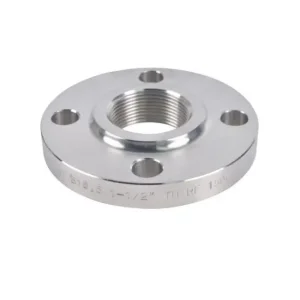
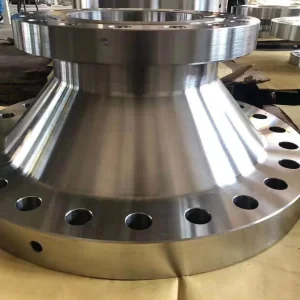
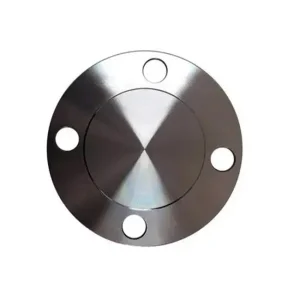
Complementary precision flanges engineered in-house to support comprehensive Swedish piping projects.
Partner directly with Shanxi Yuxin Casting & Forging Co., Ltd. — 33 years of certified manufacturing excellence, 10,000 tons annual capacity, full EN 10204 3.1/3.2 traceability, and dedicated technical support for European engineering projects.