Precision-machined forged flanges customized for thermal movement absorption, high-salinity corrosion resistance, and rigid mechanical coupling across Sri Lankan industrial zones.
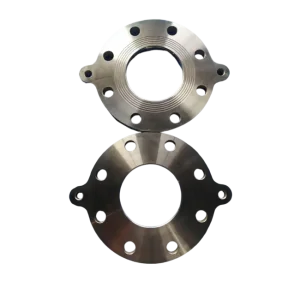
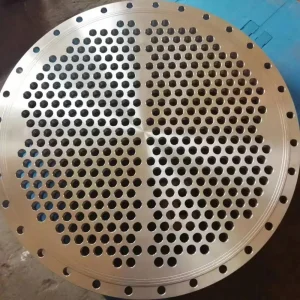
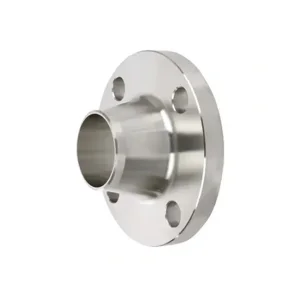
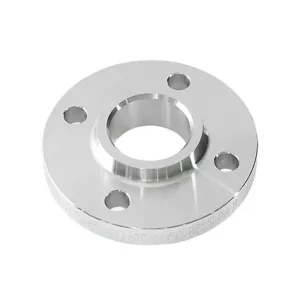
Sri Lanka occupies a pivotal geopolitical and maritime position in the Indian Ocean, serving as a primary transshipment node connecting East-West trade routes. As the nation embarks on critical industrial modernization, power sector expansion, maritime port upgrades, and regional water supply management under the National Water Supply and Drainage Board (NWSDB), the reliability of industrial piping infrastructure has emerged as an imperative engineering focal point. Thermal expansion, structural vibration, hydraulic surge, and coastal atmospheric salinity pose significant challenges to piping integrity across Sri Lanka's key economic hubs—including the Colombo Port City complex, the Kerawalapitiya Energy Center, the Hambantota Logistics Hub, and the Trincomalee Industrial & Oil Tank Zone.
Expansion joint flanges act as the critical flexible interface within rigid pressure piping systems. Designed to accommodate thermal elongation, absorb angular misalignment, attenuate mechanical vibration from heavy-duty pumps, and isolate thermal stress in heat transfer equipment, these components prevent cataclysmic joint failures, bolt shear, and flange face leakage. For procurement directors, EPC contractors, and mechanical consultants operating within Sri Lanka, sourcing high-integrity expansion joint flanges certified to international standards (ASME B16.5, ASME B16.47, EN 1092-1, DIN, JIS) with full metallurgical traceability is a mandatory risk-mitigation strategy.
Information Gain Insight: Tropical marine operating conditions in coastal Sri Lanka accelerate pitting corrosion and stress corrosion cracking (SCC) at flanged connections. Standard carbon steel flanges operating in raw sea-water cooling loops or ambient marine air often fail prematurely unless manufactured with precise chemical composition, controlled heat treatment (normalizing/quenching), and specified anti-corrosion barrier coatings such as 3LPE, Epoxy, or Fluoropolymer cladding.
As a global forging powerhouse located in Shanxi, China—the world-renowned "Hometown of Forging"—Shanxi Yuxin Casting & Forging Co., Ltd. (YUXIN) brings over 33 years of specialized manufacturing experience directly to the Sri Lanka market. Operating a fully integrated 10,000-ton annual capacity manufacturing facility certified under ISO 9001:2015, PED 2014/68/EU, and AD 2000-Merkblatt W0, YUXIN provides end-to-end engineered expansion joint flange solutions tailored to the environmental and mechanical realities of Sri Lankan industrial projects.
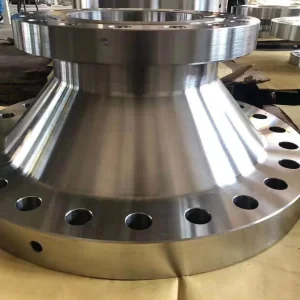
Expansion joint flanges serve as the structural anchor points for flexible bellows (metallic, rubber, or PTFE/Teflon). Unlike rigid pipe flanges designed purely for static load resistance, expansion joint flanges must manage complex dynamic load vectors, including axial tension/compression, lateral offset, angular deflection, and internal pressure thrust forces.
Calculated hub thickness and bolt-hole circle pitch dimensions absorb thermal expansion delta (ΔL = α · L · ΔT) without inducing fatigue failure at flange-to-bellows weld roots.
Forged steel flanges designed per ASME Section VIII Div 1 rules prevent structural deformation under combined pressure loads up to Class 2500 / PN400.
Attenuates high-frequency harmonics generated by multi-stage centrifugal pumps in power station condensate loops and municipal pumping stations.
| Material Grade | Standard Reference | Tensile Strength (MPa) | Yield Strength (MPa) | Primary Sri Lanka Application |
|---|---|---|---|---|
| ASTM A105 / Q235B | ASME B16.5 / EN 1092-1 | ≥ 485 | ≥ 250 | General municipal water lines, low-pressure steam, HVAC system piping. |
| ASTM A350 LF2 Class 1 | ASME B16.5 / Low Temp | 485 – 655 | ≥ 250 | Refrigeration plants, LPG/LNG handling terminals, sub-zero fluids. |
| ASTM A182 F304 / F304L | ASME B16.5 / Stainless | ≥ 485 / ≥ 480 | ≥ 205 / ≥ 175 | Food & beverage processing, pharmaceutical plants, urban water purification. |
| ASTM A182 F316 / F316L | ASME B16.5 / Marine Grade | ≥ 485 / ≥ 485 | ≥ 205 / ≥ 170 | Coastal thermal power plants, seawater reverse osmosis (SWRO) desalination. |
| Duplex UNS S31803 (F51) | ASTM A182 / High Alloy | ≥ 620 | ≥ 450 | High-salinity offshore platforms, chemical process loops with high Cl- concentration. |
Procuring heavy industrial forgings for project execution in Sri Lanka requires a refined balance of price competitiveness, international compliance, fast lead times, and seamless maritime logistics. For EPC procurement teams working on major Sri Lankan tenders, partnering directly with a qualified Chinese flange manufacturer eliminates trading intermediaries, reduces procurement costs by 18–30%, and guarantees single-source mill quality control.
Direct maritime container shipping from Qingdao or Tianjin port to the Port of Colombo offers a fast transit window of 12 to 16 days. YUXIN maintains robust logistics protocols specifically tailored for export to South Asian ports, including:
The industrial piping sector is experiencing rapid technological evolution driven by digital integration, predictive maintenance demand, and green transition initiatives. In Sri Lanka, as thermal power plants explore co-firing biomass and regional green hydrogen transport grids emerge, flange design standards are advancing rapidly.
Embedded piezo-electric strain sensors and fiber-optic thermal probes within expansion joint flanges to monitor bolt torque retention and micro-yield elongation in real time.
Transitioning from traditional bitumen to self-healing ceramic fluoropolymer coatings that eliminate marine bio-fouling and chemical degradation in warm tropical coastal waters.
Ultra-low hydrogen embrittlement forging alloys developed specifically for high-pressure gas transport pipelines and industrial decarbonization projects.
Forging processes driven by green electric heating and closed-loop scrap recycling, reducing Scope 1 and Scope 2 embedded carbon footprint by 65% for international projects.
Compliance with Sri Lankan regulatory frameworks—including Board of Investment (BOI) industrial standards, Sri Lanka Standards Institution (SLSI) requirements, and NWSDB civil works guidelines—is vital for hassle-free project commissioning. Mechanical engineers must adhere to strict installation protocols when integrating expansion joint flanges into existing or new pipe runs:
Flange bolt holes must align within ±1.5 mm, and face parallelism must be maintained within 0.5% of the outside diameter prior to bolt tightening to prevent pre-loading stress on the expansion bellows.
Utilize calibrated hydraulic torque wrenches. Apply bolt load in a 4-stage star pattern (30%, 60%, 100%, and final pass at 100%) per ASME PCC-1 guidelines to ensure uniform gasket seating.
Main pipe anchors must be placed adjacent to expansion joint flanges to absorb pressure thrust forces, while directional pipe guides maintain axial alignment and prevent squirming.
Addressing key technical specifications, standards compliance, and shipping queries for expansion joint flanges serving the Sri Lanka market.
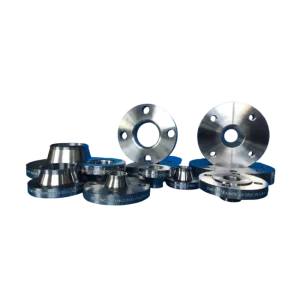
Explore our full range of certified industrial forged components engineered for seamless integration into high-demand piping networks.
Need engineered expansion joint flanges, custom tube sheets, or standard ASME/EN flanges for your Sri Lankan infrastructure projects? Our senior technical engineering team is ready to review your project drawings and provide an itemized quote within 24 hours.
Send Inquiry Now →