Precision-machined forged flanges designed to meet CSA B51, ASME B16.5, and provincial Canadian Registration Number (CRN) requirements.
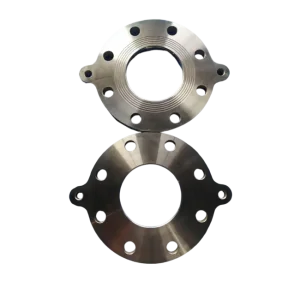
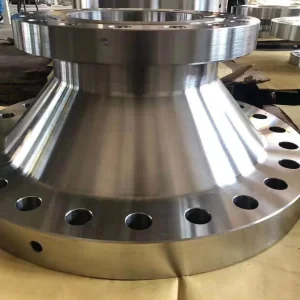
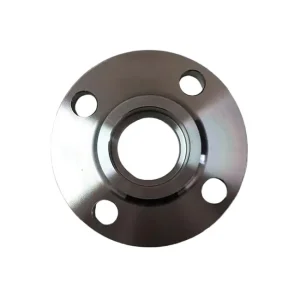
Canada’s vast industrial geography—spanning the oil sands of Alberta, natural gas liquefaction plants in British Columbia, hydroelectric stations in Quebec, and Atlantic offshore rigs—presents unique mechanical challenges. Extreme ambient temperature shifts ranging from -50°C in winter to +35°C in summer demand expansion joint flanges capable of absorbing dramatic axial, lateral, and angular piping displacements without stress failure.
Shanxi Yuxin Casting & Forging Co., Ltd. (established in 1992) supplies specialized forged expansion joint flanges engineered specifically to withstand Canada's tough operating conditions. Operating from Dingxiang, China’s renowned forging hub, our 10,000-ton annual capacity facility provides fully certified forged flanges manufactured to ASME B16.5, ASME B16.47, AWWA, and EN standards with complete Charpy V-Notch impact testing validation.
Analyzing intent data across Canadian engineering, procurement, and construction (EPC) contractors reveals a growing demand for high-integrity piping components that comply with stringent provincial safety codes.
In Steam-Assisted Gravity Drainage (SAGD) and oil sands processing in Fort McMurray and Edmonton, high-pressure steam injection lines experience extreme thermal cycles up to 350°C. Custom expansion joint flanges prevent fatigue cracking at vessel nozzles and pump manifolds.
Projects around Kitimat and Prince Rupert require cryogenic expansion joints operating down to -162°C. Flange metallurgy must remain ductile to eliminate brittle fracture risks in marine loading arms and transfer headers.
Hydro-Québec penstocks and municipal district energy networks in Toronto, Vancouver, and Montreal rely on heavy-diameter expansion joint flanges (up to DN3000) to isolate water hammer and earth settlement strain.
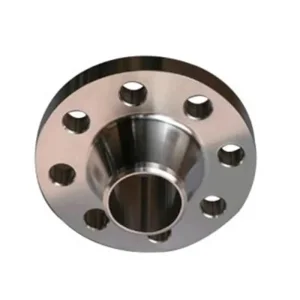
Expansion joint flanges serve as the critical mounting interface between flexible bellows (metallic, rubber, or PTFE) and rigid steel piping manifolds. Ensuring structural stability under combined bending, shear, and pressure loads requires strict adherence to forging discipline.
Standard carbon steel (ASTM A105) often becomes brittle below -29°C (-20°F). For Canadian outdoor installations, Yuxin supplies specialized normalized materials:
Expansion joint flanges must provide flawless sealing alignment to protect the inner bellows element from twisting or over-compression during installation:
| Flange Standard | Pressure Rating | Nominal Size Range | Recommended Temperature Range | Primary Canadian Application |
|---|---|---|---|---|
| ASME B16.5 | Class 150 – 2500 | ½" to 24" (DN15 – DN600) | -50°C to +538°C (A350 LF2 / A182 F316) | Refineries, SAGD steam loops, Process Piping |
| ASME B16.47 Ser. A/B | Class 75 – 900 | 26" to 60" (DN650 – DN1500) | -46°C to +400°C | Cross-country gas pipelines, Large Vessel Tie-ins |
| AWWA C207 | Class B, D, E, F | 4" to 144" (DN100 – DN3600) | -30°C to +100°C | Municipal Water Transmission, Hydroelectric Penstocks |
| EN 1092-1 Type 01/11 | PN6 to PN400 | DN15 to DN3000 | -50°C to +450°C | European Equipment Integration & Power Plants |
Pressure-retaining components installed in Canada must strictly adhere to the CSA B51 Boiler, Pressure Vessel, and Pressure Piping Code. Shanxi Yuxin Casting & Forging provides full documentation support to streamline Canadian Registration Number (CRN) approvals across all provinces.
Our engineering team works alongside Canadian importers and EPCs to satisfy document filings required by Safety Authorities such as ABSA (Alberta), TSSA (Ontario), Technical Safety BC, and Régie du bâtiment du Québec (RBQ).
Every flange batch is delivered with Mill Test Certificates (MTC) proving heat number identity, chemical ladle analysis, mechanical tension tests, hardness values, and non-destructive examination (NDE/NDT) reports.
We welcome third-party inspection (TPI) agencies—including Lloyd's Register, TÜV, Bureau Veritas, and SGS—for dimensional verification, ultrasonic testing (UT), and hydro-testing prior to ocean shipment.
Our engineers can review your drawings, material specifications, and pressure classes within 24 hours.
Discover how Yuxin’s expansion joint flanges solve real-world mechanical stress, vibration, and expansion challenges in demanding Canadian job sites.
Challenge: Heavy thermal movement caused severe strain on pump casings in a steam-assisted gravity drainage facility operating at 10 MPa steam pressures.
Solution: Yuxin forged and machined DN400 Class 600 ASTM A350 LF2 expansion joint flanges mated to multi-ply Inconel bellows. The forged hubs absorbed dynamic cyclic loading, reducing nozzle stress by over 78%.
Challenge: Liquefied natural gas piping exposed to marine air and extreme cold contraction required flange joints that eliminate low-temperature embrittlement.
Solution: Custom ASME B16.47 Series A 36" Class 300 ASTM A182 F316L flanges forged with deep hub tapers, 100% radiographically and ultrasonically inspected to guarantee zero porosity in sub-zero operation.
Situated in Zhuangli Enclave Industrial Zone, Dingxiang County, Shanxi Province, Yuxin controls every step of the forging process in-house—from raw billet heating to precision CNC finishing.
Our advanced hydraulic forging presses and ring-rolling mills shape dense, uniform grain structures up to Ø3000 mm, eliminating internal voids and improving mechanical fatigue resistance.
Computerized normalizing, quenching, and tempering furnaces guarantee precise tensile strength, yield points, and impact toughness tailored to severe Arctic climate specs.
In-house laboratories conduct Ultrasonic (UT), Magnetic Particle (MT), Liquid Penetrant (PT), Mechanical Tensile, Charpy V-Notch Impact, and Hardness testing under ISO 9001 and PED 2014/68/EU oversight.
As Canada accelerates its energy transition towards hydrogen blending, clean power, and carbon capture, utilization, and storage (CCUS), Yuxin is at the forefront of advanced flange technology.
Hydrogen gas molecules, being extremely small, increase the risk of embrittlement and micro-leakage at flanged joints. Yuxin is developing fine-grained micro-alloyed forged steel with optimized face finish tolerances to achieve helium leak rates below 1 x 10^-8 mbar·L/s for Canadian hydrogen distribution projects.
Utilizing Finite Element Analysis (FEA) software, our design engineers simulate thermal displacement and internal pressure distributions before forging begins. This eliminates stress concentrations at the expansion flange neck and extends bellows service life.
Explore our broader selection of forged pipe flanges, blind flanges, slip-on flanges, and custom components manufactured for export to Canada.
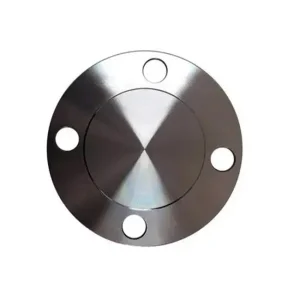
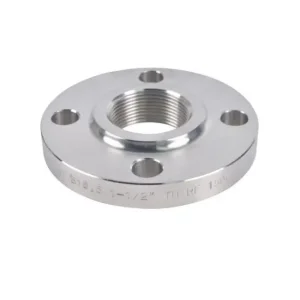
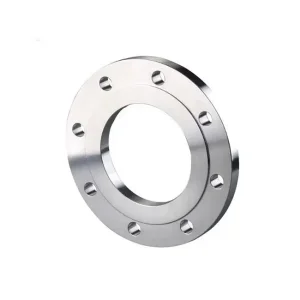
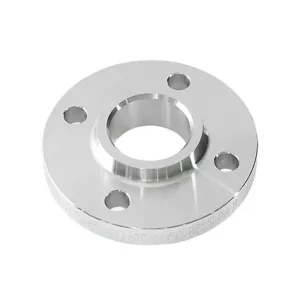
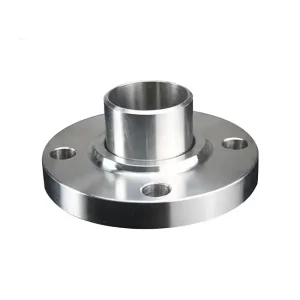
Clear, expert technical answers addressing compliance, delivery logistics, and material selection for Canadian expansion flange projects.
We forge our low-temperature flanges primarily using ASTM A350 LF2 Class 1/2 or A182 F316 steel. Every heat undergoes normalized heat treatment and mandatory Charpy V-Notch impact testing at -46°C (-50°F) or -196°C for cryogenic service. Mill test certificates include verified absorbed energy values (Joules) exceeding CSA B51 and ASME B31.3 requirements.
Yes. We provide complete documentation packages needed for CRN registration across all Canadian provinces (ABSA in Alberta, TSSA in Ontario, Technical Safety BC, etc.). This includes EN 10204 3.1 material test reports, dimensional inspection sheets, mechanical testing records, and non-destructive examination (NDE) certificates.
We forge to ASME B16.5 (½" to 24"), ASME B16.47 Series A & B (26" to 60"), AWWA C207 (up to 144"), and EN 1092-1 / DIN standards. Custom non-standard sizes, specialized bolt hole patterns, and custom expansion joint retaining rings up to 3000 mm diameter are manufactured according to client engineering drawings.
Flange sealing faces are precision CNC machined to smooth (125–250 µin) or stock serrated finishes per ASME B16.5. For ocean transit and outdoor storage in humid or freezing conditions, flanges are coated with rust-preventive black paint, yellow varnish, transparent anti-rust oil, or heavy-duty thermal spray zinc/epoxy coatings with plastic end caps.
Standard forged blanks ship in 10 to 15 days. Custom forged orders require 20 to 35 days depending on material grade and testing scope. Ocean freight to West Coast ports (Port of Vancouver, Prince Rupert) typically takes 16–22 days, while East Coast ports (Montreal, Halifax) take 30–38 days.
Yes, we supply carbon and alloy flanges compliant with NACE MR0175 / ISO 15156 for sour service environments. We also offer internal bore and sealing face weld overlay cladding using corrosion-resistant Inconel 625 (UNS N06625) or Hastelloy C276.
Over 33 years of forging mastery. Direct factory prices, full material traceability, and dedicated engineering support for your projects in Canada.
Send Inquiry Now