Precision-forged steel joint assemblies engineered to absorb thermal expansion, mechanical vibration, and structural deflection in harsh Northern European operating conditions.
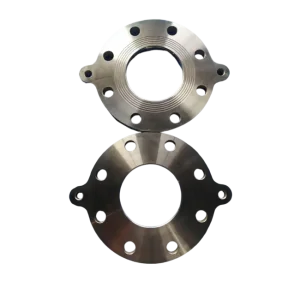
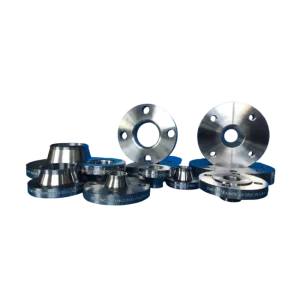
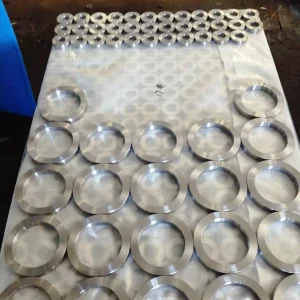
Finland represents one of Northern Europe’s most technologically advanced and capital-intensive industrial economies. Characterized by world-leading forestry and bioprocess industries, extensive district heating networks operating in extreme sub-zero climates, major naval shipbuilding yards along the Baltic coast, and a rapidly expanding green hydrogen and biofuels corridor, Finland demands pipeline components built to rigorous technical benchmarks.
Among essential piping hardware, expansion joint flanges serve a critical mechanical role. Modern industrial pipelines do not exist in static environments; they undergo severe thermal elongation, structural subsidence, high-amplitude equipment vibration, and fluid hammer effect. In Finland, where ambient winter temperatures regularly drop below −40°C while internal process steam or thermal fluids exceed +450°C, the resultant temperature gradient (ΔT > 490°C) imposes extreme cyclic mechanical stress on flanged connections.
Over 15,000 km of underground municipal heating pipelines span cities like Helsinki, Tampere, and Espoo. Flanges must withstand decades of continuous thermal cycling without bolt relaxation or gasket blowout.
Facilities operated by Stora Enso, UPM, and Metsä Group process highly corrosive black liquor and chemical digester fluids requiring 254 SMO, Duplex 2205, and 316L alloy expansion flange assemblies.
Arctic icebreakers and LNG-powered vessels produced at Meyer Turku shipyard require compact, light-weight, highly flexible expansion joints meeting DNV and Bureau Veritas standards.
In standard pipeline design, thermal expansion ΔL is calculated via ΔL = α · L · ΔT. For a 100-meter carbon steel steam line in Northern Finland (α = 12 × 10-6 /°C, ΔT = 400°C), thermal growth exceeds 480 mm. Without custom engineered expansion joint flanges—incorporating multi-ply metallic bellows and precision forged EN 1092-1 Type 34 collars—axial thrust forces would quickly deform fixed pump headers and exceed allowable flange bolt yield limits.
Procurement teams in Finland operate under stringent European Union regulations. To ensure seamless structural integration and compliance with the Pressure Equipment Directive (PED 2014/68/EU), expansion joint flanges must align precisely with European standard EN 1092-1 alongside legacy ASME B16.5 / B16.47 specifications.
| Steel Grade Standard | Equivalent Designation | Charpy V-Notch Impact Test | Target Industrial Application in Finland |
|---|---|---|---|
| EN 10222-2 P280GH | 1.0476 (Carbon Steel) | -20°C standard / -40°C optional | District Heating Plants, Boiler Feed Lines, Steam Distribution |
| ASTM A350 LF2 Class 1 | K03011 (Low-Temp Carbon Steel) | Guaranteed ≥27 J at -46°C | Sub-Zero Outdoor Cryogenic Piping & Baltic Offshore Terminals |
| EN 10222-5 1.4404 | AISI 316L (Austenitic Stainless) | -196°C Cryogenic Capable | Pulp Bleaching Lines, Chemical Processing, LNG Bunkering |
| EN 10222-5 1.4547 | 254 SMO (Super Austenitic) | High Pitting Resistance (PREN ≥43) | Marine Seawater Systems, Desalination & Acid Recovery Units |
| EN 10222-5 1.4462 | Duplex 2205 (Austenitic-Ferritic) | High Yield Strength (RP0.2 ≥450 MPa) | High-Pressure Corrosive Chemical Pipelines & Offshore Energy |
Founded in 1992 in Shanxi, China—the recognized global center for heavy forging metallurgy—Shanxi Yuxin Casting & Forging Co., Ltd. has spent over three decades perfecting high-pressure forged flange production. Operating a fully integrated 10,000-ton annual capacity facility, YUXIN controls every step of production: from raw billet spectral verification and hydraulic die-forging to heat treatment, CNC machining, and non-destructive testing (NDT).
Audited by TÜV CERT under ISO 9001:2015, PED 2014/68/EU Annex I, Sec. 4.3, and AD 2000-Merkblatt W0 / TRD 100. Every shipment carries an EN 10204 3.1 Mill Test Certificate with full chemical heat numbers and mechanical test data.
Equipped with internal Ultrasonic Testing (UT), Magnetic Particle Inspection (MT), Liquid Penetrant Testing (PT), Optical Emission Spectrometers, and 3D CMM arms to ensure 100% dimensional precision on non-standard drawings up to 3,000 mm diameter.
For Finnish engineering EPC contractors and valve/bellows OEMs, partnering directly with a primary forging mill eliminates intermediary trading layers. This guarantees direct engineering collaboration on customized flange face serrations (125–250 μin AARH per ASME B16.5 or Form C/D per EN 1092-1), custom bolt-circle diameters, and specialized corrosion prevention coatings.
Delivering heavy forged steel flanges to Nordic destinations requires precise logistics execution. YUXIN maintains robust export packaging standards tailored for North Sea and Baltic Sea maritime transport routes into major Finnish commercial ports, including Port of Vuosaari (Helsinki), Port of Kotka-Hamina, and Port of Naantali.
All flange shipments are secured in ISPM-15 compliant, heavy-duty plywood cases with custom internal timber cradles to prevent flange face contact during transit.
Flange sealing faces undergo rust-inhibitive oil coating, VCI film vacuum wrapping, and plastic end-cap insertion to prevent sea spray oxidation.
Complete paperwork supplied: Commercial Invoice, Packing List, Certificate of Origin (Form A/EUR.1 support), Bill of Lading, and EN 10204 3.1 MTC.
As Finland accelerates toward its ambitious national goal of carbon neutrality by 2035, energy networks and process facilities are shifting toward green hydrogen (H2) transport, carbon capture and storage (CCS), and synthetic biomethane. These high-purity, ultra-penetrating gas media impose unprecedented demands on expansion joint integrity.
Conventional carbon steels are vulnerable to atomic hydrogen absorption under high pressure, leading to micro-cracking and catastrophic brittle failure. YUXIN’s R&D team is developing specialized low-sulfur (≤0.005%), calcium-treated forged alloys with refined grain structures (ASTM Grain Size ≥8) specifically engineered for hydrogen service across Nordic pipeline corridors.
Next-generation expansion joint flanges are being manufactured with integrated recessed grooves designed to accept fiber-optic strain gauges and wireless piezoelectric vibration sensors. This allows Finnish plant operators to stream real-time stress data into digital twin control platforms for predictive maintenance.
Explore our comprehensive inventory of standard and customized forged components available for rapid export to Finnish stockists and project sites.
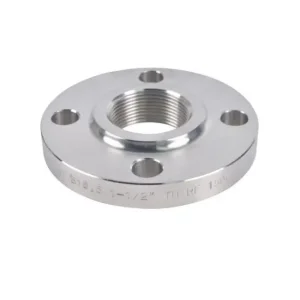
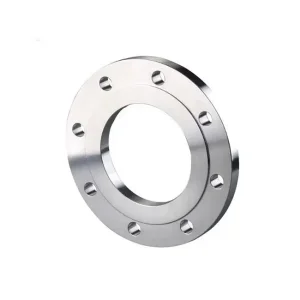
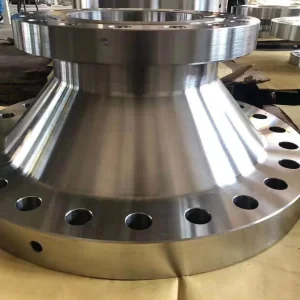
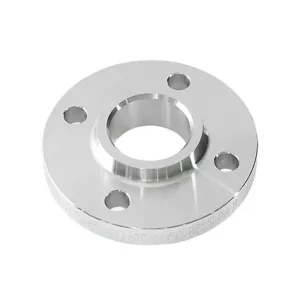
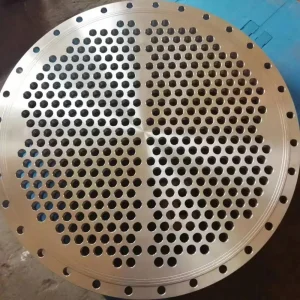
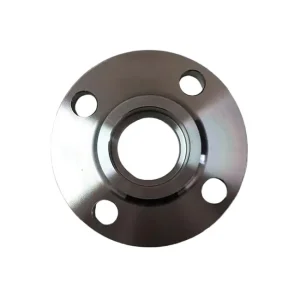
Expert engineering responses to critical questions regarding standards, metallurgy, documentation, and delivery to Finland.
In Finland and across the European Economic Area (EEA), EN 1092-1 is the prevailing standard for steel flanges. For expansion joint connections, EN 1092-1 Type 34 (weld-on collar with loose flange) and Type 02 / 35 / 37 are exceptionally common because they allow the flange ring to rotate around the inner collar, facilitating quick bolt-hole alignment during site assembly. However, for petrochemical refineries built to American engineering specs (such as the Porvoo refinery area), ASME B16.5 / B16.47 Series A & B flanges are frequently ordered in Class 150 through Class 2500.
To prevent brittle fracture in sub-zero ambient environments, material selection and heat treatment are tightly controlled. We supply materials such as ASTM A350 LF2 Class 1 or fine-grain normalized carbon steels (e.g., EN 10222-2 P280GH) that undergo rigorous Charpy V-notch impact testing at −40°C or −46°C, guaranteeing energy absorption values far exceeding the minimum 27 Joules required by European standards. Mill Test Certificates explicitly record these low-temperature impact values.
Yes. Shanxi Yuxin Casting & Forging Co., Ltd. holds certified manufacturing approval in accordance with Pressure Equipment Directive (PED 2014/68/EU) Annex I, Section 4.3 as well as AD 2000-Merkblatt W0. Every flange shipment is accompanied by a full EN 10204 3.1 Inspection Certificate detailing chemical ladle analysis, tensile strength, yield point, elongation, hardness, heat treatment batch charts, and non-destructive testing (UT/MT) results.
Absolutely. Over 40% of our production consists of non-standard, custom-machined forged rings, expansion joint collars, and heat exchanger tube sheets up to 3,000 mm outer diameter. Our engineering department can work directly from your CAD files (DWG, STEP, PDF), verifying forging tolerances, machining allowances, and bolt-pattern pitch precision on 3D CMM measuring equipment prior to dispatch.
Standard forged blanks held in stock can be CNC finished and shipped within 7–15 days. Custom forged-to-order flanges typically require a 20–30 day manufacturing cycle depending on raw billet procurement and heat treatment requirements. Maritime shipping from Ningbo/Tianjin port to major Finnish ports (Helsinki Vuosaari or Kotka) takes approximately 30–38 days. Express air transport or rail freight options are also available for urgent shutdown or repair orders.
Partner directly with Shanxi Yuxin's engineering team. Receive itemized technical proposals, CAD feasibility reviews, and competitive direct-from-mill pricing within 24 hours.
Send Inquiry Now