Precision-engineered forged components tailored for US pipeline contractors, Gulf Coast refineries, and midstream energy systems.
The industrial piping infrastructure across the United States is undergoing a profound transition. Driven by ongoing energy expansion in the Permian Basin, heavy petrochemical refining upgrades along the US Gulf Coast (Texas and Louisiana), modernization of municipal water treatment plants in the Midwest, and federal investments under the Infrastructure Investment and Jobs Act (IIJA), the demand for high-integrity piping components has reached an all-time high.
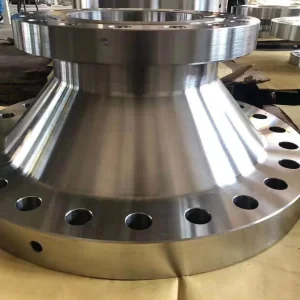
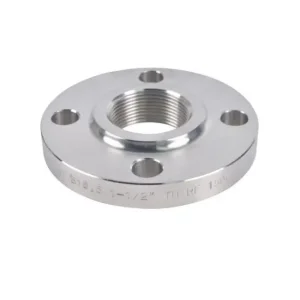
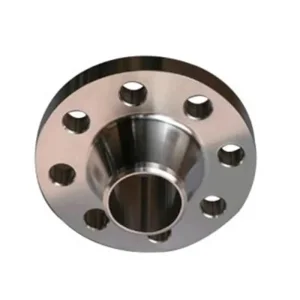
Among these critical pressure-retaining components, Reducer Flanges play an indispensable structural and hydraulic role. Unlike standard flange connections that require separate concentric or eccentric pipe reducers welded to standard flanges, a forged reducer flange integrates the diameter reduction directly into a single forged body. This reduces total weld joints, minimizes non-destructive examination (NDE) costs, and eliminates critical points of stress concentration in high-pressure or cyclic thermal environments.
For US EPC (Engineering, Procurement, and Construction) firms, pipeline stocking distributors, and industrial plant operators, sourcing high-performance reducer flanges at competitive direct-factory price points ("Discount Reducer Flange Solutions") without sacrificing compliance with ASME B16.5, ASME B16.47, ASTM A105, A350 LF2, and A182 standards is a primary commercial objective.
Utilizing single-piece forged Reducer Flanges reduces pipeline installation space, saves 50% on circumferential field butt-welding labor, and provides superior flow stabilization compared to multi-component welded assemblies.
When specifying reducer flanges for US projects, mechanical design engineers must carefully select between Concentric Reducer Flanges and Eccentric Reducer Flanges based on fluid dynamics, piping orientation, and pump suction/discharge dynamics.
| Flange Feature | Concentric Reducer Flange | Eccentric Reducer Flange |
|---|---|---|
| Geometric Centerline | Centerlines of both nominal pipe sizes coincide on the same axis. | Offset centerlines, maintaining a flat bottom or flat top alignment. |
| Primary US Applications | Vertical piping runs, high-pressure gas headers, pump discharge nozzles. | Horizontal liquid piping (flat bottom to prevent air pockets; flat top for slurry). |
| Hydraulic Behavior | Symmetrical velocity acceleration, uniform stress distribution under thermal expansion. | Prevents vapor entrainment/cavitation at pump suctions; prevents sediment buildup. |
| ASME B16.5 Compliance | Standardized dimensions for hubbed and slip-on reducer flange types. | Custom or non-standard forging dimensions machined per customer drawing. |
As a specialized China-based forging manufacturer supplying the United States market, our plant utilizes advanced 3D CAD/CAM die design and CNC machining centers to produce both concentric and eccentric reducer flanges ranging from NPS 1/2" up to NPS 60" (DN15 to DN1500), supporting pressure classes from Class 150 to Class 2500.
Why do leading US master stocking distributors and project contractors partner with Shanxi YUXIN Casting & Forging Co., Ltd.? The answer lies in the synergistic combination of regional industrial clustering, vertically integrated manufacturing, and rigid international quality management.
Our forged reducer flanges and custom piping components are actively deployed in demanding American engineering environments:
High-pressure wellhead tie-ins, manifold line reductions, and sour gas gathering systems requiring NACE MR0175 / ISO 15156 compliance and RTJ facing.
Cryogenic stainless steel (ASTM A182 F316/316L) reducer flanges for liquid natural gas liquefaction and regasification skids in Texas and Louisiana.
Large-diameter AWWA C207 and ASME B16.47 carbon steel reducer flanges for water treatment plants, municipal piping, and power generation cooling circuits.
Procuring industrial forged flanges from overseas requires more than just manufacturing prowess—it demands flawless export logistics, protective seaworthy packaging, and transparent documentation to navigate US Customs & Border Protection (CBP) and Section 301 tariffs seamlessly.
At YUXIN, our export desk works directly with US buyers to optimize Total Cost of Ownership (TCO):
Our engineering sales team provides 24-hour rapid quoting, drawing reviews, and metallurgical consultation for US pipeline buyers and EPC contractors.
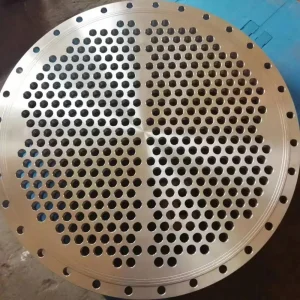
Send Inquiry NowExplore our complete range of ANSI/ASME, DIN, and EN standard forged flanges, tube sheets, and custom engineered rings.
Technical and commercial clarity for US pipeline engineers, quality inspectors, and purchasing agents.
Under ASME B16.5, a Reducer Flange is designated by the outer flange dimension (which determines the bolt circle and pressure class) and the bore size (which connects to the smaller pipe). For example, a "NPS 6 x NPS 4 Class 300 Reducer Flange" has the bolt pattern, outer diameter, and thickness of a standard 6-inch Class 300 flange, but is bored and hubbed to mate directly with a 4-inch pipe.
We forge to all major ASTM/ASME specifications, including Carbon Steel (ASTM A105, A350 LF2 Class 1/2 for low temperatures), Alloy Steel (ASTM A182 F11, F22, F91 for high-temperature power applications), Stainless Steel (ASTM A182 F304/304L, F316/316L, F321), and Duplex/Super Duplex grades (F51 / S31803, F53 / S32750).
Standard forged blanks are kept in stock and can be fully CNC-machined, tested, and dispatched within 7 to 15 days. Custom forged or large-diameter orders typically require 20 to 30 days. Ocean freight from Tianjin/Qingdao port to US West Coast (Los Angeles/Long Beach) takes approximately 14-18 days, while transit to US Gulf Coast (Houston) or East Coast ports takes 28-35 days.
Yes. Every single shipment is accompanied by an EN 10204 3.1 Mill Test Certificate detailing exact heat numbers, chemical ladle analysis, mechanical tension/yield test data, hardness values, Charpy impact test results (where required), and heat treatment logs. EN 10204 3.2 certificates co-signed by an independent third-party inspector (SGS/TÜV) are available upon request.
A single-piece forged reducer flange eliminates one major circumferential weld seam. This drastically reduces field welding labor costs, cuts non-destructive testing requirements (radiographic/ultrasonic testing) in half, minimizes total mechanical assembly length, and removes a potential leak path in high-vibration or high-pressure piping systems.
We offer flexible Incoterms including FOB, CIF, DDP (Delivered Duty Paid), or DAP to US warehouse facilities. Our experienced logistics team collaborates closely with US customs brokers, ensuring accurate tariff coding, optimized container volume packing, and transparent invoicing to streamline customs release without unexpected port fees.