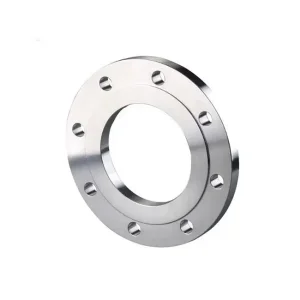
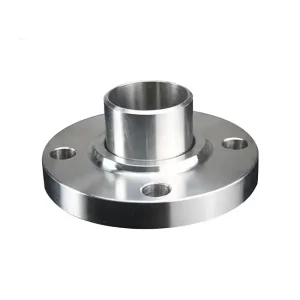
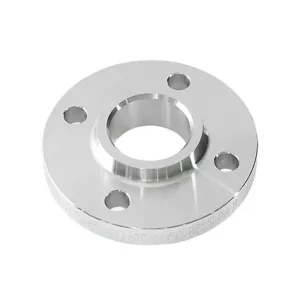
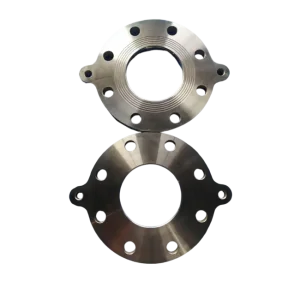
Factory-direct engineered flanges fully compliant with ASME B16.5, EN 1092-1, and PDO specifications for Gulf environments.
The Sultanate of Oman is undergoing a historical economic transformation driven by Oman Vision 2040. This strategic roadmap prioritizes industrial diversification, energy transition, localized manufacturing value, and massive capital investments across critical sector hubs including the Special Economic Zone at Duqm (SEZAD), the Port of Sohar & Freezone, the Salalah Free Zone, and expanded industrial estates managed by Madayn in Muscat, Suhar, and Sur.
At the center of Oman's economic expanding blueprint lies a hyper-rigorous infrastructure requirement: the necessity for durable, corrosion-resistant, high-temperature, and high-pressure fluid conveyance networks. Whether in sour-gas oilfield extraction supported by Petroleum Development Oman (PDO), seawater reverse osmosis (SWRO) desalination facilities located in Barka and Ghubrah, or emerging green hydrogen hubs in the Al Wusta region, piping systems serve as the structural vascular system of the nation's energy and industrial independence.
Oman’s upstream and midstream energy infrastructure requires specialized forged flanges capable of resisting H2S sour gas cracking, high temperature thermal cycling, and sand-laden abrasive slurry flows. Plain and slip-on flanges engineered to ASME B16.5 and Shell DEP standards are critical for offsite storage tanks, gathering lines, and low-pressure utility lines.
Given Oman’s arid climate, municipal and industrial water supplies rely heavily on SWRO plants along the Gulf of Oman and Arabian Sea coastlines. Piping components in these plants face hyper-corrosive marine atmosphere and high chloride concentrations, demanding duplex, super duplex, and coated carbon steel plain flanges that mitigate galvanic corrosion.
Procurement directors and project engineers across Omani EPC firms (such as Galfar Engineering, Douglas OHI, and Wood Group Oman) continuously balance two opposing pressures: strict adherence to stringent international standards (ASME, EN, DIN, PDO Approved Vendors) and project cost optimization. By partnering directly with an established, audited discount plain flange manufacturer, EPC contractors secure high-yield information gain, direct-from-mill pricing, and certified metallurgical integrity without incurring middleman markups.
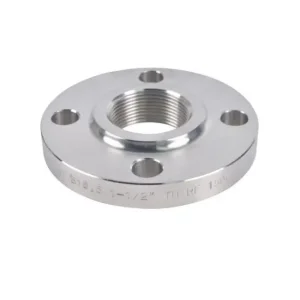
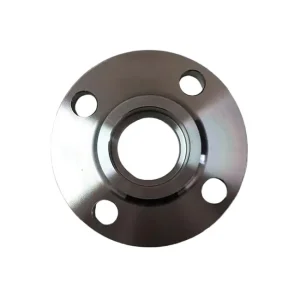
A Plain Flange (also frequently categorized alongside flat plate flanges, smooth slip-on flanges, or EN 1092-1 Type 01 plate flanges) is a circular metallic ring featuring a central bore designed to fit around a pipe's outer diameter, accompanied by circumferential bolt holes for joining valves, pressure vessels, or adjacent pipe segments. Unlike weld neck flanges that feature a long tapered hub to absorb stress, a plain flange transfers bending moments and axial forces directly into double fillet welds executed on the inner and outer diameters of the flange hub.
In low-to-medium pressure piping (Class 150 to Class 300 / PN6 to PN40), the mechanical behavior of a plain flange relies on the integrity of the fillet welds. The internal fillet weld seals the process fluid from penetrating between the pipe wall and flange bore, preventing crevice corrosion, while the external fillet weld carries the structural pressure thrust load ($F_p$) calculated as:
Where $P$ represents maximum operating pressure, $D_i$ is the gasket reaction diameter, and $F_{bolt}$ is total bolt preload force. Plain flanges manufactured in our Shanxi forging plant undergo precision CNC face finishing (AARH 125–250 stock finish) to guarantee optimal gasket seating stress and prevent flange deflection under thermal expansion cycling in Oman’s harsh ambient temperatures (reaching upwards of 50°C in interior desert wells like Marmul and Nimr).
| Steel Grade | Standard Ref. | Chemical & Mechanical Highlights | Target Oman Application Scenario |
|---|---|---|---|
| ASTM A105 / Q235B | ASME B16.5 / EN 1092-1 | Carbon steel, tensile strength ≥ 485 MPa, yield ≥ 250 MPa. Normalized heat treatment available. | Utility water, low-pressure firewater networks, HVAC cooling in urban Muscat development. |
| ASTM A350 LF2 Class 1 | ASME B16.5 | Low-temperature carbon steel with high impact energy (≥ 27 J at -46°C). Fine-grain normalized structure. | Cryogenic gas storage, LPG/LNG export lines at Salalah Port, high pressure differential utility lines. |
| ASTM A182 F316 / F316L | ASME B16.5 / DIN 2576 | Austenitic stainless steel with 2.0-3.0% Molybdenum for pitting resistance (PREN ≥ 25). | Seawater RO desalination brine rejection headers, chemical process lines at Sohar Freezone. |
| Duplex UNS S31803 / 2205 | ASME B16.5 / EN 1092-1 | Austenitic-ferritic dual phase steel delivering yield strength ≥ 450 MPa and exceptional SCC resistance. | High-pressure seawater injection pumps, sour gas gathering manifolds (PDO NACE MR0175 compliance). |
In global piping engineering, over-specifying flange types incurs substantial capital expenditures (CapEx). While weld neck flanges remain mandatory for high-fatigue cyclic conditions and extreme pressure classes (Class 900+), using them in auxiliary lines, open-drain networks, cooling towers, and atmospheric storage tanks unnecessarily inflates material and fabrication budgets.
A direct Total Cost of Ownership (TCO) comparison between Weld Neck Flanges and OEM Plain / Slip-On Flanges illustrates key economic advantages for contractors in Oman:
Plain flanges require approximately 30% to 45% less steel mass per unit compared to equivalent-rated long-hub weld neck flanges. For bulk orders in mega-projects like the Duqm Refinery Offsites, this mass reduction yields immediate raw material cost savings.
Fitting a plain flange requires straightforward square-cut pipe preparation without complex V-groove beveling. On-site fit-up time for alignment is reduced by up to 40%, cutting field labor hours in harsh desert field conditions.
Because plain plate flanges stack flat without projecting hubs, shipping density in 20ft and 40ft FCL sea containers is maximized. Shipping costs per metric ton to Sohar Port or Sultan Qaboos Port drop significantly.
As an established Chinese manufacturer originating from Dingxiang—China’s world-renowned Forging Hometown—our facility operates integrated electric heating, hydraulic ring rolling, automatic heat-treatment lines, and 5-axis CNC machining under one roof. By eliminating trading intermediaries, we extend true manufacturer-discounted pricing directly to Omani buyers, guaranteeing high-yield information gain and robust supply-chain resilience.
Challenge: Corrosive marine humidity combined with hyper-saline brine discharge at ambient coastal temperatures in Northern Oman.
Solution Provided: ASTM A182 F316L and Duplex 2205 Plain Plate Flanges (EN 1092-1 Type 01 PN16) with heavy 3-layer anti-corrosion epoxy coating. Delivered with 100% PMI testing and EN 10204 3.1 certification.
Result: Zero flange leakage reported over 48 months of continuous service, reducing maintenance shutdown costs by 22%.
Challenge: Rapid deployment needed for low-pressure cooling water headers and auxiliary utility gas lines spanning over 45 kilometers.
Solution Provided: Bulk supply of ASTM A105 Normalized Plain Slip-On Flanges (ASME B16.5 Class 150, 2" to 36" sizes) with anti-rust yellow varnish coating and custom end-cap protection.
Result: Completed field fit-up 15 days ahead of schedule with full compliance to EPC inspector witness checkpoints.
To successfully deliver piping components into the Sultanate of Oman, full compliance with regional and global quality management standardizations is non-negotiable. Oil, gas, and industrial projects overseen by PDO, OQ, Daleel Petroleum, and CC Energy Development enforce rigid quality assurance gates prior to material release.
Every single plain flange batch shipped from our plant is assigned a unique heat number stamped permanently onto the flange outer rim. We issue authentic EN 10204 3.1 Mill Test Certificates (MTC)—or independent third-party witnessed EN 10204 3.2 MTCs (TÜV, SGS, Bureau Veritas, DNV)—documenting:
As global industry moves toward Net-Zero carbon targets and Industry 4.0 digitalization, our flange manufacturing operations are undergoing continuous technological upgrades tailored to serve forward-thinking energy hubs like Oman's green hydrogen projects in Salalah and Duqm:
Computer-controlled hydraulic ring rolling mills ensure seamless grain flow direction aligned with the flange circumference, maximizing resistance against fatigue cracking and thermal stress.
High-speed multi-axis CNC lathes generate precise raised face spiral serrations (125–250 AARH), guaranteeing zero-fugitive-emission gasket seal performance under ambient Gulf thermal variations.
Transitioning from traditional coal gas to clean natural gas and induction electric billet heaters, reducing embedded carbon footprint per ton of forged steel shipped to Oman.
Expert answers addressing flange selection, standard compliance, shipping logistics, and custom manufacturing.
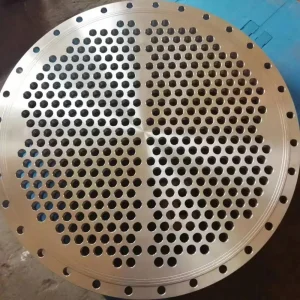
Explore our complete catalog of ANSI/DIN standard flanges, tube sheets, and expansion joints manufactured for global export.
Looking for direct-from-factory pricing, audited EN 10204 3.1 quality documentation, and fast sea freight delivery to Sohar or Salalah? Our engineering sales desk is at your service 24/7 in English.