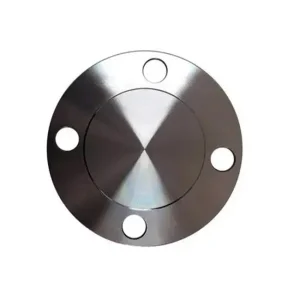
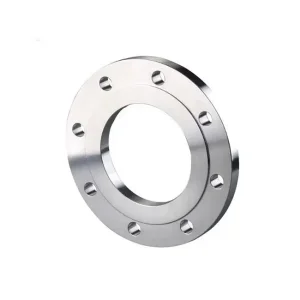
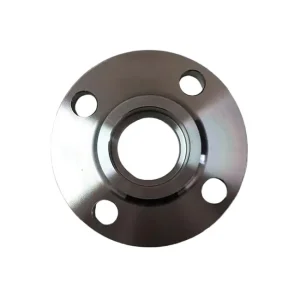
Direct factory supply featuring full heat traceability, EN 10204 3.1 certification, and custom machining to ASME B16.5, EN 1092-1, and DIN standards.
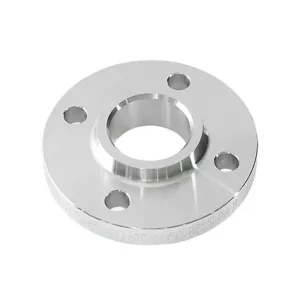
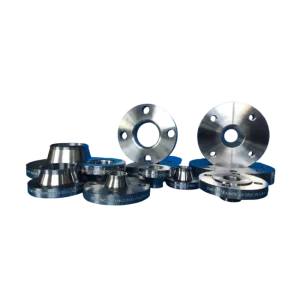
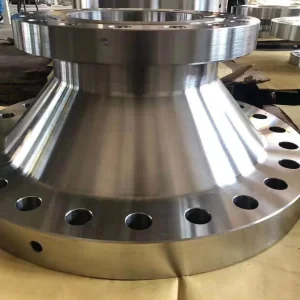
Chile's unique geographic and economic topography demands specialized piping components engineered for severe wear, high altitude, corrosive marine environments, and seismic stress.
Chile stands as the world's leading copper producer. In copper and lithium concentrate transportation, piping systems experience extreme abrasive slurry erosion. China forged reducer flanges engineered with high-yield carbon steel (ASTM A105) and low-alloy variants (ASTM A350 LF2) provide the wall thickness transition needed to sustain laminar slurry flow while preventing localized cavitation.
To combat acute water scarcity in northern Chile, mining giants rely on reverse osmosis seawater desalination plants. High-salinity raw seawater requires Super Duplex Stainless Steel (UNS S32750/S32760) and Austenitic Stainless (ASTM A182 F316L) reducer flanges. Our specialized forge routes deliver zero-pitting corrosion performance against aggressive chloride ion erosion.
Southern Chile is transforming into a global hub for Green Hydrogen and Green Ammonia production. High-pressure gas transition lines demand high-integrity concentric weld-neck reducer flanges rated for Class 1500 to Class 2500, compliant with ASME B31.1 and ASME B31.3 processing codes with 100% volumetric UT testing.
Selecting the exact geometry and forging process prevents liquid turbulence, pump cavitation, and premature mechanical fatigue across complex Chilean industrial installations.
Designed with symmetrical taper centerlines, concentric reducer flanges are primarily deployed in vertical piping runs or high-pressure gas headers. When fluid flows through vertical slurry discharge lines in high-altitude Andean mines, concentric reduction minimizes friction loss and prevents pressure drop spikes. Our closed-die forging process aligns metal grain structure along the hub contour, providing high hoop stress capacity under thermal cycling.
Configured with a flat side and a tapered side, eccentric reducer flanges are essential for horizontal fluid suction lines connected to heavy-duty centrifugal pumps. In desalinated water intake systems across Antofagasta, installing an eccentric reducer flange with the flat side UP prevents air or vapor pocket accumulation. This eliminates devastating pump cavitation, preserving pump impellers and maintaining system uptime.
| Material Standard | Equivalent Grade | Yield Strength (MPa) | Key Chilean Application | Corrosion & Mechanical Performance |
|---|---|---|---|---|
| ASTM A105 | Carbon Steel (C22.8) | ≥ 250 | Standard Water & Slurry Transport | Forged closed-die grain structure, heat-treated normalized condition. |
| ASTM A350 LF2 | Low-Temp Carbon Steel | ≥ 240 | High Altitude Andean Mining (>4000m) | Impact tested down to -46°C for extreme cold Andean mountain climates. |
| ASTM A182 F316L | Austenitic Stainless Steel | ≥ 205 | Chemical Processing & Tailings | Low carbon prevents intergranular corrosion; resistant to acid mine drainage. |
| UNS S32205 / F51 | 2205 Duplex Stainless | ≥ 450 | Desalination High-Pressure RO Lines | PREN ≥ 34; exceptional resistance to chloride stress corrosion cracking. |
| UNS S32750 / F53 | 2507 Super Duplex Steel | ≥ 550 | Brine Evaporation & Lithium Processing | PREN ≥ 42; extreme tensile strength for high-pressure corrosive brine. |
From high-altitude copper concentrators to pulp mills in Biobío, engineered flange solutions bridge standard pipe dimensions while withstanding local environmental challenges.
Chile is located along the Pacific Ring of Fire, subjecting piping infrastructures to persistent seismic micro-vibrations. Standard welded reducers can suffer stress concentrations at the weld seams. Forged reducer flanges from Shanxi Yuxin utilize heavy-hub forgings that distribute bending moments across the flange face, drastically reducing pipeline shear risk during seismic events.
Integrating a reducer flange eliminates the need for two separate components (a pipe reducer plus a standard flange), reducing butt-weld joints by 50%. For remote mining operations in the Atacama Desert, this cuts field welding labor, shortens non-destructive testing (NDT) cycles, and drastically lowers total installation expenditure.
Southern Chile’s extensive forestry and paper processing mills utilize aggressive bleaching chemicals. Our ANSI B16.5 Class 150/300 Stainless Steel (F304L/F316L) reducer flanges feature precision serrated raised faces (125-250 AARH finish) to ensure perfect gasket seal integrity under acidic liquors.
As global energy and mining sectors transition toward zero-carbon operations, flange manufacturing relies on digital metallurgy, automated NDT, and smart supply chain traceability.
To eliminate internal micro-voids and segregation, our Shanxi forging plant utilizes Deform-3D thermal simulation software before billet heating. Automated CNC ring rolling ensures radial grain flow continuity, boosting fatigue endurance limits by over 35% compared to conventional casting or flame-cut plate rings.
Every reducer flange destined for Chile is hard-stamped with a unique Heat Number linked directly to raw billet chemical composition, heat treatment charts, and mechanical test results. Certificates under EN 10204 3.1 / 3.2 ensure full audit compliance for international engineering firms (EPCs).
To survive ocean freight transport and harsh Chilean outdoor storage conditions, flanges are treated with high-grade black rust-preventive varnish, yellow anti-rust enamel, or 80-micron hot-dip galvanizing compliant with ASTM A153.
For petrochemical and refinery applications in Chile, our forged carbon and low-alloy steel flanges undergo controlled hardness testing (≤ 22 HRC) and sulfide stress cracking (SSC) testing to guarantee zero failure under H2S sour gas conditions.
Addressing essential technical, logistical, and compliance questions for importing forged reducer flanges from Shanxi, China to Chile.
Reducer flanges combine line size reduction and flange connection into a single forged component. In Chilean mining facilities where space is restricted (such as underground pumps or compact valve vaults), reducer flanges reduce overall layout length, eliminate one circumferential field weld, decrease non-destructive testing costs, and lower potential leak paths by 50%.
Our flanges conform fully to ASME B16.5 (sizes 1/2" to 24") and ASME B16.47 Series A/B (sizes 26" to 60") for American standard projects, as well as European standard EN 1092-1 Type 01 / Type 11 and German DIN standards. We also custom-machine non-standard reducer flanges based on customer technical drawings.
For high-altitude mine installations in regions such as Calama or San Pedro de Atacama where winter temperatures drop below freezing, we recommend ASTM A350 LF2 (Class 1 or 2) low-temperature carbon steel. A350 LF2 guarantees Charpy V-Notch impact toughness down to -46°C, preventing brittle fracture under sudden pressure surges or seismic shocks.
Shipments to Chilean ports (such as Valparaíso, San Antonio, or Antofagasta) undergo strict export packaging protocols: flange raised faces are coated with heavy anti-rust oil or strippable varnish, fitted with tough plastic end caps, wrapped in vapor-corrosion-inhibitor (VCI) plastic film, and packed inside sturdy, fumigation-free ISPM-15 compliant plywood cases.
Every order is supplied with complete inspection records including an EN 10204 3.1 Mill Test Certificate detailing chemical analysis, tensile/yield/elongation mechanical results, heat treatment history, ultrasonic testing (UT) report, dimensional report, Certificate of Origin (Form F for China-Chile FTA tariff privileges), commercial invoice, and packing list.
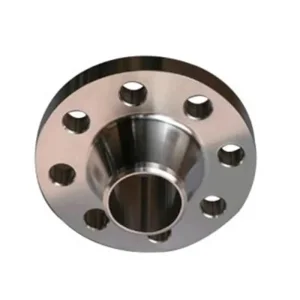
Direct factory supply featuring Weld Neck, Slip-On, Blind, Socket Weld, and RTJ flanges tailored for Chilean industrial projects.
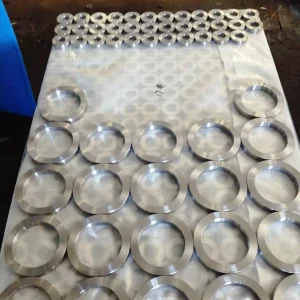
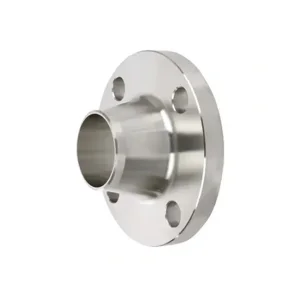
Get direct factory pricing, comprehensive technical data sheets, and custom forging CAD evaluations for your Chilean projects within 24 hours.
Send Inquiry Now