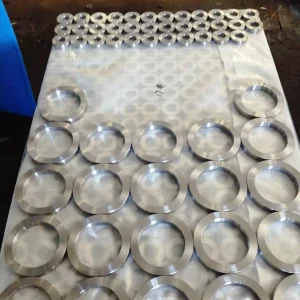
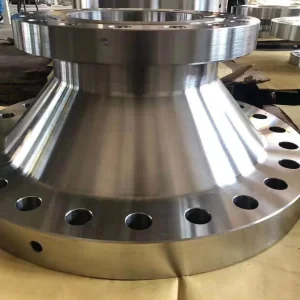
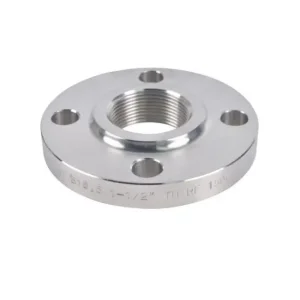
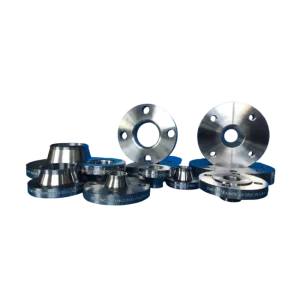
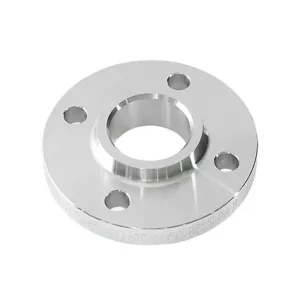
Direct factory supply of ASME B16.5, DIN, and EN standard flange components optimized for cost-effective piping installation and maintenance flexibility.
In modern industrial fluid-handling systems, the selection of flange connections plays a pivotal role in dictating long-term operational integrity, capital expenditure (CAPEX), and maintenance lifecycle costs (OPEX). Among the various pressure vessel and piping components standardized under ASME B16.5, EN 1092-1, and DIN norms, Lap Joint Flanges (also designated as Loose Flanges or LJ Flanges) occupy a unique structural and economic position.
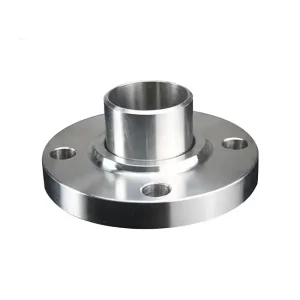
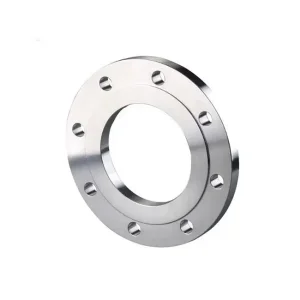
A Lap Joint Flange assembly is a two-piece piping system comprising a Lap Joint Stub End (which is butt-welded to the pipe) and a Loose Backing Flange that slides freely over the pipe barrel prior to welding. Because the backing flange does not come into direct contact with the process fluid conveyed inside the line, mechanical engineers can implement a high-value material optimization strategy: pairing an expensive corrosion-resistant alloy stub end (e.g., Stainless Steel 316L, Duplex 2205, Nickel Alloy C276, or Titanium) with a cost-effective carbon steel backing flange (such as ASTM A105 or Q235B).
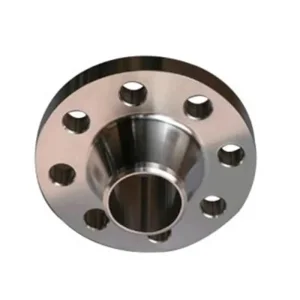
Unlike fixed Weld Neck or Slip-On flanges, Lap Joint Flanges offer 360-degree rotational freedom around the pipe axis during alignment. This eliminates bolt-hole misalignment challenges during field assembly in complex industrial projects—a critical factor for EPC contractors executing mega-projects across Gujarat, Maharashtra, Tamil Nadu, and Odisha.
As India continues its rapid industrial transformation under national growth mandates—expanding mega refineries, chemical complexes, green hydrogen corridors, coastal desalination facilities, and urban water management infrastructure—the demand for reliable, high-precision, and cost-effective flange components has escalated dramatically. China's premier forging manufacturers, centered in world-class forging hubs like Shanxi Dingxiang, have established specialized supply channels to meet Indian industrial procurement standards with unprecedented scale, metallurgic precision, and strict compliance with global codes.
India’s heavy engineering, energy, and process sectors are currently experiencing a historic capital expenditure expansion cycle. The convergence of domestic manufacturing incentives (such as Production Linked Incentive schemes) and massive public/private investments in infrastructure has created unprecedented demand for certified piping infrastructure.
Major hubs such as Jamnagar, Dahej, Mangalore, and Paradip are expanding secondary processing units, cracking plants, and storage terminals. These units demand high-pressure ASME B16.5 Class 150 to Class 1500 lap joint flange assemblies to handle aggressive hydrocarbons, organic acids, and high-temperature steam.
To combat municipal and industrial water shortages, India’s coastal states are commissioning sea-water reverse osmosis (SWRO) desalination facilities. The extreme chloride content in seawater requires Duplex and Super Duplex stub ends backed by epoxy-coated forged carbon lap joint flanges to ensure zero corrosion failures over 30-year design lives.
India's national hydrogen mission and fertilizer modernization schemes require severe-service piping systems capable of enduring hydrogen embrittlement and high cyclic thermal loads. Precision forged lap joint flanges provide accessible inspection points for non-destructive testing (NDT).
However, Indian procurement teams face distinct cross-border challenges: balancing stringent quality mandates (such as IBR compliance, NACE MR0175 sour service specifications, and EN 10204 3.1 material certification) with competitive pricing and tight project commissioning timelines. Partnering directly with tier-one Chinese flange manufacturers offers a strategic solution to bridge this gap.
On a global scale, the industrial piping component industry has transitioned from localized, transactional buying toward integrated international supply chains. Engineering, Procurement, and Construction (EPC) firms operating across Europe, the Middle East, Southeast Asia, and the Americas enforce rigorous supplier qualification audits before approving factory source lists.
Key global procurement benchmarks now revolve around three core pillars:
China accounts for over 60% of the world's total forged flange output, with the cluster in Shanxi Province (Dingxiang County)—officially recognized as the “Hometown of Forging in China”—standing at the apex of global manufacturing capability. The operational excellence of Chinese flange mills offers distinct advantages for Indian industrial importers:
| Manufacturing Parameter | Standard International Mill | China Advanced Forging Mill (Shanxi) | Impact on Indian Buyers |
|---|---|---|---|
| Annual Capacity | 2,000 – 4,000 Tons / Year | 10,000+ Tons / Year | Guaranteed volume capacity for large-scale Indian EPC purchase orders. |
| Ingot & Billet Sourcing | Third-party regional vendors | Direct steel mill strategic partnerships | Strict chemistry control, lower billet costs, heat-to-heat consistency. |
| Forging Equipment | Manual hammers & small presses | Automated ring-rolling & 5000T hydraulic presses | Superior internal grain structure, high tensile strength, zero internal voids. |
| Machining Precision | Standard lathes | Multi-axis CNC turning centers & 3D measurement arms | Exact bolt hole spacing, precise lap radius finish to mate seamless stub ends. |
| Lead Time Predictability | 45 – 60 Days | 15 – 30 Days (Stock Blanks Available) | Shortened project lead times to meet critical Indian plant shutdown windows. |
The metallurgical integrity of a forged lap joint flange depends fundamental on controlled heat treatment procedures. Chinese manufacturing excellence incorporates computerized normalizing, quenching, and tempering furnace cycles. This process refines the steel's microstructural grain pattern, eliminating internal stresses induced during hot forging, and ensures excellent low-temperature impact toughness down to -40°C (essential for sub-zero liquid chemical lines).
Quality inspection routines executed inside modern Chinese forging plants include:
To understand the utility of China-manufactured lap joint flanges in India, one must examine their real-world integration across prominent regional industrial ecosystems:
Application: Corrosive acid transfers, chlor-alkali production, and organic solvent piping lines.
Solution: ASTM A403 WP316L long pattern stub ends coupled with ASTM A105 lap joint flanges treated with anti-corrosion yellow chromate coating. Allows easy flange rotation during high-frequency maintenance and pipe cleaning routines.
Application: High-purity sanitary process lines requiring clean-in-place (CIP) and steam-in-place (SIP) sterilization.
Solution: Mirror-polished stainless steel stub ends with lightweight forged loose backing flanges, minimizing line stress and simplifying regular teardown for sanitary seal replacements.
Application: Seawater cooling intake headers and brine discharge systems.
Solution: UNS S31803 (Duplex 2205) stub ends mated with hot-dip galvanized carbon steel lap joint loose flanges, preventing pitting corrosion while keeping structural hardware costs manageable.
When issuing RFQs or technical requisitions for Indian projects, procurement engineers should specify standards, material grades, and dimensional tolerances according to the following framework:
| Standard Specification | Pressure Rating / Class | Available Size Range | Material Options (Backing Flange / Stub End) |
|---|---|---|---|
| ASME B16.5 | Class 150, 300, 600, 900, 1500 | 1/2" to 24" (DN15 - DN600) | ASTM A105, A350 LF2 / A403 WP304L, WP316L, Duplex |
| ASME B16.47 Series A & B | Class 75, 150, 300, 600 | 26" to 60" (DN650 - DN1500) | ASTM A105N, A516 Gr.70 / Custom Alloy Plates |
| EN 1092-1 Type 02 (Loose) | PN6, PN10, PN16, PN25, PN40 | DN10 to DN1200 | P250GH, S235JR / 1.4307, 1.4404 Stainless Steel |
| DIN 2641 / DIN 2642 | PN6, PN10 | DN10 to DN800 | Carbon Steel Forgings / Austenitic Stainless Alloys |
The global flange manufacturing landscape is undergoing significant technological advancement. Key trends shaping future procurement include:
Explore our full forged component line engineered to ASME, EN, DIN, and JIS standards with total material traceability.
Clear, authoritative answers to common engineering, quality assurance, and cross-border logistics queries.
Lap Joint Flanges offer two major operational advantages in chemical and process plants across India:
Every shipment is accompanied by a comprehensive EN 10204 3.1 Mill Test Certificate (MTC) issued directly by our certified quality department. Upon request, 3.2 third-party inspection certificates witnessed by independent agencies such as TÜV, SGS, BV, or Lloyd's Register can be provided. Documentation covers heat number traceability, ladle chemical analysis, mechanical property test results (tensile, yield, elongation, hardness), heat treatment records, and non-destructive examination (UT/MT/PT) reports.
All finished flanges undergo multi-layer export protection: sealing faces are machined with protective plastic covers or wooden caps; flange bodies receive rust-preventive oil, transparent varnish, black lacquer, or yellow chromate dipping. For long ocean transit to major Indian ports like Nhava Sheva (Mumbai), Mundra, Chennai, or Visakhapatnam, components are packed in heavy-duty, ISPM-15 compliant fumigation-free plywood cases or wooden pallets wrapped in moisture-barrier plastic film.
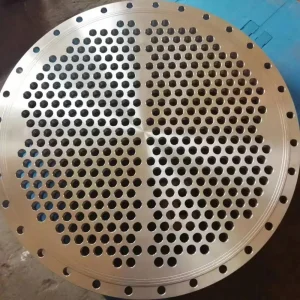
Yes. In addition to standard ASME B16.5, ASME B16.47, EN 1092-1, and DIN flanges, our engineering team routinely reverse-engineers or manufactures custom-dimensioned loose flanges, heavy wall stub ends, clad components, and heat exchanger tube sheets up to 3,000 mm diameter. We accept DWG, STEP, or PDF engineering drawings and provide DFM (Design for Manufacturability) technical feedback prior to die forging.
For standard carbon and stainless steel sizes held as forged semi-finished blanks, final machining and inspection require approximately 7 to 15 days. Custom forged-to-order alloys or large-diameter flanges generally require 20 to 30 days. Shipping transit time from main Northern Chinese ports (such as Tianjin or Qingdao) to major Indian seaports is approximately 14 to 22 days depending on direct vessel routes.
Contact our Senior Metallurgical & Sales Engineering Team today. We reply within 24 hours with complete commercial proposals and technical data sheets.
Send Inquiry Now