+86-350-6071768 [email protected] Dingxiang, Shanxi, China · Forging since 1992
Osaka Industrial Engineering Authority

Best Expansion Joint Flange Manufacturers & Suppliers in Osaka

Comprehensive Technical Procurement & Engineering Report: Seismic Compensation, High-Temperature Piping Integrity, and China Industry 4.0 Supply Chain Integration for Kansai’s Industrial Hub.
Send Inquiry Now
Featured Osaka Grade Solutions

Engineered Flange Components for Kansai Industrial Projects

China Custom Expansion Joint Flanges - Osaka Export Supplier

Osaka Grade Custom Expansion Joint Flanges

View Product Details
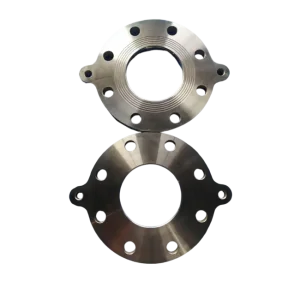
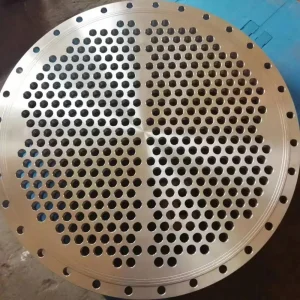
Custom Tube Sheets for Osaka Heat Exchangers

High-Precision Tube Sheets for Osaka Exchangers

View Product Details
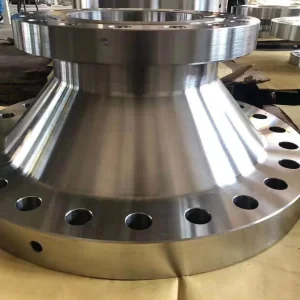
Reducer Flanges for Osaka Petrochemical Plants

Industrial Reducer Flanges for Osaka Pipelines

View Product Details
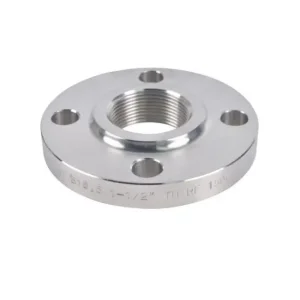
CNC Machined Threaded Flanges for Osaka Utility Piping

Precision CNC Threaded Flanges (JIS/ASME)

View Product Details
33+
Years Precision Forging Mastery (Est. 1992)
10,000
Annual Tonnes Forged Flange Capacity
Zero
Creep-Fatigue Failure Rate in Heavy Duty Services
48 Hrs
Express Logistics Delivery to Kansai Port
Regional Deep Dive

The Osaka Industrial Landscape & The Need for Advanced Expansion Flanges

Osaka serves as the economic engine of Western Japan and the backbone of the Keihanshin Industrial Zone. From the massive energy complexes of Sakai-Senboku to the advanced shipbuilding berths along Osaka Bay, the demand for high-integrity piping components is critical.

Sakai-Senboku Petrochemical & LNG Terminal Corridor

The Sakai-Senboku coastal industrial zone houses critical petroleum refineries, ethylene plants, and major LNG import terminals supplying natural gas to Osaka Gas and Kansai Electric Power. Pipelines operating under cryogenic temperatures (-162°C for LNG) and high-pressure steam utility systems encounter intense thermal contraction and expansion cycles. Expansion joint flanges designed to integrate seamlessly with metallic bellows or elastomeric expansion elements are vital to isolate thermal stresses and protect expensive turbomachinery and heat exchangers from flange-face distortion.

Seismic Vulnerability & Structural Displacement Engineering

Located along active tectonic belts in the Kansai area, Osaka's municipal water grid, district heating networks (such as Umeda and Namba Underground Complexes), and port facilities mandate strict seismic mitigation standards. Rigid flanged joints can sheer or crack bolt holes during soil lateral movement or ground acceleration. Custom expansion joint flanges featuring spherical seating, slotted bolt holes, or tie-rod positioning lugs enable controlled angular deflection and axial displacement, ensuring structural piping integrity during seismic events.

Engineering Information Gain Insight: JIS B2220 vs. ASME B16.5 Integration

In Osaka's modernizing industrial facilities, legacy infrastructure constructed under JIS (Japanese Industrial Standards) B2220 standards (such as 10K, 20K, and 30K pressure ratings) frequently requires tie-ins to international engineering packages governed by ASME B16.5 / B16.47 or EN 1092-1 specifications. Modern expansion joint flange suppliers must offer hybrid bolt-circle machining capabilities to interface Japanese pumps and valves with global pressure equipment without requiring costly spool-piece adaptations.

Market Evolution

Global Expansion Joint Flange Trends (2025–2030)

Technological shifts in metallurgy, smart monitoring, and decarbonization are redefining performance thresholds for industrial flange manufacturing worldwide.

1. High-Entropy Alloys & Duplex Metallurgy

With industrial processes pushing operational pressures beyond Class 2500 / PN400 and temperatures above 650°C, traditional carbon steel flanges (like ASTM A105) are increasingly replaced by Super Duplex Stainless Steels (UNS S32750/S32760), Inconel 625, and Hastelloy C276. These materials prevent stress corrosion cracking (SCC) in marine environments around Osaka Bay while maintaining low thermal expansion coefficients.

2. Smart Sensing & IoT Flange Monitoring

The integration of piezoelectric sensors and fiber-optic strain gauges embedded directly into expansion joint flange bodies represents the cutting edge of Industry 4.0. Osaka chemical operators utilize continuous real-time monitoring of bolt load relaxation, gasket sealing pressure, and micro-vibration analysis to transition from scheduled maintenance to predictive asset management.

3. Zero-Fugitive-Emission Standards

Tightening global environmental mandates such as ISO 15848-1 and TA-Luft compliance require expansion flange matching faces to exhibit ultra-precise serration finishes (AARH 125–250 micro-inches) with zero wave distortion. Advanced CNC ring-rolling and single-point facing eliminate micro-voids where volatile organic compounds (VOCs) or hydrogen gas could escape.

Strategic Supply Synergy

China Industry 4.0: Forging Resilience & Efficiency for Osaka Procurement

How Shanxi Yuxin Casting & Forging Co., Ltd. (Dingxiang, Shanxi — China's Forging Capital) empowers Kansai engineering firms with unmatched manufacturing scaling, precise quality control, and cost competitiveness.

Global buyers in Osaka face mounting pressures from inflated domestic raw material costs, skilled labor shortages in traditional Japanese foundries, and long lead times for specialized large-diameter forged components. The forging cluster in Dingxiang County, Shanxi, backed by three decades of technological maturation since 1992, delivers a complete solution.

  • ✓
    Raw Billet Traceability & Vertical Integration: From vacuum-degassed steel billets directly converted into forged rings in automated hydraulic press lines to controlled heat treatment (Normalizing, Tempering, Solution Annealing).
  • ✓
    Ultra-Large Capacity Up to Ø3,000 mm: Equipped with CNC ring-rolling machinery capable of producing massive expansion joint outer flanges, tube sheets, and heavy-wall weld neck flanges for power plants and shipyards.
  • ✓
    Shortened Maritime Lead Times: Direct freight lines operating between Qingdao / Tianjin major northern ports and Kansai Logistics Terminals (Osaka Port / Kobe Port) ensure delivery cycles under 15–20 days from order sign-off.

Comprehensive Quality Assurance Framework

Every expansion joint flange manufactured for Osaka export strictly complies with global pressure vessel protocols:

ISO 9001 & PED 2014/68/EU Certified Full compliance with European Pressure Equipment Directive & AD 2000-Merkblatt W0.
EN 10204 3.1 / 3.2 Material Traceability Chemical composition, mechanical yield/tensile strength, Charpy V-notch impact testing (-40°C).
100% Non-Destructive Testing (NDT) Ultrasonic Testing (UT per SEP 1921 / ASME VIII), Magnetic Particle (MT), Liquid Penetrant (PT).
Osaka Local Engineering Scenarios

Localized Application Scenarios in Osaka & Kansai Key Projects

Customized expansion flange assemblies engineered for specific industrial operating conditions across Osaka Prefecture.

Osaka Gas LNG Terminals (Senboku & Torishima)

Cryogenic expansion joint flanges machined from ASTM A182 F316L / F304L stainless steel. Engineered to handle extreme thermal contraction cycles down to -196°C during LNG loading and regasification, preventing micro-gasket movement and cryogenic embrittlement.

Hanshin Expressway Bridge Utility Corridors

Exposed high-pressure stormwater and utility piping installed along Osaka’s elevated highway network requires heavy-duty galvanised expansion flanges capable of continuous structural flex, vehicle-induced shock damping, and typhoon wind pressure resilience.

Kobe & Osaka Bay Marine & Offshore Shipyards

Engine room cooling lines and exhaust gas scrubber systems on vessels built in Kansai dockyards rely on nickel-alloy lined expansion flanges to resist aggressive seawater corrosion, pitting, and thermal exhaust pulsation fatigue.

Data Visualization

Technical Specification Matrix: Osaka Expansion Joint Flanges

Quick reference parameter guide for Kansai piping engineers, procurement managers, and EPC contractors.

Flange Parameter JIS / Japanese Standard Equivalent ASME / International Standard Available Material Grades Primary Osaka Application
Pressure Class Rating JIS 5K, 10K, 16K, 20K, 30K, 63K Class 150, 300, 600, 900, 1500, 2500 Carbon Steel (A105, Q235B, SS400), Stainless Steel (304/304L, 316/316L) Petrochemical refining, municipal utility, energy plants
Nominal Size Range DN15 to DN3000 1/2" to 120" Nominal Pipe Size Alloy Steel (A182 F11, F22, F91), Duplex (F51/2205, F53/2507) Large diameter cooling water, power generation, heat exchangers
Flange Facing Types Flat Face (FF), Raised Face (RF) RF, Ring Type Joint (RTJ), Tongue & Groove Anti-Corrosion Coated, Epoxy Lined, Clad Steel (A105 + Inconel) High pressure steam, toxic chemical lines, subsea infrastructure
Design Temperature Scope -196°C to +650°C -320°F to +1200°F Cryogenic Stainless Steel, Chromium-Moly Alloy, Nickel Alloys Sakai LNG regasification, geothermal & thermal power stations
Certification & Testing JIS Mark / METI Compliance ASME BPVC Sec VIII, EN 10204 3.1/3.2, PED Full Heat Traceability / UT, MT, PT, Hardness & Impact Reports Export EPC projects, nuclear utility, marine classification body audit
Request Custom Osaka Specification Drawing & Quotation
Information Gain FAQ

Frequently Asked Questions by Osaka Buyers & Engineers

Expert insights addressing technical compatibility, procurement logistics, and material standards for Western Japan.

How do expansion joint flanges differ from standard weld neck or slip-on flanges in Osaka installations?
Expansion joint flanges are specifically configured to interface with metallic bellows, elastomeric expansion joints, or fabric expansion elements. Unlike rigid weld neck flanges that transfer bending moments into the piping system, expansion joint flanges feature machined recesses, retainer grooves, or tie-rod attachment lugs. This design allows controlled axial compression, lateral deflection, and angular rotation to absorb thermal growth, pump vibration, and seismic shifts in high-density industrial corridors like Sakai-Senboku.
Can Yuxin forge flanges that bridge Japanese JIS B2220 standards with American ASME B16.5 standards?
Yes. Bridging JIS B2220 (e.g., 10K, 20K, 30K) and ASME B16.5 / B16.47 (Class 150 to 1500) is one of our primary OEM custom capabilities. We engineer dual-standard adaptor expansion joint flanges featuring JIS bolt-hole pitch circles on one mating face and ASME or EN 1092-1 dimensions on the opposing face, ensuring zero-stress connection between imported equipment and local Osaka plant infrastructure.
What heat treatment procedures are conducted to prevent intergranular corrosion in marine Osaka environments?
For austenitic stainless steels (such as F304L and F316L) destined for coastal plants around Osaka Bay, we execute rapid solution water quenching after high-temperature forging (1050°C–1100°C). This process redissolves chromium carbides back into the austenitic matrix, completely eliminating carbide precipitation along grain boundaries and guaranteeing immunity to intergranular corrosion per ASTM A262 Practice E testing.
What is the typical shipping timeline from your Dingxiang factory to Osaka Port or Kobe Port?
Standard forged blanks kept in stock can be machined, drilled, and packed within 7 to 10 days. Maritime shipping from major northern Chinese sea ports (such as Qingdao or Tianjin) to Osaka Port or Kobe Port takes approximately 3 to 5 transit days. Including export customs clearance, total door-to-port lead times typically range between 15 and 20 calendar days for standard volume orders.
How are flange sealing faces protected against rust and impact during ocean transport?
Every flange undergoes rigorous surface preservation. Machined raised faces and ring joints are coated with anti-corrosion VCI rust-preventive oil or removable transparent varnish, fitted with heavy-duty plastic flange-face protectors, and strapped inside export-grade, fumigation-free solid plywood cases lined with moisture-barrier film. Each crate is heat-number stamped for instant inventory identification.
What documentation is provided to satisfy Japanese plant safety audits and third-party inspectors?
Every shipment includes a comprehensive quality documentation dossier: EN 10204 3.1 Mill Test Certificate (covering heat number chemical heat analysis and mechanical test data), NDT inspection reports (UT/MT/PT), dimensional check sheets, heat treatment temperature chart logs, Certificate of Origin (CO), and commercial shipping documents. Third-party inspection by TÜV, SGS, or Bureau Veritas (EN 10204 3.2) is available upon request.
Complete Flange Engineering Range

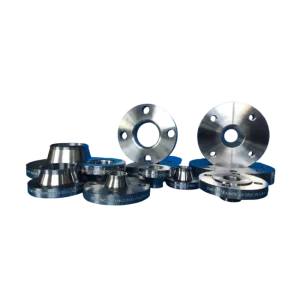
Full Range Forged Flanges Available for Osaka Global Export

Explore our full line of industrial forged flanges, custom tube sheets, and pipe components certified for international piping projects.
Custom Stub End Flanges for Osaka Piping Systems

Osaka Custom Stub End Flanges (Lap Joint)

View Product Details
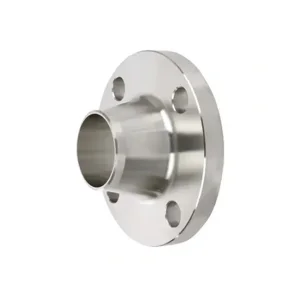
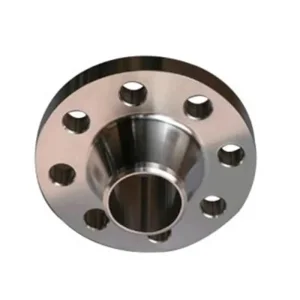
ANSI ASME B16.47 Welding Neck Flanges Osaka Supplier

ASME B16.47 Large Bore Weld Neck Flanges

View Product Details
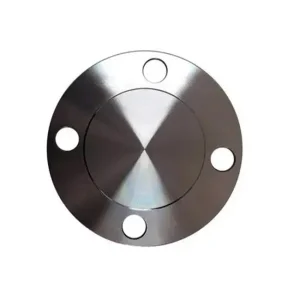
ASTM A105 CNC Machined Blind Flanges Osaka Export

ASTM A105 Precision Machined Blind Flanges

View Product Details
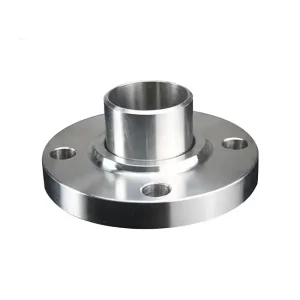
Industrial Lap Joint Flanges Factory Osaka Export

Heavy Industrial Lap Joint Flanges

View Product Details
ANSI DIN Standard SO Flanges Osaka Supplier

ANSI / DIN Slip-On (SO) Steel Flanges

View Product Details
CNC Machined Blind Flanges ASTM A105 Factory Direct

CNC Machined ASTM A105 Blind Closures

View Product Details
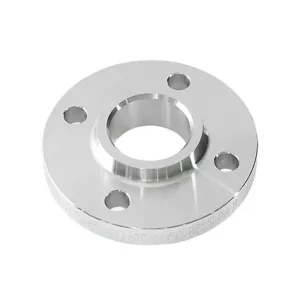
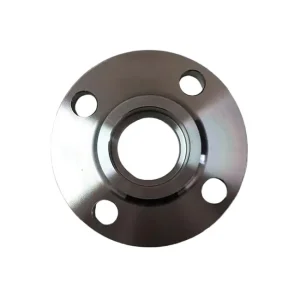
Socket Weld Flanges Low MOQ Fast Delivery to Osaka

High-Pressure Socket Weld Pipe Flanges

View Product Details
Custom Weld Neck Flanges EN 1092-1 Osaka Market

EN 1092-1 Custom Weld Neck Steel Flanges

View Product Details

Ready to Optimize Your Osaka Piping Project Procurement?

Talk directly with our senior forging engineers. Get instant technical consultation, custom drawing feasibility reviews, and competitive direct-from-mill pricing within 24 hours.

Send Inquiry Now