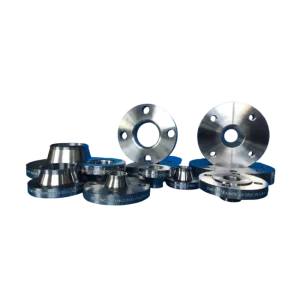
ASTM, EN, DIN, and JIS standard flange components optimized for extreme thermal loads and aggressive fluid transmission.
In modern industrial piping infrastructure—encompassing high-pressure oil and gas trunklines, supercritical power plant headers, chemical refining loops, and marine cryogenic storage—the term "Discount Welding Flange" is frequently misunderstood by inexperienced procurement buyers. In non-technical purchasing circles, "discount" might suggest compromised metallurgy, downgraded mechanical testing, or relaxed dimensional tolerances. However, within the framework of tier-1 heavy forging manufacturing in Shanxi, China, real cost reductions stem from structural supply chain efficiency, advanced material yield optimization, and Industry 4.0 automation, rather than cutting corners on quality.
This technical whitepaper explores the critical engineering parameters, metallurgical choices, compliance frameworks, and global procurement strategies required to source high-performance discount welding flanges. By analyzing total cost of ownership (TCO), microstructural grain flow alignment, non-destructive examination (NDE) protocols, and global supply chain resilience, engineering procurement teams can secure institutional-grade flange connections that offer maximum operating safety at optimized capital expenditures (CAPEX).
A deep breakdown of stress distribution, forging grain flow, and material selection for severe temperature and pressure environments.
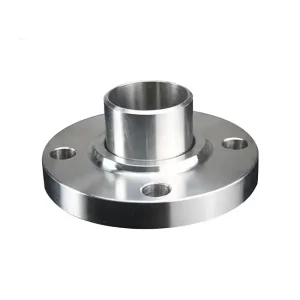
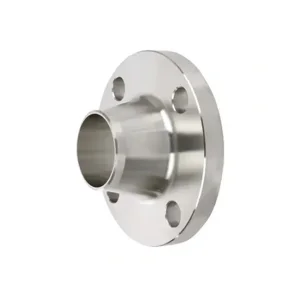
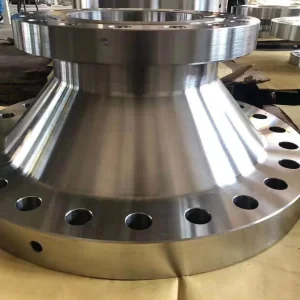
Designed with a long tapered hub that transitions stress smoothly into the attached pipe wall. Ideal for cyclic loading, extreme thermal shocks, and pressure classes up to ASME Class 2500 (PN400). The continuous forged grain structure prevents stress concentration at the neck junction.
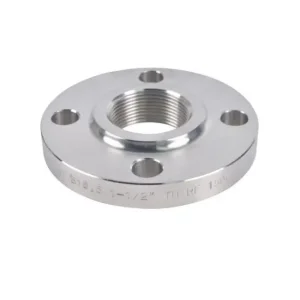
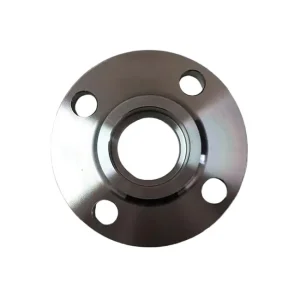
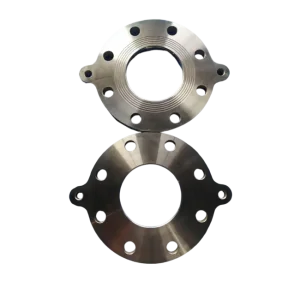
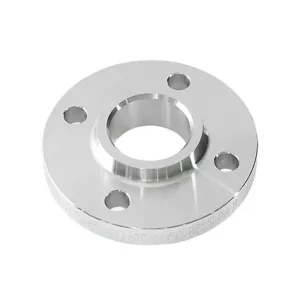
Slip-On flanges fit over the pipe and feature fillet welds on both internal and external hubs. Socket Weld flanges feature a counter-bored socket with a mandatory 1.6mm expansion gap, providing optimal flow characteristics in small-bore, high-pressure utility lines.
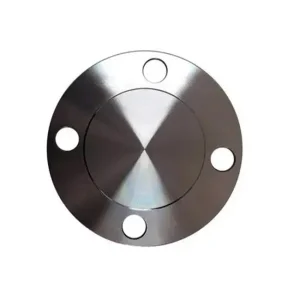
Blind flanges (BL) serve as high-strength pressure-retaining closures for vessel nozzles and header ends. Lap Joint (LJ) configurations combine loose backing carbon steel flanges with corrosion-resistant stub ends to maximize cost efficiency in expensive alloy piping systems.
| Material Standard | Common Steel Grades | Tensile Strength (MPa) | Yield Strength (MPa) | Primary Industrial Applications |
|---|---|---|---|---|
| ASTM A105 / ASME SA105 | Carbon Steel (Standard Temp) | ≥ 485 MPa | ≥ 250 MPa | General ambient and elevated pressure piping, oil/gas refining, steam lines. |
| ASTM A350 LF2 Class 1 | Low-Temp Carbon Steel | 485 - 655 MPa | ≥ 250 MPa (Charpy @ -46°C) | Cryogenic service, arctic oil pipelines, subsea gas headers, cold-climate processing. |
| ASTM A182 F304 / F304L | Austenitic Stainless Steel | ≥ 485 MPa (F304) | ≥ 170 MPa (F304L) | Chemical processing, food & beverage, nitric acid, clean room utility systems. |
| ASTM A182 F316 / F316L | Molybdenum Austenitic SS | ≥ 485 MPa (F316) | ≥ 205 MPa (F316L) | Marine environments, chloride-rich media, sour gas, pharmaceutical synthesis. |
| ASTM A182 F51 / UNS S31803 | Duplex Stainless Steel | ≥ 620 MPa | ≥ 450 MPa | High-pressure desalination plants, offshore topsides, highly corrosive chemical loops. |
The global dominance of Chinese flange manufacturing is anchored in modern industrial clusters, with Dingxiang County in Shanxi Province standing as the world's dense cluster for forged steel components. Over the past three decades, plants such as Shanxi Yuxin Casting & Forging Co., Ltd. have evolved from traditional manual forging shops into digitalized Factory 4.0 production hubs.
By leveraging integrated raw billet manufacturing, energy-efficient induction heating, automated ring-rolling equipment, and multi-axis CNC machining, Chinese factories achieve economies of scale that are unmatchable in North America or Western Europe. The result is authentic "Discount Pricing" delivered directly to international EPCs, stockists, and industrial OEMs.
Direct bulk procurement of prime round billets from state-certified steel mills (such as Baosteel and Taiyuan Iron & Steel) guarantees competitive raw material costs and heat-level material purity.
Computerized radial-axial ring rolling mills forge seamless circular grain lines, eliminating micro-porosity and structural weak spots while drastically reducing material loss compared to flame cutting.
High-speed CNC lathes cut serrated gasket faces (125–250 µin AARH finish), bolt hole circles, and weld bevel angles (37.5° ± 2.5°) with micrometer accuracy, ensuring effortless field installation.
Heating, hot forging, heat treatment (normalizing, quenching, tempering), testing, and packaging occur in one facility. Heat numbers are stamped directly onto each flange body for 100% material traceability.
Custom flange configurations engineered for harsh operating environments across global energy sectors.
Supplying Class 600 to Class 2500 Ring Type Joint (RTJ) Weld Neck flanges compliant with NACE MR0175 / ISO 15156. Built to withstand sour gas (H2S) cracking, high pressure, and hydrocarbon corrosive erosion in offshore platforms and refinery distillation towers.
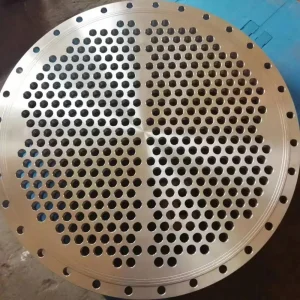
Providing high-alloy and stainless steel (ASTM A182 F316L, Duplex F51, Hastelloy) flanges, custom tube sheets, and heavy-wall reducer flanges. Engineered for zero-leakage performance under thermal cycling and aggressive chemical acid exposure.
Specialized low-temperature carbon steel (A350 LF2) and austenitic stainless steel flanges designed for liquid natural gas (LNG) carrier vessels (-162°C) and ultra-pure hydrogen gas transport pipelines demanding leak rates under 1x10^-6 mbar·l/s.
A primary factor that separates industrial-grade manufacturers from unverified traders is standard certification and quality assurance transparency. International piping project contractors cannot risk installing non-compliant fittings that threaten pressure vessel integrity.
Shanxi Yuxin Casting & Forging Co., Ltd. operates under a rigorous quality management framework certified to ISO 9001:2015 by TÜV CERT, alongside PED 2014/68/EU Directive Annex I and AD 2000-Merkblatt W0 / TRD 100 qualifications. Every export shipment includes comprehensive testing documentation that meets European and American regulatory standards.
Each flange lot is accompanied by an EN 10204 3.1 Mill Test Certificate detailing ladle chemical analysis, tensile strength, yield point, elongation, hardness testing, and impact energy absorption values. Independent third-party inspection (SGS, TÜV, Lloyd's Register) is available for 3.2 certification.
100% ultrasonic testing (UT) per ASTM A388 is performed on forged blanks to detect internal inclusions or voids. Critical flange faces undergo liquid penetrant testing (PT) and magnetic particle inspection (MT) to ensure flaw-free surfaces prior to final shipment.
Calibrated coordinate measuring machines (CMM) verify flange thickness, bore diameter, bolt circle pitch (PCD), and raised face height against ASME B16.5, ASME B16.47, or EN 1092-1 tolerances. Protective finishes include yellow varnish, anti-rust oil, black lacquer, or hot-dip galvanizing.
As heavy industry accelerates toward decarbonization and operational digitalization, flange manufacturing is undergoing a significant transformation. The next decade will see a major shift in how welding flanges are specified, manufactured, and monitored throughout their operating lifecycle.
Integration of hydrogen-direct reduced iron (DRI) billets and electric arc furnace (EAF) melting processes. This lowers the embodied carbon footprint of forged carbon and stainless flanges by up to 60%, helping global EPC contractors meet ESG procurement mandates.
Implementing finite element modeling (FEM) for metal flow optimization during hot die forging. AI-driven CNC adaptive machining automatically adjusts tool paths to ensure surface finish accuracy within ±0.01 mm across high-volume production lines.
Development of hybrid additive-manufactured flanges featuring embedded fiber-optic or piezoelectric sensors. These "smart flange joints" enable real-time monitoring of bolt tension loss, temperature spikes, gasket degradation, and micro-leakage in remote subsea or toxic gas lines.
For international supply chain managers and project engineers, evaluating flange suppliers requires balancing cost efficiency against risk mitigation. Evaluating a manufacturer on unit price alone can expose projects to schedule delays, field weld rejections, or unexpected customs delays.
| Procurement Metric | Traditional Trading Desk / Trader | YUXIN Direct Factory Sourcing | Strategic Benefit / Cost Impact |
|---|---|---|---|
| Price Structure | 25% - 40% intermediate markup | Direct mill-level discount pricing | Significant reduction in CAPEX for bulk pipeline orders. |
| Material Traceability | Fragmented documentation across middle agents | 100% heat number stamped, EN 10204 3.1 directly from forge | Eliminates risk of non-compliant steel rejections during audit. |
| Custom Fabrication | Limited to standard stock inventory | Custom drawings, tube sheets & non-standard sizes up to 3000mm | One-stop shop for specialized heat exchanger and vessel components. |
| Lead Time & Logistics | Dependent on third-party stock availability | 7-15 days stock, 20-35 days custom production run | Predictable delivery timelines with seaworthy export packaging. |
Detailed answers to standard engineering inquiries, certification questions, and order logistics.
Explore our full line of blind, socket weld, reducer, lap joint, and custom-machined tube sheet components.