Explore our precision-forged and CNC-machined stainless and carbon steel flange lineup manufactured under rigorous ISO 9001 and PED certification standards.
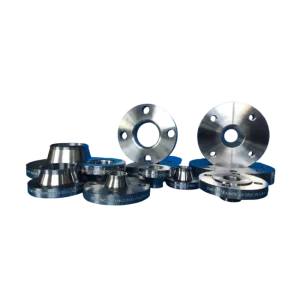
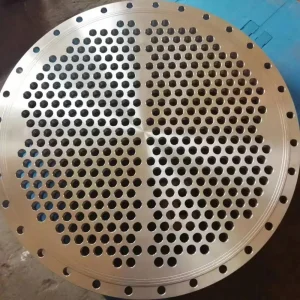
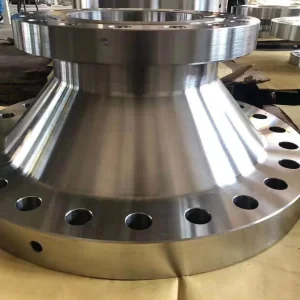
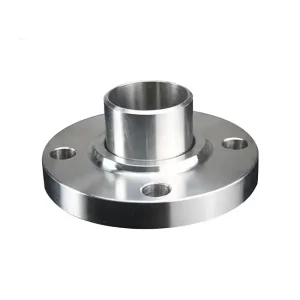
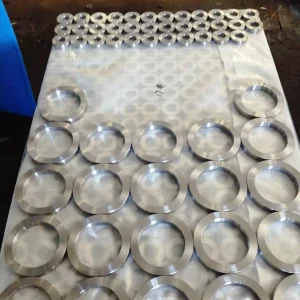
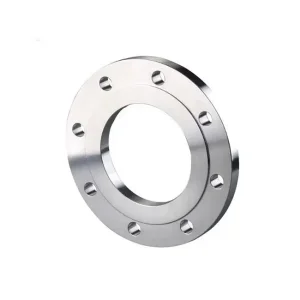
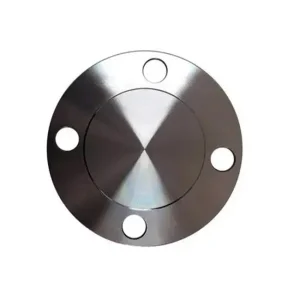
In modern forced-induction propulsion systems, heavy-duty diesel engines, marine turbocharging units, and industrial gas energy platforms, the stainless turbo flange represents the primary mechanical seal between extreme exhaust energy and mechanical conversion turbine housings.
Exhaust gas temperatures (EGT) in turbocharger manifolds routinely cycle between ambient temperatures and upwards of 950°C to 1,050°C (1,742°F to 1,922°F). Under these harsh operational conditions, conventional cast or low-alloy carbon steel components suffer rapid thermal degradation, oxidation scaling, intergranular cracking, and flange face warpage. The transition to high-integrity stainless steel alloys—specifically austenitic grades such as 304L, 316L, 321, 310S, and nickel-base superalloys like Inconel 718—has redefined structural reliability for turbocharger connection interfaces worldwide.
Key Engineering Insight: Discount procurement in global sourcing does not imply technical compromise. By leveraging automated Industry 4.0 forging lines and precision 5-axis CNC machining, Chinese manufacturing hubs like Dingxiang achieve tight geometric tolerances (Ra ≤ 1.6 µm, parallelism within 0.05 mm) while reducing unit material waste by up to 35%.
Rapid thermal cycling creates localized stress concentrations. Precision-machined stainless turbo flanges feature optimized bolt-hole pitch circles and stress-relief relief grooves to absorb expansion without causing stud shear or joint leakage.
Preventing high-pressure exhaust bypass is critical to maintaining turbine spool-up efficiency. Ground gasket surfaces matched with T3, T4, T6, or V-Band geometric profiles guarantee complete gas tightness under severe backpressure.
High chromium and nickel content forms a self-healing chromium oxide (Cr2O3) passive layer, shielding the flange against aggressive combustion sulfur compounds, moisture condensation, and atmospheric corrosion.
The global market for stainless turbo flanges is undergoing a structural paradigm shift driven by stringent emissions legislation (Euro VI, US EPA Tier 4 Final, IMO Tier III), engine downsizing trends, and the expansion of heavy industrial power generation.
Global automakers are adopting smaller displacement engines equipped with high-pressure twin-scroll turbochargers to satisfy carbon reduction targets without sacrificing power output. This shift demands turbo flanges capable of withstanding higher manifold pressures and rapid transient heat cycles. Stainless 304 and 321 flanges have become the standard for passenger cars, while 316L and Inconel are preferred for commercial transport engines operating under continuous high load.
With international maritime regulation enforcing strict NOx and SOx emission limits within Emission Control Areas (ECAs), marine diesel engines rely on dual-fuel and exhaust gas recirculation (EGR) turbocharging systems. These units demand heavy-section forged stainless steel flanges (such as ASME B16.5 and custom ring flanges) that resist aggressive acidic condensate and salt spray environments.
Stationary natural gas power generation facilities require 24/7 continuous operation under constant thermal load. Turbine inlet flanges used in these power plants must maintain zero creep deformation over 50,000+ operational hours. As a result, procurement teams are shifting away from sand-cast iron components toward forged and CNC-machined stainless steel flanges with full material traceability (EN 10204 3.1).
Procurement managers no longer evaluate turbo flanges solely on unit price. Reliability metrics—such as dimensional repeatable precision, zero micro-porosity, surface flat tolerance, and verifiable heat-number certification—now lead purchase decisions.
Selecting the correct alloy for your turbocharger flange application depends on maximum operating temperature, environmental exposure, pressure rating, and budget constraints.
| Material Grade | Composition Key Highlights | Max Temp Limit | Corrosion / Oxidation Resistance | Best Application Scenarios |
|---|---|---|---|---|
| Stainless Steel 304 / 304L | 18% Cr / 8% Ni (Low Carbon) | 800°C (1,472°F) | Good baseline resistance to atmospheric oxidation | Standard automotive performance downpipes, light duty turbo downpipe adapters, entry-level exhausts. |
| Stainless Steel 316 / 316L | 16% Cr / 10% Ni / 2% Mo | 870°C (1,598°F) | Superior chloride & acidic gas pitting resistance | Marine turbochargers, offshore power gensets, chemical exhaust scrubbers, high-moisture exhaust systems. |
| Stainless Steel 321 | 17% Cr / 9% Ni + Titanium Stabilized | 900°C (1,652°F) | Prevents intergranular chromium carbide precipitation | High-temperature commercial diesel exhaust manifolds, aircraft turbocharger systems, continuous racing engines. |
| Stainless Steel 310S | 25% Cr / 20% Ni (High Austenitic) | 1,050°C (1,922°F) | Exceptional resistance to high-temperature scaling | Heavy industrial gas turbine exhausts, continuous duty power plants, extreme high-EGT performance setups. |
| Duplex 2205 (UNS S31803) | 22% Cr / 5% Ni / 3% Mo + Nitrogen | 600°C (1,112°F) | Ultra-high mechanical strength & stress corrosion cracking resistance | Subsea gas compressors, heavy oilfield pumping turbine flanges, combined high-pressure structural joints. |
China’s Shanxi forging cluster—centered around Dingxiang—combines raw steel integration, precision forging, digital heat treatment, and automated CNC machining into a singular industrial ecosystem.
From billet cutting and induction heating to closed-die forging and CNC bolt-hole milling, every process stage is contained in-house. This eliminates intermediary markups and transit delays.
Utilizing multi-axis CNC turning centers and automated coordinate measuring machines (CMM), flange face flatness, bevel angles, and thread concentricities are held to strict tolerances (ISO 2768-m).
Processing over 10,000 tons of forged components annually allows factory-direct bulk purchasing of prime stainless billets, passing up to 25–40% cost savings directly to overseas B2B buyers.
For international EPC contractors, distributor network managers, and OEM engine builders, procuring stainless turbo flanges involves stringent quality gates and procedural compliance.
Every bulk shipment must be accompanied by an official EN 10204 3.1 Inspection Certificate (or 3.2 third-party witnessed MTC). Certificates verify exact ladle chemical heat analysis, yield strength, tensile strength, elongation percentages, hardness values (HBW/HRC), and non-destructive examination (NDE) reports like Ultrasonic (UT) or Liquid Penetrant (PT) testing.
Standard off-the-shelf flanges (T3, T4, T6, GT25, GT30, GT35, V-Band) often require custom bolt patterns, integrated sensor ports (EGT/O2), or tapered transition bores. Factory-direct engineering teams work directly from customer STEP, DWG, or PDF blueprints to produce rapid prototype dies within 7 to 12 working days.
Understanding how stainless turbo flanges perform across different operational environments highlights the importance of matching material specifications to local duty cycles.
Scenario: High-boost drag racing and circuit vehicles running ethanol-blend fuels (E85) experience intense exhaust gas pulses and temps exceeding 980°C.
Solution: CNC-machined SS321 thick-plate (1/2" or 12mm) T4 twin-scroll flanges with counter-bored pipe sockets eliminate warping and prevent head-gasket blowing under 45+ PSI boost.
Scenario: Workboats operating in saltwater environments require turbo flange connections that resist continuous salt fog and ambient humidity.
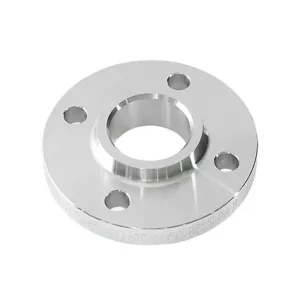
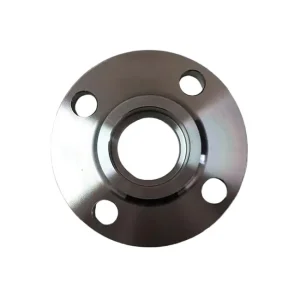
Solution: Forged Stainless Steel 316L lap joint and socket weld flanges paired with heavy-duty studs offer immunity against marine pitting corrosion while facilitating rapid turbo overhaul servicing.
Scenario: Off-highway haul trucks operating in high-altitude, dust-heavy mining sites face heavy structural vibration and thermal shock.
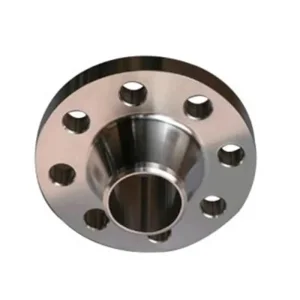
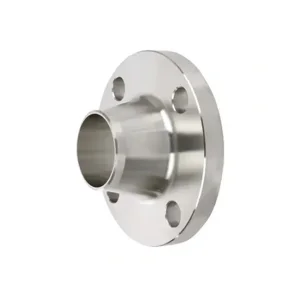
Solution: Heavy-section ASTM A182 F304 forged weld neck flanges with radiographed welds transfer stress away from the turbo housing into the manifold assembly, extending service life by 300%.
Every flange manufactured inside Shanxi Yuxin Casting & Forging Co., Ltd. undergoes multi-stage quality verification to ensure zero-defect delivery for critical global infrastructure projects.
Audited quality management governing raw material sourcing, forging control, and final packing.
Pressure Equipment Directive compliance certified by TÜV CERT for European industrial pressure systems.
German pressure vessel material approval guaranteeing metallurgical structural integrity and safety margins.
Complete material traceability with optional independent third-party witness inspection (SGS, BV, Lloyd's).
Get immediate answers to common technical, metallurgical, and logistics questions raised by engineers and procurement officers.
Forged stainless flanges are created by applying extreme directional hydraulic pressure to heated solid steel billets. This process refines the internal grain structure, aligns micro-flow lines, and eliminates internal voids, gas porosity, and micro-cracks common in sand or investment casting. Forged flanges exhibit up to 35% higher tensile strength, superior impact resistance at extreme temperatures, and significantly higher resistance to thermal fatigue leakage.
For operating temperatures consistently exceeding 900°C (1,652°F), Stainless Steel 321 (titanium-stabilized) or Stainless Steel 310S (high nickel/chromium) is strongly recommended over standard SS304. SS321 prevents intergranular chromium carbide precipitation during welding and high heat exposure, while SS310S provides superior scaling resistance up to 1,050°C. For extreme racing or aerospace applications, Nickel Alloy Inconel 718 is the ultimate choice.
Flange face warping during exhaust manifold fabrication occurs due to uneven heat input. To minimize distortion, our factory produces thick-plate flanges (10mm to 20mm thickness options) featuring precise stress-relief chamfers. We advise fabricators to use backer plates, apply staggered TIG welding passes with argon gas purging, and specify stress-relieved or solution-annealed flanges prior to final assembly machining.
We forge and machine flanges compliant with ASME B16.5, ASME B16.47 Series A & B, EN 1092-1, DIN, JIS, GOST, and BS standards across pressure classes from Class 150 to Class 2500 (PN6 to PN400) in nominal sizes from 1/2" up to 120" (DN15 to DN3000). Additionally, our engineering shop manufactures custom turbo flanges (T3, T4, T6, V-Band, GT series) and drawing-based non-standard components up to 3,000 mm diameter.
Standard flange items held in stock as rough-forged blanks can be fully CNC-machined, inspected, and shipped within 7 to 15 days. Custom forged-to-order flanges or specialized alloys normally require 20 to 35 days depending on billet availability and heat-treatment cycles. Flexible MOQs are available for trial orders, prototype evaluation, and distributor stock replenishment.
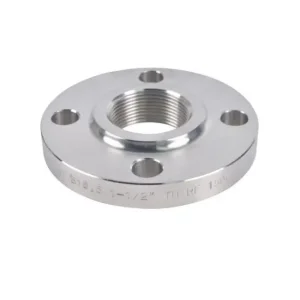
Explore additional standard and custom forged flange types manufactured for oil & gas, chemical, power generation, and turbo machinery pipelines.
Connect directly with our engineering team in Dingxiang, Shanxi. Send your CAD drawings, bill of materials, or flange schedule for an itemized factory quotation within 24 hours.
