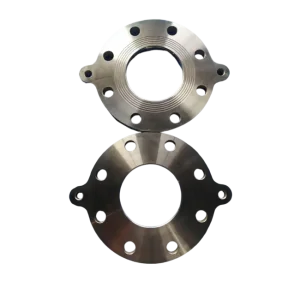
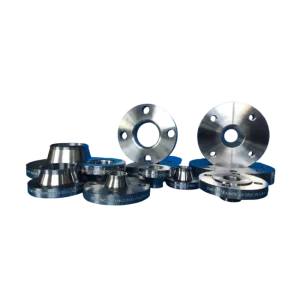
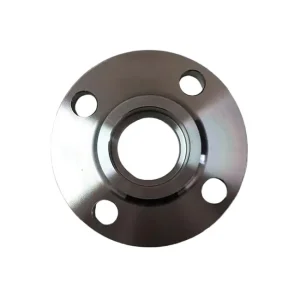
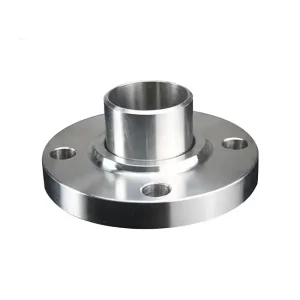
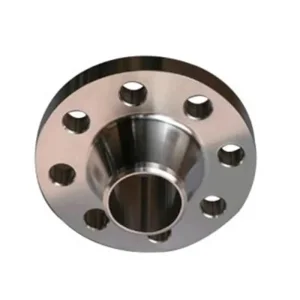
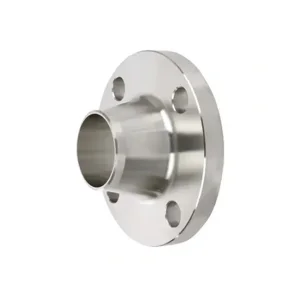
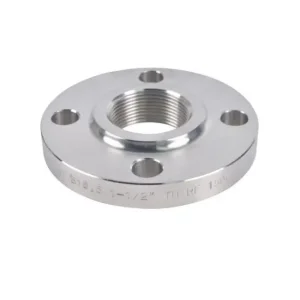
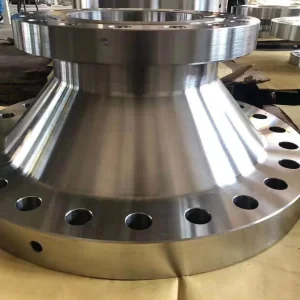
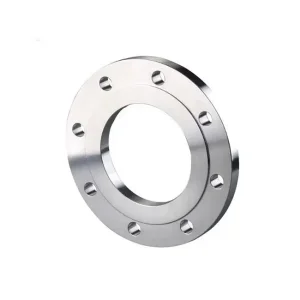
Explore our high-yield, corrosion-resistant forged flange catalogue optimized for critical piping pressure transitions, oil & gas systems, and heavy chemical skids.
In modern fluid mechanics, thermal processing, and high-pressure conveying infrastructure, the Stainless Steel Reducing Flange plays a vital, non-negotiable role. Designed to join pipe runs of differing diameters seamlessly, reducing flanges eliminate the necessity for a standalone concentric or eccentric pipe reducer welded to a standard flange. This dual-function capability reduces weld seams by 50%, mitigates non-destructive examination (NDE) costs, and dramatically streamlines installation footprints in space-constrained skids such as Floating Production Storage and Offloading (FPSO) vessels and high-purity chemical dosing modules.
The global industrial flange sector is undergoing a profound structural shift driven by clean energy transitions, LNG export infrastructure construction, and chemical plant modernizations. Procurement officers, EPC engineers, and stocking distributors are increasingly searching for a discount stainless steel reducing flange manufacturer & manufacturers capable of balancing competitive pricing with absolute metallurgical compliance.
Market demands are moving away from stock-standard commodity components toward customized alloy configurations (e.g., Duplex 2205, Super Duplex 2507, and Austenitic 316L/317L) produced under strict ASME B16.5, ASME B16.47, and EN 1092-1 Type 11 specs. Purchasing departments require verified factory-direct pricing without taking on risks related to casting porosity or grain-growth defects.
The primary engineering justification for specifying stainless steel reducing flanges lies in precise fluid velocity regulation. When a process fluid experiences a diameter reduction, pressure drops and velocity profiles adjust accordingly. By utilizing precision-machined, smooth-tapered reducer flanges, mechanical engineers minimize fluid cavitation, turbulence, and stress concentrations at joint faces.
To guarantee zero leakage under extreme pressure classes (Class 150 to Class 2500, PN10 to PN400), manufacturing stainless steel reducing flanges requires absolute mastery of high-temperature forge mechanics and closed-die technology. Unlike cheap cast alternatives that suffer from internal shrinkage cavities, micro-porosity, and erratic wall thickness variations, Shanxi Yuxin Casting & Forging Co., Ltd. utilizes 100% closed-die closed-grain forged billets.
| Alloy Grade | UNS / EN Standard | Tensile Strength (MPa) | Yield Strength (MPa) | Key Industrial Applications |
|---|---|---|---|---|
| 304 / 304L Stainless | UNS S30400 / 1.4301 | ≥ 485 | ≥ 170 | General HVAC, municipal water, light chemical, food processing skids. |
| 316 / 316L Stainless | UNS S31600 / 1.4404 | ≥ 485 | ≥ 205 | Offshore oil & gas, marine equipment, pharmaceutical processing, nitric acid piping. |
| Duplex 2205 | UNS S31803 / 1.4462 | ≥ 655 | ≥ 450 | Desalination plants, high-chloride environments, sour gas gathering systems. |
| Super Duplex 2507 | UNS S32750 / 1.4410 | ≥ 750 | ≥ 550 | Deepwater subsea trees, aggressive chemical refining, flue-gas desulfurization (FGD). |
| 321 / 347 Stabilized | UNS S32100 / 1.4541 | ≥ 515 | ≥ 205 | High-temperature exhaust manifolds, refinery catalytic cracking units, thermal power. |
Hot forging refines the directional grain structure of stainless steel raw material. Under heavy hydraulic pressing, grain flow realigns along the contour of the flange hub and sealing face. This results in superior impact toughness at sub-zero temperatures and high resistance to fatigue failure under pressure pulsation cycles.
All forged stainless steel reducing flanges undergo high-temperature solution heat treatment (1050°C - 1100°C) followed by rapid water quenching. This step redissolves chromium carbides into the austenitic matrix, eliminating intergranular corrosion susceptibility and restoring ductility for subsequent welding.
Sealing surfaces are machined on multi-axis CNC lathes to achieve exact roughness profiles (AARH 125-250 micro-inches for Raised Face, and smooth finishes for Ring Type Joint grooves). Critical parameters including bolt-hole circle concentricity, face parallelism, and wall thickness steps are verified via CMM.
When engineering and procurement directors search for a discount stainless steel reducing flange manufacturer & manufacturers, the term "discount" must never signal a compromise in raw material purity, testing rigor, or dimensional tolerance. Instead, it reflects structural cost efficiencies native to China's leading forging epicenters.
Located in Dingxiang County, Shanxi Province—officially designated as the “Hometown of Forging in China”—Shanxi Yuxin Casting & Forging Co., Ltd. operates inside an ultra-dense industrial cluster. This ecosystem integrates raw steel billet production, forging presses, heat treatment facilities, testing laboratories, and export logistics within a tight geographic radius.
Because reducing flanges serve as the structural link between varying pipe schedules and equipment nozzles (e.g., pumps, strainers, turbines, valves), their mechanical execution dictates overall system reliability. Here are four real-world engineering applications where YUXIN stainless steel reducing flanges excel:
In offshore oil production, weight reduction and space savings are paramount. Our ASTM A182 F316L reducing flanges join 8" main header lines to 4" pressure transmitter manifolds without bulky concentric reducers, saving up to 40 kg per joint while withstanding high-salinity atmospheric corrosion.
Handling liquefied natural gas at temperatures as low as -196°C demands high impact toughness. Our low-carbon stainless steel forged flanges undergo Charpy V-notch impact testing down to cryogenic thresholds, preventing brittle fractures under severe thermal cycling.
In high-pressure dosing systems transferring sulfuric or nitric acid, any turbulent eddy current causes accelerated wall thinning. YUXIN's smooth CNC bore transitions prevent velocity pockets, extending skid operating life to over 25 maintenance-free years.
Seawater reverse osmosis (SWRO) systems operate under continuous pressures exceeding 70 bar in high-chloride fluids. Utilizing Super Duplex 2507 reducing flanges prevents crevice corrosion underneath gaskets and eliminates catastrophic joint failures.
The industrial flange market is evolving rapidly. Advanced manufacturing, digital quality tracking, and stringent environmental policies are reshaping how global buyers evaluate a potential discount stainless steel reducing flange manufacturer & manufacturers. key trends transforming the sector include:
Modern EPC projects require total digital integration. Every flange forged at YUXIN is laser-etched with a unique QR code linked directly to its digital EN 10204 3.1 Mill Test Certificate (MTC). Field inspectors can scan the physical flange on site to verify chemical composition, heat number, yield strength, and NDE test reports instantaneously.
Global end-users are demanding lower Scope 3 carbon emissions. By replacing coal-fired reheating furnaces with closed-loop electric induction heaters and natural gas continuous furnaces, YUXIN has reduced forge carbon emissions by 28% over five years, satisfying stringent European environmental criteria.
As field installation labor costs climb in North America and Europe, piping contractors rely heavily on automated orbital welding. Our reducing flanges feature precision-machined weld bevels (to ASME B16.25 standards) with exact wall-thickness transitions, guaranteeing uniform penetration and minimal weld root setup times.
Procuring stainless steel reducing flanges across international supply chains requires a disciplined quality verification approach. Procurement teams must look past price quotes to ensure their chosen factory enforces comprehensive Non-Destructive Examination (NDE) and strict quality control measures. Below is YUXIN's standard Quality Assurance protocol applied to every export shipment:
Expert answers to common questions from engineering firms, stockists, and procurement managers.
A standard flange connected to a separate pipe reducer requires two circumferential weld joints, leading to increased fabrication labor, longer fit-up times, and double the required non-destructive testing (radiography/UT). A Reducing Flange integrates both function into a single forged component. The outer dimensions (bolt circle, flange thickness, outer diameter) match the larger nominal pipe size, while the inner bore matches the smaller pipe diameter. This saves installation space, eliminates one weld seam, and reduces stress concentration points in critical piping skids.
Our competitive pricing stems directly from our strategic location in Dingxiang, Shanxi—China's primary forging industrial cluster. We maintain direct mill-contract pricing for raw stainless steel billets, operate high-capacity automated heating and forging lines, and handle heat treatment and multi-axis CNC machining entirely in-house. By removing middle trading agents and achieving economies of scale (10,000 tons annual output), we pass structural cost savings (20% to 35%) directly to global buyers while delivering 100% tested, EN 10204 3.1 certified forgings.
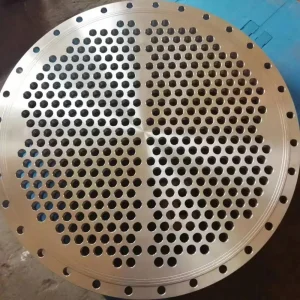
We manufacture standard reducing flanges according to ASME B16.5 (sizes 1/2" to 24", Class 150 to 2500), ASME B16.47 Series A & B (sizes 26" to 60"), EN 1092-1 (PN6 to PN400), as well as DIN, JIS, and GOST standards. For custom requirements, our engineering department produces non-standard reducer flanges, high-thickness tube sheets, and forged rings up to 3,000 mm (120 inches) outer diameter directly from customer CAD/DWG drawings.
Shanxi Yuxin Casting & Forging Co., Ltd. holds ISO 9001:2015 accreditation, PED 2014/68/EU certification, AD 2000-Merkblatt W0, and Special Equipment Manufacturing Licensing. Every order ships with a comprehensive EN 10204 3.1 Mill Test Certificate detailing heat numbers, chemical analysis, mechanical properties, hardness values, and solution heat-treatment logs. On request, we regularly host third-party inspection agencies including SGS, TÜV, Lloyd's Register, BV, and DNV for EN 10204 3.2 witness certification.
For standard sizes held in semi-finished forged blank inventory, final CNC machining, facing, and packaging take 7 to 15 days. Custom forged-to-order alloy items (e.g., Duplex 2205, Super Duplex, low-carbon 316L) typically require 20 to 30 days. To support distributor sample needs and project emergency replacements, we maintain a flexible MOQ policy, accepting trial orders starting from single-piece non-standard items up to full 20ft container loads.
Discover our full suite of ISO-certified, CNC-machined industrial flanges designed for long service lives in harsh operational environments.