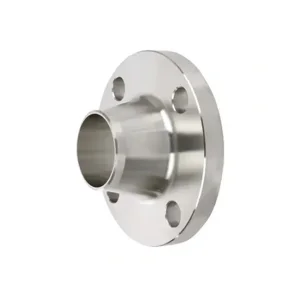
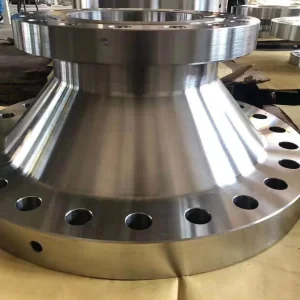
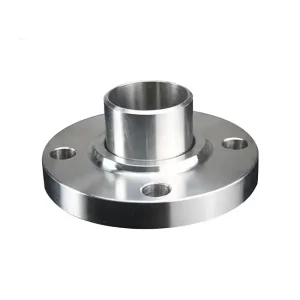
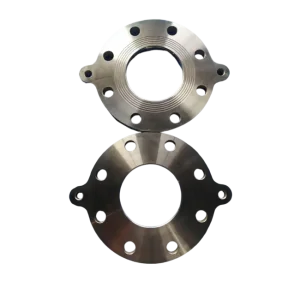
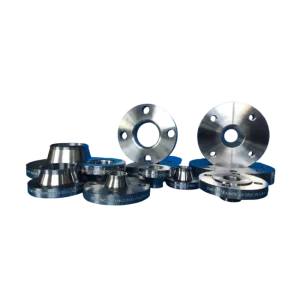
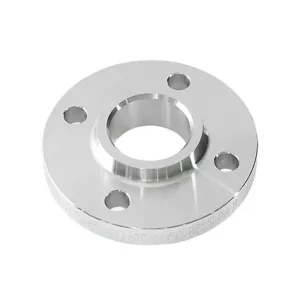
Direct factory supply of ASME/ANSI B16.5 and EN 1092-1 compliant stainless steel flanges manufactured under strict metallurgical quality control protocols.
Evaluating the strategic balance between low-cost sourcing and high-spec mechanical performance in critical fluid transmission systems.
In global industrial piping contracts, the term "Discount SS Flanges" frequently triggers caution among EPC (Engineering, Procurement, and Construction) managers due to fears of compromised metallurgy or dimensional tolerances. However, modern manufacturing economics in specialized industrial clusters like Shanxi, China, have redefined what "discount" means. Rather than cutting costs on nickel or chromium alloy content, true cost advantages stem from scale economics, automated CNC machining cells, and localized raw billet integration.
By leveraging direct forge-to-finish production lines, tier-one Chinese suppliers eliminate regional distributor markups, middle-tier trading overheads, and inefficient small-batch setups. This allows global buyers to purchase ASTM A182 F304/304L and F316/316L flanges at 20% to 35% below Western stockist pricing without sacrificing 100% UT (Ultrasonic Testing) compliance or EN 10204 3.1 material traceability.
The global market for stainless steel flanges is undergoing a significant transformation driven by energy transition projects, chemical plant upgrades, and subsea infrastructure expansion. Key macroeconomic drivers include:
Comprehensive breakdown of ASTM A182 forged stainless steel grades, chemical compositions, and pressure-temperature applicability.
| Steel Grade | UNS No. | Key Alloy Elements | PREN Value | Primary Industrial Applications | Applicable Standards |
|---|---|---|---|---|---|
| F304 / F304L | S30400 / S30403 | 18% Cr, 8% Ni (Max 0.03% C for L) | 18.0 - 20.0 | General Chemical, HVAC, Food Processing, Potable Water | ASME B16.5, EN 1092-1 Type 01/11 |
| F316 / F316L | S31600 / S31603 | 16% Cr, 10% Ni, 2.0-3.0% Mo | 23.0 - 25.0 | Marine Engineering, Offshore Oil & Gas, Petrochemicals | ASME B16.5 / B16.47, DIN 2501 |
| F321 / F321H | S32100 / S32109 | 17% Cr, 9% Ni, Ti = 5x(C+N) min | 18.5 - 21.0 | High-Temperature Refinery Piping, Exhaust Systems, Thermal Power | ASME B16.5, EN 1092-1 |
| Duplex 2205 | S31803 / S32205 | 22% Cr, 5% Ni, 3% Mo, 0.18% N | 32.0 - 35.0 | Desalination Plants, Sour Gas Wellheads, Chloride Environments | ASTM A182 F51 / F60, NACE MR0175 |
| Super Duplex 2507 | S32750 | 25% Cr, 7% Ni, 4% Mo, 0.27% N | > 42.0 | Deepwater Subsea Manifolds, Aggressive Chemical Processing | ASTM A182 F53, API 6A |
| 904L | N08904 | 20% Cr, 25% Ni, 4.5% Mo, 1.5% Cu | 34.0 - 36.0 | Sulfuric & Phosphoric Acid Handling, Pulp & Paper Bleaching | ASME B16.5 Custom |
Austenitic stainless steels like F304 and F316 are susceptible to chromium carbide precipitation along grain boundaries when exposed to temperatures between 425°C and 850°C during welding or slow cooling. By utilizing low-carbon variants (F304L / F316L) or titanium-stabilized grades (F321), intergranular corrosion risks are completely mitigated.
Proper gasket seat contact is crucial for leak-free operations. We manufacture precise facing profiles including Raised Face (RF) with serrated concentric grooves (125-250 µin AARH), Flat Face (FF) for cast iron mating, and Ring Type Joint (RTJ) octagonal/oval grooves engineered for Class 900 to Class 2500 ultra-high pressure duties.
All SS flange forgings undergo mandatory solution heat treatment (heating to 1040°C–1120°C followed by rapid water quenching). This process fully redissolves precipitates into the matrix, restoring maximum corrosion resistance and mechanical ductility required by EN 10204 3.1 certification.
From raw stainless steel billet selection to final seaworthy export packing, our integrated manufacturing plant ensures zero defect tolerances.
Every batch of raw stainless steel round bars undergoes Optical Emission Spectrometry (OES) to verify chemical composition (Cr, Ni, Mo, C) prior to heating.
Billets are heated under strict temperature control before closed-die hot forging or ring rolling. This continuous grain alignment boosts yield strength and fatigue limits.
Forged blanks undergo high-temperature solution heat treatment in computer-controlled gas furnaces, followed by rapid water quench tanks to freeze the austenitic phase.
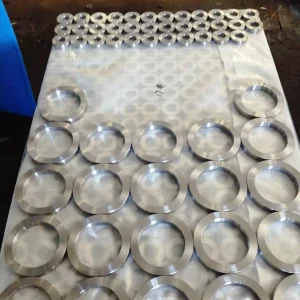
Multi-axis CNC lathes machine the flange hub, bore, bolt hole pattern, and flange face serration to strict ANSI/ASME B16.5 and EN 1092-1 dimensional tolerances.
100% Ultrasonic Testing (UT) for internal voids/laminations, accompanied by Dye Penetrant Inspection (PT) on critical sealing faces to detect surface micro-cracks.
Hard stamping on the flange rim records heat number, material grade, pressure rating, standard size, and manufacturer logo for complete 30-year lifecycle traceability.
Flanges are acid-passivated to clean free iron from the surface, coated with protective caps, and packed in ISPM-15 compliant fumigation-free plywood crates for global shipping.
Discover how specialized SS flange configurations address high-stress operational challenges across critical heavy industries.
Liquefied Natural Gas (LNG) at −162°C demands materials with exceptional low-temperature notch toughness. ASTM A182 F316L and F321 Weld Neck Flanges are specified for cryogenic loading arms and storage headers, undergoing Charpy V-notch impact testing at −196°C to prevent brittle fracture risks.
Sour service environments containing wet hydrogen sulfide ($H_2S$) cause Sulfide Stress Cracking (SSC). We manufacture Duplex 2205 and NACE MR0175/ISO 15156 compliant SS flanges with strictly controlled hardness values (< 28 HRC) to guarantee decades of maintenance-free refining operations.
High-pressure seawater reverse osmosis (SWRO) pumps operate at pressures exceeding 70 bar in high-chloride brine. Standard 316L flanges suffer pitting. We supply Super Duplex 2507 and 904L Flanges with PREN values > 42 to withstand aggressive localized pitting and crevice corrosion.
The small atomic radius of hydrogen gas causes hydrogen embrittlement in standard carbon steels under high pressure. Electropolished F316L Slip-On and Socket Weld Flanges provide seamless grain structures, non-permeable inner walls, and zero contamination in fuel cell production.
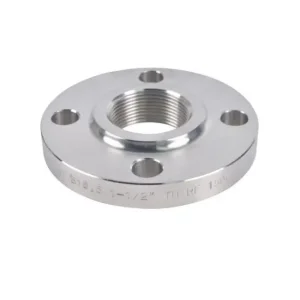
Ultra-pure water (WFI) and CIP/SIP cleaning fluids require zero crevice retention. Our specialized CNC-machined SS Threaded and Stub End Flanges feature mirror-polished internal bores ($Ra < 0.4 \mu m$) preventing bacterial entrapment and biofilm formation.
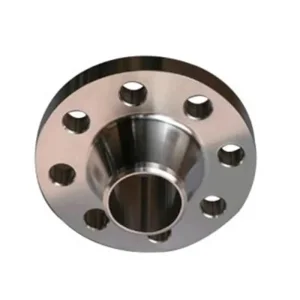
Primary cooling loops in thermal and nuclear facilities experience intense thermal cycling and pressure spikes. High-strength ASME B16.47 Series A/B Welding Neck Flanges in F321H deliver exceptional creep rupture resistance at operating temperatures above 550°C.
Streamlined documentation, third-party inspection authorization, and protective export logistics designed for frictionless customs entry.
Every shipment of stainless steel flanges from our mill is accompanied by an exhaustive dossier verified by internal quality directors and independent inspectors:
Maritime transport exposes steel cargo to extreme humidity and salt vapor. To prevent surface staining or flange face impact damage during transit, we implement multi-layer protection:
Discover how Industry 4.0 integration, green steel hydrogen forging, and digital twin traceability are revolutionizing stainless steel flange reliability.
Transitioning from conventional natural gas heating furnaces to zero-emission hydrogen-powered induction heating systems. This reduces Scope 1 carbon footprints by up to 85%, ensuring full compliance with European CBAM tariffs and corporate ESG targets.
Integrating real-time laser tool wear monitoring and automated optical inspection (AOI) on CNC turning centers. Micro-variations in flange face serration pitch or bolt circle diameter are corrected instantly with zero human error margin.
Every forged SS flange will carry a laser-etched QR code linking directly to a decentralized blockchain ledger. Instant verification of raw billet chemistry, heat treatment curves, and NDT certificates eliminates counterfeit MTC risks worldwide.
Expert answers to common technical queries regarding stainless steel flange standards, pricing mechanisms, and installation integrity.
Discover high-integrity Threaded, Slip-On, Stub End, Lap Joint, and Ring Flanges manufactured for global piping systems.