Explore our certified forged flange configurations engineered for oil & gas, chemical processing, and power infrastructure projects worldwide.
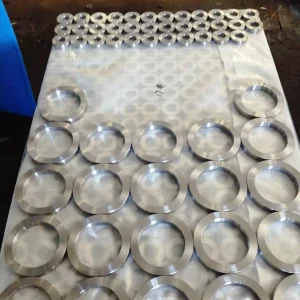
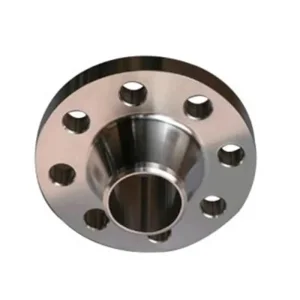
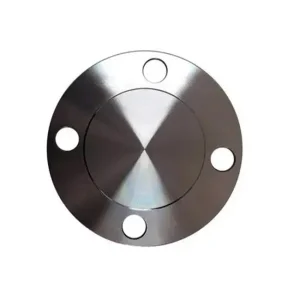
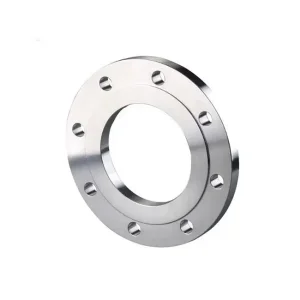
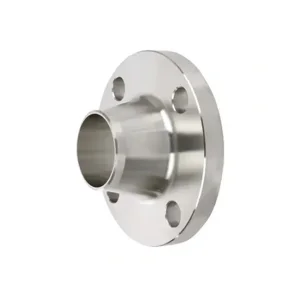
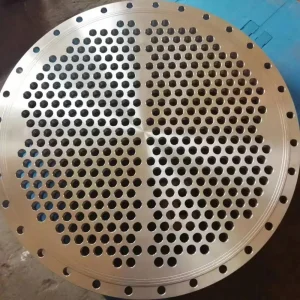
In high-pressure petrochemical, oil refining, gas processing, and power plant operations, achieving absolute fluid separation during maintenance or line turnaround is a non-negotiable safety mandate. A Slip Blind Flange (frequently referred to as a Paddle Blind, Spade Flange, or paired with its open counterpart, the Ring Spacer) is a solid metallic disc with an extended handle manufactured to fit between two pipe flanges to completely block fluid flow.
While mechanical gate or ball valves can suffer from seat wear, thermal expansion binding, or microscopic fluid bypass, a correctly specified ASME B16.48 Slip Blind provides 100% mechanical positive isolation. This eliminates human error and cross-contamination risks when personnel enter pressure vessels or downstream piping sections.
A solid metallic plate with an extended handle. Inserted into piping flange joints during maintenance or line shutdowns to provide absolute physical closure and leak prevention.
A open ring plate matching the exact thickness and diameter of its corresponding Slip Blind. Installed during normal pipeline operation to maintain stress balance and uniform spool length.
Combines both a solid spade and an open spacer ring connected by a solid bridge. Rotated visually between open and closed position without removing the spacer from the flange set.
Determining the design thickness of a Slip Blind is crucial to avoid deflection or catastrophic yielding under line hydrotesting or maximum allowable operating pressure (MAOP). According to ASME B31.3 Process Piping Code, the minimum required thickness ($t$) is computed using the equation:
Located in Shanxi Province, Dingxiang County is officially designated as the "Capital of Forging in China." Sourcing directly from Shanxi Yuxin Casting & Forging Co., Ltd. delivers direct factory cost advantages without compromising international quality standards.
Direct integration with Taiyuan Iron and Steel (TISCO) and major regional carbon steel mills guarantees premium billet availability, complete chemical heat numbers, and immediate response to custom alloy melt requests.
Our 10,000-ton annual capacity features automated hydraulic forging presses, ring rollers, and CNC vertical lathes. Bulk production reduces unit processing costs, allowing us to pass significant discounts to global buyers.
Discount pricing does not mean degraded quality. Every lot is audited under ISO 9001, PED 2014/68/EU, and AD 2000-Merkblatt W0 guidelines, accompanied by EN 10204 3.1 Mill Test Certificates.
Our slip blind flanges and paddle spacers are engineered across a broad spectrum of pressure ratings, size diameters, and specialized alloys to withstand sour gas, sub-zero temperatures, and high-acid environments.
| Material Category | ASTM / EN Grade | Service Temperature Range | Recommended Industrial Applications |
|---|---|---|---|
| Carbon Steel | ASTM A105 / Q235B / P250GH | -29°C to 425°C (-20°F to 800°F) | Refinery steam utilities, ambient oil/water headers, general piping installations. |
| Low-Temp Carbon Steel | ASTM A350 LF2 Class 1 / Class 2 | -46°C to 345°C (-50°F to 650°F) | Cryogenic LPG/LNG gas terminals, arctic exploration, subsea gas headers. |
| Low-Alloy Steel | ASTM A182 F11 / F22 / F91 | Up to 650°C (1200°F) | High-temperature steam boiler lines, catalytic cracking units, thermal power stations. |
| Austenitic Stainless | ASTM A182 F304/304L / F316/316L | -196°C to 815°C (-320°F to 1500°F) | Chemical processing plants, nitric acid lines, food grade utility lines, marine service. |
| Duplex & Super Duplex | UNS S31803 (2205) / UNS S32750 (2507) | :-50°C to 300°C (-58°F to 572°F)Desalination facilities, severe offshore platforms, high-chloride chemical lines. | |
| Nickel Superalloys | Inconel 625 / Hastelloy C276 | Extreme Corrosion & Thermal (+1000°C) | NACE MR0175 sour crude wells, wet chlorine gas handling, severe acid lines. |
How global engineering procurement construction (EPC) contractors utilize Yuxin slip blind flanges for maximum facility uptime and zero environmental discharge.
During scheduled maintenance shutdowns, hundreds of lines must be isolated simultaneously. Extended handle paddle blinds allow plant managers to visually confirm line closure from ground level, accelerating turnaround clearance protocols.
In high $H_2S$ concentrations, sulfide stress cracking (SSC) presents severe hazards. Our NACE MR0175 / ISO 15156 compliant Duplex and alloy 625 spade flanges ensure zero hydrogen embrittlement failure in harsh offshore environments.
Prevent cross-batch contamination in multi-purpose chemical synthesis units. Fluoropolymer-coated slip blinds prevent aggressive solvents and acids from attacking flange faces or leaking into adjacent mixing tanks.
Modern industrial facilities are moving towards digital P&ID (Piping and Instrumentation Diagram) management. Shanxi Yuxin now supplies slip blind flanges with laser-etched matrix barcodes and embedded high-temperature RFID tags. Maintenance crews can instantly scan line blinds using handheld terminals to confirm physical location, pressure ratings, and installation timestamps, preventing accidental energization of un-isolated lines.
For large-diameter pipelines (DN600 / 24" and above), traditional solid paddle blinds can exceed 150 kg, requiring heavy cranes for installation. Through FEA structural modeling, our design team produces tapered flange geometry that maintains full ASME B31.3 structural compliance while reducing total weight by up to 18%, saving operational rigging hours.
Beyond traditional yellow oxide and rust-inhibiting black lacquer, high-value procurement projects demand specialized surface treatments:
How international procurement managers can leverage direct factory relationships to eliminate middleman markups while ensuring zero project lead-time risks.
Require EN 10204 3.1 or 3.2 inspection certificates with every shipment. Verify heat numbers stamped on the spade handle match melt analysis reports directly from the forge.
Ensure 100% Ultrasonic Testing (UT) per ASME Sec V for forged plates to detect internal inclusions, micro-voids, or laminations prior to final CNC precision facing.
All flange faces are coated with anti-rust oil, fitted with plastic protective caps, and packed inside fumigation-free wooden cases reinforced with heavy steel strapping.
Combine high-volume carbon steel Weld Neck / Slip-On flanges with low-volume custom alloy slip blinds in single sea containers to optimize ocean freight costs per kilo.
Answers to critical design, standards, and procurement questions asked by piping engineers and procurement officers.
A Spectacle Blind is a single contiguous metal piece combining an open ring spacer and a solid blind disc connected by a bridge, requiring space for 180-degree rotation. A Slip Blind (Paddle Blind) is only the solid disc with an extended handle. Slip blinds are preferred in larger pipe diameters (>12") or tight piping layouts where space restrictions prevent spectacle blind rotation.
While pipe flanges (Weld Neck, Slip-On, Blind) are governed by ASME B16.5 (up to 24") and ASME B16.47 (26" to 60"), metallic line blinds—including spectacle blinds, paddle blinds, and paddle spacers—are explicitly governed by ASME B16.48. Dimensions, pressure-temperature ratings, and materials under ASME B16.48 directly match ASME B16.5 flange pressure classes (Class 150 through Class 2500).
Shanxi Dingxiang is China's largest forging industrial cluster. High concentration of raw steel mills, centralized heat-treatment facilities, dedicated ring rolling lines, and high annual production volume generate unmatched economies of scale. Direct factory sourcing removes trading markups while maintaining full ISO and TÜV PED quality compliance.
Per ASME B16.48, the extended handle of every slip blind must be permanently die-stamped with: Manufacturer logo/name, Nominal Pipe Size (NPS), Pressure Class, Material Grade/Heat Number, and Facing Type (RF or RTJ). Additionally, a solid handle indicates a blind spade, whereas a drilled hole in the handle signifies a paddle spacer.
RTJ facing is recommended for high-pressure and high-temperature services (typically Class 600 and above, or temperatures exceeding 450°C), as well as critical sour gas lines. The metal-to-metal seal formed by an octagonal or oval ring gasket inside the RTJ groove provides superior joint tightness under high thermal cycling and bending stresses.
Inserting a slip blind introduces two gasket sealing faces instead of one. Piping engineers must select gaskets (such as spiral wound gaskets with inner rings or RTJ metallic rings) compatible with the line fluid and ensure bolts are of adequate length to accommodate the spade thickness. Star-pattern criss-cross torqueing must be strictly followed per ASME PCC-1 guidelines.
Every order includes complete EN 10204 3.1 Mill Test Certificates detailing chemical composition, mechanical tensile/yield strength, impact test values (for low-temp grades), hardness testing, dimensional inspection reports, and non-destructive examination (UT/MT) reports.
Standard carbon steel (A105) and stainless steel (304/316) spade blanks in sizes 1/2" to 24" ship within 7 to 15 days. Custom forged alloy sizes, heavy wall thicknesses, or special drawing-based ring spacers typically require 20 to 35 days including forging, heat treatment, CNC turning, and final inspection.
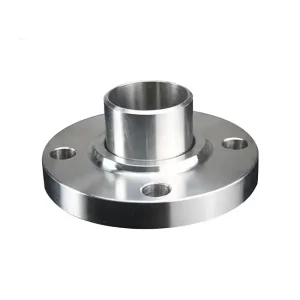
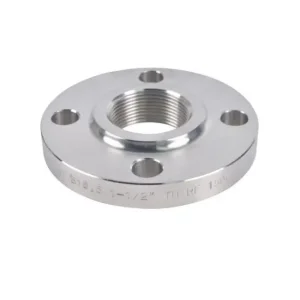
Browse our full spectrum of heavy-duty piping components available with bulk export discounts.
Send your line blind specifications, CAD drawings, or project piping bills of materials to our Shanxi engineering desk. Get an itemized manufacturing offer within 24 hours.
