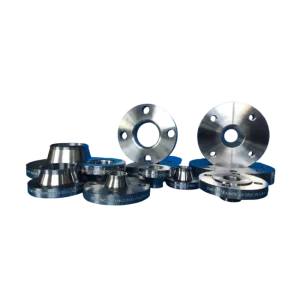
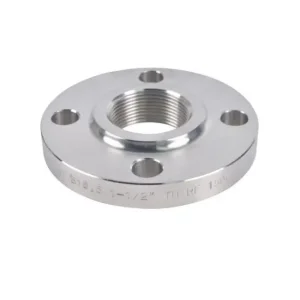
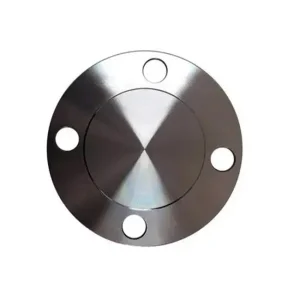
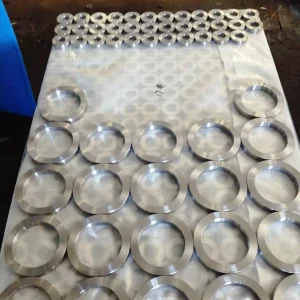
Explore our top-tier precision-machined forged flanges engineered for extreme pressure rating, thermal stability, and corrosion-resistant pipeline architectures.
Understanding how integrated reducing filler flanges optimize fluid dynamics, eliminate extra circumferential welds, and save skid footprint in heavy chemical processing.
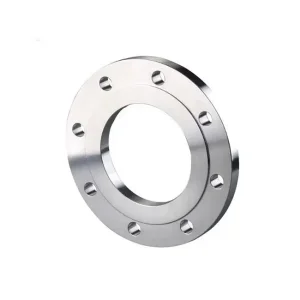
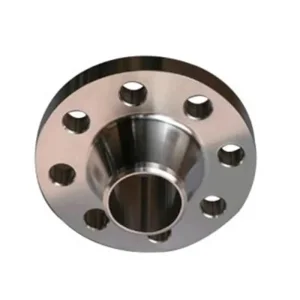
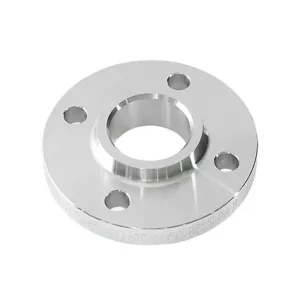
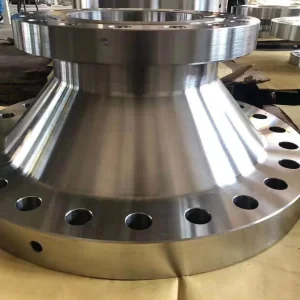
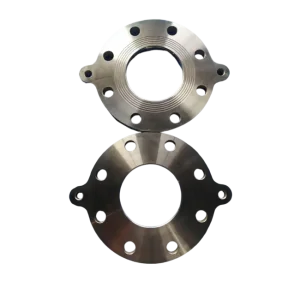
In high-pressure industrial piping systems, connecting pipes of dissimilar nominal diameters while maintaining structural integrity and thermal gap adjustment presents a major challenge for mechanical engineers. A Reducing Filler Flange (often designated as a Reducer Flange with integrated Filler/Spacer ring geometry) represents an advanced single-piece forged component engineered to bridge two different pipe sizes without requiring a separate pipe reducer and weld neck assembly.
| Flange Classification | Primary Function | Welding Requirements | Ideal Application Scenario |
|---|---|---|---|
| Standard Reducer Flange | Connects smaller nominal pipe to larger flange rating | Single weld neck or hub slip-on fitment | Flow velocity alteration in standard headers |
| Filler Flange / Spacer Ring | Compensates axial distance, valve replacement gaps | Bolted between existing flange pairs (No welding) | Retrofit maintenance & thermal clearance compensation |
| Reducing Filler Flange | Dual-function: Diameter step-down + axial spacing fill | Machined hub for single weld joint or direct bolting | Compact oil/gas modular skids, heat exchanger manifolds |
From a fluid dynamics perspective, reducing filler flanges feature smooth internal taper transitions (concentric or eccentric) machined via multi-axis CNC lathes. This precision internal wall smoothing prevents cavitation, turbulence, and sudden pressure drops that typically plague poorly fitted pipe-reducer welds. When manufactured to ASME B16.5 or EN 1092-1 standards, these flanges can withstand extreme pressure classes ranging from Class 150 up to Class 2500, as well as PN6 through PN400 rating matrices.
Inside the Shanxi Dingxiang metallurgical ecosystem: How advanced hot-die forging, scale economies, and integrated supply chains deliver unbeatable pricing without sacrificing quality.
China's premier forging facilities utilize modern hydraulic closed-die hammers and hydraulic ring mills. By forging high-grade carbon steel (ASTM A105) and alloy/stainless grades (A182 F304/F316L/F11/F22) at strict controlled temperatures, the grain flow of the steel follows the contour of the reducing hub, dramatically upgrading tensile strength and impact toughness over flame-cut plates.
Sourcing directly from a certified Chinese flange manufacturer eliminates middleman trading margins. Local proximity to raw steel billets (Taiyuan Iron & Steel Group) ensures volume raw material pricing. Coupled with automated CNC drilling lines, energy-efficient heat treatment electric furnaces, and streamlined export shipping ports (Tianjin/Qingdao), buyers receive genuine high-discount pricing.
Every batch of reducing filler flanges undergoes full non-destructive testing (NDT), including Ultrasonic Testing (UT) for internal void detection, Magnetic Particle Inspection (MPI), Positive Material Identification (PMI) chemical verification via XRF analyzers, and Hydrostatic testing. Full EN 10204 3.1 certificates accompany every single crate.
How smart manufacturing, sub-zero cryogenic metallurgy, and green hydrogen transition are shaping the next generation of reducing filler flanges.
The global energy landscape is undergoing a massive transformation toward higher operating pressures, severe sour gas service (NACE MR0175/ISO 15156 compatibility), and zero-emission hydrogen transport infrastructure. These micro and macro shifts directly influence flange design and metallurgical specifications:
Modern flange production lines integrate optical 3D laser scanners and AI-guided multi-axis CNC boring equipment. This guarantees pitch circle diameter (PCD) tolerances within ±0.1mm, ensuring exact bolt hole orientation and gasket seating groove surface finish (125-250 µin AARH serrated finish per ASME B16.5) for instant, leak-free field installation.
With liquefied natural gas (LNG) operating at temperatures as low as -196°C, reducing filler flanges forged from low-temperature carbon steels (ASTM A350 LF2 Class 1/2) and austenitic stainless steels (ASTM A182 F316L/F321) undergo Charpy V-Notch impact testing at extreme sub-zero temperatures to eliminate brittle fracture risks.
To resist hydrogen sulfide ($H_2S$) cracking and high-salinity offshore spray, reducing filler flanges can be furnished with advanced epoxy resin coatings, electro-galvanized zinc coatings, or hot-rolled nickel alloy (Inconel 625 / Hastelloy C276) internal weld cladding for high-corrosion chemical media.
Leading engineering teams utilize FEA software to model bending moments, thermal expansion stresses, and bolt-load distribution across reducing filler flange faces. This ensures that wall thickness transitions between larger hub dimensions and smaller pipe connections avoid stress concentration peaks.
Real-world engineering implementations across oil refining, power generation, subsea skids, and heavy chemical processing facilities worldwide.
Used extensively at crude oil fractionating tower inlets and pump suction/discharge headers where line sizes drop from 12" to 8" while requiring a heavy spacer plate for maintenance isolation valves.
Integrated into high-pressure steam distribution headers and feed-water preheaters where rapid temperature fluctuations demand high thermal fatigue resistance and precise axial clearance fillers.
Space and weight savings are crucial on offshore topside skids. Replacing a multi-component pipe-reducer assembly with a single forged reducing filler flange reduces footprint and total structural weight.
Overcoming vibration damping, thermal expansion misalignment, and galvanic corrosion challenges in complex fluid transfer networks.
In thermal cycling environments, standard flat gaskets can lose seal compression due to differential thermal expansion between dissimilar pipe wall thicknesses. By utilizing forged carbon steel (A105) or duplex stainless steel (A182 F51) reducing filler flanges designed with Ring Type Joint (RTJ) or Raised Face (RF) serrated grooves, engineers achieve dynamic gasket load retention under severe pressure swings.
When connecting carbon steel headers to stainless steel or copper-nickel alloy lines, galvanic corrosion can rapidly deteriorate the less noble metal. Reducing filler flanges can be custom-manufactured with dielectric insulating sleeve kits or internal polymeric lining (such as PTFE or FEP coatings), creating an electrical barrier that arrests galvanic current flow.
Reciprocating compressors and high-volume pumps generate severe flow pulsation. Traditional welded pipe reducers create cantilevered mass distributions that amplify vibration resonance. The heavy hub geometry of a drop-forged reducing filler flange increases local pipe stiffness, damping FIV and protecting downstream control valves.
A comprehensive checklist for international procurement directors, project EPC contractors, and stocking distributors sourcing forged steel flanges from China.
When evaluating factory quotations for Discount Reducing Filler Flanges, looking purely at piece-price can lead to hidden costs during site delivery or third-party inspection. A thorough procurement evaluation matrix should encompass the following critical pillars:
By partnering directly with an established manufacturer like Shanxi Yuxin Casting & Forging Co., Ltd. (operating since 1992 in China's famous forging region), global buyers secure direct factory pricing, expedited lead times (7-15 days for stock blanks, 20-35 days for custom forgings), and complete legal compliance with international pressure equipment directives.
Direct answers to technical queries asked daily by piping engineers, quality managers, and international buyers.
Discover our comprehensive range of custom ring flanges, RTJ connectors, tube sheets, socket weld fittings, and expansion joints.