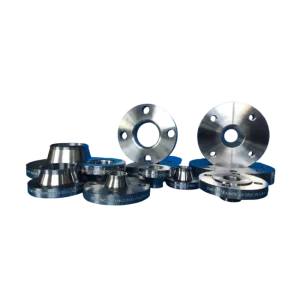
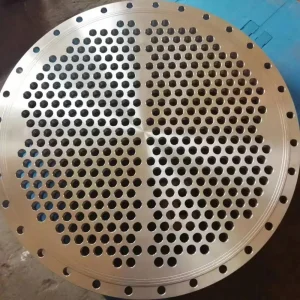
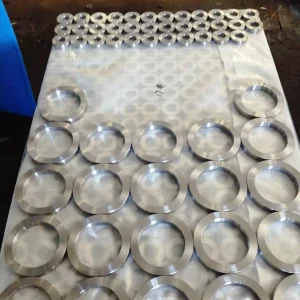
Explore our ISO 9001 and PED 2014/68/EU certified carbon steel plate flanges, slip-on connections, and custom tube sheets engineered for high-pressure industrial applications.
Understanding the mechanical properties, structural integrity, and manufacturing specifications of carbon steel plate flanges for modern fluid transmission systems.
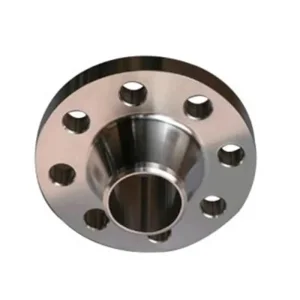
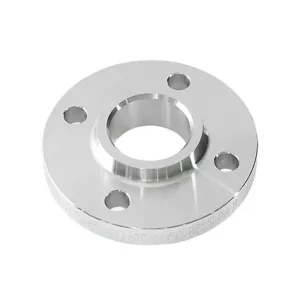
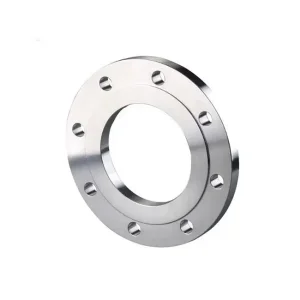
Carbon steel plate flanges (often designated as EN 1092-1 Type 01 plain flanges or ASME B16.5 plate-style slip-on flanges) are flat circular disks designed to connect piping segments, valves, pumps, and pressure vessels. Unlike forged hubbed weld neck flanges, plate flanges feature a flat mechanical profile with precisely machined bolt holes and a central bore through which the pipe is slipped or butt-welded. They provide exceptional radial stiffness and cost-effective mechanical joints for low-to-medium pressure utility lines.
The performance of a plate flange hinges on material composition. Premium carbon steel grades such as ASTM A105, ASTM A36, Q235B, Q355B, and S235JR offer an ideal balance of tensile strength, yield stress, and ductility. With controlled carbon equivalents (CE <= 0.42%), these materials ensure superior weldability without risking hydrogen-induced micro-cracking during field installation. High-tensile carbon steel resists cyclic thermal expansion and mechanical stress in continuous-duty industrial plants.
Flange leakage prevention relies on precise gasket surface finishes. Carbon steel plate flanges manufactured by leading Chinese suppliers undergo CNC lathe machining to achieve Raised Face (RF) or Flat Face (FF) geometries. Serrated concentric or spiral grooves engineered with a roughness average (Ra) of 3.2 µm to 6.3 µm (125–250 µin AARH) allow soft gaskets or spiral-wound metallic gaskets to bite securely under bolt torque, creating a hermetic seal under dynamic fluid loads.
While plate flanges cut directly from heavy structural steel plates offer significant cost savings for municipal water, fire protection, and low-pressure HVAC (PN6–PN16 / Class 150), critical high-pressure hydrocarbon processing lines operating above 40 bar require forged slip-on or weld neck flanges conforming to ASME B16.5. Evaluating your system's pressure-temperature envelope during front-end engineering design (FEED) avoids costly component over-engineering.
How Chinese flange manufacturing hubs combine raw material scale, advanced automation, and strict quality assurance to deliver world-class products at competitive prices.
Located in Shanxi Province, the Dingxiang region is globally recognized as the "Hometown of Forging." This specialized cluster concentrates raw steel billet suppliers, heavy plate rolling mills, precision CNC machine shops, heat treatment specialists, and testing laboratories within a tight geographic radius. This supply chain integration dramatically reduces internal transport costs, raw material lead times, and energy consumption, allowing manufacturers to pass direct cost savings ("discount pricing") to international procurement agents without sacrificing material grade or tolerances.
Modern Chinese flange manufacturers have transitioned from manual lathe turning to fully automated 5-axis CNC machining centers and high-precision plasma/laser plate cutting lines. Computer-controlled flame profile cutting ensures ultra-clean outer edge contours and bore concentricity within ±0.5 mm tolerances. CNC automatic drilling heads produce accurate bolt hole circle pitch diameters (PCD), guaranteeing instant bolt alignment during field assembly and eliminating job site rework.
Leading Chinese exporters maintain comprehensive quality management systems certified to ISO 9001:2015, PED 2014/68/EU Module H, and AD 2000-W0. Every batch of carbon steel plate flanges undergoes Ultrasonic Testing (UT) to detect internal plate lamination or voids, Positive Material Identification (PMI) spectral analysis, and mechanical tensile testing. Full EN 10204 3.1 or 3.2 inspection certificates are issued for every heat batch, ensuring complete metallurgical traceability from raw ladle melt to final export container delivery.
A cross-reference guide comparing international standard frameworks for carbon steel plate flanges used across North American, European, and Asian projects.
| Standard Framework | Flange Type Code | Pressure Class Range | Nominal Size Range | Common Material Grades | Primary Global Application |
|---|---|---|---|---|---|
| ASME / ANSI B16.5 | Plate Slip-On / Blind | Class 150 – Class 300 | 1/2" to 24" (DN15–DN600) | ASTM A105, A36, A350 LF2 | Petrochemical, Oil & Gas, Refining |
| EN 1092-1 | Type 01 (Plate / Plain) | PN6, PN10, PN16, PN25, PN40 | DN10 to DN2000 | S235JR, P245GH, P265GH | European Process Piping, Waterworks |
| DIN Standards | DIN 2573, 2576, 2501, 2502 | PN6 to PN16 | DN10 to DN1200 | St37-2, C22.8, RST37-2 | Legacy Industrial Infrastructure |
| JIS B2220 | SOP (Slip-On Plate) 5K/10K | 5K, 10K, 16K | 10A to 1500A | SS400, SF440A, SM490A | Shipbuilding, Asian Industrial Plants |
| ASME B16.47 Series A/B | Large Diameter Plate | Class 75 – Class 300 | 26" to 60" (DN650–DN1500) | A105, A36, High-Yield Q355D | Heavy Utility Pipelines, Water Treatment |
For standard structural and pressure vessel plate materials (e.g., ASTM A36 / Q235B / S235JR):
To ensure long-term shelf life during transoceanic shipping and outdoor job site storage:
How decarbonization mandates, smart factory logistics, and material engineering updates are reshaping the global carbon steel flange landscape.
As international buyers demand Scope 3 emissions reductions, leading Chinese flange mills are adopting Electric Arc Furnace (EAF) steelmaking utilizing recycled steel scrap, powered by green solar and wind grids. Transitioning away from coal-fired Blast Furnace-Basic Oxygen Furnace (BF-BOF) routes reduces the carbon footprint per ton of steel flanges by up to 60%, preparing global buyers for European Carbon Border Adjustment Mechanism (CBAM) compliance.
The integration of IoT-enabled laser cutting stations and automated robotic material handlers enables real-time tolerance feedback. Digital twin models track the thermal cutting trajectory, optimizing nesting patterns to minimize scrap steel waste by up to 18%. This digital precision ensures that even high-volume "discount" orders retain sub-millimeter dimensional consistency across thousands of flange units.
Modern mega-projects require instant component identification. Premium flange manufacturers now offer laser-etched QR codes or embedded RFID tags on the outer diameter rim of plate flanges. Field engineers can scan the flange using a smartphone to instantly view the heat number, chemical composition, mill test certificate (MTC), and recommended bolt installation torque values during plant erection.
How carbon steel plate flanges are deployed across critical infrastructure, energy, municipal, and industrial process engineering projects.
Large-diameter EN 1092-1 Type 01 PN10/PN16 plate flanges are widely specified in municipal potable water transmission mains, sewage pumping stations, and desalination plants. Their flat face (FF) configuration mates seamlessly with cast iron or ductile iron valves without risk of flange body cracking under bolt pretensioning.
In low-pressure hot water heating lines and chilled water air conditioning headers, carbon steel plate flanges (ASTM A36 / Q235B) provide an economical connection method. Fast fit-up via fillet welding on both inner and outer flange hubs accelerates installation cycles for mechanical contractors.
Auxiliary steam condensate systems, cooling tower water lines, and compressed air distribution networks in fossil fuel and combined-cycle gas turbine (CCGT) power plants rely on carbon steel plate flanges for low-vibration, maintenance-accessible joint configurations.
Atmospheric chemical storage tanks, fuel oil tanks, and low-pressure silos utilize plate-style companion flanges on shell nozzles. Customized plate flanges with non-standard bolt patterns or offset bores can be flame-cut and machined directly from customer engineering drawings.
Best practices for EPC contractors, stocking distributors, and industrial buyers seeking to balance unit price discounts with structural reliability and compliance safety.
Sourcing carbon steel plate flanges directly from integrated Chinese manufacturers eliminates 15%–25% agent markups. Direct factory partnerships also provide direct access to technical engineering teams capable of modifying die designs, accommodating custom flange thickness tolerances, and providing real-time production status updates during heavy manufacturing runs.
Freight costs represent a major component of landed TCO. Specialized manufacturers offer container loading optimization by nesting smaller nominal pipe size (NPS) flanges inside large-diameter ring bores, maximizing cubic meter volume utilization and container weight limits (FCL loading), effectively lowering per-unit transport expenses.
A low purchase price becomes extremely costly if job site flange failure leads to hydro-test leaks or project delays. Smart procurement teams enforce mandatory stage-gate inspections: raw material spectral check, pre-machining dimensional verification, post-machining surface roughness check, hydro-test sampling, and seaworthy fumigation-free plywood pallet packaging.
Direct answers to critical questions asked by piping engineers, quality auditors, and procurement managers when sourcing carbon steel plate flanges.
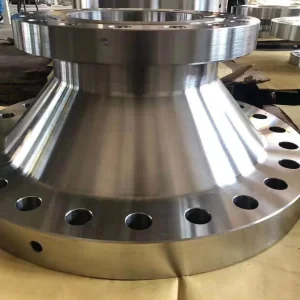
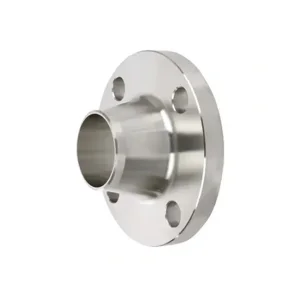
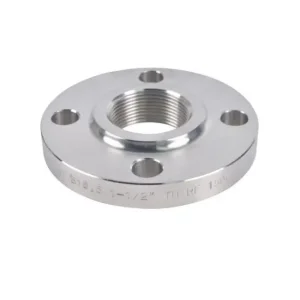
Browse our full spectrum of specialized pipe fittings, reducer flanges, stub ends, and high-pressure welding neck flanges engineered for global project execution.