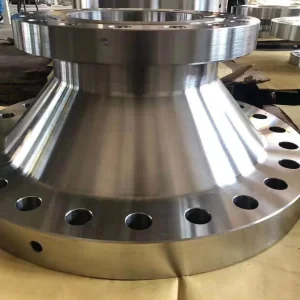
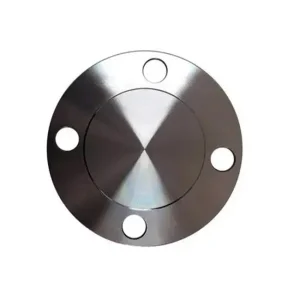
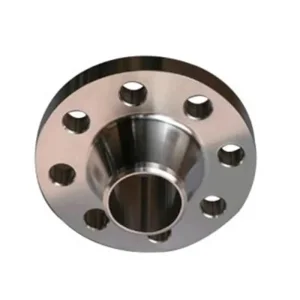
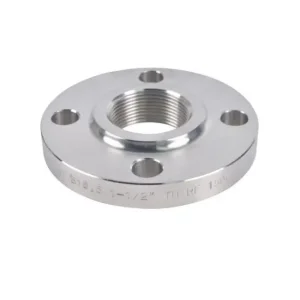
Explore our top-tier export range engineered to ASME, EN, DIN, and JIS standard specs with full heat-number traceability.
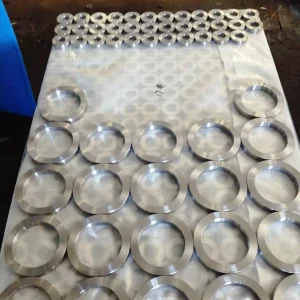
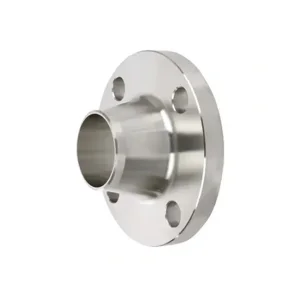
In the domain of industrial piping architecture, the term Plain Flange (frequently designated as a Plate Flange, Slip-On Flat Flange, or EN 1092-1 Type 01 Flange) refers to a disc-shaped forged or plate-machined component featuring a central bore designed to accept the outside diameter of a mating pipe. Unlike Weld Neck flanges that utilize a tapered hub to redistribute hoop stress along the pipe wall, a plain flange fits over the pipe end and is anchored via internal and external fillet welds.
When procurement managers search for a discount plain flange supplier & suppliers, the strategic objective is achieving optimal total cost of ownership (TCO) without compromising pipeline structural integrity under operational pressure. "Discount" in high-integrity industrial manufacturing does not denote substandard material; rather, it reflects economies of scale, lean forge automation, high material yield ratios, and direct-from-source factory procurement.
Plain flanges present a lower profile, zero hub taper, and reduced initial component cost. Mechanical calculation under ASME Section VIII Division 1 indicates plain flanges possess approximately 2/3 the fatigue resistance of weld neck joints under bending moments, making them ideal for low-to-medium pressure utility headers, water treatment, HVAC, and atmospheric chemical processing lines.
Plain flanges are produced from forged carbon steel (ASTM A105, Q235B, S235JR), stainless steel (ASTM A182 F304/F304L, F316/F316L), or specialty nickel/duplex alloys (S31803 / F51). The flange profile consists of:
The global industrial flange sector is undergoing a structural transition driven by decarbonization targets, digital twin logistics, and severe price pressures across global infrastructure projects. Supply chain decision-makers must navigate several overarching megatrends:
Traditional carbon steel plain flanges are rapidly being augmented by dual-certified stainless grades (304/304L & 316/316L) and Duplex 2205 in municipal water and seawater desalination applications. Suppliers with integrated melting and forging capacity provide the lowest cost variance during nickel price swings.
Global EPC contractors no longer accept paper-only certificates. Top suppliers embed QR codes directly onto the flange rim alongside hard-stamped heat numbers, giving site inspectors instant mobile access to spectral chemical composition, tensile strength, and impact test reports.
With Europe’s Carbon Border Adjustment Mechanism (CBAM) taking effect, global buyers demand low-carbon footprint forgings. China's top forging hubs are transitioning to electric induction heating and solar-supplemented CNC machining centers to minimize embodied carbon per ton of steel.
When engineering firms seek a discount plain flange supplier, the primary leverage point is China’s specialized forging clusters, most notably located in Dingxiang County, Shanxi Province — universally recognized as the “Hometown of Forging in China.”
Industry 4.0 modernization has elevated Shanxi Yuxin Casting & Forging Co., Ltd. and allied manufacturers from traditional forging shops into fully digitized, automated production hubs capable of delivering superior dimensional precision at unprecedented scale.
Raw steel billets are heated in temperature-controlled closed-loop induction furnaces, followed by automated ring rolling that refines the internal grain boundary flow. This yields superior burst pressure values compared to flame-cut plate rings, while saving up to 25% in raw steel waste — passing direct cost savings to wholesale buyers.
Manual lathe operations have been replaced by multi-spindle CNC machining centers. Serrated gasket face grooves (125–250 AARH phonographic or concentric finish) and bolt hole positioning are executed in single-setup cycles, guaranteeing absolute concentricity and zero misalignment during field installation.
Located in close proximity to major Shanxi steel mills, factories benefit from continuous bulk steel billet supplies (A105, Q235B, 304, 316). Immediate billet availability eliminates stockouts and enables fast-track production leads of 7 to 15 days for standard ANSI/EN plain flange orders.
Selecting the correct standard and material specification is critical to ensuring compatibility across international piping networks. Below is a comprehensive engineering cross-reference matrix maintained by our technical quality team.
| Standard | Pressure Class / PN | Nominal Size Range | Material Grades Available | Primary Facing Types |
|---|---|---|---|---|
| ASME B16.5 | Class 150, Class 300 | ½" to 24" (DN15 - DN600) | ASTM A105, A350 LF2, A182 F304/L, F316/L | Flat Face (FF), Raised Face (RF) |
| EN 1092-1 (Type 01) | PN6, PN10, PN16, PN25, PN40 | DN10 to DN2000 | S235JR, P250GH, 1.4301, 1.4404, 1.4571 | Type A (Flat), Type B1 (Raised Face) |
| DIN Standards (DIN 2576/2502) | PN6, PN10, PN16 | DN10 to DN1000 | RSt37-2, C22.8, Stainless 304/316 | Form C, Form D |
| JIS B2220 | 5K, 10K, 16K | 15A to 1500A | SS400, SF440A, SUS304, SUS316 | Flat Face (FF) |
| BS 4504 / BS 10 | Table D, E, F / PN6-PN40 | ½" to 48" | Carbon Steel, Stainless Steel | Flat Face, Raised Face |
Every batch of plain flanges produced under our quality management system undergoes strict testing protocols prior to dispatch:
Plain flanges serve diverse sectors globally due to their installation simplicity, rapid alignment capability, and cost-effectiveness. Understanding localized operational conditions enables engineers to specify the optimal pressure rating and surface coating.
Large-diameter EN 1092-1 Type 01 PN10/PN16 plain flanges are heavily deployed in municipal water mains, filtration plants, and waste handling lines. Zinc galvanizing or black rust-preventive varnish extends service life up to 30 years in atmospheric moisture.
Used extensively in commercial building HVAC chillers, cooling towers, and wet sprinkler fire lines. Flat face plain flanges mate seamlessly with cast iron pump casings and butterfly valves without risking flange ear fracture during bolt torquing.
Shipyards specify JIS 5K/10K carbon steel plain flanges for bilge, ballast, and low-pressure fuel transfer piping aboard commercial vessels. Compact outer dimensions allow installation in tight engine-room spaces.
Flat plate plain flanges serve as reinforcement rings and low-pressure ducting attachments on atmospheric oil storage tanks, chemical silos, and bulk material handling hoppers.
Clear, direct answers regarding specifications, pricing structures, lead times, and factory audits.
Direct factory pricing for OEM projects, distributors, and global piping contractors.