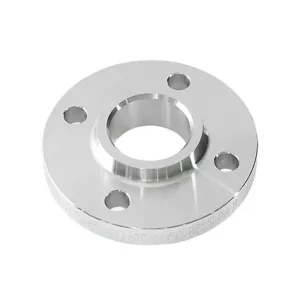
Explore our precision-machined, ISO 9001 & PED 2014/68/EU certified forged flanges engineered for high-pressure oil, gas, chemical, and industrial fluid control systems.
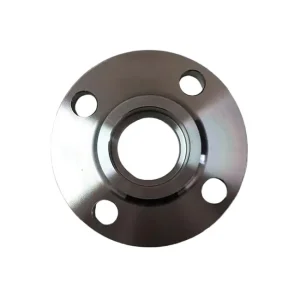
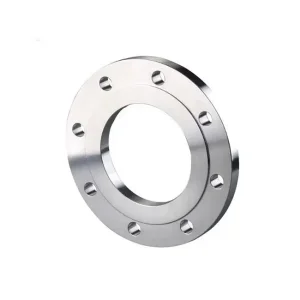
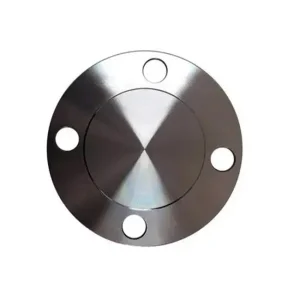
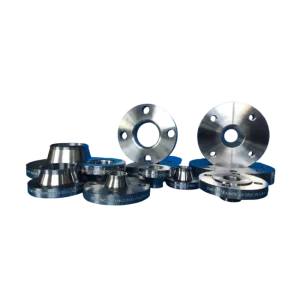
In pressure piping systems, selecting the appropriate flange configuration dictates the mechanical integrity, thermal fatigue tolerance, and operational lifespan of the connection. Below is a granular analysis of primary pipeline flange categories manufactured under stringent ASTM, ASME, EN, and DIN parameters.
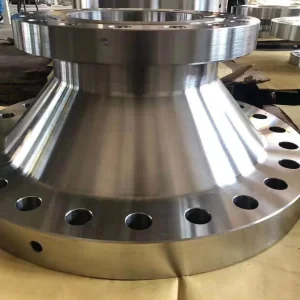
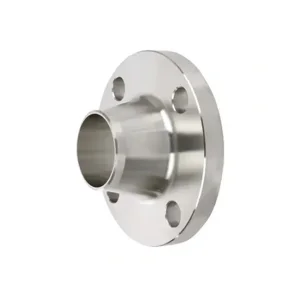
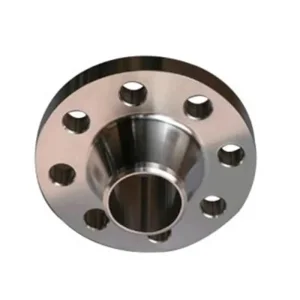
Engineered with a long tapered hub that transitions stress gradually into the attached pipe wall. Weld neck flanges offer exceptional mechanical strength under cyclic loading, high pressure (Class 150 to Class 2500), and extreme temperature fluctuations. Preferred in critical oil & gas pipelines, nuclear facilities, and subsea headers.
Designed to slip over the outer diameter of the pipe and secured via internal and external fillet welds. Slip-on and plain flanges provide easy alignment, reduced initial procurement cost, and effortless installation in low-to-medium pressure applications such as HVAC, water treatment, and low-pressure utility lines.
Solid forged discs manufactured without a central bore, utilized to isolate pressure systems, cap pipe terminations, or serve as access manways on pressure vessels. Designed to withstand maximum system design pressure and hydraulic testing spikes without permanent deformation.
Feature a recessed counterbore socket into which pipe is inserted prior to fillet welding. Socket weld flanges minimize fluid turbulence and flow restriction in small-bore high-pressure piping networks (typically 1/2" to 4" nominal pipe size) across petrochemical process plants.
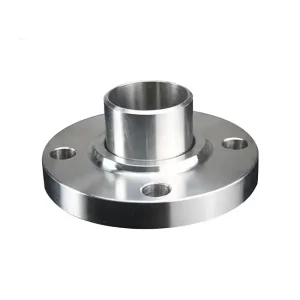
Paired directly with stub ends. The loose backing flange rotates freely around the stub end, allowing rapid bolt hole alignment during field installation. Extremely cost-effective for stainless steel or nickel alloy piping, as the backing flange can be forged in lower-cost carbon steel (ASTM A105).
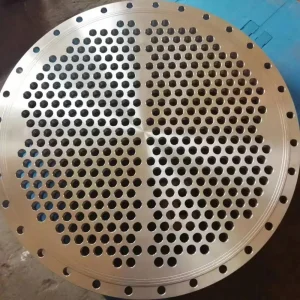
Precision-drilled heavy forged plates optimized for shell-and-tube heat exchangers, boilers, and heavy processing vessels. Machined on multi-axis CNC drilling centers with strict pitch accuracy and tight tolerance guarantees for high thermal efficiency.
Understanding global manufacturing standard equivalents ensures smooth procurement compliance for cross-border EPC contracts.
| Flange Category | ASME/ANSI Standard | EN/DIN Standard | Pressure Rating Range | Primary Sealing Facing Types | Ideal Application Scenario |
|---|---|---|---|---|---|
| Weld Neck (WN) | ASME B16.5 / B16.47 Series A & B | EN 1092-1 Type 11 / DIN 2631-2638 | Class 150 – 2500 / PN6 – PN400 | Raised Face (RF), Ring Type Joint (RTJ) | High pressure, extreme thermal cycling, subsea lines |
| Slip-On (SO) | ASME B16.5 | EN 1092-1 Type 12 / DIN 2576 | Class 150 – 1500 / PN6 – PN100 | Flat Face (FF), Raised Face (RF) | Low/medium pressure, plant utility, HVAC networks |
| Blind (BL) | ASME B16.5 / B16.47 | EN 1092-1 Type 05 / DIN 2527 | Class 150 – 2500 / PN6 – PN400 | RF, RTJ, Male-Female (M&F) | Line termination, hydrostatic testing pressure caps |
| Socket Weld (SW) | ASME B16.5 | EN 1092-1 Type 14 / DIN 2633 | Class 150 – 1500 / PN10 – PN100 | Raised Face (RF) | Small-bore high pressure, toxic/explosive gas piping |
| Lap Joint (LJ) | ASME B16.5 (Mates MSS SP-43) | EN 1092-1 Type 02 / DIN 2642 | Class 150 – 600 / PN10 – PN40 | Flat Face / Stub End Face | Corrosive fluids, frequent maintenance cleanout spools |
Modern procurement intent for pipeline flange types has shifted dramatically from simple unit-price evaluation toward Total Cost of Ownership (TCO), risk-mitigated delivery schedules, and verified metallurgical compliance. EPC contractors and stockists globally face rigid project deadlines, stringent safety mandates, and evolving environmental regulations.
When buyers search for "Discount Pipeline Flange Types Product & Products", their commercial intent is twofold: securing competitive factory-direct volume pricing while demanding zero compromise on material integrity, wall thickness tolerances, and international certifications (ISO 9001, PED 2014/68/EU, AD 2000-W0).
Demands high-yield strength forged steel (ASTM A350 LF2, F52, Duplex 2205) resistant to sour hydrogen sulfide (H2S) cracking per NACE MR0175/MR0103 standards.
Requires zero-leakage, cryogenic-tested flanges capable of maintaining structural ductility at sub-zero temperatures (-196°C) using ASTM A182 F316L stainless alloys.
Requires pre-machined, exact-tolerance reducer flanges, tube sheets, and stub ends ready for automated robotic welding with tight dimensional consistency.
Situated in Shanxi’s Dingxiang County—renowned worldwide as the official "Hometown of Forging in China"—our modern flange manufacturing operations synthesize three decades of traditional metallurgical craftsmanship with smart Industry 4.0 automation.
Direct raw material partnerships with top-tier domestic steel mills (such as Baosteel and Taiyuan Iron & Steel) ensure direct access to prime carbon steel (A105, Q235B), low-alloy steel (A182 F11/F22), and stainless grades (F304/F316L) at raw material mill prices.
Our production floors feature automated vertical hydraulic ring rolling mills and high-speed multi-axis CNC machine centers. Precision CNC machining guarantees uniform gasket surface serrations (125-250 µin AARH) and perfect bolt hole circle concentricity.
Every forged blank undergoes computerized heat treatment (normalizing, quenching, tempering) backed by thermal tracking logs. Every unit is die-stamped with its corresponding heat number for 100% material traceability from ingot to final export container.
Deploying pipeline flanges requires deep alignment with regional environmental conditions, corrosive atmospheric challenges, and local regulatory mandates.
In high-temperature, wet H2S-rich crude gathering networks across the Gulf region, standard carbon steel flanges suffer catastrophic Hydrogen-Induced Cracking (HIC). We deliver custom ASTM A105N and A350 LF2 flanges subjected to strict HIC and SSCC testing protocols in full compliance with NACE MR0175.
Offshore topside processing facilities require maximum weight reduction combined with hyper-corrosion resistance against saltwater splash zones. We supply Duplex 2205 (UNS S31803) and Super Duplex 2507 (UNS S32750) weld neck and blind flanges certified to EN 10204 3.2 third-party inspection.
Extremely low freezing ambient temperatures in Northern Canada and Alaska cause brittle fractures in standard forged steel. Our ASTM A350 LF2 Class 2 forged flanges undergo Charpy V-notch impact testing at -46°C (-50°F), guaranteeing high fracture toughness under extreme environmental shock.
High-chloride reverse osmosis desalination systems demand corrosion-immune flange connections. We manufacture custom stub end flanges paired with ASTM A403 WP316L and 904L lap joint backing rings, optimizing capital expenditure while providing a 30-year operational life.
To guarantee that every flange withstands its rated pressure class, our internal testing lab executes a comprehensive non-destructive (NDT) and destructive testing protocol prior to shipment.
100% volumetric ultrasonic scanning per ASTM A388 performed on all heavy-wall forged blanks to detect internal voids, inclusions, or forging shrinkages before machining.
Magnetic Particle Inspection (MT) and Dye Penetrant Testing (PT) applied to sealing facings and bevel ends to verify 100% freedom from surface micro-cracks.
X-ray Positive Material Identification (PMI) conducted on 100% of alloy and stainless steel flanges to confirm exact chemical composition (Cr, Ni, Mo content).
Select from our extended product lineup of specialized pipe flanges, lap joint assemblies, and ASME B16.47 large-diameter welding neck connections.
Direct engineering answers regarding flange standards, material grade selections, pressure ratings, and custom OEM manufacturing.