Certified high-integrity flange assemblies engineered for critical natural gas pipelines, pressure vessels, and energy processing systems.
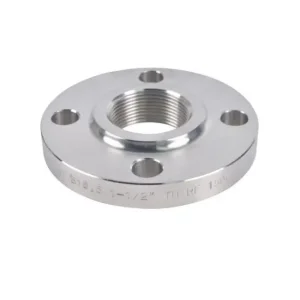
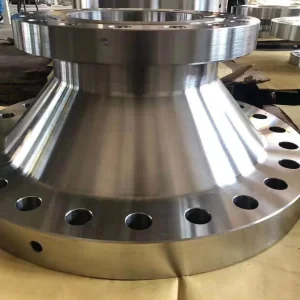
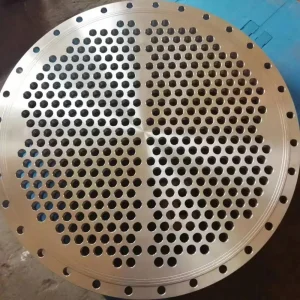

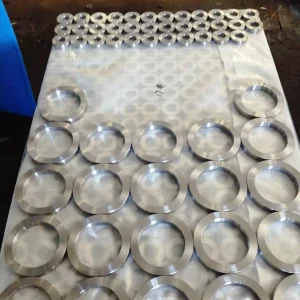
Understanding the thermodynamic, chemical, and structural mechanics governing leakage-free flanged connections across natural gas extraction, processing, and transportation networks.
Natural gas consists predominantly of methane ($\text{CH}_4$), a low-molecular-weight hydrocarbon exhibiting exceptionally high mobility under high-pressure conditions. Unlike heavy liquid hydrocarbons, natural gas rapidly penetrates micro-voids between metal flange faces and soft sealing elements. Selecting the optimal natural gas flange gasket material requires strict evaluation of micro-porosity, creep relaxation, and bolt load retention.
When designing flanged joints for ASME B16.5 or EN 1092-1 systems, gasket seating stress ($\sigma_s$) must be balanced against yield limits to achieve an impermeable micro-barrier. Factory direct sourcing from qualified manufacturers guarantees that gasket compressibility (ASTM F36) and recovery characteristics remain uniform across every production batch.
A gasket does not operate in isolation; it functions as part of a three-body mechanical system comprising the forged steel flange, the compressible gasket matrix, and high-tensile bolting studs. Shanxi Yuxin Casting & Forging Co., Ltd. integrates precise CNC machining of flange serrations (125–250 $\mu\text{in}$ AARH concentric or spiral finish) to mechanically interlock with composite graphite or ePTFE gasket materials.
This exact surface geometry prevents blowout under rapid pressure pulsation while maintaining optimal sealing stress during severe thermal cycling experienced at compressor stations and valve manifolds.
Core Technical Takeaway: Modern natural gas infrastructure demands gasket materials with low $m$ (maintenance factor) and $y$ (minimum seating stress) values per ASME Boiler and Pressure Vessel Code Section VIII. Sourcing integrated flange and gasket packages directly from an accredited Chinese forging manufacturer eliminates dimensional mismatch and ensures compliance with fugitive emission targets.
Technical evaluation of soft gaskets, semi-metallic spiral wound configurations, and solid metal ring joints for natural gas processing.
| Material Classification | Composition & Structure | Temp Range (°C) | Pressure Class | Gasket Factor (m) | Min Seating Stress (y) | Primary Gas Application |
|---|---|---|---|---|---|---|
| Flexible Graphite (316L Tanged) | 99.5% pure expanded graphite reinforced with 0.1mm tanged 316L SS core | -200 to +550 | Class 150 – 600 (PN10-PN100) | 2.00 | 2,500 psi (17.2 MPa) | Upstream dry/wet gas pipelines, plant utilities, low-temp gas manifolds |
| Expanded PTFE (ePTFE) | 100% multidirectionally expanded fluorocarbon polymer | -240 to +260 | Class 150 – 300 (PN6-PN40) | 1.50 | 1,500 psi (10.3 MPa) | Aggressive sour gas (H2S), chemical gas feedstocks, low bolt-load flanges |
| Spiral Wound Gaskets (SWG) | V-shaped metallic winding (316L/Inconel) with flexible graphite filler | -200 to +650 | Class 150 – 2500 (PN20-PN400) | 3.00 | 10,000 psi (68.9 MPa) | High-pressure transmission lines, compressor discharge, steam-methane reformers |
| Kammprofile (Grooved Metal) | Serrated metallic core (SS316L / Duplex 2205) with soft graphite facing layer | -200 to +700 | Class 300 – 2500 (PN50-PN400) | 3.50 | 4,100 psi (28.3 MPa) | Severe thermal cycling gas turbines, heat exchangers, offshore gas risers |
| Ring Type Joint (RTJ Metal) | Solid octagonal/oval ring in Soft Iron, SS316L, or Inconel 625 per ASME B16.20 | -250 to +800 | Class 600 – 2500 (API 2K-10K) | 5.50 to 6.50 | 18,000 psi (124 MPa) | Wellhead Christmas trees, high-pressure sour gas extraction, subsea manifolds |
Utilizing high-purity (99.5%+) exfoliated graphite sheets with 316L stainless steel tanged insertions provides exceptional blowout resistance. The absence of organic binders prevents thermal degradation and micro-void formation under cyclic operating loads.
Expanded PTFE overcomes traditional PTFE cold flow (creep) through a uniform 3D fibrillated structure. It provides near-universal chemical immunity against hydrogen sulfide ($\text{H}_2\text{S}$), carbon dioxide ($\text{CO}_2$), and gas condensate additives.
Precision-forged metallic RTJ rings operate via high localized plastic deformation into the flange groove. Manufactured in soft iron, SS316L, or Duplex 2205, RTJs guarantee zero-gas leakage at pressures up to 10,000 PSI.
Tailored sealing configurations and forged flange designs tailored to severe operating environments across the natural gas lifecycle.
Upstream extraction wells often encounter severe concentrations of hydrogen sulfide ($\text{H}_2\text{S}$) and carbon dioxide ($\text{CO}_2$) alongside high pressure. Under wet sour gas conditions, standard carbon steel flanges risk Sulfide Stress Cracking (SSC) and Hydrogen-Induced Cracking (HIC).
Engineered Solution: Forged ASTM A350 LF2 Class 1 or ASTM A182 F51 Duplex flanges combined with Inconel 625 inner-ring Spiral Wound Gaskets or RTJ soft-iron rings treated per NACE MR0175/ISO 15156. This configuration ensures complete micro-containment while resisting localized pitting corrosion.
LNG liquefaction and regasification plants operate at extreme cryogenic temperatures down to -196°C. Thermal contraction causes dimensional shift in flange bolts, leading to sudden seating stress relaxation and catastrophic fugitive gas escape.
Engineered Solution: ASME B16.5 Weld Neck flanges forged from austenitic stainless steel (ASTM A182 F316/316L) paired with specialized Cryogenic ePTFE gaskets or Spring-Energized Metallic Gaskets. Thermal expansion coefficients are matched to maintain tight clamping stress across freeze-thaw cycles.
Municipal gas distribution grids require long-term, maintenance-free connection reliability under continuous ground vibration, moderate pressure (Class 150/300), and variable outdoor ambient temperatures.
Engineered Solution: Economical EN 1092-1 Type 01 Plain Slip-On flanges or ASME B16.5 Slip-On forged carbon steel (ASTM A105) paired with high-density tanged flexible graphite flat gaskets. Provides exceptional cost efficiency while satisfying national safety regulations.
Energy transition initiatives involve blending up to 20% Hydrogen ($\text{H}_2$) into existing natural gas trunk lines. Hydrogen's tiny atomic radius dramatically increases leakage risk and susceptibility to steel hydrogen embrittlement.
Engineered Solution: Fine-grain normalized forged flanges with ultra-smooth face finishes (Ra 3.2 $\mu\text{m}$) coupled with micro-dense Kammprofile gaskets featuring high-purity modified graphite or ePTFE facings to prevent micro-permeation.
Pioneering next-generation sealing materials, smart flange monitoring systems, and stringent zero-emission compliance.
Global decarbonization mandates require natural gas operations to reduce methane flaring and fugitive leaks. The industry is rapidly shifting toward ISO 15848-1 Class AH tightness standard ($< 10^{-6} \text{ mg}\cdot\text{s}^{-1}\cdot\text{m}^{-1}$). Advanced composite gaskets with pre-compressed outer containment boundaries represent the standard of tomorrow.
Future natural gas transmission hubs will integrate piezoelectric micro-sensor arrays embedded directly into gasket guide rings. These sensors transmit real-time telemetry regarding bolt load relaxation, internal line pressure spike, and micro-temperature shifts directly to SCADA maintenance platforms.
Incorporating graphene oxide nanoparticles into flexible graphite and ePTFE matrices increases mechanical tensile strength by over 40% while enhancing thermal dissipation. This eliminates localized hot-spot degradation in high-temperature gas turbine exhaust flanges.
How Shanxi Yuxin Casting & Forging Co., Ltd. leverages China's premier forging cluster to deliver uncompromised ASME/EN quality at direct-factory discount pricing.
Located in Dingxiang County, Shanxi Province—recognized globally as the "Hometown of Forging in China"—Shanxi Yuxin operates within a fully integrated industrial cluster. From raw steel ingot procurement at tier-1 domestic mills (such as Baosteel and TISCO) to heating, die forging, heat treatment, and precision CNC machining, every production phase occurs within a 15-kilometer radius.
This structural density eliminates regional transport delays, optimizes raw material yield, and reduces bulk manufacturing overhead by 25–35% compared to Western European or North American forging operations.
Buying "discount" direct from a Chinese manufacturer does not mean sacrificing quality. Shanxi Yuxin operates an ISO 9001, PED 2014/68/EU, and AD 2000-W0 certified facility. Every flange lot is stamped with a unique heat number directly tied to its EN 10204 3.1 Mill Test Certificate (MTC).
Mapping international standards compliance, regional gas infrastructure demand, and trade trends across key market zones.
Driven by Permian and Appalachian basin shale expansion. Demand focuses heavily on ASME B16.5 / ASME B16.47 weld neck and blind flanges in ASTM A105 and A350 LF2, mated with API 6A RTJ gaskets for high-pressure field gathering systems.
REPowerEU initiatives prioritize rapid construction of LNG import terminals and cross-border interconnectors. Compliance with EN 1092-1, PED 2014/68/EU, and strict TA-Luft fugitive emission certification is mandatory across all bidding contracts.
Mega-projects managed by Aramco, ADNOC, and QatarEnergy focus on deep sour gas field development. Strict adherence to NACE MR0175/ISO 15156, Inconel cladding, and heavy-wall ASME Class 900–2500 forged components is required.
Rapid urbanization and industrial power conversion drive massive demand for municipal gas pipeline networks, city gate pressure regulation stations, and cost-effective DIN/JIS standard slip-on and plain flanges.
Providing global engineering procurement teams with seamless technical consultation, custom drawing support, and export packaging reliability.
Our engineering desk translates customer DWG, STEP, or PDF drawings into precise forging dies and 5-axis CNC machining programs. Non-standard flange geometries, custom tube sheet layouts, and heavy ring forgings up to 3,000 mm diameter are supported.
Every export order ships with fully documented Mill Test Certificates covering heat chemistry, heat treatment curves (Normalizing/Tempering), mechanical strength, Charpy impact test results, NDT reports, and dimensional compliance inspection sheets.
Flange faces are coated with rust-preventive VCI oil or protective varnish, sealed with plastic cap protectors, and packed into fumigation-free solid plywood crates. Steel strapping prevents movement during ocean container transits.
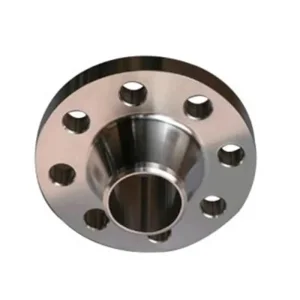
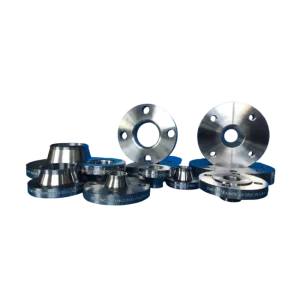
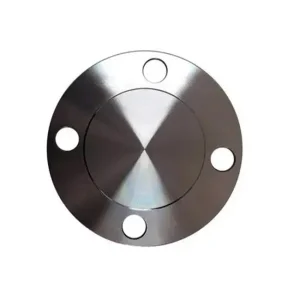
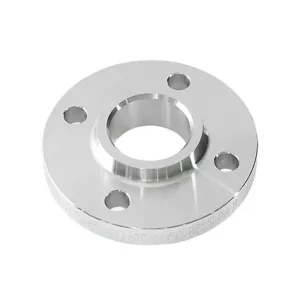
Explore our full line of ANSI, ASME, EN, DIN, and custom-machined pipe flanges ready for international export.
In-depth technical answers addressing material selection, torque calculations, discount pricing structures, and regulatory compliance.
Direct-factory "discount" pricing reflects geographic supply chain consolidation rather than material compromise. By manufacturing in Dingxiang, Shanxi—the core of China's forging industry—Shanxi Yuxin benefits from localized raw steel billet sourcing, low-cost clean energy, and streamlined CNC machining processes. All flanges and gasket materials fully satisfy ASME B16.5, ASME B16.20, and EN 1092-1 specifications. Every lot undergoes independent non-destructive testing (UT/MT) and chemical composition analysis backed by EN 10204 3.1 certification.
Spiral Wound Gaskets (ASME B16.20) feature alternating V-shaped metallic windings and soft fillers (graphite/ePTFE). They are ideal for ASME Class 150 to Class 2500 raised-face (RF) flanges where resilience against thermal cycling is required. Ring Type Joint (RTJ) gaskets are solid precision-machined metallic rings (Octagonal or Oval) designed for RTJ-grooved flanges. RTJs function via metal-to-metal plastic deformation, making them the default standard for high-pressure sour gas extraction (up to 10,000 PSI) and wellhead assemblies.
Under NACE MR0175/ISO 15156, materials exposed to wet $\text{H}_2\text{S}$ must resist Sulfide Stress Cracking (SSC). Soft gasket facings should utilize expanded PTFE (ePTFE) or high-density pure graphite. For semi-metallic or metallic gaskets, internal metal windings and outer rings must be fabricated from corrosion-resistant alloys such as Inconel 625, Hastelloy C276, or Duplex 2205, paired with normalized ASTM A350 LF2 or ASTM A182 F51 forged flanges with maximum hardness controlled below 22 HRC.
Fugitive emission compliance relies on achieving precise flange face parallelism, smooth serration finish (125–250 $\mu\text{in}$ AARH), and uniform gasket seating stress ($\sigma_s$). YUXIN employs high-precision CNC lathes to guarantee serration concentricity, combined with pre-dense tanged graphite or ePTFE gasket facings that eliminate micro-porosity channels. Helium leak testing is available upon request to verify leak rates below $10^{-6} \text{ mg}\cdot\text{s}^{-1}\cdot\text{m}^{-1}$.
Every shipment is accompanied by a comprehensive quality documentation package including: EN 10204 3.1 Mill Test Certificate (MTC) detailing heat chemistry and mechanical properties; ISO 9001 and PED 2014/68/EU compliance certificates; Ultrasonic (UT) and Magnetic Particle (MT) test reports; Hardness and Charpy V-Notch impact test sheets (-46°C); Certificate of Origin (CO); and Fumigation-Free packaging statements.
Required bolt torque ($T$) is calculated using the formula $T = K \cdot D \cdot F_b$, where $K$ is the nut factor (typically 0.15 to 0.20 for lubricated studs), $D$ is the nominal bolt diameter, and $F_b$ is the target bolt load. Target bolt load must satisfy the minimum gasket seating stress ($y$) per ASME BPVC Section VIII while remaining below 70% of bolt yield strength to account for thermal expansion and pressure thrust loads.
Yes. In addition to standard ASME, EN, DIN, JIS, and GOST flanges, YUXIN specializes in custom forging and precision machining of tube sheets, reducer flanges, heavy ring forgings, and non-standard vessel flanges up to 3,000 mm outer diameter. Our engineering team conducts finite element stress analysis (FEA) and provides DFM (Design for Manufacturability) guidance prior to forging die production.
