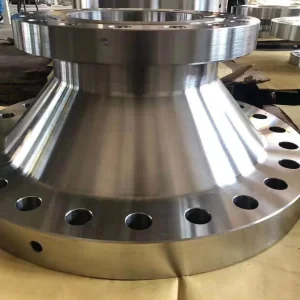
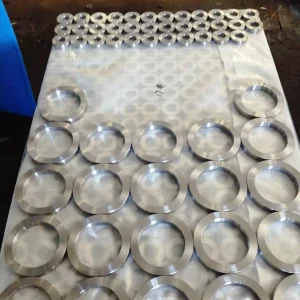
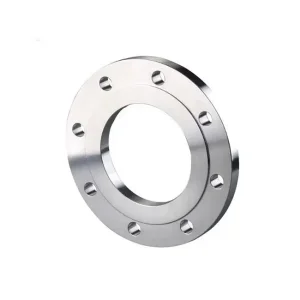
Precision-machined ANSI/DIN/ISO standard pipe fittings, slip-on, weld neck, and custom tube sheets engineered for critical sealed environments.
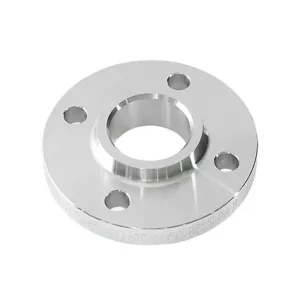
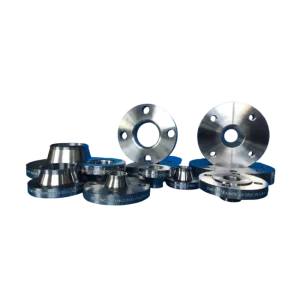
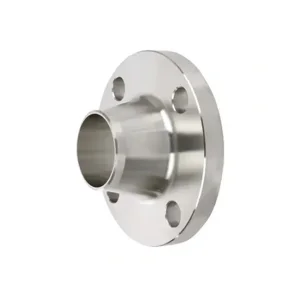
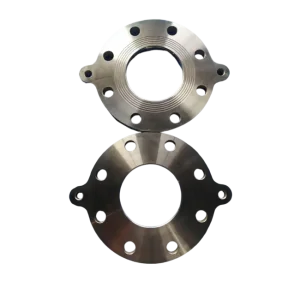
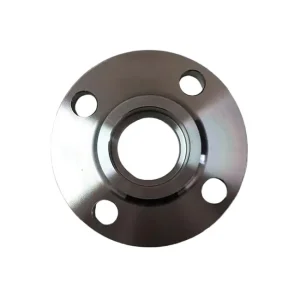
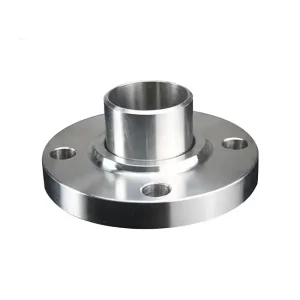
In modern high-tech manufacturing and advanced physics research, ISO Vacuum Flanges serve as the essential physical interface connecting vacuum chambers, turbomolecular pumps, cryogenic valves, and process pipework. Operating within pressure regimes spanning from High Vacuum (HV: 10⁻³ to 10⁻⁷ mbar) to Ultra-High Vacuum (UHV: 10⁻7 to 10⁻¹² mbar), these standardized coupling mechanisms ensure structural integrity, hermetic tightness, and zero contamination in environment-critical processes.
Global demand for high-reliability vacuum flanges has experienced exponential growth over the past decade. This surge is primarily driven by three strategic global megatrends: the relentless expansion of semiconductor wafer fabrication plants (fabs), the massive scale-up of thin-film photovoltaic (PV) solar cell production lines, and the rapid rise of advanced surface engineering via Physical Vapor Deposition (PVD) and Chemical Vapor Deposition (CVD). In these high-stakes manufacturing environments, even a micro-leak measuring less than 1×10⁻⁹ mbar·L/s can cause catastrophic batch contamination, resulting in millions of dollars in scrapped silicon wafers or damaged optical coatings.
Consequently, enterprise procurement directors and system design engineers face a dual challenge: maintaining uncompromised metallurgical standards (such as ultra-low outgassing stainless steel grades and zero-defect forging density) while simultaneously optimizing capital expenditure (CapEx) and operational expenditure (OpEx). This strategic imperative has shifted global purchasing patterns toward verified, high-efficiency manufacturing hubs—most notably China's advanced forging clusters—where high-capacity automated forging and CNC machining yield exceptional cost performance ("discount ISO vacuum flange solutions") without sacrificing E-E-A-T compliance or technical rigorousness.
Detailed analysis of ISO-K, ISO-F, and ISO-KF coupling mechanisms, material composition, and helium leak detection benchmarks.
Designed for rapid assembly and modular flexibility. ISO-K flanges utilize double-claw clamps or single-claw clamps positioned around a peripheral outer groove. Sealing is accomplished by compressing an Elastomer O-ring mounted within a centering ring structure. Sizes range from DN63 to DN630, making them ideal for high-throughput vacuum lines requiring frequent maintenance access.
ISO-F flanges feature a fixed bolt-hole circle conforming to standard metric bolt patterns (DIN/ISO). Provide maximum rigidity under mechanical stress, high thermal expansion gradients, and structural load-bearing requirements. ISO-F interfaces seamlessly pair with ISO-K bodies using transition rotatable bolt rings (half-clamps).
Standardized under ISO 2861, ISO-KF (Quick Flange) covers nominal diameters from DN10 to DN50. Featuring a 15° tapered outer circumference, ISO-KF couplings are secured by a circumferential wing-nut clamp, allowing tool-free assembly within seconds while ensuring uniform radial pressure distribution across the sealing gasket.
To assist system specifiers, engineering leads, and procurement teams, the following selection matrix details the mechanical tolerances, pressure ratings, and metallurgical options offered by certified Chinese forging mills such as Shanxi Yuxin Casting & Forging Co., Ltd.:
| Flange Standard | Nominal Size (DN) | Pressure Regime | Standard Materials | Sealing Interface | Helium Leak Rate |
|---|---|---|---|---|---|
| ISO-K (Clamped) | DN63 - DN630 | 10⁻⁸ mbar to 1.5 bar abs | AISI 304L (1.4307) / 316L (1.4404) / Carbon Steel | FKM / Viton / NBR O-Ring with SS Centering Ring | < 1×10⁻⁹ mbar·L/s |
| ISO-F (Fixed Bolted) | DN63 - DN1000 | 10⁻⁸ mbar to 2.0 bar abs | Forged Stainless Steel 304L, 316L, 316Ti | Elastomer O-Ring / Aluminum Metal Seal Ring | < 1×10⁻⁹ mbar·L/s |
| ISO-KF (Quick Flange) | DN10 - DN50 | 10⁻⁸ mbar to 2.5 bar abs | 304L / 316L / Aluminum Alloy 6061-T6 | Circumferential Clamp with Centering Ring | < 1×10⁻⁸ mbar·L/s |
| CF (ConFlat UHV) | DN16 - DN350 | 10⁻¹² mbar to 1.0 bar abs | 316L ESR (Electro-Slag Remelted) / 304L | OFHC Copper Gasket with Knife-Edge Seal | < 1×10⁻¹¹ mbar·L/s |
Outgassing—the spontaneous release of absorbed molecules, trapped gas pockets, or volatile organic compounds from steel matrix surfaces under vacuum—represents the ultimate limit to achieving ultra-high vacuum states. Premium ISO vacuum flange manufacturers address this phenomenon through rigorous metallurgical choices:
When enterprise buyers search for "Discount ISO Vacuum Flange Manufacturers", the term "discount" in industrial procurement does not denote inferior quality; rather, it reflects structural supply chain efficiency, vertical factory integration, and raw material proximity. Understanding the economic geographic advantage of Shanxi Province—specifically Dingxiang County, recognized globally as the premier “Hometown of Forging in China”—explains how top-tier forging manufacturers provide competitive pricing without compromising quality.
Shanxi is China's core metallurgical belt. Local flange factories sit directly adjacent to major high-grade stainless steel and alloy mills. Direct billet procurement eliminates multi-stage transport tariffs, reducing raw steel input costs by 12% to 18% compared to coastal processing plants.
Pioneering mills such as Shanxi Yuxin Casting & Forging Co., Ltd. (established 1992) maintain 100% in-house capability. Billet heating, closed-die hammer forging, ring rolling, CNC turning, drilling, heat treatment, and helium mass spectrometer testing occur inside one unified manufacturing compound.
With an annual capacity surpassing 10,000 tons of flanges and 2,000 tons of specialized forged components, fixed tooling costs are amortized across massive production volumes. Multi-axis CNC turning centers ensure unit-to-unit repeat accuracy within ±0.02 mm.
By bypassing intermediate trading companies and dealing directly with audited original equipment manufacturers (OEMs) in Dingxiang, global buyers eliminate 20–30% markup margins. Furthermore, full compliance with European standards (TÜV-assessed ISO 9001, PED 2014/68/EU, AD 2000-Merkblatt W0) guarantees that "discount" purchasing translates into maximum commercial margin and zero operational risk.
From semiconductor cleanrooms to heavy chemical process plants, ISO vacuum flanges deliver robust hermetic sealing across high-stress environments.
Integrated into load-lock chambers, etch systems, and atomic layer deposition (ALD) modules. ISO-K and ISO-F stainless steel 316L flanges withstand aggressive fluorinated process gases (SF₆, NF₃) and thermal cycling while preserving cleanroom vacuum integrity down to 10⁻⁸ mbar.
In high-volume solar wafer manufacturing, continuous vacuum coating systems operate 24/7. ISO-F heavy-duty bolted flanges prevent ambient air ingress across thermal expansion joints in PECVD equipment, minimizing cell efficiency drop caused by oxidation defects.
Equipped on super-insulated vacuum-jacketed (VIJ) piping lines transporting liquid nitrogen (LN₂) or liquid helium (LHe) at −269 °C. Low-temperature carbon steel (A350 LF2) and austenitic stainless flanges preserve seal elasticity without brittle fracture risk.
Vacuum freeze-dryers utilize large-bore ISO-K flanges (DN320 to DN500) to isolate sterilization chambers. Mirror-polished inner bores prevent bacterial accumulation, ensuring full CIP/SIP (Clean-in-Place / Steam-in-Place) compatibility.
As industrial automation transitions toward Industry 4.0, vacuum sealing technology is evolving rapidly beyond passive mechanical connection. System operators demand higher performance metrics, predictive maintenance integration, and greener manufacturing cycles:
Emerging ISO flange designs incorporate micro-machined sensor ports or embedded piezoelectric strain gauges. These smart fittings continuously monitor real-time gasket compression force, local flange temperature, and helium trace micro-leaks, alerting maintenance teams before vacuum degradation causes line downtime.
In alignment with global EU Carbon Border Adjustment Mechanism (CBAM) requirements, leading Chinese forging manufacturers are adopting electric arc furnaces (EAF) powered by green solar and wind power in Shanxi. Closed-loop scrap metal recycling further reduces the carbon footprint per flange by up to 35%.
To resist highly toxic, corrosive precursor chemicals in next-generation 2nm semiconductor manufacturing, flanges are undergoing physical vapor deposition of Titanium Nitride (TiN) or Amorphous Silicon coatings, extending joint operational lifespans by over 300% in sour chemical media.
Key compliance documentation, material certification, and inspection protocols required when procuring ISO vacuum flanges internationally.
Global procurement teams must evaluate vacuum flange suppliers through a structured verification framework. The following step-by-step checklist reflects best practices recommended by senior quality assurance auditors:
Verify EN 10204 3.1 or 3.2 Mill Test Certificates showing complete heat number traceability, chemical composition (C, Si, Mn, P, S, Cr, Ni, Mo), and mechanical tensile/yield properties.
Require 100% Ultrasonic Testing (UT) per ASTM A388 for internal void detection, alongside Liquid Penetrant Testing (PT) on sealing faces to ensure zero micro-cracks.
Insist on factory leak testing certificate confirming leak tightness below 1×10⁻⁹ mbar·L/s under vacuum spray mode using calibrated helium leak detectors.
Ensure flange faces are fitted with protective plastic end covers, vacuum-sealed in polyethylene bags with desiccant, and packed inside fumigation-free ISPM-15 plywood crates.
Expert engineering responses regarding standard selection, temperature thresholds, custom forging capability, and delivery logistics.
The primary distinction lies in nominal sizing, fastening mechanism, and pressure envelope:
While AISI 304L (1.4307) provides excellent mechanical strength and outgassing characteristics for standard clean high-vacuum (HV) systems, AISI 316L (1.4404) contains 2–3% Molybdenum. Molybdenum significantly enhances resistance to pitting corrosion in chlorine- or fluorine-containing plasma chemical environments (such as semiconductor etching). Additionally, 316L exhibits lower magnetic permeability, making it preferred for electron microscope beamlines and particle accelerators.
100% of vacuum flanges undergo helium leak testing using calibrated Mass Spectrometer Leak Detectors (MSLD). ISO-K and ISO-F flanges with standard Viton/FKM O-rings are certified to leak rates < 1×10⁻⁹ mbar·L/s. Ultra-high vacuum (UHV) variants with metal seals achieve leak rates tighter than 1×10⁻¹¹ mbar·L/s. Every shipment includes an EN 10204 3.1 test certificate detailing helium test background levels and holding duration.
Founded in 1992 in Dingxiang, Shanxi—the heart of China's forging industry—Yuxin combines 33 years of specialized metallurgical expertise with a 10,000-ton annual flange capacity. Holding TÜV ISO 9001, PED 2014/68/EU, and AD 2000-W0 certifications, Yuxin manages all production processes in-house. This direct mill model offers enterprise clients true factory pricing ("discount ISO vacuum flanges"), rapid custom drawing development, low MOQs, and reliable 15 to 35-day export delivery.
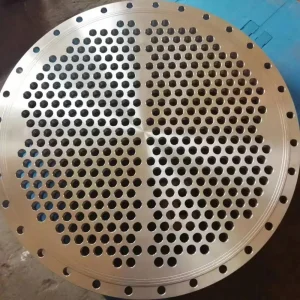
Yes. Engineering teams can supply custom forged rings, oversized ISO flanges up to Ø3,000 mm, tube sheets for heat exchangers, expansion joint flanges, and non-standard hub geometries directly from DWG, STEP, or PDF drawings. Dies and CNC programs are prepared in-house to accelerate first-article sampling.
Explore factory-direct reducer flanges, tube sheets, ring flanges, and stub ends manufactured under audited quality management systems.