Directly sourced from Shanxi Yuxin Casting & Forging Co., Ltd. — Verified EN 10204 3.1 Traceability for Global Energy Infrastructure
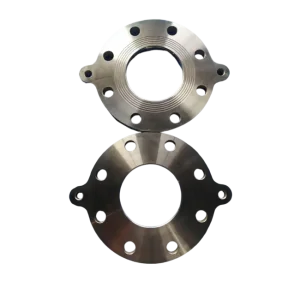
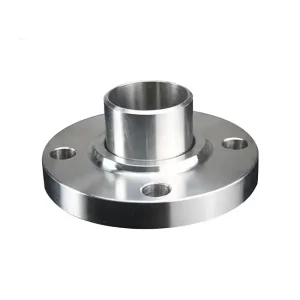
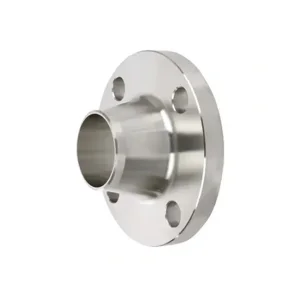
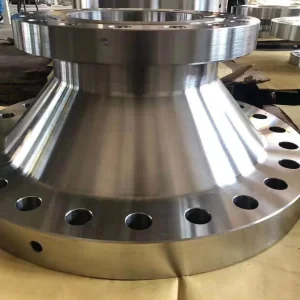
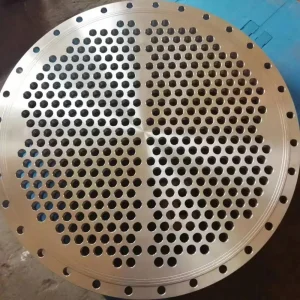
In contemporary process industries—spanning petrochemical refining, ultra-supercritical (USC) thermal power plants, concentrated solar power (CSP), and green hydrogen synthesis—the structural integrity of bolted flange joints (BFJs) operating under extreme thermal and mechanical loads represents a critical engineering frontier. Flange gaskets utilized in high-temperature environments (exceeding 400°C up to 1100°C) must maintain gas-tight sealability, resist oxidation and chemical attack, and compensate for thermal cycling fatigue without undergoing excessive creep relaxation or bolt stress degradation.
The global high-temperature flange gasket market is undergoing unprecedented expansion, driven by stringent fugitive emission mandates (such as ISO 15848-1 and TA-Luft) and the rapid scaling of high-pressure energy systems. According to recent industrial data, the market for specialized high-temperature gaskets and matching forged flange connections is projected to grow at a CAGR of 6.4%, reaching over $4.2 Billion globally. Industrial operators are increasingly bypassing intermediary trading desks to establish direct technical partnerships with primary forging mills and specialized gasket suppliers to achieve high cost-efficiency, standardized OEM compliance, and verified EN 10204 3.1/3.2 material traceability.
Information Gain Insight: Sourcing high-temperature flange connections via factory-direct discount structures does not mean compromising on metallurgical density. Shanxi Yuxin Casting & Forging Co., Ltd. (established in 1992 in Dingxiang County, Shanxi—China's premier Forging Hub) integrates closed-die hot precision forging with automated CNC face serration. This guarantees optimal gasket seating stress (m and y factors according to ASME Section VIII Division 1, Appendix 2) while reducing overall procurement expenditure by up to 25–35% compared to European stockist markups.
Understanding the synergistic interaction between forged flange metallurgy, gasket deformation mechanics, and high-temp oxidation behavior.
Expanded flexible graphite reinforced with tanged 316L or Inconel 625 cores serves effectively up to 450°C in oxidizing atmospheres and 650°C in non-oxidizing steam. For continuous service up to 1000°C, phlogopite mica layered with stainless steel core structures provides superior thermal oxidation immunity.
SWG designs utilizing V-shaped metallic strip windings (Inconel 600/625, Hastelloy C-276, or Monel 400) combined with non-asbestos mineral fillers ensure high elastic recovery ($Q_{smax}$ and $E_G$ values per EN 13555), counteracting flange rotation and thermal shock loading.
Precision CNC-machined Octagonal and Oval RTJ rings (ANSI B16.20) in Soft Iron, F5 Alloy Steel, 316L, or Inconel 718. Designed for ASME B16.5 / B16.47 RTJ flanges operating under extreme pressure ratings (Class 900 to Class 2500) and elevated temperatures.
| Gasket Technology Type | Temperature Range (°C) | Max Pressure Class | ASME m & y Factors | Recommended Flange Finish (AARH) | Typical Industrial Application |
|---|---|---|---|---|---|
| TANG-Reinforced Flexible Graphite | -200 to +550 °C | Class 150 - 600 | m = 2.00, y = 2,500 psi | 125 – 250 µin (Concentric Serrated) | Refinery Hydrotreaters, High-Temp Steam Lines |
| Mica-Phlogopite High-Temp Sheet | Up to 1,000 °C | Class 150 - 300 | m = 3.00, y = 4,000 psi | 125 – 250 µin (Smooth / Spiral) | Gas Turbine Exhaust, Waste Heat Recovery |
| Inconel 625 SWG (Mica Filled) | -100 to +900 °C | Class 150 - 2500 | m = 3.00, y = 10,000 psi | 125 – 250 µin (Phonographic Finish) | Catalytic Crackers (FCCU), Petrochemical Furnaces |
| Solid Inconel 718 RTJ Octagonal | Up to 850 °C | Class 900 - 2500+ | m = 6.50, y = 18,000 psi | 63 µin or finer (Smooth RTJ Groove) | Subsea HPHT Wellheads, Supercritical Boiler Headers |
| Kammprofile Gasket (Layered Graphite/Mica) | -200 to +700 °C | Class 150 - 2500 | m = 4.00, y = 4,200 psi | 125 – 250 µin | Thermal Cycling Heat Exchangers & Tube Sheets |
Deploying precision-forged flanges and specialized gaskets to solve complex fluid containment challenges worldwide.
Fluid Catalytic Cracking (FCCU) and delayed coking units operate under continuous thermal swings exceeding 650°C. Micro-fissures in standard gaskets lead to catastrophic fugitive emissions. By pairing Shanxi Yuxin's forged ASTM A182 F11/F22 Weld Neck Flanges with custom Kammprofile or SWG gaskets, operators achieve absolute bolt torque retention and long-term zero leakage.
Modern power stations utilize steam temperatures up to 620°C under 30 MPa pressure. Standard rubber or low-grade graphite gaskets fail rapidly under steam washing. Utilizing YUXIN's high-alloy forged EN 1092-1 Type 11 weld neck flanges with Inconel-reinforced RTJ gaskets guarantees resistance against steam oxidation and thermal fatigue.
Hydrogen molecules possess extremely small atomic radii, causing severe gas permeation and hydrogen embrittlement in standard metallic components. YUXIN supplies specialized low-carbon forged stainless steel (F316L/F316Ti) flanges paired with silver-plated metallic O-rings and ultra-dense mica composite gaskets to eliminate micro-leakage pathways.
The Evolution of Smart Flange Interfaces, Nanocomposite Gasket Materials, and Zero-Emission Mandates
Transitioning from traditional passive sealing to active, IoT-enabled bolted joint monitoring. Embedded high-temperature piezoelectric sensors within the gasket body measure real-time bolt stress loss, localized flange rotation, and micro-temperature fluctuations, transmitting diagnostics directly to refinery SCADA systems.
Incorporating vertically aligned graphene nano-sheets and boron nitride whiskers into flexible graphite and mica matrices. This innovation increases lateral thermal conductivity by 300%, eliminating localized hot-spots on flange faces while maintaining zero-permeability under 1000°C extreme thermal shock.
Global adoption of zero-leakage standards ($<10^{-6}\text{ mg}\cdot\text{s}^{-1}\cdot\text{m}^{-1}$). Primary forging mills will standardly manufacture laser-inspected phonographic flange face finishes combined with self-energized metal C-rings, eliminating the need for periodic retorquing throughout a 30-year operational lifecycle.
33 Years of Forging Mastery, Single-Site Quality Assurance, and Unrivaled Cost Advantage
Located in Zhuangli Industrial Zone, Dingxiang County, Shanxi. Heating, forging, normalizing, tempering, CNC machining, and non-destructive testing (UT/MT/PT) are executed 100% in-house. Heat numbers on certificates perfectly match the steel in your hands.
Audited quality management systems including ISO 9001 (TÜV CERT), Pressure Equipment Directive (PED 2014/68/EU), AD 2000-Merkblatt W0, VdTÜV 350 / 399-3, and Chinese Special Equipment Manufacturing License (TS Certification).
Eliminating intermediate broker commissions and trading house overheads. Direct wholesale procurement agreements allow contractors and EPCs to acquire high-temperature flange assemblies at factory discount pricing without sacrificing metallurgical integrity.
ANSI, EN, DIN, JIS Standard & Custom Drawing-Based Forgings
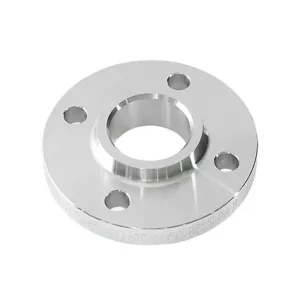
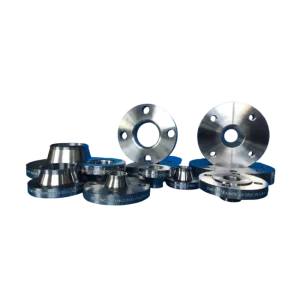
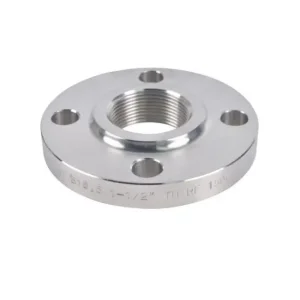
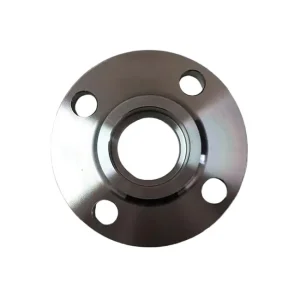
Direct technical clarification on high-temperature sealing compliance, bolt torque calculation, and factory direct procurement.
A high-temperature flange gasket must resist oxidation, thermal creep relaxation, and binder burnout at temperatures exceeding 400°C. Standard elastomeric or compressed fiber gaskets fail rapidly due to polymer degradation. High-temperature gaskets utilize flexible expanded graphite (up to 550°C), phlogopite mica (up to 1000°C), ceramic fibers, or solid high-nickel alloys (Inconel 625/718, Hastelloy) to maintain structural elasticity and compressive resistance ($y$ and $m$ seating factors) over long operational cycles.
Flange surface roughness directly controls gasket material flow and sealability. For soft composite gaskets like flexible graphite or mica, a serrated finish of 125 to 250 µin AARH (3.2 to 6.3 µm Ra) is required to bite into the gasket matrix and prevent lateral blowout under internal pressure. For metallic Ring Type Joint (RTJ) gaskets, a much smoother finish (63 µin AARH or finer) is mandated to form a metal-to-metal seal along the conical groove walls.
Discount factory pricing is achieved through vertical integration and geographical manufacturing advantages. Shanxi Yuxin operates its own forging hammers, heat-treatment furnaces, and high-speed CNC machining centers in Dingxiang, Shanxi—eliminating third-party sub-contracting fees, distributor markups, and agent commissions. Furthermore, raw steel billets (A105, A350 LF2, A182 F316L/F11/F22) are procured in multi-thousand-ton batches directly from primary steel mills, allowing significant material cost reductions passed on to international buyers.
Every shipment from Shanxi Yuxin includes full EN 10204 3.1 Mill Test Certificates (MTC) detailing heat numbers, chemical ladle analysis, mechanical tension tests, Charpy V-notch impact values at low temperatures, heat treatment charts, and 100% Ultrasonic Testing (UT) / Magnetic Particle Inspection (MPI) reports. EN 10204 3.2 third-party inspection certificates (TÜV, SGS, Bureau Veritas) are available upon request.
Differential thermal expansion occurs when the flange, bolt, and gasket materials possess different Coefficients of Thermal Expansion (CTE). Under high temperatures, this causes uneven thermal expansion, leading to localized bolt over-stretching or gasket crushing. Engineering solutions include utilizing matched alloy steel bolting (e.g., ASTM A193 B7/B16 or Grade 660) paired with self-energized Kammprofile or spring-loaded metallic SWGs that continuously adapt to thermal growth differentials.
