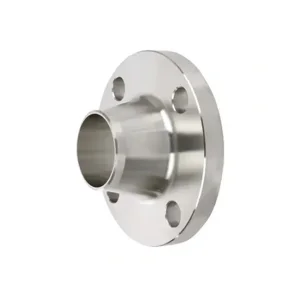
Precision-machined forged and composite piping elements engineered to ASME B16.5, EN 1092-1, and ISO quality standards.
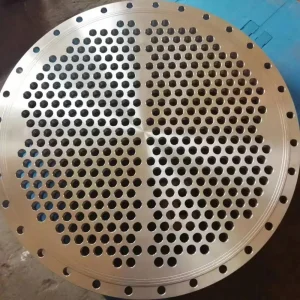
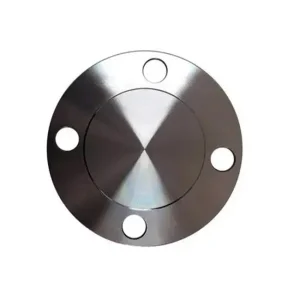
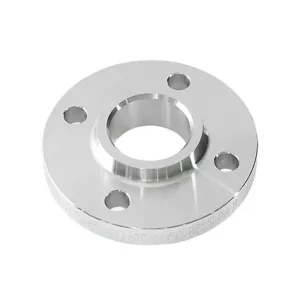
Understanding the operational trade-offs, material science, and economic factors driving global demand for discount FRP blind flanges and forged steel pipeline isolation solutions.
Blind flanges function as non-bored flat discs designed to seal off piping termination points, pressure vessel nozzles, or valve ends during maintenance, hydro-testing, and system expansion. Proper seal integrity under cyclic pressure relies heavily on disk thickness and face machining.
While FRP (Fiberglass Reinforced Plastic) blind flanges offer complete immunity to galvanic and chemical corrosion in marine or acid lines, forged steel (ASTM A105, A182 F316L) provides vastly superior mechanical shear strength and temperature resistance up to 600°C.
Global buyers seek "discount" blind flange suppliers not by compromising on raw material standards, but by leveraging China Industry 4.0 production hubs like Shanxi Yuxin, where raw billet integration and automated ring-rolling reduce unit costs by 22–35%.
In modern industrial process engineering, the selection of end-of-line sealing components—specifically Blind Flanges (BF)—represents a critical safety and operational decisions. As global infrastructure expands across desalination, offshore oil & gas, hydrogen transport, and heavy chemical synthesis, procurement managers are increasingly evaluating the total cost of ownership (TCO) between composite Fiberglass Reinforced Plastic (FRP / GRP) blind flanges and traditional forged carbon/stainless steel blind flanges (such as ASTM A105, ASTM A182 F304/F316L, and Duplex 2205).
FRP blind flanges utilize vinyl ester, epoxy, or polyester resins reinforced with multi-axial glass fibers. Manufactured via resin transfer molding (RTM) or hand lay-up per ASME RTP-1 and BS 4994 standards, they are completely immune to electrochemical corrosion, making them highly desirable for sea water intake headers, bleach plants, and municipal waste lines. However, FRP flanges exhibit lower pressure capability (typically limited to ASME Class 150) and are vulnerable to physical impact and thermal degradation above 120°C.
Forged steel blind flanges, crafted through high-energy die forging and precision CNC turning, remain the ultimate benchmark for high-pressure, high-temperature, and hazardous gas containment. Manufactured to ASME B16.5, ASME B16.47 Series A/B, and EN 1092-1 Type 05 standards, forged flanges easily operate in Class 300 to Class 2500 pressure regimes and withstand extreme thermal shock from cryogenic (-196°C) up to severe steam heat (650°C).
Global EPC contractors are adopting a dual-sourcing model: utilizing lightweight FRP blind flanges for low-pressure utility water circuits and specified chemical drain headers, while standardizing on direct factory-sourced forged steel blind flanges for main process headers. Buyers seeking discount FRP and forged blind flanges are circumventing intermediary distributors to partner directly with advanced Chinese manufacturing hubs capable of supplying both standard ASME/EN forged flanges and custom composite-to-metal transition flange assemblies under unified quality control.
To assist piping engineers and procurement officers in selecting the optimal flange product, the following technical matrix details key physical, mechanical, and economic parameters across four primary material specifications:
| Engineering Property | FRP / Vinyl Ester Composite | Forged Carbon Steel (ASTM A105) | Stainless Steel (ASTM A182 F316L) | Duplex Stainless (UNS S31803 / 2205) |
|---|---|---|---|---|
| Corrosion Resistance (Acid/Salt) | Exceptional (No Rust) | Poor (Requires Coating) | High (Pitting Risk in Chlorides) | Ultra-High (PREN > 34) |
| Max Operating Pressure | Class 150 (PN10-PN16) | Class 150 to 2500 (PN400) | Class 150 to 2500 (PN400) | Class 150 to 2500 (PN400) |
| Temperature Limit Range | -30°C to +120°C | -29°C to +425°C | -196°C to +600°C | -50°C to +300°C |
| Tensile Strength (MPa) | 150 – 300 MPa | ≥ 485 MPa | ≥ 485 MPa | ≥ 655 MPa |
| Specific Gravity / Weight Ratio | 1.8 g/cm³ (Lightweight) | 7.85 g/cm³ (Heavy) | 7.98 g/cm³ (Heavy) | 7.80 g/cm³ (Heavy) |
| Factory Discount Potential | Moderate (Resin Volatility) | Maximum (High Volume Forge) | High (Scale Machining) | Moderate (Alloy Cost) |
Discover the technical and economic mechanisms that allow our Dingxiang manufacturing center to deliver world-class forged and composite blind flanges at competitive direct prices.
Located in Dingxiang County—China's recognized "Hometown of Forging"—YUXIN sources prime steel billets in 1,000-ton lots directly from top-tier state mills, slashing material procurement costs by 15%.
Our automated hydraulic forging presses and 5-axis CNC vertical turning centers optimize material utilization, minimizing scrap rate to under 1.2% while assuring tight dimensional tolerances (±0.5mm).
In-house computer-controlled normalising, tempering, and solution annealing furnaces guarantee fine grain structure and zero internal stress, verified per AD 2000-W0 & PED 2014/68/EU standards.
Every blind flange shipped carries a hard-stamped heat number matching an EN 10204 3.1 (or 3.2 third-party) certificate, detailing spectral chemical analysis, yield, tensile, impact, and UT results.
From seawater reverse osmosis plants in the Middle East to chemical refining complexes in Western Europe, see where our blind flanges perform.
Challenge: High chloride levels cause rapid pitting and crevice corrosion in standard carbon steel flanges, leading to total joint failure.
Solution: Procurement teams utilize FRP blind flanges for low-pressure brine discharge lines, while specifying YUXIN's Duplex 2205 (UNS S31803) forged blind flanges for high-pressure RO pump isolation, securing lifetime leak-free operation with zero maintenance downtime.
Challenge: Hydrogen sulfide (H2S) exposure causes sulfide stress cracking (SSC) in high-stress pipeline terminations.
Solution: YUXIN supplies NACE MR0175/ISO 15156 compliant ASTM A105N and ASTM A350 LF2 Class 600 forged blind flanges with raised-face (RF) and ring-type joint (RTJ) facings, ensuring full structural integrity during severe hydro-testing and operational shut-offs.
Challenge: Strong acid lines (such as 98% H2SO4 or HCl) quickly attack metallic pipe walls.
Solution: Plant engineers combine PTFE/FEP-lined steel blind flanges or heavy-wall Vinyl Ester FRP blind flanges for reactor vessel inspection nozzles, balancing chemical immunity with mechanical safety.
Challenge: Large-diameter cooling water conduits (DN1000 to DN3000) require economical positive isolation discs.
Solution: Direct factory OEM supply of AWWA C207 and EN 1092-1 large-format forged steel plain/blind flanges featuring anti-corrosion black bitumen or epoxy coatings, delivering substantial savings over Western stockists.
Clear, authoritative answers regarding standards, material selection, quality control, and bulk purchasing discount structures.
An FRP (Fiberglass Reinforced Plastic) blind flange is constructed from synthetic resin and glass fiber matrices, offering lightweight, 100% rust-proof performance ideal for corrosive chemical or marine service under low pressure (≤16 bar). A Forged Steel blind flange is hot-forged from solid steel billets (ASTM A105, Stainless, Alloy), capable of withstanding extreme pressure classes (up to Class 2500 / PN400) and elevated temperatures (up to 600°C) with superior structural strength.
Our discount pricing is achieved through vertical integration and economies of scale at our Shanxi manufacturing center. By purchasing raw billets directly from primary steel producers in 1,000-ton lots, utilizing automated CNC ring rolling, and conducting all heat-treatment and testing in-house, we eliminate intermediary trader markups and reduce unit production costs by 20–35%, passing these direct savings to our global customers.
We forge and machine blind flanges strictly compliant with ASME B16.5 (1/2" to 24"), ASME B16.47 Series A & B (26" to 60"), EN 1092-1 Type 05, DIN 2527, JIS B2220, GOST 12836, and BS 4504 standards. We also manufacture custom non-standard blind flanges up to 3,000 mm diameter according to customer engineering drawings.
Yes. We frequently supply custom tapped blind flanges featuring centered or eccentric threaded NPT/BSP ports (1/2", 3/4", 1", etc.) for mounting pressure gauges, drain valves, or chemical injection quills. All tapping operations are performed on high-precision CNC machines to maintain thread concentricity and seal integrity.
Every shipment is accompanied by a full EN 10204 3.1 Mill Test Certificate (MTC) detailing heat number, chemical composition, mechanical properties (tensile, yield, elongation, hardness), heat treatment records, and non-destructive testing results (UT/MT/PT). Third-party inspection (TUV, SGS, BV, Lloyd's) with EN 10204 3.2 certification is available upon request.
Standard size forged blind flanges in stock semi-finished blanks ship within 7 to 15 days. Custom forged-to-drawing items require 20 to 35 days. For seaworthy export, flange faces are protected with rust-preventive varnish or rust-inhibitor oil, plastic end covers are applied, and items are packed in fumigation-free ISPM 15 plywood cases or solid steel-framed crates.
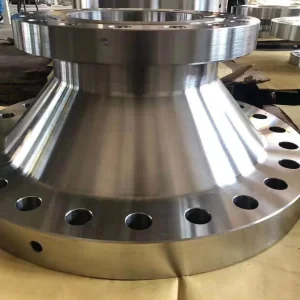
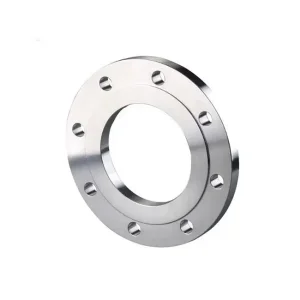
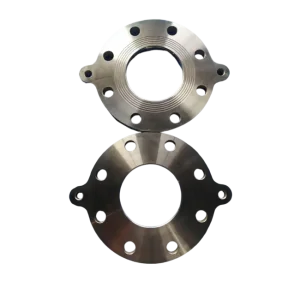
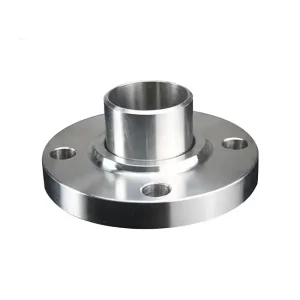
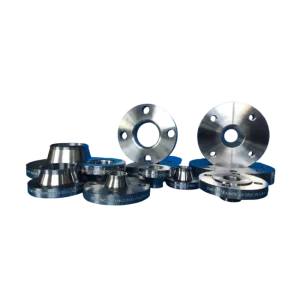
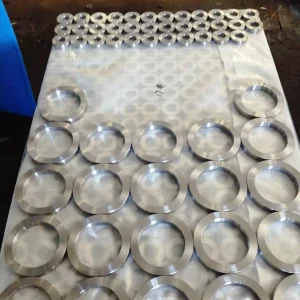
Discover our full lineup of OEM/ODM custom flanges, plain flat rings, weld neck, slip-on, and reducer flanges ready for global project dispatch.