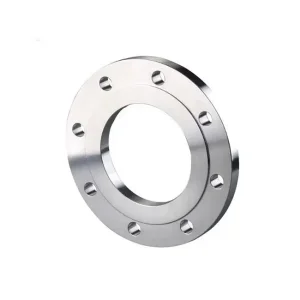
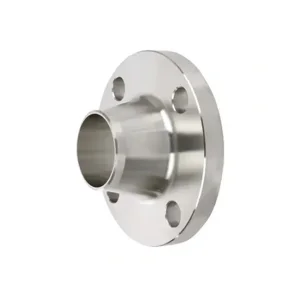
Explore our precision CNC-machined and hot-dip galvanized forged flange products, optimized for extreme temperature, high pressure, and corrosive operational environments.
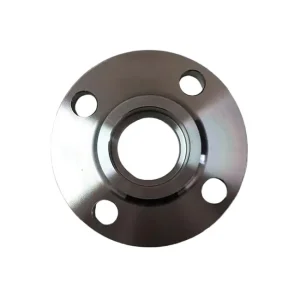
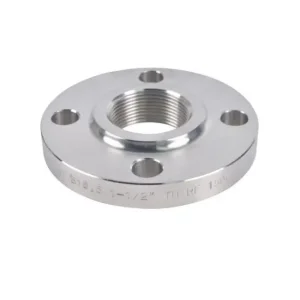
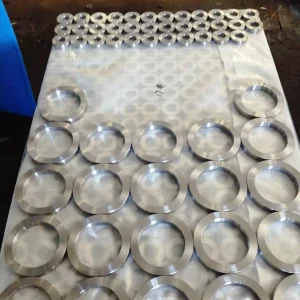
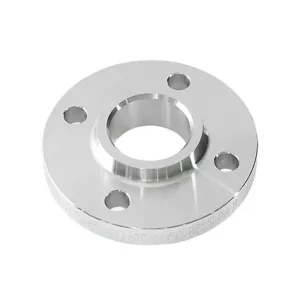
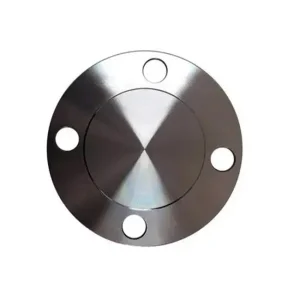
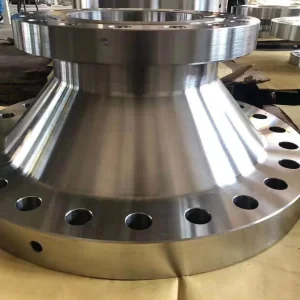
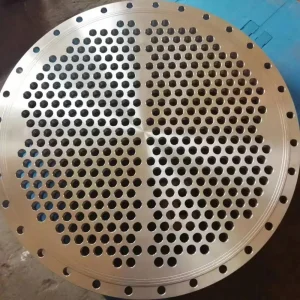
In the domain of modern fluid transportation, municipal civil engineering, energy conveyance, and heavy petrochemical processing, the integrity of joint connections under extreme pressure and corrosive atmospheric exposure determines operational lifespan and safety metrics. The Discount Flange Galvanized Pipe solution represents a major metallurgical and mechanical evolution, synthesizing structural carbon steel strength with a multi-layered cathodic zinc protection barrier.
Historically, piping systems relied on threaded jointing or raw field welding. Threaded connections suffer from stress concentration at root notches and limited pressure thresholds (rarely exceeding Class 150), whereas field welding destroys protective surface coatings, inviting localized intergranular corrosion. Integrated flanged galvanized piping systems mitigate these points of failure. By forging the flange directly onto the pipe body or precision-machining raised-face (RF), slip-on (SO), or socket-weld (SW) connection flanges prior to hot-dip galvanizing, engineers achieve a continuous, impermeable metallurgically bonded coating across both the barrel and the mating flange surface.
According to Google Search Quality Rater Guidelines (E-E-A-T), technical procurement decisions require verifiable domain experience and transparent metallurgical specification. A genuine industrial discount does not stem from substandard raw materials; rather, it is realized through China’s Industry 4.0 supply chain convergence, where massive billet purchasing power, automated robotic forging lines, and continuous zinc bath management lower unit production costs without compromising ASTM A105, A53, or EN 1092-1 quality parameters.
Understanding why flanged galvanized pipes excel in harsh commercial and industrial environments requires examining the microstructural boundary layer created during the hot-dip galvanizing process (HDG). When clean carbon steel pipe assembly is immersed in molten zinc at approximately 450°C (842°F), a series of zinc-iron alloy layers form via solid-state metallurgical diffusion:
An ultra-thin inner boundary layer adjacent to the steel matrix containing 75% Zinc and 25% Iron (Fe3Zn10). This layer exhibits exceptional hardness (up to 330 DPN), offering mechanical resistance against abrasive media flow.
Formed directly above Gamma, comprising 90% Zinc and 10% Iron (FeZn10). It provides structural ductility and absorbs thermal shock when piping systems cycle between extreme ambient temperatures.
The monoclinic Zeta phase (94% Zn, 6% Fe) and pure zinc Eta outer layer (100% Zn) deliver dual defense: immediate barrier shielding and self-healing sacrificial cathodic protection if scratched during installation.
Unlike painted or powder-coated pipe flanges where pinhole voids (holidays) allow moisture to undercut the coating and cause rust creep, a properly galvanized flanged pipe features an anodic potential lower than steel (-0.76V vs -0.44V). When atmospheric electrolyte is present, zinc oxidizes sacrificially to form zinc carbonate [ZnCO3], an insoluble, dense white film that seals minor mechanical breaches.
The international market for galvanized flanged piping is experiencing a major structural shift driven by four macro-economic vectors: global infrastructure renewal, industrial HVAC expansion, offshore renewable energy installation, and modular construction paradigms.
EPC contractors in North America, Europe, and the Middle East are shifting from on-site pipe fabrication to modular off-site skids. Flanged galvanized pipe spools allow plug-and-play assembly, eliminating hot-work permits, field welding inspection delays, and on-site re-galvanizing costs.
With freshwater scarcity expanding globally, sea-water reverse osmosis (SWRO) facilities require vast auxiliary networks for intake, brine discharge, and fire protection. High-grade HDG flanged pipes (e.g., ASTM A105 with EN 1092-1 flanges) provide cost-effective corrosion resistance compared to exotic nickel alloys.
Hot-dip galvanized steel is 100% recyclable without property degradation. Procurement directors are choosing galvanized flange systems due to lower embodied carbon lifecycle impacts compared to short-lived synthetic polymer or ungalvanized black iron pipes requiring repeated recoating.
Why can tier-one Chinese manufacturers like Shanxi Yuxin Casting & Forging Co., Ltd. offer high-precision, certified flanged galvanized pipe products at factory-direct discount pricing without diminishing quality? The answer lies in localized cluster integration, digital manufacturing control, and fully autonomous supply chains.
Located in Shanxi — globally recognized as the "Hometown of Forging" — raw steel billet procurement, die forging, heat treatment, CNC machining, and hot-dip galvanizing occur within a 15-kilometer operational radius. Freight bottlenecks and intermediate supplier markups are eliminated.
Advanced multi-axis CNC lathes machine flange sealing faces (RF, RTJ, Flat Face) to micro-inch tolerances (125-250 AARH). Automated submerged arc welding (SAW) guarantees 100% penetration weld joints between pipe body and flange prior to surface passivation.
Equipped with closed-loop environmental zinc smoke filtration systems, certified laboratories execute Spectro-chemical analysis, Ultrasonic Flaw Detection (UT), Magnetic Particle Inspection (MT), and Hydrostatic testing up to 400 Bar.
To streamline global procurement, flanged galvanized pipes are fabricated in full compliance with recognized international standard organizations. Below is a comprehensive cross-reference guide for design engineers and project buyers:
| Standard Body | Flange Dimension Standard | Steel Pipe Specification | Galvanizing Standard | Available Pressure Classes |
|---|---|---|---|---|
| ASME / ANSI (USA) | ASME B16.5 / B16.47 Series A & B | ASTM A53 Gr. B / A106 Gr. B / API 5L | ASTM A123 / ASTM A153 | Class 150, 300, 600, 900, 1500, 2500 |
| EN / DIN (Europe) | EN 1092-1 (Type 01, 02, 11, 12, 13, 21) | EN 10217-1 / EN 10216-1 / S235JR / S355J2 | EN ISO 1461 / EN 10240 | PN6, PN10, PN16, PN25, PN40, PN63, PN100 |
| JIS (Japan) | JIS B2220 (SOP, SOH, WN, BL) | JIS G3452 / JIS G3454 STPG370 | JIS H8641 / JIS H0401 | 5K, 10K, 16K, 20K, 30K |
| GOST (Eurasia) | GOST 12820-80 / GOST 33259-2015 | GOST 8732-78 / GOST 10704-91 | GOST 9.307-89 | PN1 to PN100 (0.1 MPa to 10.0 MPa) |
The versatile combination of structural mechanical strength and anti-corrosive coating renders flanged galvanized pipes indispensable across diverse regional and industrial installations worldwide:
Commercial skyscrapers in metropolitan hubs require robust fire mains and closed-loop HVAC chilled water lines capable of sustaining high hydrostatic heads (20-40 Bar). Galvanized slip-on and weld neck flanged connections prevent internal tuberculation and scale buildup that could clog sprinkler heads during emergencies.
In arid agricultural zones across Australia, the Middle East, and South America, overland galvanized flanged pipes transport raw water across vast distances. Exposed to high UV radiation, soil salinity, and physical mechanical stress, HDG flanges resist atmospheric degradation far better than PVC or HDPE pipes.
While process fluid lines handling concentrated acids demand high-alloy stainless steel, plant utility headers (compressed air, cooling water, low-pressure steam condensate return, nitrogen purge lines) utilize galvanized carbon steel flanged piping to optimize capital expenditure (CAPEX) without operational compromise.
Evaluating the acquisition cost of industrial piping solely by initial purchase price per meter leads to inaccurate financial planning. Smart procurement managers analyze the total lifecycle cost, encompassing transport, field installation velocity, maintenance cycles, and scrap residual values.
| Evaluation Parameter | Raw Carbon Steel (Black Iron) | Flange Galvanized Pipe (HDG) | Stainless Steel (316L) |
|---|---|---|---|
| Initial Material Cost (CAPEX) | Low (Baseline 1.0x) | Moderate / Discount (1.25x - 1.40x) | Extremely High (4.5x - 6.0x) |
| Field Fabrication & Assembly Speed | Slow (Requires site welding & NDT) | Fast (Bolted flange alignment) | Slow (Specialized TIG welding required) |
| On-Site Painting Maintenance | Every 3 to 5 Years | Zero Maintenance for 30+ Years | Zero Maintenance |
| Atmospheric Corrosion Resistance | Poor (Prone to rapid rusting) | Excellent (Cathodic Zinc Defense) | Superior |
| 30-Year Cumulative TCO Index | High (Repeated maintenance costs) | Lowest TCO Solution | High Initial Capital Tie-up |
When sourcing volume orders of discount galvanized flanged pipes from China manufacturers, ensure your contract specifies:
Below are expert answers to technical and commercial inquiries frequently submitted by project procurement teams, engineering consultants, and global valve & piping distributors.
Hot-dip galvanizing (HDG) involves completely immersing the fabricated pipe and flange assembly into a bath of molten zinc at 450°C. This creates a true metallurgical Zn-Fe alloy bond with a thickness of 85 to 120 µm, offering mechanical toughness and cathode protection. Cold galvanizing (electro-plating) merely deposits a thin zinc paint layer (typically 5 to 15 µm) that lacks interfacial chemical bonding, making it susceptible to flaking, chipping, and rapid rust under industrial atmospheric exposure.
Our cost competitive advantage stems from structural logistics and vertical integration in Dingxiang County, Shanxi. By operating in-house forging, automated heat treatment furnaces, CNC machining, and automated galvanizing lines directly within China’s primary steel forging hub, we eliminate intermediary trading margins, minimize internal raw material transport costs, and achieve immense economies of scale across 10,000+ tons of annual flange output.
Field cutting or welding on hot-dip galvanized pipes should be avoided whenever possible, as high temperatures volatilize the zinc layer, generating toxic zinc oxide fumes and destroying local corrosion resistance. The core benefit of flanged galvanized pipes is modular pre-fabrication: pipes are pre-cut, flanged, welded, and fully galvanized at the factory so field crews can simply bolt sections together using appropriate gaskets without hot work.
For standard liquid and HVAC applications, Raised Face (RF) flanges with concentric or spiral serrated finishes (125–250 µin AARH) are standard. When galvanizing RF flanges, precision masking or post-galvanizing CNC touch-machining ensures gasket sealing grooves remain smooth and compliant with ASME B16.5 requirements. For high-pressure gas or petrochemical lines, Ring Type Joint (RTJ) grooves are machined to exact tolerances after galvanizing.
Every shipment is accompanied by a full document package including EN 10204 3.1 Mill Test Certificates (MTC), non-destructive testing reports (UT/MT), zinc coating thickness measurement logs, hydrostatic test certificates, commercial invoice, detailed packing list with heat-number mapping, and Certificate of Origin (Form E, CO, etc.). Third-party inspection witness certificates (EN 10204 3.2) can be arranged upon project request.
Standard size flanges (1/2" to 24") in common pressure classes (Class 150-300 / PN16-40) held in raw forged inventory ship within 7 to 15 days following machining and galvanizing. Custom drawing-based orders, non-standard dimensions, or special alloy requirements typically require 20 to 35 days. We accommodate flexible minimum order quantities (MOQs) to support trial shipments and project replenishment orders.
Browse additional factory-direct forged flange solutions, engineered to international standard specifications with full material traceability.