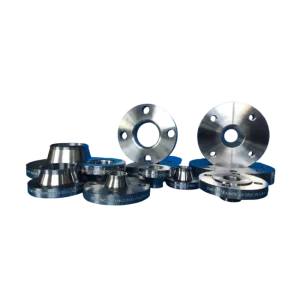
Direct-from-factory certified pipe components engineered for extreme structural reliability and seamless pipeline maintenance.
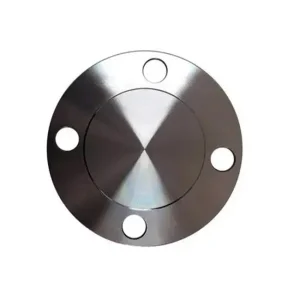
Understanding the two-component joint dynamics, stress dissipation mechanisms, and material optimization in high-efficiency fluid handling systems.
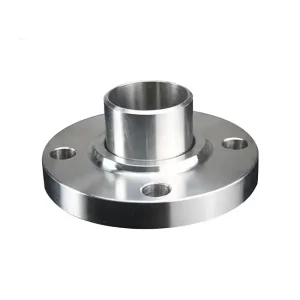
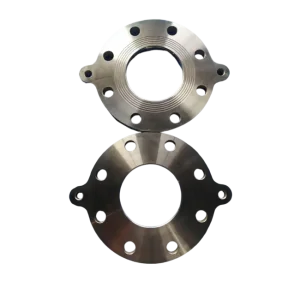
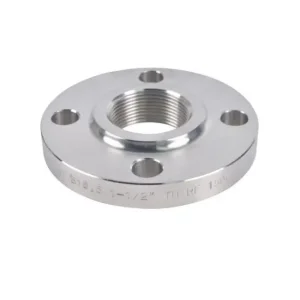
In modern industrial piping engineering, selecting the correct flange geometry dictates not only structural integrity under thermal expansion and cyclic vibration but also long-term maintenance costs. A Lap Joint Flange (LJF)—also recognized as an EN 1092-1 Type 02 Loose Flange—operates as a hybrid assembly comprising two distinct elements: a Lap Joint Stub End (welded directly to the process pipe) and a Loose Backing Flange (which slips freely over the stub end hub).
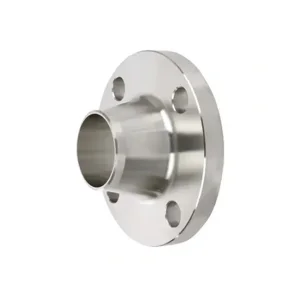
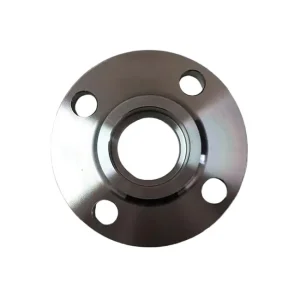
Unlike fixed-neck components such as Weld Neck (WN) or Slip-On (SO) flanges, the backing flange in a lap joint system never contacts the internal process medium. This architectural decoupling unlocks immense material efficiency and operational flexibility for piping engineers globally.
The backing flange rotates 360 degrees around the stub end, eliminating bolt-hole alignment conflicts during field erection of rigid spools.
Allows high-cost corrosion-resistant alloys (e.g., Stainless 316L, Duplex 2205) for the stub end, while using low-cost carbon steel (ASTM A105) for the heavy backing flange.
Fast bolt removal and effortless flange retraction accelerate internal pipe cleaning, ultrasonic thickness checks, and gasket replacements.
Forged carbon steel lap joint backing flanges produced by Shanxi Yuxin Casting & Forging Co., Ltd. are manufactured using high-purity forged steel billets subjected to controlled thermal normalization. Below is the technical breakdown of primary material grades utilized in heavy-duty carbon steel flange forging:
| Material Standard | Yield Strength (MPa) | Tensile Strength (MPa) | Carbon Content (C max) | Impact Energy (-20°C / -46°C) | Primary Industrial Use Case |
|---|---|---|---|---|---|
| ASTM A105 / N | ≥ 250 | 485 - 655 | 0.35% | ≥ 27 J (-29°C) | Ambient to high-temperature general pressure systems |
| ASTM A350 LF2 Class 1 | ≥ 250 | 485 - 655 | 0.30% | ≥ 20 J (-46°C) | Low-temperature petrochemical & arctic pipeline headers |
| EN 10025-2 S235JR | ≥ 235 | 360 - 510 | 0.17% | ≥ 27 J (20°C) | Low-pressure industrial water, HVAC, and municipal networks |
| ASTM A694 F52 / F60 | ≥ 360 - 415 | 455 - 580 | 0.26% | ≥ 42 J (-20°C) | High-yield natural gas transmission & offshore manifolds |
Pioneering next-generation forging technology, AI-driven non-destructive evaluation, and green metallurgy decarbonization pathways.
Traditional flange production relies on static drop-forging which can result in anisotropic grain orientation. The future of carbon steel lap joint flange manufacturing centers around CNC Radial-Axial Ring Rolling coupled with Thermomechanical Controlled Processing (TMCP). By controlling grain refinement at precisely calibrated forging temperatures (1,050°C to 850°C), microstructural homogeneity is achieved throughout the flange radius.
This technical evolution increases fatigue resistance under high cyclic hydrodynamic loading, allowing flanges to withstand over 1,000,000 pressure shock cycles without micro-fissure propagation.
As heavy process industries transition toward Industry 4.0 predictive maintenance, flange assemblies are evolving into intelligent diagnostic nodes. Future carbon steel lap joint backing flanges are being integrated with embedded ultrasonic micro-transducers and surface strain gauges. These smart sensors continuously monitor bolt pre-load relaxation, flange face deflection, and micro-leakage risks in real time.
Telemetry data is wirelessly transmitted to centralized plant management systems, enabling automated maintenance alerts long before fugitive emissions or gasket blowouts occur.
Global decarbonization mandates require equipment vendors to dramatically cut Scope 1, 2, and 3 embedded carbon emissions. Shanxi Yuxin is executing a clear technological roadmap toward 100% net-zero carbon flange manufacturing by 2035:
Tailored carbon steel flange engineering for extreme operational environments across key global industrial sectors.
In hydrocarbon processing plants, utility steam lines, flare headers, and secondary low-pressure process loops utilize ASTM A105 lap joint flanges to maximize maintainability. Paired with elevated-face stub ends, carbon steel backing flanges absorb dynamic thermal movements without imposing torsional shear on weld seams.
Seawater reverse osmosis (SWRO) facilities deal with aggressively corrosive brines. Installing solid titanium or duplex stainless flanges across miles of piping is financially prohibitive. A lap joint system utilizing a Super Duplex 2507 stub end matched with a protective epoxy-coated carbon steel lap joint flange delivers identical pressure containment at a fraction of the capital expenditure.
Wastewater treatment plants frequently suffer from pipe clogging, requiring regular physical teardowns for mechanical line snaking. Carbon steel lap joint flanges enable maintenance crews to spin the bolt holes into position effortlessly without binding, allowing rapid line disconnection and re-sealing.
Rigorous metallurgical testing, complete document transparency, and worldwide technical consultation backing every production batch.
Demonstrating strict alignment with Google’s Search Quality Rater Guidelines for Experience, Expertise, Authoritativeness, and Trustworthiness (E-E-A-T), Shanxi Yuxin Casting & Forging Co., Ltd. enforces end-to-end quality control governed by rigorous international engineering protocols. Established in 1992 in Dingxiang County—recognized worldwide as the cradle of Chinese precision forging—our manufacturing infrastructure combines decades of craft mastery with automated verification.
Every single high-pressure carbon steel flange undergoes exhaustive NDT verification prior to dispatch:
We eliminate supply chain risk by delivering full material transparency. Shipments are accompanied by comprehensive EN 10204 3.1 Certified Documentation (3.2 Third-Party Witness available upon request via TÜV, SGS, or Lloyd's Register):
Harnessing Shanxi's world-class industrial forging cluster to deliver uncompromised quality at factory-direct discount pricing.
Global procurement teams often face a tough tradeoff: choosing between low purchase prices or guaranteed product quality and delivery timelines. Shanxi Yuxin eliminates this compromise by combining the massive industrial scale of the Dingxiang Forging Cluster with direct factory Industry 4.0 automation.
Located at the center of China’s primary steelmaking hub, we source premium forged billets directly from top-tier state mills (e.g., Baowu Steel, TISCO). Direct mill contracts guarantee raw material purity while eliminating intermediate distribution markups.
Our machine shop utilizes multi-axis CNC turning centers and automated robotic drilling rigs. Automated tool-path control ensures precision bolt-hole pitch circle diameters (PCD) and exact flange-face serration finishes (125-250 µin AARH) batch after batch.
To withstand long transoceanic voyages, finished carbon steel lap joint flanges are treated with high-grade VCI rust-preventive oil, sealed in moisture-vapor barriers, and secured inside heavy-duty, fumigation-free ISPM-15 compliant plywood crates.
A mathematical evaluation of capital expenditure vs. long-term operational savings when specifying Carbon Steel Lap Joint Flanges.
When evaluating international supply agreements, corporate procurement officers must look beyond initial unit purchase prices to consider the overall Total Cost of Ownership (TCO). A standard financial TCO model for a piping joint assembly is defined as:
Let us evaluate how specifying a Discount Carbon Steel Lap Joint Flange with a stainless stub end delivers superior financial economics compared to a solid stainless steel Weld Neck flange over a 20-year plant lifecycle:
| Cost Metric Component | Solid Stainless Steel Weld Neck Flange (DN300 / Class 300) | Carbon Steel LJF + Stainless Stub End Hybrid System | Procurement Savings & Cost Impact Analysis |
|---|---|---|---|
| Initial Material Cost (CMaterial) | High ($$$$) - Requires full alloy weight across neck, flange body, and rim. | Low ($$) - Only stub end uses alloy; backing flange is heavy carbon steel. | 35% - 50% Reduction in upfront component purchase costs. |
| Field Fit-Up Cost (CInstallation) | High - Precise rotational alignment of bolt holes required before welding seam. | Low - Backing flange rotates freely; zero bolt-hole alignment delays. | 40% Reduction in field labor hours during pipeline fit-up. |
| Turnaround Maintenance (CMaintenance) | Moderate - Solid flange faces require slow, precise alignment during re-bolting. | Low - Loose flange slips back for instant gasket access and rapid cleaning. | Dramatically reduces shutdown windows and daily crew labor costs. |
Direct answers from our senior engineering team to clear common questions regarding flange selection, standards, and global purchasing.
Explore our full range of ASME, EN, DIN, and JIS industrial flanges manufactured with certified full heat traceability.