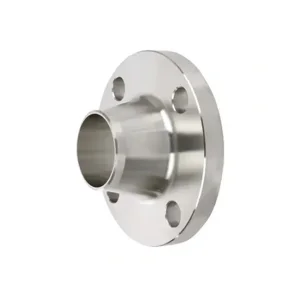
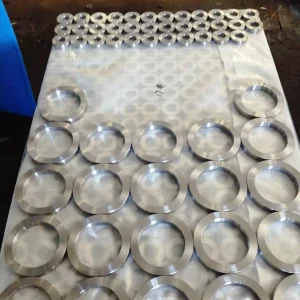
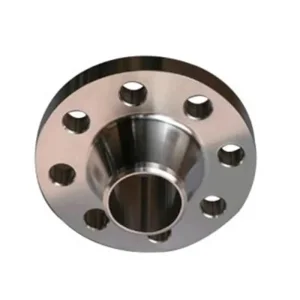
Explore factory-direct engineered flanges manufactured per ASME B16.5, ASME B16.47, and EN 1092-1 specifications with 100% material traceability and EN 10204 3.1 certification.
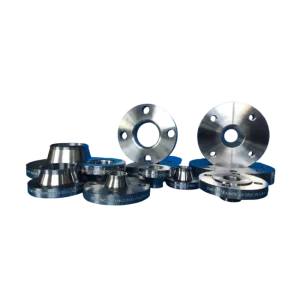
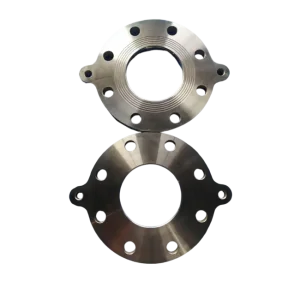
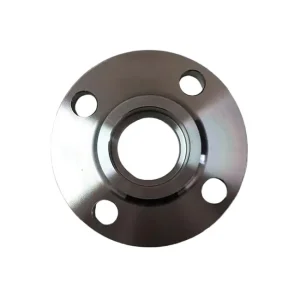
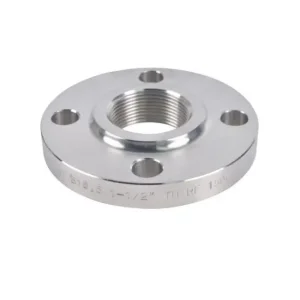
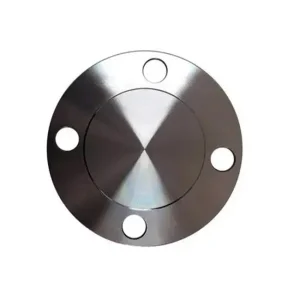
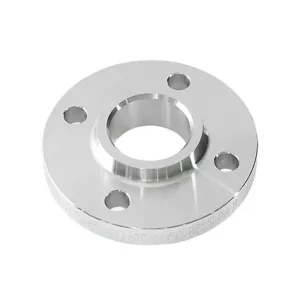
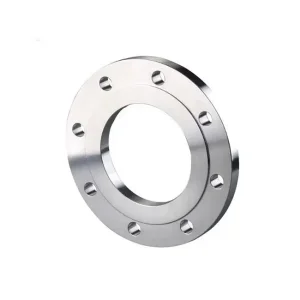
In-depth technical breakdown of chemical composition, heat treatment requirements, pressure-temperature ratings, and dimensional tolerances for industrial pipeline connections.
Selecting the optimal carbon steel flange specification requires a precise understanding of material metallurgy, pressure boundary capabilities, and mechanical performance under operational stresses. As a leading manufacturer established in 1992 in Shanxi, China—the world-renowned epicenter of precision forging—Shanxi Yuxin Casting & Forging Co., Ltd. produces high-integrity forged flanges engineered for zero-leakage performance across oil & gas, chemical refining, power generation, and heavy industrial applications.
Carbon steel forged flanges are primarily manufactured from standard forging-grade carbon steels such as ASTM A105, ASTM A350 LF2 (Low-Temperature Carbon Steel), ASTM A694 (High-Yield Carbon Steel), and European grades like P250GH / C22.8 (EN 1092-1). The mechanical integrity of these flanges is governed by strict chemistry thresholds, particularly the Carbon Equivalent (CE) ratio, which determines weldability and resistance to hydrogen-induced cracking (HIC).
| Grade / Specification | Carbon (C) Max | Manganese (Mn) | Yield Strength (Min) | Tensile Strength | Impact Temp / Charpy V-Notch |
|---|---|---|---|---|---|
| ASTM A105 (Standard Temp) | 0.35% | 0.60 – 1.05% | 36,000 psi (250 MPa) | 70,000 psi (485 MPa) | N/A (Standard Normalized) |
| ASTM A350 LF2 Class 1 (Low Temp) | 0.30% | 0.60 – 1.35% | 36,000 psi (250 MPa) | 70,000–95,000 psi (485–655 MPa) | -46 °C (-50 °F) / 20 J (15 ft-lbf) |
| ASTM A694 F52 (High Yield) | 0.26% | 1.35% Max | 52,000 psi (360 MPa) | 66,000 psi (455 MPa) | Tested per project requisition |
| EN 1092-1 P250GH (EU Standard) | 0.20% | 0.40 – 1.20% | 250 MPa (DN ≤ 16) | 410 – 540 MPa | -20 °C / 27 J |
Our production lines accommodate global dimensional frameworks, ensuring seamless field fit-up and compatibility with existing piping headers. Flange specifications are categorized by pressure rating classes according to major international standards:
Next-generation forging methodologies, metallurgical evolution, smart component integration, and net-zero manufacturing trajectories in pressure vessel hardware.
As global energy systems transition toward green hydrogen transport, carbon steel flanges must withstand high-pressure gaseous hydrogen embrittlement (HE). Future specs incorporate ultra-clean steels with S < 0.005%, P < 0.010%, and micro-alloying additives (Titanium, Niobium) to lock free carbon and eliminate micro-void propagation under cyclic load.
Integrating 3D Laser Metal Deposition (LMD) with traditional closed-die forging allows targeted deposition of high-corrosion-resistant alloy cladding (such as Inconel 625 or 316L Stainless) onto carbon steel sealing faces, yielding maximum corrosion barrier protection at significantly reduced material cost.
Modern forging specifications increasingly mandate direct-part marking with matrix QR codes and embedded high-temperature RFID tags. This provides instant field verification of heat treatment records, ultrasonic test results, dimensional clearance logs, and bolt torque sequences directly on site via mobile scanning.
Transitioning from gas-fired reheating furnaces to 100% digital electric induction billets minimizes scale formation, refines microstructural grain growth, and drastically decreases the carbon footprint per ton of finished forged flanges to meet EU CBAM environmental mandates.
Purpose-engineered flange configurations engineered to solve extreme pressure, corrosive media, and thermal expansion challenges across critical global infrastructure.
Industrial piping networks operate under vastly diverse thermal and mechanical regimes. Generic commodity flanges often fail when exposed to cyclic stress, severe temperature transients, or sour gas environments. Shanxi Yuxin Casting & Forging Co., Ltd. provides specialized carbon steel flange configurations tailored to demanding macro-industry sectors:
In hydrocarbon extraction containing wet H2S, standard A105 carbon steel is prone to Hydrogen-Induced Cracking (HIC) and Stress Corrosion Cracking (SCC). We supply normalized ASTM A105 NACE MR0175 / ISO 15156 compliant flanges with restricted hardness (≤ 22 HRC), low carbon content, and vacuum-degassed steel billets for refinery hydrocrackers and wellhead piping manifolds.
High-pressure boiler feed piping and main steam headers demand heavy-wall Weld Neck Flanges (ASME B16.5 Class 1500 / 2500) forged from high-temperature carbon and alloy steels. Our 3D ring-rolling technology eliminates internal laminations, providing long-term creep rupture resistance at operating temperatures reaching 540 °C.
Subsea tie-backs and FPSO vessel topsides require compact, lightweight flanged joints capable of handling dynamic bending moments caused by wave motion. We manufacture custom Ring Type Joint (RTJ) flanges and hubbed slip-on flanges with protective anti-corrosion treatments, including hot-dip galvanizing and high-build epoxy coatings.
Shell-and-tube heat exchangers utilize customized heavy-section Tube Sheets and Expansion Joint Flanges up to 3,000 mm diameter. Utilizing 5-axis CNC drilling centers, we guarantee hole pitch positioning within ±0.05 mm tolerances, preventing tube bundle distortion and ensuring leak-free tube-to-tubesheet joint integrity.
Unlocking cost advantages, capacity reliability, and technical precision through localized industrial clusters and integrated smart manufacturing.
Global procurement teams face persistent challenges with supply chain disruptions, fluctuating raw material costs, and strict project lead times. Located in the Zhuangli Enclave Industrial Zone of Dingxiang County, Shanxi—officially recognized as the “Hometown of Forging in China”—Shanxi Yuxin Casting & Forging Co., Ltd. represents the peak of Chinese Industry 4.0 forging capabilities.
Rigorous quality controls, comprehensive documentation packages, and risk mitigation strategies tailored for EPC contractors and stockist inventory managers.
Every shipment is accompanied by a certified EN 10204 3.1 Mill Test Certificate details heat number, chemical spectrographic analysis, mechanical tensile/yield tests, Charpy impact energy values, and heat treatment charts. Independent third-party inspection certificates (EN 10204 3.2) by TÜV, SGS, or Bureau Veritas are available upon request.
To eliminate subsurface defects, non-destructive examination (NDE) is performed across critical production stages. Our internal testing capabilities include Ultrasonic Testing (UT per ASTM A388), Magnetic Particle Inspection (MPI per ASTM E709), Liquid Penetrant Inspection (PT), and Positive Material Identification (PMI) via XRF analyzers.
Utilizing high-rigidity CNC vertical lathes and multi-spindle drilling machines, flange thickness, bolt hole PCD, and raised face concentricity are held within sub-millimeter tolerances. Facing serrations (spiral or concentric) are continuously monitored with optical surface profilometers.
By offering low minimum order quantities (MOQ), optimized container loading, combined shipping of varied flange types (Weld Neck, Slip-On, Blind, Threaded), and long-lasting anti-rust treatments, we lower landing costs and risk for international distributors.
Adhering to regional regulatory frameworks, environmental compliance standards, and heavy-duty seaworthy export packaging.
Navigating global regulatory landscapes requires manufacturers to hold accredited quality certifications accepted by local municipal authorities and safety inspectorates. Shanxi Yuxin Casting & Forging Co., Ltd. holds a comprehensive accreditation portfolio including:
Expert technical answers to common questions regarding carbon steel flange selection, tolerances, lead times, and factory direct customization.
While both are forged carbon steel grades, ASTM A105 is designed for ambient to elevated temperature service (operating down to -29 °C), whereas ASTM A350 LF2 is specifically formulated for low-temperature applications down to -46 °C (-50 °F). A350 LF2 requires compulsory Charpy V-Notch impact testing to prove notch toughness at low temperatures.
Our cost competitiveness stems from strategic industrial clustering in Dingxiang, Shanxi—China's primary forging hub. Direct bulk sourcing of raw billets, highly automated CNC machining, high-volume production output (10,000 tons/year), and direct factory export (eliminating trading intermediaries) allow us to pass significant cost savings to buyers while maintaining strict ISO 9001 and PED compliance.
For standard Raised Face (RF) flanges used with soft gaskets or spiral wound gaskets, ASME B16.5 mandates a serrated concentric or serrated spiral finish with a roughness of 125 to 250 micro-inches AARH (3.2 to 6.3 μm Ra). Smooth finishes (63–125 μm AARH) are available upon request for metal gaskets or solid O-rings.
Yes. Our in-house engineering team uses 3D CAD/CAM software to develop forging dies for custom non-standard flanges, forged rings, stub ends, tube sheets, and heavy-wall nozzles up to 3,000 mm (120 inches) in diameter. We work directly from customer DWG, STEP, or PDF engineering drawings.
Depending on material specification and pressure class: ASTM A105 flanges for Class 300 and higher (or bore size > 4") are mandatory Normalized at 880–920 °C. ASTM A350 LF2 flanges undergo Normalizing & Tempering or Quenching & Tempering to achieve required impact values. Heat treatment graphs are recorded and included in the MTC.
Every shipment includes a full document pack: EN 10204 3.1 Mill Test Certificate, Commercial Invoice, Packing List, Certificate of Origin (CO / Form E), Bill of Lading, Non-Wood Fumigation Certificate, and NDE Inspection Reports (UT/MT/Dimensional checks).
Explore our extended catalog of high-integrity Weld Neck, Threaded, Ring Joint, and Large Diameter Flanges ready for immediate bulk order fulfillment.