Explore our export-grade, precision-machined forged flanges produced directly at our Shanxi manufacturing center with complete heat number traceability.
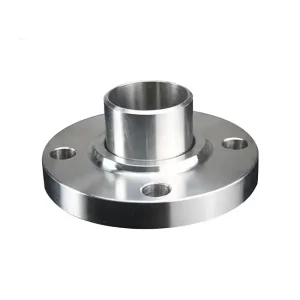
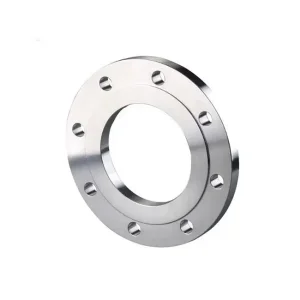
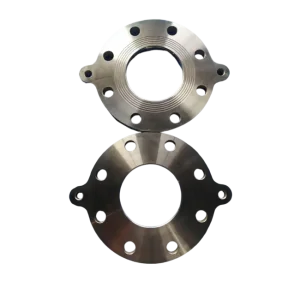
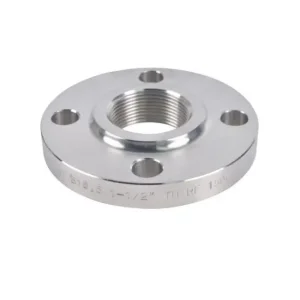
Evaluating Structural Integrity, Zero-Dead-Leg Sealing Physics, Metallurgical Metallurgy, and Cost-Efficient Factory Sourcing for High-Purity Applications.
In modern biopharmaceutical manufacturing, sterile food processing, semiconductor chemical distribution, and fine chemical synthesis, fluid handling systems demand an absolute commitment to sterility and zero contamination. The joint interface—where pipes, valves, reactors, and process skids connect—represents the single greatest point of vulnerability in any hygienic system. Traditional standard pipe flanges (such as ASME B16.5 or EN 1092-1 plate flanges) leave crevice gaps, dead zones, and elastomeric protrusions that foster bacterial bio-films, microbial growth, and product cross-contamination.
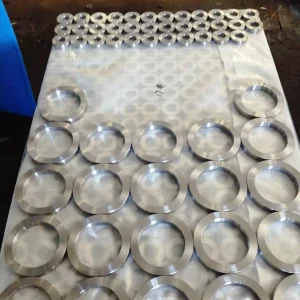
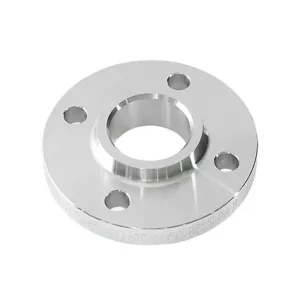
This is where specialized Aseptic Flanges (governed by standards like DIN 11864, DIN 11853, and ASME BPE) become critical infrastructure. By engineering precision metallic stop faces, defined elastomer compression grooves, and flush internal bores, aseptic flanges eliminate dead legs and allow full Clean-in-Place (CIP) and Sterilize-in-Place (SIP) thermal washdowns. As a premier discount aseptic flange manufacturer and supplier operating out of Shanxi, China, our forge combines state-of-the-art ring rolling, high-purity metallurgy, and automated CNC micro-machining to deliver world-class sanitary fittings at highly competitive direct-factory pricing.
Technical Principle: The Physics of Zero-Dead-Leg Sealing
Unlike conventional flat-gasket flange unions where the gasket expands dynamically under bolt load into the process stream, an aseptic flange connection utilizes a metallic metal-to-metal stop. When the flange bolts or collar clamps are tightened, the metal faces meet at a hard stop, compressing the elastomer O-ring into an enclosed groove by an exact, engineered percentage (typically 18% to 22%). This guarantees a perfectly smooth, continuous internal bore transition ($L/D < 1.5$ dead-leg ratio) without internal step overhangs or crevice voids.
Specifying engineers must select the correct hygienic flange standard based on region, operating pressure, temperature cycles, and joint dismantling frequency. Below is a engineering matrix comparing primary aseptic flange specifications:
| Standard Specification | Sealing Mechanism | Max Pressure Class | Surface Finish Options | Primary Industry & Application |
|---|---|---|---|---|
| DIN 11864-2 Form A (Flange) | Aseptic O-Ring in recessed groove with metallic hard stop | PN16 to PN40 (16–40 Bar) | Ra ≤ 0.8 µm to Ra ≤ 0.38 µm Electropolished | European Biopharma, Sterile Chemical Skids, WFI Lines |
| DIN 11864-1 Form A (Unions) | Threaded union nut with aseptic O-ring groove | PN16 to PN40 (16–40 Bar) | Ra ≤ 0.8 µm to Ra ≤ 0.4 µm EP | High-pressure sanitary dosing, mobile bioreactors |
| ASME BPE Hygienic Flange | Hy-Clamp or bolted hygienic gasket face with flush alignment | 150 PSI to 300 PSI | SF1 (Ra 0.5 µm) to SF4 (Ra 0.38 µm EP) | North American Biopharmaceutical & Cell Culture |
| DIN 11853-2 (Hygiene Flange) | O-Ring hygienic connection for food & dairy standard duty | PN16 (16 Bar) | Ra ≤ 0.8 µm Mechanical Polish | Dairy processing, brewing, beverage filtration |
| ASME B16.5 Standard Flange | Flat or Raised Face (RF) with sheet gasket / spiral wound | Class 150 to Class 2500 | Ra 3.2 µm to Ra 6.3 µm (Stock Finish) | General Petrochemical, Water Treatment (Non-Sanitary) |
Aseptic flanges operate in aggressive CIP wash circuits containing hot sodium hydroxide ($\text{NaOH}$ up to 85°C), nitric acid ($\text{HNO}_3$), and superheated steam (SIP cycles up to 135°C). Selecting the correct stainless steel or nickel alloy billet is essential to prevent pitting corrosion, stress corrosion cracking (SCC), and rouge accumulation.
Combining Shanxi’s world-renowned raw forging supply chain with cleanroom CNC finishing to deliver significant total cost savings without compromising European quality compliance.
Located in Dingxiang, Shanxi—the "Hometown of Forging in China"—our facility leverages low-cost raw steel procurement, local energy integration, and in-house ring rolling. By buying direct from our forge, global OEMs bypass trading company markups.
Equipped with modern chemical electropolishing and laser profilometer inspection equipment. Every aseptic flange inner diameter is certified to ASME BPE SF4 micro-smoothness standards to ensure ultra-low protein binding and effortless cleaning.
Every single flange is heat-stamped with a unique heat code. We provide EN 10204 3.1 Mill Test Certificates covering chemical spectral analysis, mechanical tensile/yield testing, intergranular corrosion tests (ASTM A262 Practice E), and hydrostatic test records.
Aseptic flange O-ring grooves demand micron-level geometric tolerances ($+0.05\,\text{mm} / -0.00\,\text{mm}$). Our Japanese-imported 5-axis CNC machining centers ensure flawless seal seat geometry and perfect alignment bolt circles.
Whether you need a 5-piece custom skid flange order or a 10,000-piece container order, our dual-production line structure accommodates both rapid custom OEM prototyping and large-scale bulk export orders efficiently.
Aseptic flange sealing faces are vulnerable to scratching during ocean shipment. We protect every unit with individual yellow PE plastic face caps, vacuum sealed foil bags, and export-grade fumigation-free plywood boxes.
Providing high-integrity hygienic flange connections engineered for severe duty, sterile fluids, and harsh CIP chemical environments.
In cell culture bioreactors, downstream purification, and WFI (Water For Injection) distribution loops, minor contamination can destroy multi-million-dollar drug batches. Our DIN 11864-2 electropolished aseptic flanges guarantee absolute zero-dead-leg performance, backed by USP Class VI and FDA elastomer gasket compliance (EPDM, FKM, PTFE, Kalrez).
Modern ultra-high temperature (UHT) milk processing, aseptic fruit juice packaging, and craft brewery filtration headers require rapid disassembly and rigorous CIP washdowns. Our discount ISO, DIN 11853, and SMS standard flanges prevent ingredient accumulation and withstand daily caustic soda and hot acid sanitization routines.
Microchip fabrication demands UPW with ion impurity levels measured in parts-per-trillion (ppt). Standard metallic flanges leach metal ions into the process stream. Our 316L VIM+VAR vacuum remelt forged flanges undergo strict passivation (ASTM A967 Citric/Nitric) to create an ultra-dense chromium oxide passive layer that resists ionic leach-out.
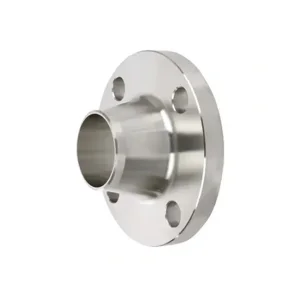
Personal care manufacturing involves high-viscosity emulsions, lotions, and active surfactants that tend to clog standard piping joints. Our smooth-bore lap joint and aseptic weld neck flanges ensure continuous fluid velocity profiles, eliminating gel build-up and lowering pumping head loss across the plant.
How Procurement Officers and EPC Contractors Can Optimize Supply Chain TCO with Shanxi Factory Direct Purchasing.
When international EPC contractors, process skid builders, and industrial stockists evaluate Chinese flange suppliers, the primary challenge is balancing cost reduction ("Discount Pricing") with strict quality risk control. A low-cost flange that fails a pressure test, exhibits surface porosity, or lacks proper material certification can cause project delay penalties far exceeding initial purchasing savings.
Our manufacturing facility operates under an audited, enterprise-wide Quality Assurance System designed specifically to eliminate cross-border procurement risks:
100% incoming raw bar stock is tested via Optical Emission Spectrometry (OES) to verify C, Cr, Ni, Mo chemical elements before heating and forging.
100% Ultrasonic Testing (UT per EN 10228-3 Class 4) on critical forged blanks to guarantee zero internal voids, cracks, or inclusions.
Coordinate Measuring Machine (CMM) verification of gasket groove concentricity, bolt hole alignment, and face flatness tolerances within ±0.02mm.
By establishing long-term OEM supply agreements directly with our Shanxi forging factory, global buyers secure a reliable, predictable supply chain. We maintain extensive raw material billet inventory in 316L, 1.4404, 1.4435, and A105, allowing us to offer industry-leading production turnaround times of 15 to 25 days for standard and custom aseptic flange schedules.
Get immediate answers to common technical, metallurgical, and ordering questions regarding our discount aseptic flanges.
A standard ASME B16.5 flange uses a raised face with serrated grooves that grip a flat gasket. This design leaves microscopic gaps and internal crevices where liquid media gets trapped, encouraging bacterial growth. An aseptic flange (such as DIN 11864) features a precision metal-to-metal stop face and an engineered O-ring groove. When bolted together, the metal faces align completely flush with the pipe inner diameter, creating a zero-dead-leg ($L/D < 1.5$) smooth seal suitable for CIP/SIP sterilization.
We supply multiple surface finish grades based on customer specifications:
• Standard Sanitary: Mechanical polish Ra ≤ 0.8 µm (32 µin)
• Biopharma High Purity: Mechanical polish Ra ≤ 0.5 µm (20 µin)
• ASME BPE SF4 / DIN 11864 High Polish: Electropolished Ra ≤ 0.38 µm (15 µin) with full passivation report.
Our price advantage comes from structural industrial efficiency: 1) Direct location in Dingxiang, Shanxi—China’s primary forging cluster—reducing raw steel transport and energy overhead. 2) High-volume automated ring rolling and CNC machining lines. 3) Direct factory-to-buyer sales model removing 3rd-party export agent commissions. We invest cost savings directly into advanced testing equipment (CMM, Profilometers, Spectrometers).
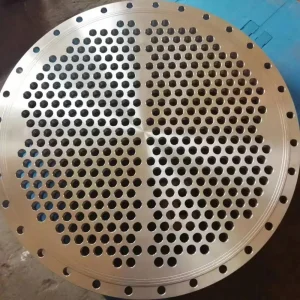
Yes. Our engineering team routinely manufactures custom non-standard aseptic flanges, stub ends, tube sheets, and specialized block flanges directly from customer 2D DWG/PDF drawings or 3D STEP models. In-house die development allows fast first-article prototyping in 7–10 days.
Every shipment includes a comprehensive EN 10204 3.1 Certification package containing:
1. Chemical Composition Analysis & Mechanical Tensile Test Data
2. Heat Treatment Temperature Curve Logs
3. Dimensional Inspection Sheet & Surface Roughness (Ra) Test Graph
4. Ultrasonic (UT) & Positive Material Identification (PMI) Verification Reports
5. Certificate of Origin (CO) & Fumigation Statements.
DIN 11864 aseptic flanges utilize specially proportioned O-rings. We supply pre-fitted or standalone seals in FDA 21 CFR 177.2600 and USP Class VI compliant materials: EPDM (Ethylene Propylene), FKM (Viton), PTFE (Teflon), HNBR, and Kalrez FFKM for extreme chemical solvent resistance.
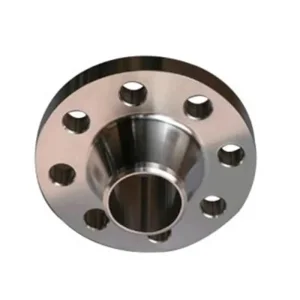
Review our broader range of industrial pipe flanges, ANSI/ASME standard components, RTJ rings, and custom CNC components.
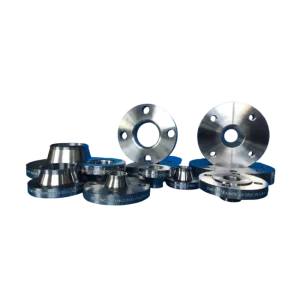
Consult directly with our metallurgists and piping application engineers. Receive an itemized technical proposal, CAD drawing review, and factory-direct price quotation within 24 hours.
