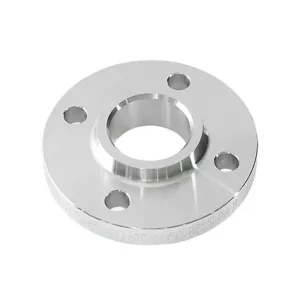
Explore precision-engineered, ISO-certified forged steel flanges directly manufactured to international standards. Bulk export discounts apply for high-volume pipeline project procurement.
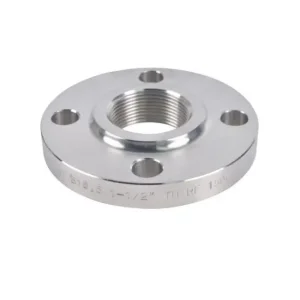
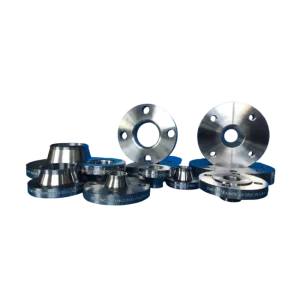
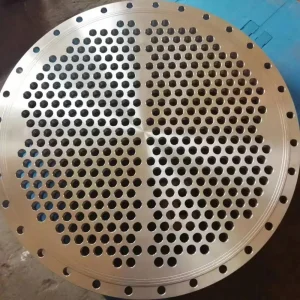
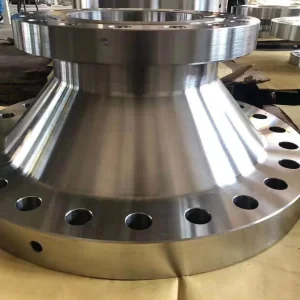
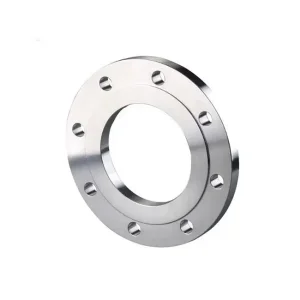
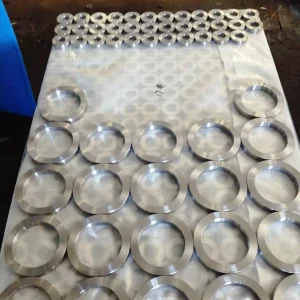
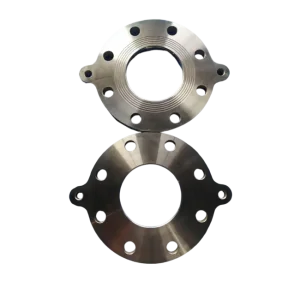
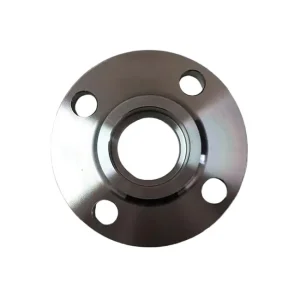
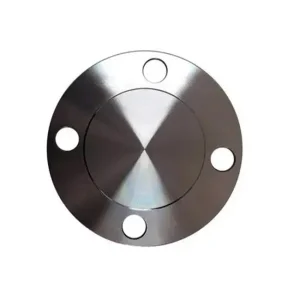
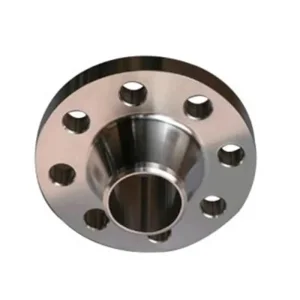
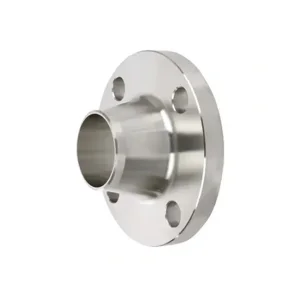
In modern process infrastructure—spanning high-pressure petrochemical refineries, offshore oil platforms, nuclear power loops, and cross-country gas transmission grids—the ANSI Blind Flange (Bl-Flange) serves as a critical pressure-containing safety barrier. Unlike flow-through flanges such as Weld Neck (WN), Slip-On (SO), or Socket Weld (SW) variants, a blind flange features no center bore. It is engineered specifically to seal off the terminal ends of piping systems, pressure vessel nozzles, and valve outlets to allow maintenance, routine line flushing, or temporary isolation during hydrostatic testing.
From a macroeconomic perspective, the global market for industrial forged flanges is experiencing a profound transformation. Driven by aggressive energy expansion across the Middle East, deepwater exploration in North America, and strict decarbonization mandates in Western Europe, procurement officers and EPC (Engineering, Procurement, and Construction) contractors are facing dual pressures: maintaining uncompromising structural safety compliance while optimizing capital expenditure (CAPEX).
This industrial white paper evaluates the manufacturing economics behind discount ANSI blind flange procurement. It explores how top-tier Chinese forging hubs—specifically anchored in Shanxi's Dingxiang forging district—achieve significant cost efficiencies through metallurgical economies of scale, closed-loop vertical integration, and high-speed CNC multi-spindle drilling without compromising mechanical ductility, impact toughness, or material traceability under EN 10204 3.1/3.2 certification.
ANSI/ASME standards govern the dimensional tolerances, bolt hole patterns, pressure-temperature ratings, and surface finishes of blind flanges. Understanding these precise metrics is essential for specifying components capable of enduring extreme mechanical stress and thermal fatigue.
Fully standardized across Class 150, 300, 400, 600, 900, 1500, and 2500 lbs. Each class defines maximum allowable working pressure (MAWP) scaled inversely with operating temperatures up to 1000°F (538°C).
Available in Raised Face (RF) with spiral serrated finish (125–250 µin AARH/Ra), Ring Type Joint (RTJ) with octagonal or oval grooves for high-pressure sealing, and Flat Face (FF) for cast-iron mating.
Forged carbon steel (ASTM A105, A350 LF2 for low-temp), low-alloy steel (ASTM A182 F11/F22), austenitic stainless steel (F304/304L, F316/316L), and Duplex/Super Duplex (F51/F53/F55).
| Material Specification | Yield Strength (Min) | Tensile Strength (Min) | Service Environment | Core Industrial Application |
|---|---|---|---|---|
| ASTM A105 Carbon Steel | 250 MPa (36 ksi) | 485 MPa (70 ksi) | Ambient / Non-Corrosive (-29°C to 425°C) | General Hydrocarbon & Municipal Water Systems |
| ASTM A350 LF2 Class 1 | 250 MPa (36 ksi) | 485 - 655 MPa | Low-Temperature (-46°C / Charpy V-Notch) | Cryogenic Gas Processing & Arctic Pipelines |
| ASTM A182 F316 / F316L | 205 MPa (30 ksi) | 515 MPa (75 ksi) | Sour Service & Chloride Attack | Chemical Processing & Offshore topsides |
| UNS S31803 (Duplex 2205) | 450 MPa (65 ksi) | 655 MPa (95 ksi) | High Pressure & Severe Pitting Corrosion | Subsea Manifolds & Marine Desalination Plants |
In industrial terminology, "discount" often triggers concern regarding compromised material integrity or recycled steel usage. However, when evaluating factory-direct OEM forging enterprises in Shanxi, China, the cost reduction is driven by structured industrial cluster advantages rather than quality compromises:
Direct procurement contracts with premier steel mills (e.g., Baosteel, TISCO) eliminate middleman trading markups. Large-scale annual billet commitments unlock raw material tier-1 pricing discounts passed directly to global buyers.
Transitioning from manual lathes to multi-axis CNC drilling centers reduces per-unit processing cycles for blind flange bolt hole drilling by up to 65%. High throughput lowers unit labor overhead.
Consolidated container shipping directly from factory staging grounds via Tianjin port minimizes intermodal handling fees, import tariff bottlenecks, and warehousing markups common to local stocking distributors.
As the world pivots toward cleaner energy vectors and ultra-deepwater extraction, ANSI blind flanges are evolving beyond simple steel discs into high-performance, instrumented isolation components.
Hydrogen embrittlement poses severe structural risks to carbon steel at elevated pressures. Leading manufacturers now offer vacuum-degassed carbon steel and modified 316L stainless blinds with controlled nickel-equivalent ratios specifically tested for H2 molecular retention and zero-microcrack propagation.
Integration of embedded piezoresistive strain sensors and wireless acoustic leak-detection probes directly inside custom blind flange faces. These "Smart Blinds" transmit real-time bolt relaxation, thermal shock, and pressure delta data straight to plant SCADA systems.
To combine the mechanical strength of forged ASTM A105 with the extreme corrosion resistance of nickel alloys, laser clad Inconel 625 (UNS N06625) layer deposition (3mm thickness) over raised faces is replacing solid alloy construction—reducing costs by up to 40%.
Operating environments dictate precise flange configuration requirements. Engineers must align ASTM grade selections, flange facings, and surface coatings with local environmental hazards:
Requirement: Class 1500 / 2500 RTJ Blind Flanges in ASTM A350 LF2 / Duplex 2205.
Challenge: Hydrostatic external ambient pressures combined with internal sour oil flow (H2S gas). Heavy offshore salt spray demands fluoropolymer or marine epoxy outer coatings.
Requirement: Class 300 / 600 RF Blind Flanges with Alloy 625 Cladding or Super Duplex F53.
Challenge: Extreme thermal fluctuations (ambient temperatures exceeding 50°C) coupled with hypersaline seawater and concentrated acid washing routines.
Requirement: ASME B16.5 Class 150 / 300 Stainless Steel 316L with PED 2014/68/EU & AD 2000-W0 compliance.
Challenge: Rigorous environmental fugitive emission limits requiring precision serrated gasket faces (Ra 3.2 - 6.3 µm) for bio-methane and hydrogen blending loops.
The manufacturing roadmap for industrial forging is converging with advanced digital simulation and zero-defect quality control protocols:
Implementation of Finite Element Analysis (FEA) thermal deformation modeling prior to hydraulic forging. Near-net shape ring rolling minimizes raw material scrap generation by 30%, optimizing forging grain flow lines around bolt hole zones.
Integration of continuous phased-array ultrasonic testing (PAUT) and automated magnetic particle inspection (MPI) into production lines. Real-time scanning detects internal inclusions, voids, and micro-cracks before flange facing machining.
Digital twin passports assigned to every heat number. QR codes laser-etched onto flange rims allow site engineers to instantly verify mill test certificates (MTC), heat treatment charts, and impact testing records directly from mobile devices.
Beyond standardized stock supply, manufacturers offer integrated turnkey packages customized to project life-cycle phases:
Custom tapped blind flanges fitted with NPT, BSPP, or high-pressure autogenous thread ports for pressure gauge attachment, venting, and pressure medium fill points during pre-commissioning hydro-tests.
Pre-packaged isolation kits comprising matching blind flanges, spiral wound gaskets (SS316L/Graphite), and B7/2H stud bolts color-coded by pressure rating for rapid refinery turnaround execution.
Manufacturing companion paddle blinds (spade) and paddle spacers to facilitate permanent, highly visible mechanical line positive shutoff during routine process plant operation.
Addressing critical technical queries posed by piping stress engineers, QA/QC inspectors, and procurement directors:
Review additional ANSI, DIN, and EN standard flange lines manufactured for high-reliability industrial service. Click through to inspect technical drawings and request direct factory quotations.