An In-Depth Engineering Analysis of High-Integrity Anchor Flanges, Advanced Structural Restraint Mechanics, Industry 4.0 Smart Forging Capabilities, and Global Supply Chain Economics.
Direct factory engineered forging solutions meeting ASME B16.5, ASME B16.47, EN 1092-1, and custom engineering blueprints.
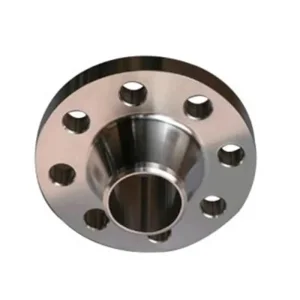
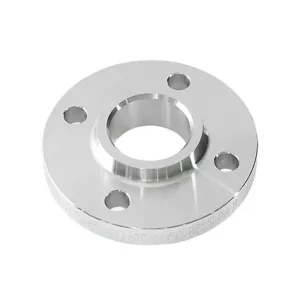
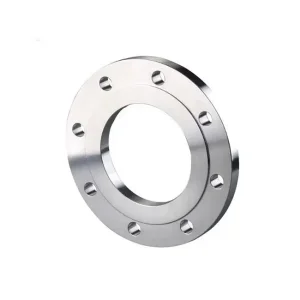
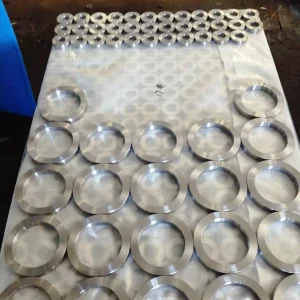
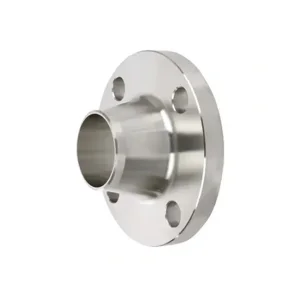
Understanding structural axial thrust mitigation, concrete thrust block embedment, and thermal displacement control in continuous welded transmission lines.
In high-pressure oil, natural gas, refined hydrocarbon, and hydrogen transmission infrastructure, continuous welded steel pipelines are subject to massive axial dynamic forces. These stresses stem primarily from internal operating pressure ($P$), temperature differentials ($\Delta T$) relative to installation conditions, soil friction along buried routes, and hydraulic surge pressure (water hammer). Without robust mechanical anchoring, these forces cause unrestrained pipeline migration, bending moments, and catastrophic stress concentrations at vulnerable connection points such as compressor stations, valve vaults, pump stations, and subsea risers.
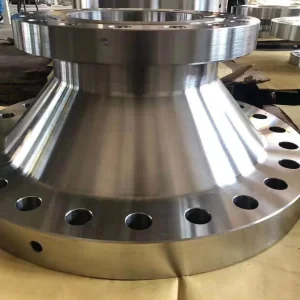
An Anchor Flange is a specialized, heavy-section forged steel fitting designed specifically to prevent axial movement in pipelines. Unlike conventional flange pairs (such as ASME B16.5 Weld Neck or Slip-On flanges) that connect adjacent piping segments with dynamic bolted gaskets, an anchor flange features a prominent, integral forged radial shoulder (collar). This collar is cast directly into a reinforced concrete thrust block structure, effectively transferring all longitudinal pipeline thrust forces into the surrounding soil mass or structural foundation.
Directly converts high internal longitudinal forces ($F_{axial} = A_i \cdot P + E \cdot A_s \cdot \alpha \cdot \Delta T$) into shear loads safely absorbed by massive concrete foundations, isolating sensitive equipment.
Locks the pipeline end position when transferring lines transition from subterranean depths to atmospheric plant headers, neutralizing expansion strains up to Class 2500 pressure ratings.
Being a single-piece forged ring welded inline directly to the main line pipe, anchor flanges eliminate soft sealing elements, guaranteeing maintenance-free 30-to-50-year service lifespans.
Modern pipeline design standards (ASME B31.4, ASME B31.8, and ASME Section VIII Division 2) demand rigorous Finite Element Analysis (FEA) for anchor flange design. FEA modeling verifies that bending stresses across the neck transition region remain well below specified yield strengths (SMYS) under combined mechanical, thermal, and seismic load combinations.
Key metallurgical advancements, carbon reduction initiatives, and extreme-environment engineering driving modern flange manufacturing.
As global energy transport scales up in throughput and operating pressure, project operators are moving away from traditional ASTM A105 carbon steel toward high-yield forged grades, including ASTM A694 F52, F60, F65, F70, and duplex/super duplex alloys (S31803 / S32750). These advanced micro-alloyed compositions allow manufacturers to reduce collar wall thickness while elevating yield strength beyond 555 MPa, resulting in lighter overall structures without sacrificing load safety factors.
Offshore deepwater developments require anchor flanges located at Subsea Pipeline End Terminations (PLETs), Pipeline End Manifolds (PLEMs), and Riser Bases. These components face immense external hydrostatic sea pressure coupled with aggressive internal sour gas or multiphase fluids. Advanced heavy forge mills now incorporate cladding technology—overlaying corrosion-resistant alloys (Inconel 625 / UNS N06625) onto the internal bore via automated hot-wire TIG welding.
With the rapid transition toward clean energy, carbon capture, utilization, and storage (CCUS) alongside pure hydrogen ($H_2$) blended pipeline networks are multiplying. Hydrogen embrittlement and sulfide stress cracking (SSC) present severe integrity threats. Modern anchor flange manufacturing enforces strict compliance with NACE MR0175/ISO 15156, restricting nickel content, maintaining hardness levels below 22 HRC, and performing rigorous HIC (Hydrogen-Induced Cracking) testing.
Leading-edge industrial installations are embedding fiber-optic strain gages and piezoelectric ultrasonic transducers directly into the shoulder region of anchor flanges. This smart infrastructure configuration feeds real-time stress data, dynamic concrete load balances, and soil settlement movement straight to control-room digital twin dashboards, facilitating predictive maintenance before critical fatigue thresholds are reached.
Engineering buyers require complete material traceability, stringent non-destructive examination (NDE), and compliance with global codes.
Procuring large-diameter anchor flanges for mega-scale energy projects involves strict regulatory verification. Engineering, Procurement, and Construction (EPC) contractors require suppliers to maintain verified Quality Management Systems (QMS) alongside standardized metallurgy. Below is the technical compliance matrix required by tier-1 global buyers:
| Standard / Code | Scope & Description | Key Metallurgical / Quality Requirement | Primary Application |
|---|---|---|---|
| ASME Section VIII Div 1 & 2 | Boiler and Pressure Vessel Code (BPVC) Rules for Construction | Mandatory Appendix 2 design calculations; finite element stress validation. | High-pressure plant tie-in anchors & vessel boundary connections. |
| MSS SP-44 | Steel Pipeline Flanges Standard Specification | Dimensional tolerances for high-yield carbon steel flanges matching pipe sizes NPS 12 to 60. | Cross-country gas transmission mainlines & metering stations. |
| ASME B31.4 / B31.8 | Pipeline Transportation Systems for Liquids & Gas | Calculations for longitudinal stress limit under thermal gradients & combined bending. | Liquid petroleum pipelines and natural gas distribution hubs. |
| EN 10204 3.1 / 3.2 | Metallic Products Material Inspection Documents | Full material traceability with 3.1 independent factory inspector or 3.2 TUV/Lloyds witness certification. | Mandatory requirement for European & Middle Eastern project deliveries. |
| NACE MR0175 / ISO 15156 | Materials for Use in H2S-Containing Environments in Oil & Gas | Hardness testing ≤ 22 HRC; SSC & HIC resistant testing for sour gas service. | Sour oil/gas wellhead tie-ins & offshore processing facilities. |
| ASTM A388 / EN 10228 | Ultrasonic Examination of Heavy Steel Forgings | 100% volumetric UT testing to eliminate internal inclusions, voids, and hydrogen flakes. | Critical heavy forged collars and high-pressure anchor rings. |
How the Shanxi Dingxiang Forging Industrial Cluster combines smart manufacturing, cost efficiency, and raw material integration.
Located in Dingxiang County, Shanxi—globally recognized as the "Hometown of Forging"—our production facility benefits from an ultra-dense supply chain cluster. High-purity steel billets from premier domestic mills are sourced within a 50 km radius, drastically reducing material transport lead times and logistics overheads.
Our Industry 4.0 factory line integrates 10,000-ton hydraulic forging presses, automated CNC ring rollers capable of producing seamless rings up to 5,000 mm in diameter, and multi-axis CNC machining centers. Computerized thermal monitoring ensures precise forge-temperature windows, eliminating grain-growth flaws.
In our procurement model, "Discount" never implies compromised metallurgical quality or skipped testing. Instead, it signifies structural yield optimization: automated near-net-shape forging minimizes raw material waste, digital power controls lower heat-treatment energy consumption, and direct factory-to-port export eliminates intermediary trading desk markups.
From desert cross-country pipelines to subsea riser installations, anchor flanges protect critical infrastructure worldwide.
Long-distance pipelines crossing varying terrains—such as deserts, mountains, and permafrost regions—experience extreme seasonal temperature variations ($\Delta T$ reaching over $60^\circ\text{C}$). Anchor flanges positioned at regular intervals (e.g., every 15–30 km) and adjacent to sectionalizing block valve stations lock the pipe in place. This prevents axial push loads from compromising valve body tightness or buckling elevated pipeline segments.
Reciprocating compressors and high-volume centrifugal pumps create continuous harmonic vibration and pressure pulses. Installing heavily concrete-embedded anchor flanges at station battery limits decouples plant piping headers from external mainline forces, preventing vibration transfer back into sensitive turbine seals and manifold assemblies.
Where marine pipelines emerge from oceanic seabeds and land at coastal processing terminals (HDD shore crossings), heavy wave motion, tidal currents, and seabed shifting apply combined axial tension and bending. High-integrity forged anchor flanges securely lock the pipeline beneath the sea bed or inside concrete landfall vaults, preserving structural stability.
High-temperature geothermal networks transport high-pressure steam exceeding $250^\circ\text{C}$. The resulting thermal elongation forces are enormous. Anchor flanges encased in heavy underground concrete vaults absorb these severe thermal thrusts, keeping expansion loops within engineered design limits and preventing plant header deformation.
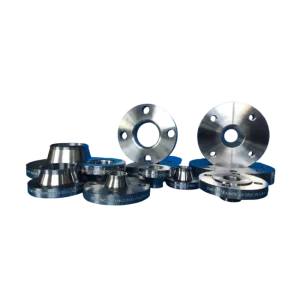
Explore our wide range of forged carbon, alloy, and stainless steel pipe flanges engineered for global project compliance.
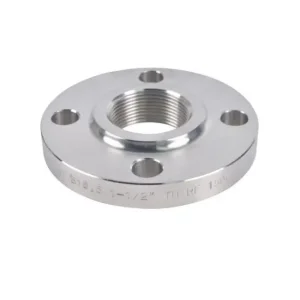
In-depth answers to common engineering, metallurgical, and international procurement queries regarding pipeline anchor flanges.
Founded in 1992 in the Zhuangli Enclave Industrial Zone of Dingxiang County, Shanxi, China, YUXIN is a premier certified manufacturer specializing in heavy forged flanges, anchor flanges, tube sheets, and custom forged components. Operating with ISO 9001, PED 2014/68/EU, and AD 2000-Merkblatt W0 certifications, our annual output exceeds 10,000 tons shipped to over 40 countries worldwide.
Submit your project drawings, material specifications, or RFQ schedules directly to our engineering desk for 24-hour technical response.
Contact Factory Engineers Now