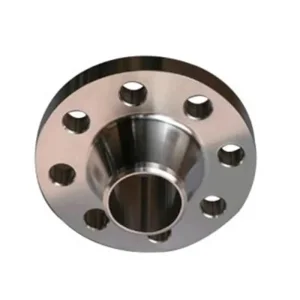
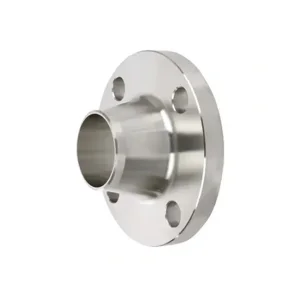
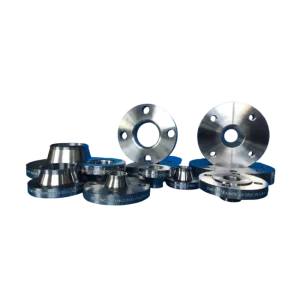
Explore our top-tier selection of ASME, EN, and custom-machined pipe flanges produced in Shanxi, China.
Understanding the functional synergy, stress distribution, and financial optimization of steel lap joint flanges in modern piping infrastructure.
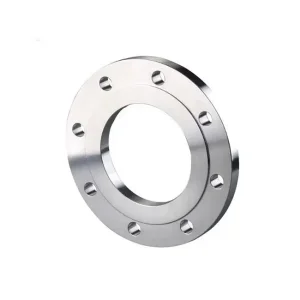
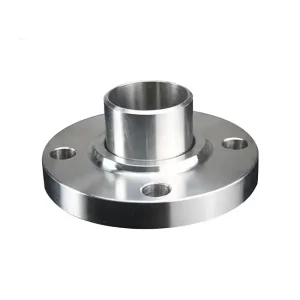
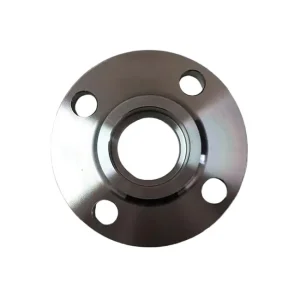
A Steel Lap Joint Flange (frequently designated as a Loose Flange or Loose Hub Flange) is a unique two-piece piping component consisting of a backing lap joint flange and a stub end fitting. Unlike integrated Weld Neck or Slip-On flanges, the backing flange is not welded directly to the pipe shell. Instead, it slides freely over the pipe exterior and rotates unconstrained around the stub end shoulder.
The primary mechanical advantage lies in the decoupling of rotational alignment from fluid sealing. When jointing two pipe segments, line personnel can rotate the loose backing flange 360 degrees to align bolt holes perfectly without imparting torsional strain onto the pipe wall. The fluid containment seal is maintained exclusively by the face of the stub end pressed against the mating gasket.
In chemical process plants, offshore platforms, and water treatment infrastructure utilizing exotic alloys (such as Titanium Grade 2, Stainless 316L, Nickel Alloy C276, or Duplex 2205), deploying integral solid flanges becomes economically prohibitive. Lap Joint assemblies provide massive capital expenditure (CAPEX) relief through material bifurcation.
Only the Stub End comes into direct contact with aggressive process media, requiring expensive corrosion-resistant alloys. The backing flange—shielded from fluid contact—can be manufactured from cost-effective forged carbon steel (such as ASTM A105 or Q235B) treated with anti-corrosion coatings. This structural strategy routinely yields 30% to 55% reduction in overall bill-of-materials costs for high-alloy piping systems.
Precision forging tolerances according to ASME B16.5, EN 1092-1 Type 02/32, and MSS SP-43 specifications.
Shanxi Yuxin Casting & Forging Co., Ltd. manufactures steel lap joint flanges adhering rigorously to international dimensional and pressure standards. A critical technical detail in lap joint design is the internal fillet radius at the intersection of the flange bore and the back face. This radius must be precisely machined to accommodate the matching outer fillet radius of the stub end, ensuring uniform axial load transfer across the seating surface during bolt torquing.
| Dimensional & Material Parameter | ASME B16.5 Standard | EN 1092-1 (Type 02 / Type 32) | DIN / JIS Standard Equivalent |
|---|---|---|---|
| Nominal Pipe Size (NPS / DN) | 1/2" to 24" (Class 150 - 2500) | DN 10 to DN 1200 (PN 6 - PN 40) | DN 15 to DN 1000 (JIS 5K - 30K) |
| Bore Fillet Radius Tolerance | +0.8 mm / -0.0 mm (Match Stub End) | Per EN 1092-1 Table 9 Radius R1 | Precision CNC Chamfer / Fillet Radius |
| Facing Types Supported | Flat Face (FF) / Raised Face (RF) | Type A (Flat) / Type B (Raised) | Smooth Finish / Concentric Serrated |
| Standard Steel Grades | ASTM A105, A182 F304/316L, A350 LF2 | P250GH, S235JR, 1.4404, 1.4307 | SS400, SFVC1, SUS304, SUS316 |
| Applicable Stub End Standards | ASME B16.9 / MSS SP-43 Type A & B | EN 1092-1 Type 32 / Type 33 | DIN 2641 / DIN 2642 Loose Flanges |
Type A Stub Ends: Designed specifically for use with standard lap joint backing flanges. The outer lap radius matches the inner radius of the backing flange, ensuring smooth load transmission.
Type B Stub Ends: Machined for use with standard slip-on flanges functioning as lap joint backing rings, featuring a smaller radius configuration.
While steel lap joint flanges are predominantly specified in low-to-medium pressure applications (Class 150 and Class 300), YUXIN forges high-pressure lap joints rated for Class 600, 900, and 1500 applications utilizing high-yield alloy steels and precise finite element analysis (FEA) bolt-load modeling.
Flange facing serrations on stub ends are precision-lathed to achieve a roughness height of 125-250 micro-inches (3.2-6.3 µm) AARH/Ra, ensuring optimal gasket seating stress without cutting into soft composite or metallic gaskets.
From raw billet inspection to closed-die hydraulic forging, normalizing heat treatment, and CNC precision lathing.
At Shanxi Yuxin Casting & Forging Co., Ltd., located in Dingxiang County—recognized globally as the “Hometown of Forging in China”—every lap joint flange undergoes a strict, single-site manufacturing regime. This guarantees that heat numbers, mechanical test results, and dimensional verification documented on your EN 10204 3.1 Mill Test Certificate represent the exact steel component installed in your pipeline.
Our Quality Management System is audited and certified to European and international pressure vessel benchmarks:
Leveraging the Dingxiang Forging Industrial Ecosystem for Superior Lead Times, Cost Competitiveness, and Scalability.
Located in Dingxiang County, Shanxi Province, YUXIN operates within China's densest metallurgical forging cluster. This cluster provides immediate access to state-owned raw steel mills (such as Taiyuan Iron & Steel Group - TISCO), specialized heat treatment facilities, certified testing laboratories, and port logistics nodes. Raw billet procurement lead times are reduced from weeks to less than 48 hours.
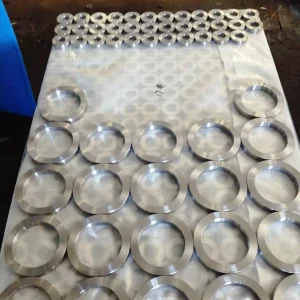
Maintaining an active stock of over 2,000 tons of forged semi-finished flange rings in standard carbon (A105, Q235B) and stainless steel (304L, 316L), YUXIN can machine standard ASME and EN lap joint flanges for dispatch within 7 to 15 business days. Custom engineering drawings and non-standard diameters (up to 3,000 mm) are fulfilled in 20 to 30 days.
To safeguard flange sealing faces and bore chamfers during multi-week ocean transport, finished lap joints are treated with heavy rust-inhibitive oil or varnish, capped with plastic protective covers, and bound inside solid fumigation-free ISPM-15 compliant plywood crates with moisture-absorbent desiccant packs.
Where steel lap joint flanges deliver critical operating advantages across global processing industries.
In Reverse Osmosis (RO) desalination plants and shipboard cooling loops handling high-salinity seawater, piping systems utilize expensive Super Duplex (UNS S32750) or 254 SMO stainless steels. Installing Super Duplex Stub Ends with Hot-Dip Galvanized Carbon Steel Backing Flanges eliminates crevice corrosion issues on flange bolt holes while cutting pipework material expenditures by nearly 40%.
Chemical reactor headers and slurry pipelines require frequent disassembly for mechanical cleaning, decoking, or ultrasonic wall-thickness checks. Lap Joint assemblies accelerate turnaround times significantly: maintenance technicians can unbolt, rotate, and align joint sections without burning or re-welding pipe ends.
Municipal wastewater management plants and industrial HVAC cooling water headers deploy large-diameter (NPS 26" to 60") Class 150 carbon steel lap joint flanges. The swivel mobility simplifies field fit-up when joining long underground pipe spans laid in irregular trenches.
High-purity liquid transport networks mandate inner pipe wall surface roughness below Ra 0.4 µm. Precision polished stainless steel (316L) stub ends connected via carbon steel loose flanges guarantee sterile fluid passage while providing rigid mechanical clamping strength.
Advancing flange manufacturing through automated AI quality verification, smart heat treatment, and carbon-neutral forging techniques.
YUXIN is integrating automated robotic arm visual inspection systems coupled with phased-array ultrasonic testing (PAUT) to scan internal forging billet matrices. This eliminates human error and guarantees 100% volumetric flaw-free structural integrity for high-pressure lap joints.
Transitioning from traditional gas-fired reheating furnaces to 100% clean-energy electric induction heaters reduces carbon intensity per ton of forged steel by up to 65%, meeting European CBAM (Carbon Border Adjustment Mechanism) environmental compliance directives.
Each forged lap joint flange is laser-etched with a unique encrypted QR matrix code. Site engineers can scan the flange in the field to retrieve real-time digital heat numbers, raw material chemical lab reports, and original factory 3D inspection models.
Direct engineering answers to technical queries raised by global procurement leads and EPC project directors.
Complete your pipeline engineering requirements with our comprehensive series of certified flange products.