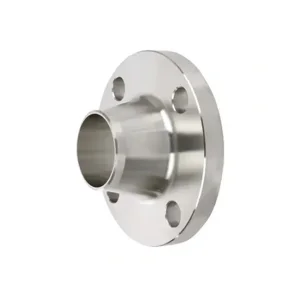
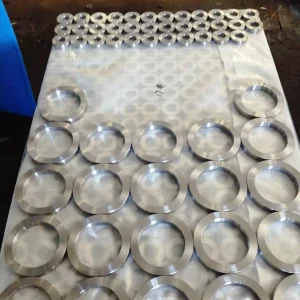
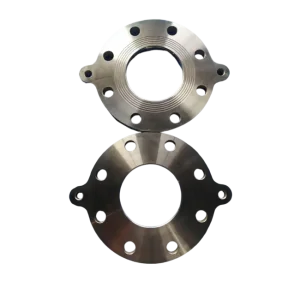
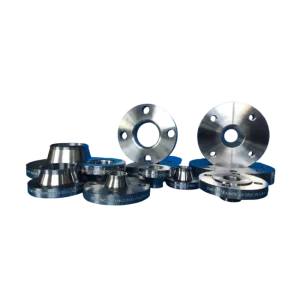
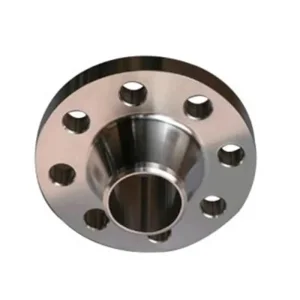
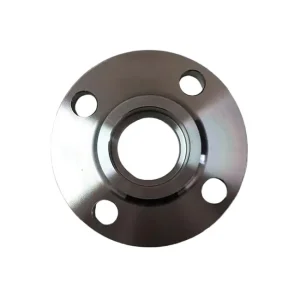
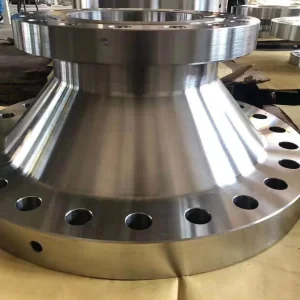
Explore our precision-forged weld neck, ring type joint, expansion joint, and stub end flanges forged under 10,000-ton capacity presses with complete metallurgical traceability.
Strategic supply chain analysis for engineering, procurement, and construction (EPC) contractors, master distributors, and critical infrastructure fabricators.
In high-capital projects, flange sourcing cannot afford vendor tiers that add broker markups without quality accountability. By establishing direct integration from billet procurement in Dingxiang County—China's dedicated forging hub—to vertical CNC turning and high-precision drilling, Shanxi Yuxin Casting & Forging guarantees deterministic delivery schedules. Standard carbon steel programs ship within 7 to 15 days, while heavy engineered fabrications adhere to strict 25-to-35-day windows.
Regulatory frameworks such as the European Pressure Equipment Directive (PED 2014/68/EU) and AD-Merkblatt W0 mandate flawless metallurgical integrity. Our single-roof manufacturing model eliminates intermediate sub-contracting risks. Every flange heat number is matched directly to chemical spectrometry, charpy impact toughness values at down to -46°C, and calibrated ultrasonic non-destructive testing, satisfying strict third-party auditors including SGS, BV, and TÜV Rheinland.
Beyond nominal purchase prices, piping engineers evaluate operational life cycles and gasket integrity. Inferior cast or poorly forged steel flanges lead to catastrophic micro-fissuring and bolt torque relaxation under cyclic thermal loads. Our open-die and ring-rolling forging creates continuous circumferential grain alignment that delivers superior fatigue strength, virtually eliminating unplanned downtime in high-stress pipeline service.
Engineered to global standards: ASME B16.5, ASME B16.47 (Series A & B), EN 1092-1, DIN, JIS B2220, and tailored customer engineering blueprints.
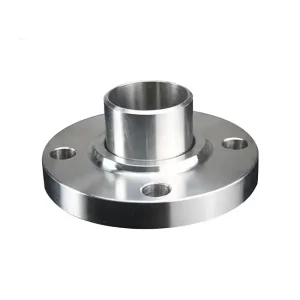
Featuring a tapered, heavy hub that smoothly transfers mechanical stresses to the adjoining pipe wall. Essential for extreme pressure conditions ranging from Class 150 up to Class 2500, deep cryogenic lines, and high cyclic thermal shock installations in chemical reactors.
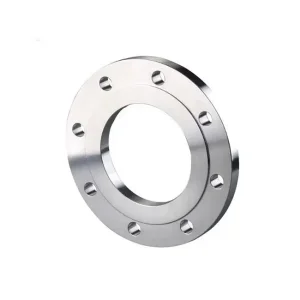
Engineered for low-pressure utilities, HVAC cooling loops, and water infrastructure. Our plate and forged plain flanges (EN 1092-1 Type 01) are machined with precision inner bore tolerances, facilitating rapid alignment and dual fillet welds that cut installation times.
Designed with precision-machined annular grooves to accommodate octagonal or oval metallic gaskets. Widely utilized across upstream subsea manifolds, high-pressure hydrogen service, and petroleum refining where vapor-tight sealing is mission-critical.
Forged to safely isolate piping sections, pressure vessels, and bypass systems during pressure testing and scheduled plant turnarounds. Engineered with elevated thickness thresholds to resist severe bending moments caused by high hydrostatic loads.
Paired with stainless or exotic alloy stub ends. The backing carbon steel flange spins freely around the stub end, drastically reducing procurement expenditures on expensive alloys while facilitating effortless bolt alignment on complex field piping spools.
Specially forged for compact, small-diameter piping (DN15 to DN100) operating under intense hydraulic and steam pressures. The smooth internal bore profile mitigates turbulence, fluid erosion, and localized cavitation pitting over decades of operation.
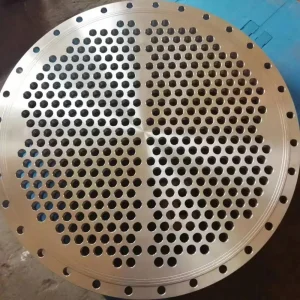
Precision-machined forged disks for shell-and-tube heat exchangers, surface condensers, and high-pressure steam boilers. Multi-axis CNC drilling ensures hole pitch accuracy within ±0.05 mm and flawless groove dimensions to prevent tube joint leakage.
Fabricated to support elastomeric, PTFE, and stainless steel bellows expansion joints. Machined to standard or non-standard custom bolt circles with electro-galvanized, black primer, or heavy marine epoxy anti-corrosion barrier coatings.
Direct from Shanxi Yuxin's factory floor: dimensional envelope, mechanical properties, and compliance standards.
| Dimensional & Engineering Attribute | Mill Capability Envelope | Governing Engineering Standard & Notes |
|---|---|---|
| Nominal Pipe Sizing (DN / NPS) | DN15 to DN3000 (1/2" up to 120" Nominal Outer Diameter) | ASME B16.5, ASME B16.47 (Ser. A & B), EN 1092-1, DIN 2631–2638, BS 4504 |
| Pressure Rating Matrix | Class 150, 300, 600, 900, 1500, 2500 PSI; PN6 to PN400 Bar | Full hydro-test, vacuum compatibility, and cryogenic ratings validated |
| Carbon & Micro-Alloy Steel Grades | ASTM A105, A350 LF2 Class 1/2, Q235B, C22.8, P250GH, 16Mn, S235JR | Optimized for toughness; low-temperature Charpy V-notch tested down to -46°C |
| High-Alloy & Chrome-Moly Steels | ASTM A182 F5, F9, F11 Class 2, F22 Class 3, F91 | Refinery hydro-treating, delayed coking, and supercritical boiler steam piping |
| Stainless & Duplex Grades | ASTM A182 F304/304L, F316/316L, F321, F51 (2205), F53 (2507) | Solution annealed; intergranular corrosion tested per ASTM A262 Practice E |
| Flange Facing Profiles & Finishes | Flat Face (FF), Raised Face (RF), Ring Joint (RTJ), Tongue & Groove | Stock serrated spiral or concentric grooving (Ra 3.2 to 6.3 µm / 125–250 AARH) |
| Thermal Heat Treatment Options | Normalizing, Normalizing + Tempering, Quench & Temper (Q&T), Annealing | Automated, sensor-monitored continuous gas-fired heat treatment furnaces |
| Non-Destructive Testing (NDT) | Ultrasonic Testing (UT), Magnetic Particle (MT), Liquid Penetrant (PT), PMI | Level II / III certified NDT inspectors; Third-party verification (SGS/BV/TÜV) |
| Documentation & Traceability | EN 10204 / DIN 50049 3.1B Mill Test Certificates (MTC), NACE MR0175 / ISO 15156 | Direct hard-stamping of heat number, size, rating, material grade, and maker logo |
| Protective Surface Finishes | Rust-preventative varnish, transparent lacquer, black bitumen, hot-dip galvanizing | VCI atmospheric wrapping, export sea-worthy fumigated plywood crates & steel skids |
Tailored flange metallurgical integrity designed to thrive across hostile industrial operating environments.
For sour crude and wet natural gas networks containing high levels of hydrogen sulfide (H2S), our flanges are supplied in strict compliance with NACE MR0175 / ISO 15156. Through careful raw material selection and specialized heat treatment, carbon equivalent (CE) and hardness are maintained below 22 HRC, preventing Hydrogen Induced Cracking (HIC) and Stress Corrosion Cracking (SCC) in harsh offshore environments.
Modern combined-cycle power and supercritical coal plants demand flange connections capable of maintaining bolt tension at steam temperatures exceeding 560°C. We forge high-pressure weld neck flanges and heavy tube sheets using alloy grades like ASTM A182 F11, F22, and F91. Controlled grain refinement ensures long-term creep rupture resistance and thermal shock stability under sudden turbine trip conditions.
Liquefied Natural Gas processing operates at severe cryogenic temperatures down to -196°C, where ordinary carbon steel loses ductility and suffers catastrophic brittle failure. We manufacture cryogenic pipeline flanges utilizing austenitic stainless steels (ASTM A182 F304L/F316L) and low-temperature carbon steels (ASTM A350 LF2 Class 1), subjecting each heat batch to verified Charpy impact toughness testing in liquid nitrogen baths.
Shanxi Yuxin Casting & Forging is continuously advancing its production facilities with cutting-edge manufacturing technologies to achieve net-zero dimensional deviation.
Prior to die manufacturing, our metallurgy team performs complete finite element analysis (FEA) using numerical plastic deformation modeling. This guarantees uniform stress redistribution throughout the forging stroke, completely eliminating internal micro-voids, lap seams, and localized grain coarsening.
Our CNC machining line integrates automated vertical turning centers equipped with digital tool setting and live probing. Gasket contact surfaces are turned with high-precision serration tools to achieve exact micro-inch RMS roughness, ensuring uniform seating for spiral-wound and kammprofile gaskets.
Furnace heat zones are managed by SCADA software with multi-point calibrated thermocouple feedback. Heating ramp rates, soak times, and quench immersion cycles are automatically archived to ensure mechanical properties conform to ASTM and EN tolerances with zero manual drift.
In response to international decarbonization targets, our Dingxiang factory has transitioned to clean natural gas burners and regenerative induction billet pre-heaters. Scrap billet cut-offs are recycled directly within certified closed-loop electric arc furnace (EAF) steel facilities, reducing embodied carbon per metric ton.
International credentials, accredited testing regimes, and comprehensive third-party inspection readiness.
Our manufacturing plant operates under an audited ISO 9001 quality management framework certified by TÜV Rheinland. Full compliance with the European Pressure Equipment Directive (PED 2014/68/EU Annex I) and German AD 2000-Merkblatt W0 allows our flanges to be installed in regulated European pressure equipment. We also hold Chinese Special Equipment Manufacturing Licenses (TSG) and Type Test Certificates.
Every single flange delivered by Shanxi Yuxin is permanently hard-stamped with its corresponding melt heat number, size, pressure class, wall schedule, material designation, and manufacturer trade mark. We issue rigorous EN 10204 3.1 Mill Test Certificates containing full optical emission spectrometry chemistry, tensile/yield strengths, elongation percentages, Brinell/Rockwell hardness, and Charpy impact energy ratings.
To guarantee that flange gasket faces arrive at construction sites without transit damage or oxidation, components are treated with rust-preventative coatings and capped with protective end covers. Orders are packed in fumigated solid timber cases conforming to ISPM-15 or heavy-gauge steel skids, bundled with commercial packing lists, certificates of origin, and custom shipping manifests for clearance at major global ports.
In-depth answers to critical procurement, metallurgical, and specification questions from our senior engineering team.
Explore our socket weld, reducer, tube sheet, plain, and lap joint flanges manufactured to international tolerances.
Eliminate intermediary trading brokers. Submit your engineering piping schedules, material takeoffs, and custom flange blueprints directly to the manufacturing floor.
Whether your project requires high-pressure ASME B16.5 weld neck flanges, EN 1092-1 Type 34 rings, or custom-drilled tube sheets, our metallurgical engineers provide drawing review, material validation, and competitive direct-mill pricing within 24 hours.