Explore our primary certified forged stainless steel components engineered for critical chemical, oil, gas, and marine infrastructure worldwide.
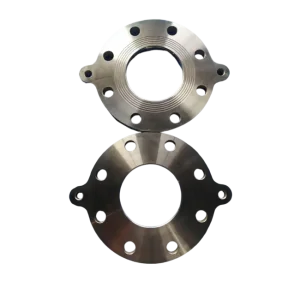
An exhaustive metallurgical and supply chain analysis of stainless steel pressure components in modern energy, chemical, and marine infrastructures.
In modern industrial fluid transport systems, stainless steel flange fittings serve as the critical mechanical interfaces connecting pipes, valves, pumps, and pressure vessels. Valued at over $8.5 billion globally, the demand for forged stainless steel flanges continues to accelerate driven by global energy transitions, offshore oil and gas developments, Liquefied Natural Gas (LNG) regasification networks, and aggressive expansions in pharmaceutical and semiconductor manufacturing.
Unlike carbon steel components, stainless steel flange fittings provide exceptional pitting resistance, intergranular corrosion mitigation, and cryogenic toughness down to -196°C. High-integrity piping circuits demand flawless mechanical strength and zero-leakage performance under extreme thermal cycling and high pressure—making the choice of a premier China Stainless Steel Flange Fittings Manufacturer & Manufacturers a strategic decision for EPC (Engineering, Procurement, and Construction) contractors worldwide.
How integrated raw material clusters, precision ring-rolling automation, and strict international compliance create unmatched value for global buyers.
Located within China's primary forging hubs (such as Dingxiang, Shanxi and Wenzhou, Zhejiang), direct access to premier steel mills like Tsingshan, Yongxing Special Steel, and Baosteel guarantees seamless supply of certified 304, 316L, and Duplex billets with complete heat chemistry control.
By replacing manual forging with computer-controlled radial-axial ring rolling and multi-axis CNC turning centers, Chinese manufacturers achieve micro-grain refine alignment, flawless face serration (AARH 125-250), and tight bolt-hole pitch tolerances.
Full compliance with European Pressure Equipment Directive (PED 2014/68/EU), AD 2000-Merkblatt W0, and ISO 9001:2015 guarantees that every flange ships with an EN 10204 3.1 Mill Test Certificate featuring full chemical and mechanical properties verification.
Selecting the exact stainless steel alloy and dimensional standard for severe industrial operating environments.
Selecting the optimal stainless steel alloy is paramount to preventing premature catastrophic piping failure due to stress corrosion cracking (SCC), crevice corrosion, or hydrogen embrittlement. The matrix below outlines the primary metallurgical properties, chemical limits, and service limits across standard austenitic, duplex, and super duplex alloys manufactured in our plant.
| Material Grade | UNS / EN Standard | PREN Value | Yield Strength (MPa) | Primary Industrial Applications |
|---|---|---|---|---|
| 304 / 304L | UNS S30400 / 1.4301 | ≥ 18.0 | ≥ 205 | General HVAC, Municipal Water Treatment, Food Processing, Mild Chemical Utility Lines. |
| 316 / 316L | UNS S31603 / 1.4404 | ≥ 23.1 | ≥ 220 | Petrochemical Refining, Marine Hardware, Pharmaceutical Lines, Marine Coastal Infrastructure. |
| 317L | UNS S31703 / 1.4438 | ≥ 29.0 | ≥ 240 | Flue Gas Desulfurization (FGD), Paper & Pulp Bleaching Systems, High-Chloride Acids. |
| 321 / 347H | UNS S32100 / UNS S34709 | ≥ 19.0 | ≥ 205 | High-Temperature Steam Headers, Refinery Catalytic Cracking Units (up to 850°C). |
| 2205 Duplex | UNS S31803 / S32205 / 1.4462 | ≥ 34.0 | ≥ 450 | Offshore Oil & Gas Separation Vessels, Seawater Reverse Osmosis (SWRO) Desalination. |
| 2507 Super Duplex | UNS S32750 / 1.4410 | ≥ 42.0 | ≥ 550 | Subsea Christmas Trees, Sour Gas Wellheads (NACE MR0175/ISO 15156), Chemical Tankers. |
| 904L | UNS N08904 / 1.4539 | ≥ 36.0 | ≥ 220 | Concentrated Sulfuric & Phosphoric Acid Processing, High-Chloride Heat Exchangers. |
Our manufacturing lines produce standard and non-standard forged flanges in strict compliance with global technical specifications. Dimensions, tolerances, material markings, and facing profiles seamlessly match international engineering designs:
| Standard Body | Standard Code | Pressure Class Range | Size Range (NPS / DN) | Facing Types |
|---|---|---|---|---|
| ASME / ANSI | ASME B16.5 / B16.47 (Series A & B) | Class 150, 300, 600, 900, 1500, 2500 | 1/2" to 120" (DN15 to DN3000) | RF (Raised Face), FF, RTJ, M&F, T&G |
| EN / DIN | EN 1092-1 / DIN 2501 | PN 6, PN 10, PN 16, PN 25, PN 40, PN 100 | DN 10 to DN 3000 | Type A (Flat), Type B1/B2 (RF), Type C/D |
| JIS | JIS B2220 | 5K, 10K, 16K, 20K, 30K | 10A to 1500A | FF, RF, Male-Female |
| GOST | GOST 12820-80 / 12821-80 | PN 1 to PN 100 | DN 15 to DN 1600 | Plaskie (Slip-On), Vorotnikovye (Weld Neck) |
From raw stainless steel billet to final seaworthy packaged flange: how 7-stage quality control eliminates porosity, cracks, and dimensional variances.
Every incoming stainless steel round bar undergoes Optical Emission Spectrometry (OES) for PMI verification, ensuring exact Cr, Ni, and Mo elemental distribution.
Precision electric induction heating followed by hydraulic closed-die forging and radial-axial ring rolling establishes seamless grain flow alignment across the flange hub.
Austenitic grades undergo high-temperature solution heat treatment (1050°C–1100°C) followed by rapid water quenching to dissolve carbide precipitates and restore corrosion resistance.
Multi-axis CNC lathes cut precise pipe bores, bolt-hole pitch circles, and spiral or concentric serrated gasket faces (125-250 µin Ra) to ensure leak-free seal compression.
100% Ultrasonic Testing (UT) per ASTM A388 verifies zero internal voids or inclusions, while Liquid Penetrant Testing (PT) checks surface integrity.
Laser coordinate measuring arms verify flange thickness, hub taper angles, bolt hole diameters, and raised face heights against ASME/EN tolerances.
Permanent die stamping records heat number, material grade, size, pressure rating, and manufacturer logo for complete EN 10204 3.1 certification linkage.
Flange faces are coated with rust-preventive film, fitted with protective end caps, and packed into ISPM-15 fumigation-free wooden cases.
How engineered stainless steel flange connections perform across aggressive environments worldwide.
Operating Conditions: Subsea high-pressure crude extraction, sour gas (H2S), high salinity seawater splash zones.
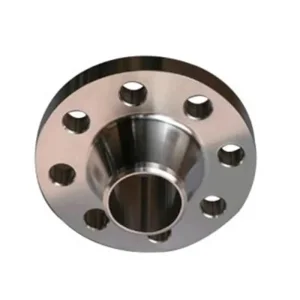
Flange Solution: Ring Type Joint (RTJ) Weld Neck Flanges forged from UNS S32750 Super Duplex stainless steel. RTJ metal gaskets expand under high pressure, maintaining leak-tight seals up to Class 2500 (6000+ PSI).
Operating Conditions: Storage and transfer of liquid methane at -162°C.
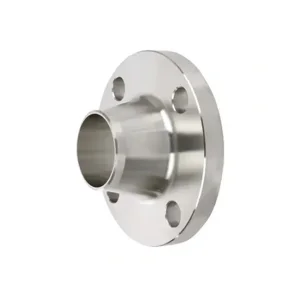
Flange Solution: Low-carbon ASTM A182 F316L Weld Neck Flanges. Ferrite levels are strictly controlled between 3-8% to prevent low-temperature embrittlement while retaining high Charpy V-Notch impact energy down to -196°C.
Operating Conditions: CIP/SIP (Clean-In-Place) steam sterilization, zero bacterial accumulation tolerance.
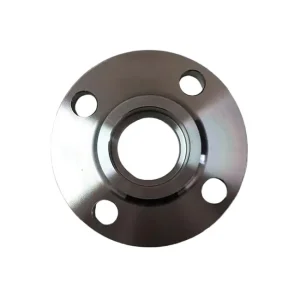
Flange Solution: ASME BPE compliant 316L Socket Weld and Sanitary Clamp Flanges with internal electro-polishing achieving surface roughness Ra ≤ 0.38 μm (15 μin).
Key evaluation criteria when auditing and selecting a reliable China Stainless Steel Flange Fittings Manufacturer.
Procuring industrial piping components requires balancing total landed cost against project risk. When selecting a Chinese flange manufacturer for major capital project orders, international procurement teams must verify the following structural competencies:
Ensure the manufacturer issues EN 10204 3.1 certificates directly linked to raw billet heats. MTRs must document actual chemical composition (including Nitrogen in Duplex grades), tensile strength, yield strength, elongation, and impact values.
Stainless steel forgings require precise solution annealing. Verify that the supplier operates automated continuous or batch furnaces with digital temperature recording and rapid water quenching tanks to prevent sensitization.
Leading manufacturers readily accommodate third-party inspection agencies (such as DNV, Lloyd's Register, TÜV, SGS, or Bureau Veritas) for pre-shipment dimensional checks, NDT audits, and hydrostatic tests.
Innovations driving next-generation flange design, green manufacturing, and digital supply chains.
Leading Chinese foundries are adopting electric arc furnaces (EAF) powered by green solar and wind energy. The utilization of high-percentage recycled stainless scrap drastically lowers the carbon footprint of exported flanges, satisfying Scope 3 emissions compliance for Western buyers.
Automated optical sorting and machine-learning ultrasonic flaw detection algorithms are replacing manual visual checks, eliminating human error in surface scratch identification, thread pitch measurements, and serration profiling.
High-criticality offshore subsea pipelines are beginning to adopt integrated flange joint monitoring systems, embedding micro-sensors into flange bodies to track bolt tension, gasket compression pressure, and localized corrosion rate in real time.
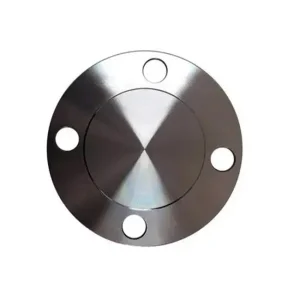
Explore our full line of tube sheets, RTJ rings, reducer flanges, and custom CNC-machined blind flanges.
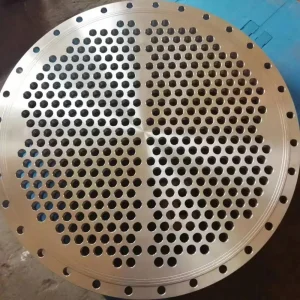
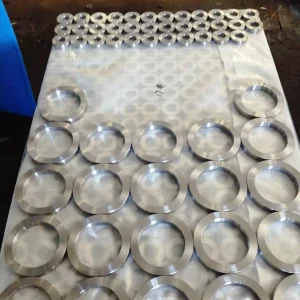
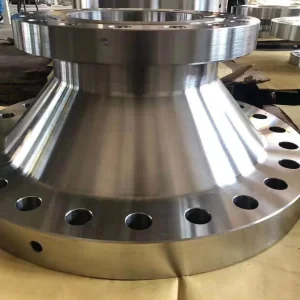
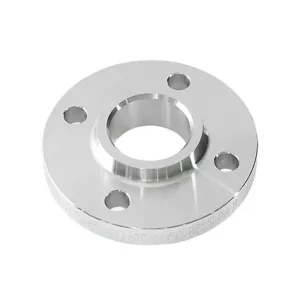
Expert answers to common engineering questions regarding stainless steel flange selection, standards compliance, and lead times.
While both 304L and 316L are low-carbon austenitic stainless steels, 316L contains 2.0% to 3.0% Molybdenum (Mo), whereas 304L contains none. The addition of molybdenum significantly raises 316L's Pitting Resistance Equivalent Number (PREN ≥ 23.1 vs ≥ 18.0 for 304L), giving 316L far superior resistance to chloride-induced pitting, crevice corrosion, and acidic chemical environments. 304L is economical for utility and fresh water lines, while 316L is mandated for marine, coastal, chemical processing, and oil refining applications.
Forged flanges undergo heavy mechanical working (hot die forging and ring rolling) which refines the crystal grain structure of the steel, aligning micro-grains along the directional stress contours of the hub. This process completely eliminates internal gas porosity, shrinkage voids, and micro-cracks common in cast flanges. Forged flanges exhibit up to 30% higher mechanical toughness, superior fatigue strength under thermal cycling, and full suitability for high-pressure Class 300 to Class 2500 critical services.
North American and global oil/gas projects typically specify ASME/ANSI B16.5 (sizes 1/2" to 24") and ASME B16.47 (sizes 26" to 60" Series A/B) with pressure ratings designated by Class (e.g., Class 150, 300, 600, 900, 1500, 2500). European industrial projects default to EN 1092-1 (superseding old German DIN standards), using metric nominal sizes (DN) and pressure classes defined by PN (Nominal Pressure in Bar, e.g., PN 6, PN 10, PN 16, PN 40, PN 100). Our factory manufactures both standard series with dedicated tooling.
Every shipment from our plant includes a comprehensive certification dossier anchored by an EN 10204 3.1 Mill Test Certificate. This certificate reports the specific heat number, chemical ladle analysis, mechanical test results (yield, tensile, elongation, impact values), solution annealing parameters, NDT inspection results (UT/PT), dimensional clearance, and PED 2014/68/EU compliance. EN 10204 3.2 certificates verified by independent inspectors (TÜV, SGS, BV) are available upon request.
Duplex alloys (UNS S31803 / S32205) feature a dual-phase microstructure consisting of approximately 50% austenite and 50% ferrite. They offer double the yield strength of standard austenitic 316L alongside high resistance to stress corrosion cracking (SCC) in chloride environments. Super Duplex (UNS S32750) has a PREN ≥ 42, making it mandatory for sour gas service (containing H2S under NACE MR0175/ISO 15156), deepwater subsea trees, concentrated phosphoric acid processing, and severe offshore environments.
Standard size flanges (1/2" to 24" in 304L/316L Class 150-600) held as forged blanks can be CNC machined, inspected, and packed for shipment within 7 to 15 days. Custom forged-to-order flanges, large-diameter ring rolled items (up to 120" / 3000 mm), or special alloys (Duplex, Super Duplex, 347H, 904L) typically require 20 to 35 days depending on raw material billet availability and third-party witness schedules.
