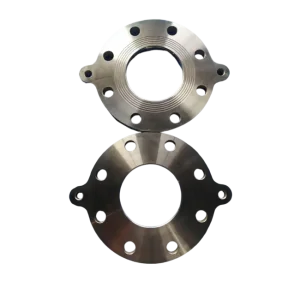
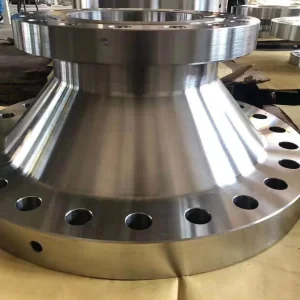
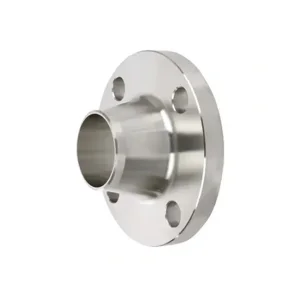
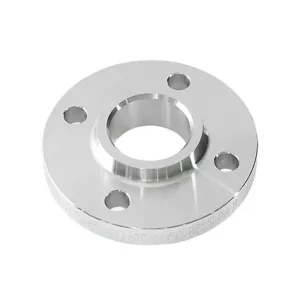
In modern industrial processing, piping networks operating in ultra-aggressive media—ranging from cryogenic Liquefied Natural Gas (LNG) terminals at -196°C to high-temperature offshore hydrocracker units—demand uncompromised zero-leak integrity. Stainless flanged fittings function as the essential mechanical interfaces ensuring structural boundary safety, pressure containment, and system modularity. As global engineering, procurement, and construction (EPC) firms navigate shifting trade dynamics, carbon border adjustment mechanisms (such as the EU's CBAM), and escalating lifecycle performance thresholds, searching for reputable China stainless flanged fittings suppliers has evolved from a pure unit-cost purchasing decision into a strategic risk management priority.
China’s advanced forging infrastructure, led by integrated manufacturing hubs such as Dingxiang County in Shanxi Province, delivers over 70% of the world’s industrial forged flange capacity. Leading manufacturers like Shanxi Yuxin Casting & Forging Co., Ltd. (established in 1992) have spearheaded this industrial transformation. Transitioning from basic commercial carbon steel forging to highly specialized stainless steel, duplex, and nickel-alloy flanged fitting production, Chinese suppliers combine raw material cost efficiency with ISO 9001, PED 2014/68/EU, and AD 2000-Merkblatt W0 certified quality frameworks. This whitepaper systematically evaluates the technological capability, supply chain resilience, metallurgical engineering, and application landscape surrounding Chinese stainless flanged fittings to provide global procurement executives and piping system engineers with deep actionable insights.
The integrity of a flanged fitting under high mechanical torque, cyclic thermal stress, and corrosive exposure is dictated by its grain structure. Cast fittings often suffer from internal shrinkage porosity, gas entrapment, and dendritic segregation, making them vulnerable to stress corrosion cracking (SCC). In contrast, precision closed-die and ring-rolled forged stainless fittings produced by top-tier Chinese manufacturers undergo intense plastic deformation, refining coarse grain structures into tight, continuous grain flow lines that align perfectly with the geometry of the flange hub, flange face, and bolt circle.
Utilizing low-carbon variants (304L/316L with C ≤ 0.03%) eliminates chromium carbide precipitation at grain boundaries during welding, maintaining immunity to intergranular corrosion per ASTM A262 Practice E. Molybdenum addition in 316L (2.0–3.0%) provides critical resistance to localized pitting and crevice corrosion in chloride environments. Titanium-stabilized (321) and Niobium-stabilized (347) grades offer elevated temperature creep strength up to 815°C.
Combining roughly equal proportions of ferrite and austenite phases, duplex stainless flanges deliver yield strengths nearly double that of standard austenitic grades alongside extraordinary Pitting Resistance Equivalent Numbers (PREN ≥ 40 for 2507). This enables substantial wall-thickness reductions in high-pressure offshore subsea manifolds and marine desalination plants.
For extreme sour gas service (H2S-rich environments conforming to NACE MR0175/ISO 15156) and concentrated mineral acid transport, custom-forged nickel-chromium-molybdenum fittings prevent hydrogen embrittlement and catastrophic stress-cracking failures.
| Standard Framework | Dimensional / Pressure Class Scope | Facing Types & Surface Finish | Primary Material Traceability |
|---|---|---|---|
| ASME B16.5 / B16.47 | 1/2" to 120" (DN15–DN3000) | Class 150 to Class 2500 | RF, FF, RTJ (Ring Type Joint), T&G | 125–250 µin AARH | ASTM A182 F304/L, F316/L, F321, F51, F53, F55 |
| EN 1092-1 / DIN | DN10 to DN3000 | PN6 to PN400 (Type 01, 02, 11, 12, 34) | Form A, B1, B2, C, D, E, F | Ra 3.2 to Ra 12.5 µm | EN 10222-5 1.4301, 1.4307, 1.4401, 1.4404, 1.4462 |
| JIS B2220 / GOST | 10K to 63K | Py 6 to Py 160 (DN15–DN2000) | Flat Face, Raised Face, Male-Female concavity | SUS304, SUS316, 08X18H10T, 12X18H10T |
Global engineering buyers frequently ask: What underpins the global dominance of Chinese stainless flange manufacturers in lead time stability and cost competitiveness? The answer lies in localized industrial clustering, fully integrated raw material eco-systems, and vertical process control.
Dingxiang County in Shanxi is recognized as the "Hometown of Forging in China." This geographic concentration clusters raw stainless billet mills, die fabrication shops, heat treatment specialists, machining centers, and third-party inspection agencies within a 15-kilometer radius, drastically reducing internal logistics lead-times.
Tier-1 facilities like Shanxi Yuxin Casting & Forging Co., Ltd. maintain direct strategic procurement contracts with premier stainless steelmakers (e.g., Tsingshan, TISCO, Baosteel). Long-term billet reserves mitigate international nickel and molybdenum spot-price volatility for clients.
From electric-induction billet heating, hydraulic forging, hydraulic ring rolling, solution annealing to CNC flange-facing and automatic bolt-hole drilling—single-site control guarantees heat-number traceability through every transformation stage.
Proximity to Tianjin and Qingdao deep-water container ports enables rapid customs declaration, seaworthy fumigation-free plywood crating, and flexible FCL/LCL shipping schedules to any port in Europe, the Americas, or the Middle East.
The international stainless flanged fitting sector is undergoing rapid technological modernization. Over the next decade, market leadership will be defined by three pivotal technological vectors:
As global energy systems shift toward green hydrogen fuel transport, conventional stainless fittings face strict hydrogen micro-permeation and embrittlement challenges. Advanced Chinese suppliers are developing optimized 316L/316Ti forged fittings featuring controlled nitrogen additions and sub-micron grain refinement that maintain structural integrity under 700 bar gaseous hydrogen pressures.
To optimize material costs in extreme corrosive applications, technological roadmaps emphasize hybrid manufacturing: forging a high-strength carbon steel structural base (e.g., A105) and applying automated laser clad or PTA weld overlays of 316L, Inconel 625, or Hastelloy onto the sealing face and wetted bores.
Implementation of Industry 4.0 smart factory lines: direct laser-etched 2D DataMatrix codes on flange rims link every fitting to its digital twin on the cloud—housing real-time 3D laser scan dimensional measurements, UT ultrasonic wave inspection records, and EN 10204 3.1 chemical analysis certificates.
Chinese stainless flanged fittings are deployed across critical infrastructure projects globally. Below are five verified industrial application scenarios illustrating technical performance requirements:
Location: Gulf of Mexico & North Sea
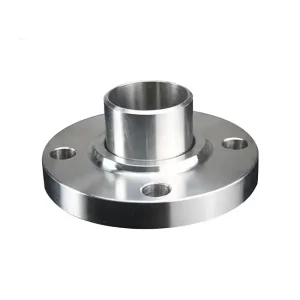
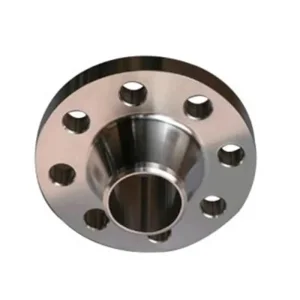
Specification: ASME B16.5 Weld Neck RTJ Flanges in Duplex F51 / F53.
Duty: Resisting high marine hydrostatic pressure, wave vibration fatigue, and sour crude oil containing H2S and CO2.
Location: Australia & Qatar Energy Expansion
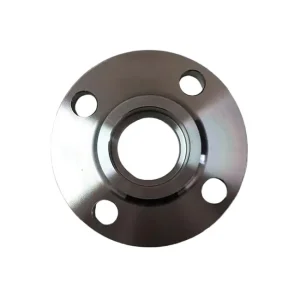
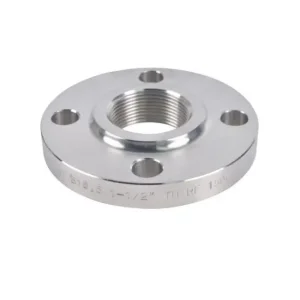
Specification: Stainless Steel 304L / 316L Long Weld Neck & Socket Weld Flanges.
Duty: Maintaining Charpy V-notch impact toughness at -196°C without brittle failure during thermal expansion cycles.
Location: Middle East (Ras Al Khair) & Atacama, Chile
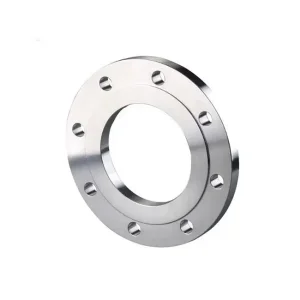
Specification: Super Duplex 2507 (1.4410) Blind & Slip-On Flanges.
Duty: Handling hyper-saline brine concentrate under high pump pressures (up to 80 bar) with complete immunity to pitting.
Location: Germany & US Gulf Coast Chemical Hubs
Specification: EN 1092-1 Type 11 Weld Neck Flanges, electropolished Ra < 0.4 µm.
Duty: Preventing bacterial biofilm accumulation and chemical fluid contamination in sterile processing loops.
Location: Iceland & East Asia Nuclear Installations
Specification: Heavy wall forged ASME B16.47 Series A Weld Neck Flanges in 321H / 347H.
Duty: Enduring high-temperature steam, boric acid corrosion, and continuous mechanical shock.
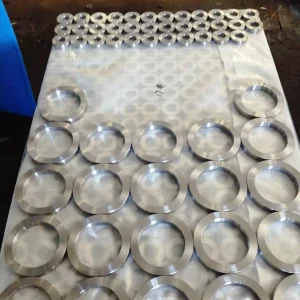
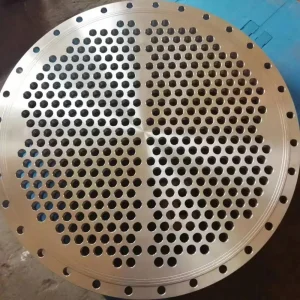
Engineering Capability: Shanxi Yuxin produces drawing-based non-standard rings, thick tube sheets, and heavy-wall reducer flanges up to Ø3,000 mm diameter with complete internal non-destructive testing (UT/MT/PT).
Building trust in international procurement requires strict compliance with Western quality standards and localized regulatory documentation. Leading manufacturer Shanxi Yuxin Casting & Forging Co., Ltd. operates under a fully certified E-E-A-T (Experience, Expertise, Authoritativeness, Trustworthiness) quality system:
ISO 9001 quality system assessed by TÜV CERT, certified pressure equipment manufacturing under PED 2014/68/EU and AD 2000-Merkblatt W0 / TRD 100, alongside VdTÜV 350 and VdTÜV 399-3 material approvals.
Every export shipment includes full original Mill Test Certificates (MTC) stating exact melt heat numbers, chemical ladle analysis, mechanical tension tests (Yield, Tensile, Elongation), impact values down to -196°C, and hardness figures. Third-party witness (3.2 MTC) by SGS, Lloyd's Register, or TÜV is routinely conducted.
In-house NDT capabilities include 100% Ultrasonic Testing (UT per EN 10228-3 / ASME SA388) to detect internal voids, Liquid Penetrant Testing (PT) on sealing faces, positive material identification (PMI spectrum analyzer), and hydrostatic pressure testing.
Clear, authoritative engineering answers to common inquiries encountered when sourcing stainless flanged fittings from Chinese suppliers:
Collaborate directly with Shanxi Yuxin's engineering team. Submit your flange schedules, project specifications, or custom drawings for an itemized technical proposal within 24 hours.
Download our full product dimension catalog and material equivalency chart.
Contact Factory Desk →