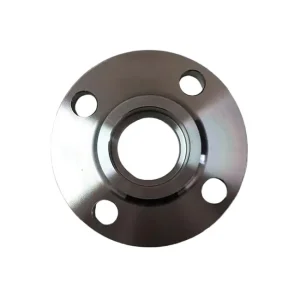
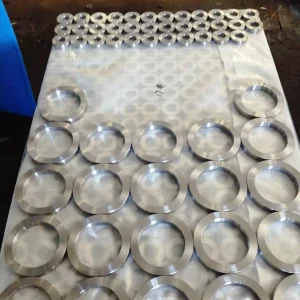
Factory-direct high-pressure forged flanges certified under ISO 9001, PED 2014/68/EU, and ASME B16.5 standards.
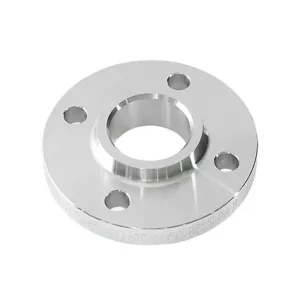
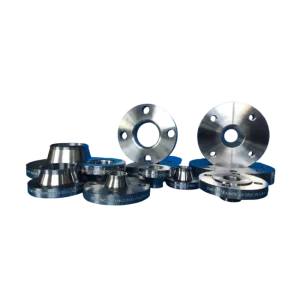
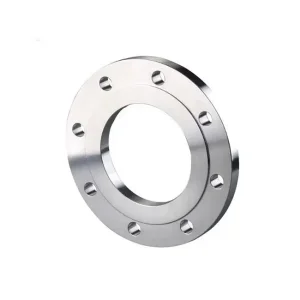
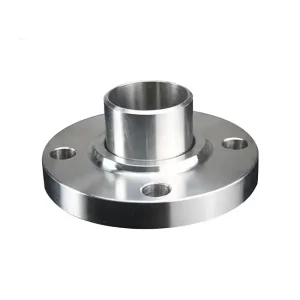
Understanding the critical role of Raised Face Weld Neck (RFWN) flanges in severe mechanical environments and high-pressure fluid systems.
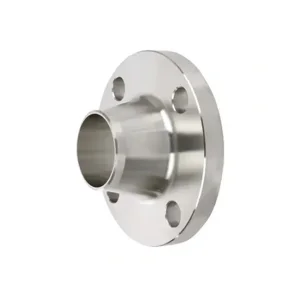
In modern industrial piping infrastructure, the Raised Face Weld Neck (RFWN) Flange represents the gold standard for high-integrity, high-pressure, and thermal-cyclic connections. Classified under international standards such as ASME B16.5, ASME B16.47 (Series A & B), and EN 1092-1 (Type 11), the RFWN flange is engineered specifically to transfer stress directly from the flange body to the adjacent pipe wall, thereby minimizing localized stress concentration at the base of the flange joint.
The performance superiorities of the China RFWN flange stem from its distinct geometrical design:
Under hydrostatic test pressure and thermal shocks, standard Slip-On flanges rely on double fillet welds that create localized stress concentrations. RFWN flanges, by contrast, possess a stress concentration factor near 1.0 at the butt weld, making them mandatory for ASME Section VIII pressure vessels, toxic chemical transfer lines, and offshore high-pressure manifold systems.
Exploring the industrial clustering, raw material integration, and advanced metallurgical control of Shanxi Yuxin Casting & Forging Co., Ltd.
Dingxiang County in Shanxi Province is officially recognized as the "Hometown of Forging in China." Over 70% of China's exported industrial flanges originate from this highly specialized cluster, providing unmatched economies of scale.
From refined ingot casting and hydraulic ring rolling to CNC machining, multi-stage heat treatment, and chemical lab testing—every process is consolidated within Shanxi Yuxin's 10,000-ton capacity facility.
Every single RFWN flange is stamped with a unique melt heat number, directly tied to an EN 10204 3.1 Mill Test Certificate reporting chemical ladle analysis, yield strength, tensile elongation, and Charpy impact values.
Shanxi Yuxin Casting & Forging Co., Ltd. (established in 1992) utilizes state-of-the-art closed-die and ring-rolling forging technologies. Superior mechanical performance depends entirely on controlling the grain structure of the steel. Unlike cast flanges, which suffer from internal porosity and micro-segregation, forged RFWN flanges undergo heavy plastic deformation at controlled forging temperatures (1150°C to 950°C).
This process refines the grain flow aligned with the profile of the flange hub, dramatically boosting resistance to fatigue, impact loads, and stress corrosion cracking (SCC).
| Material Category | Standard Material Grades | Applicable Service Conditions | Key Metallurgical Characteristics |
|---|---|---|---|
| Carbon Steel | ASTM A105 / A105N, Q235B, P245GH, P280GH | General ambient oil, gas, steam, and water pipelines | Normalized heat treatment eliminates internal stress; yield strength ≥ 250 MPa. |
| Low-Temp Carbon Steel | ASTM A350 LF2 Class 1 / Class 2 | Cryogenic service, LNG facilities, arctic installations (-46°C) | Charpy V-notch impact toughness verified at -46°C (≥ 27 Joules). |
| High-Yield Line Pipe | ASTM A694 F42, F52, F60, F65, F70 | High-pressure cross-country natural gas transmission pipelines | High yield-to-tensile ratio; optimized carbon equivalent (CE) for field weldability. |
| Stainless Steel | ASTM A182 F304/304L, F316/316L, F321 | Corrosive chemical plants, offshore platforms, food & pharma | Solution annealed at 1050°C; exceptional pitting resistance in chloride environments. |
| Duplex & Super Duplex | ASTM A182 F51 (UNS S31803), F53 (UNS S32750) | Subsea oilfields, aggressive marine service, acid gas processing | 50/50 Ferritic-Austenitic microstructure; PREN ≥ 40 for Super Duplex F53. |
Deploying RFWN flanges across critical global energy networks, heavy industrial infrastructure, and extreme operating environments.
In hydrocracker units, ethylene plants, and catalytic reformers operating above 450°C and 15 MPa, RFWN flanges in A182 F11/F22 alloy steel prevent hydrogen embrittlement and high-temperature creep failures.
Offshore topside piping and subsea riser connections demand RFWN flanges manufactured to NACE MR0175 / ISO 15156 standards. Heat-treated duplex steel guarantees zero sulfide stress cracking in sour gas service.
Modern thermal power plants and nuclear cooling loops utilize Class 1500 and Class 2500 heavy-wall RFWN flanges to withstand extreme steam pressure, thermal shocks, and continuous vibration.
In high-pressure gas transmission lines, conventional flat face or low-torque flange connections risk catastrophic gasket blowouts. The China RFWN flange overcomes this via engineered bolting tension and face serration interaction:
When stud bolts (e.g., ASTM A193 B7 / A194 2H) are torqued to specified values, the raised face compresses a spiral wound gasket (SWG) with flexible graphite filler into the serrated micro-grooves. The gramophone finish "bites" into the metal outer ring and soft filler of the gasket, locking it in place and creating a dynamic seal capable of sealing up to 42.0 MPa hydrostatic pressure.
Selecting the optimal flange geometry based on pressure class, fatigue life, welding requirements, and total cost of ownership.
| Flange Type | Pressure Class Range | Joint Type | Stress Concentration | NDT Inspection Compatibility | Primary Application Scenario |
|---|---|---|---|---|---|
| RFWN (Raised Face Weld Neck) | Class 150 to Class 2500 (PN6–PN400) | Butt Weld | Very Low (Smooth Taper) | 100% Radiographic (RT) / Ultrasonic (UT) | High pressure, severe cyclic temperature, toxic media |
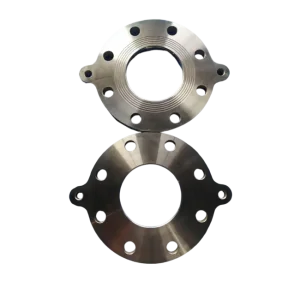
| SO (Slip-On Flange) | Class 150 to Class 300 (PN6–PN40) | Double Fillet Weld | Moderate to High | Magnetic Particle (MT) / Dye Penetrant (PT) | Low pressure utility, water, ambient air lines |
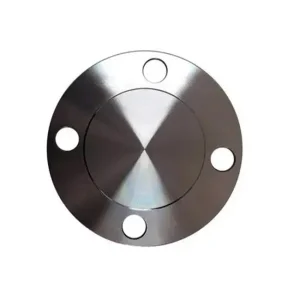
| BL (Blind Flange) | Class 150 to Class 2500 (PN6–PN400) | Bolted End Closure | High Bending Stress at Center | Ultrasonic (UT) for internal voids | Piping termination, pressure vessel inspection ports |
| SW (Socket Weld Flange) | Class 150 to Class 1500 (Small Bore) | Single Fillet Weld | Moderate (Gap Required) | Dye Penetrant (PT) | Small diameter high-pressure hydraulic & steam lines (≤ 2") |
| LJ (Lap Joint + Stub End) | Class 150 to Class 300 | Loose Ring Slip | Low on Stub End | Radiographic (RT) on Stub End Weld | Corrosive systems requiring frequent inspection dismantle |
Under ASME B31.3 Process Piping Code, RFWN flanges are required for Category M Fluid Service (toxic fluids) and high-cycle thermal piping. Slip-On flanges are strictly prohibited in severe cyclic conditions where stress range factors exceed standard safety thresholds.
A step-by-step technical framework for Procurement Directors and EPC Quality Managers auditing Chinese flange manufacturers.
Ensure raw forging stock comes exclusively from tier-1 steel mills (e.g., Baosteel, Shougang). Verify spectrographic heat analysis against ASTM/EN composition limits prior to heating.
Verify minimum forging reduction ratio of 3:1. Confirm digital temperature recorder charts for Normalizing, Tempering, or Solution Annealing to guarantee homogeneous microstructures.
Check raised face height, bolt hole circle (PCD) tolerance (±0.8mm), wall bevel thickness, and 100% Ultrasonic Testing (UT per ASTM A388) to detect internal inclusions or micro-cracks.
An export shipment of China RFWN flanges from Shanxi Yuxin is accompanied by a complete quality Dossier, including:
Addressing key technical inquiries from piping designers, EPC contractors, and international procurement teams.
How China's leading flange manufacturers are advancing into high-tier green hydrogen service, CRA cladding, and automated manufacturing.
The global energy landscape is shifting rapidly towards decarbonization, hydrogen transport, and ultra-deepwater exploration. China's forging industry is adapting through continuous technology upgrades:
Transporting pure hydrogen or hydrogen-natural gas blends introduces micro-molecular permeation hazards. Shanxi Yuxin is at the forefront of developing low-permeability carbon-moly steel RFWN flanges engineered to eliminate high-pressure hydrogen attack (HTHA).
To optimize costs in highly corrosive offshore environments, full solid alloy flanges are increasingly replaced by carbon steel (A105N or F65) bodies clad with a 3mm weld overlay of Inconel 625 or Hastelloy C276 across the raised face sealing area. This hybrid design delivers top-tier corrosion resistance at a fraction of solid nickel alloy costs.
Through Industry 4.0 integration, every RFWN flange manufactured at Shanxi Yuxin is laser-engraved with a 2D DataMatrix code. Scanning the QR code gives field engineers immediate access to the digital twin data package—including 3D laser scan inspection reports, chemical heat analysis, and NDT certificates stored on secure cloud servers.
Explore our complete range of certified forged components engineered for global pipeline installations.