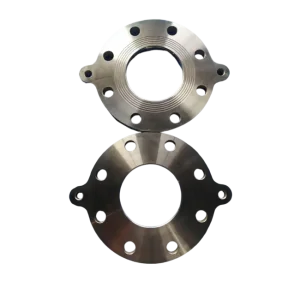
Directly sourced from Shanxi Yuxin Casting & Forging Co., Ltd. — Engineered to ASME, EN, DIN, and JIS standards.
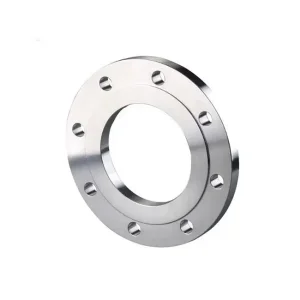
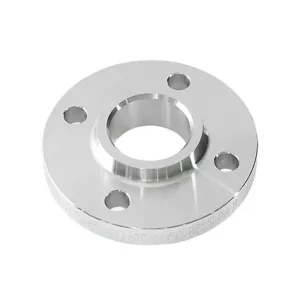
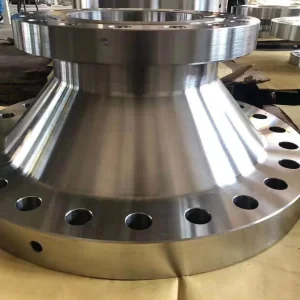
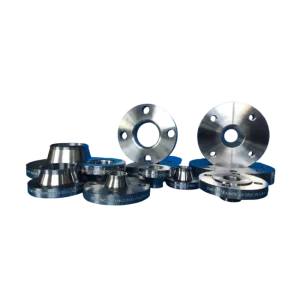
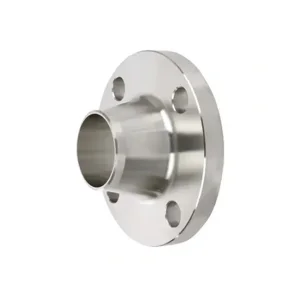
Understanding the functional superiority of forged reducing flanges in modern high-pressure piping assemblies.
Reducing flanges are manufactured primarily in concentric configurations, where the centerlines of the larger bore and smaller bore are collinear. This design minimizes fluid turbulence and boundary layer separation in vertical piping runs and gas distribution manifolds. For horizontal liquid pipelines where entrained gases or accumulated condensate present cavitation or vapor locking risks, custom eccentric reducing flanges maintain a continuous flat bottom line (FBL) or flat top line (FTL) to ensure uniform fluid evacuation.
The internal transition cone of a high-quality forged reducer flange is CNC-machined with precise smooth radii. This gradual change in cross-sectional area limits hydraulic energy loss (head loss) and prevents localized vortex shedding. By keeping turbulence indices low, piping design engineers can effectively protect downstream control valves, flow meters, and pump impellers from high-velocity erosion and pressure pulsation fatigue.
How localized manufacturing integration drives global competitiveness, uncompromised quality, and scale.
Proximity to major steel producers like Taiyuan Iron & Steel (TISCO) and Baosteel grants Yuxin immediate access to certified carbon steel (ASTM A105, Q235B, A350 LF2), low-alloy steel (A182 F11/F22), stainless steel (F304/F316L), and duplex alloys (F51/F53). Bulk steel purchasing guarantees material cost stability for large project procurement schedules.
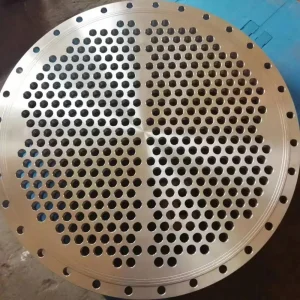
Equipped with hydraulic forging presses ranging up to high-tonnage units and advanced CNC ring-rolling machines, our facility processes forgings from standard ½” fittings up to massive 3,000 mm (120 inches) outer diameter industrial rings and custom tube sheets with uniform grain structures.
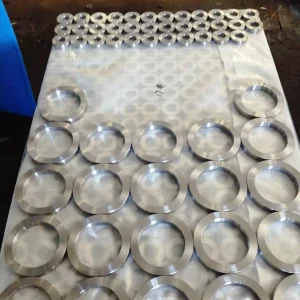
Maintaining an active stock of pre-tested, rough-forged blanks allows us to offer expedited 7 to 15-day turnaround times for standard machined orders. For non-standard OEM reducing flanges based on proprietary customer CAD drawings, sample development and full batch production are typically completed within 20 to 35 days.
Aligning Chinese manufacturing precision with stringent North American, European, and Middle-Eastern project standards.
To meet international EPC contract conditions, Shanxi Yuxin operates under an audited quality management system assessed by TÜV CERT. We maintain total material compliance across multiple regional codes, including ASME B16.5, ASME B16.47 Series A & B, EN 1092-1, DIN 2501, JIS B2220, and GOST 12820.
Quick reference engineering matrix for piping engineers, procurement managers, and plant designers.
| Flange Type | Standard Reference | Size Range (NPS / DN) | Pressure Class / Rating | Facing Types | Primary Industrial Applications |
|---|---|---|---|---|---|
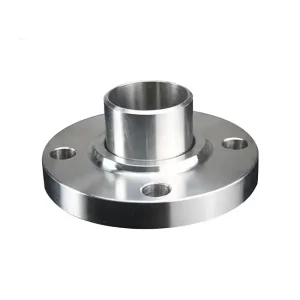
| Weld Neck Reducer | ASME B16.5 / EN 1092-1 Type 11 | ½" – 60" (DN15 – DN1500) | Class 150 – 2500 / PN6 – PN400 | RF, FF, RTJ, T&G | High-pressure, thermal cycling, oil & gas headers, steam pipelines |
| Slip-On Reducer | ASME B16.5 / EN 1092-1 Type 12 | ½" – 48" (DN15 – DN1200) | Class 150 – 600 / PN6 – PN63 | RF, FF | Low-pressure utility lines, HVAC networks, chemical transfer lines |
| Threaded Reducer | ASME B16.5 / DIN 2566 | ½" – 4" (DN15 – DN100) | Class 150 – 2500 | RF, FF | Non-weldable hazardous environments, instrument tie-ins, hydraulic lines |
| Blind Reducer (Tapped) | ASME B16.5 / EN 1092-1 Type 05 | 2" – 36" (DN50 – DN900) | Class 150 – 2500 / PN10 – PN100 | RF, RTJ | Pipeline termination points, pressure vessel inspection ports, drain valves |
| Lap Joint Reducer | ASME B16.5 / EN 1092-1 Type 02 | ½" – 24" (DN15 – DN600) | Class 150 – 300 / PN10 – PN40 | Flat Face (with Stub End) | Frequently dismantled systems, corrosive slurries, stainless/CS hybrid piping |
Where Yuxin forged flanges critical integrity protects infrastructure around the globe.
In catalytic cracking units and hydrotreating facilities, reducing weld neck flanges accommodate line size contractions leading into heat exchangers. Forged from A182 F11/F22 chromium-molybdenum steel, these fittings resist high-temperature hydrogen attack (HTHA) and creep deformation.
Offshore topside processing skids utilize Duplex (UNS S31803) and Super Duplex (UNS S32750) RTJ reducing flanges. The high PREN (Pitting Resistance Equivalent Number) ensures survival against aggressive chloride ion pitting in harsh marine atmospheres.
Commercial vessel cooling systems and ballast water treatment skids rely on galvanized carbon steel slip-on reducing flanges. The compact structural footprint reduces overall piping weight while satisfying Class society inspection rules (ABS, DNV, GL).
How smart manufacturing, advanced metallurgy, and green forging shape the next decade.
Precision machining tolerances are shifting from manual micrometers to automated 3D laser scanning coordinate measuring machines (CMM). Shanxi Yuxin integrates real-time optical inspection on flange facing serrations (125-250 µin AARH) to guarantee 100% gasket seating performance without manual error.
Global EPC contractors increasingly evaluate suppliers based on Scope 1 and Scope 2 carbon intensity. By transitioning heating furnaces from coal gasification to natural gas and electrical induction heating, Yuxin reduces carbon emissions during pre-forging thermal cycles while achieving tighter temperature uniformity across steel billets.
In-depth answers to common questions asked by global piping engineers and purchasing agents.
A reducing flange performs both line size reduction and flange connection within a single forged component. Using a standard flange welded to a concentric pipe reducer requires two butt-weld joints and occupies significantly more physical space. A single reducing flange saves installation labor, eliminates one weld inspection point (NDT radiograph), and reduces the overall envelope length in compact piping skids.
Per ASME B16.5, the pressure-temperature rating of a reducing flange is governed by the smaller pipe size bore, but the physical flange dimensions (bolt circle, flange thickness, outer diameter, and bolt hole quantity) MUST match the larger nominal pipe size rating. For example, a 6” x 4” Class 300 reducing flange has the outer dimensions and bolt circle of a 6” Class 300 flange, but is bored to match a 4” pipe schedule.
Yes. Shanxi Yuxin specializes in custom forged components up to 3,000 mm diameter. Our engineering department can work directly from your DWG, STEP, or PDF files. We analyze forging feasibility, develop dedicated dies in-house, select optimal heat treatment cycles (normalizing, quenching, tempering), and issue full EN 10204 3.1 documentation for proprietary designs.
To ensure total protection during long-distance ocean freight, all flanges are thoroughly cleaned and subjected to your choice of protective finish: black rust-preventive paint, yellow anti-rust varnish, transparent synthetic oil, hot-dip galvanizing (HDG), or epoxy coating. Machined raised faces and RTJ grooves are fitted with protective plastic caps or hardwood covers before being packed in fumigation-free plywood crates.
For standard ANSI/EN carbon steel flanges held as rough forged stock, dispatch takes 7–15 days after machining. Custom alloy forgings or complex non-standard shapes take 20–35 days. We support low MOQ trial orders to help distributors and EPC contractors evaluate our quality before committing to full container load (FCL) orders.
Complete material spectrums including Carbon, Alloy, Stainless, and Duplex Steels.