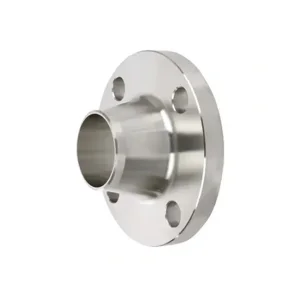
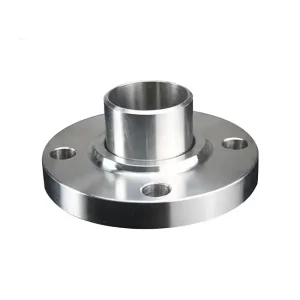
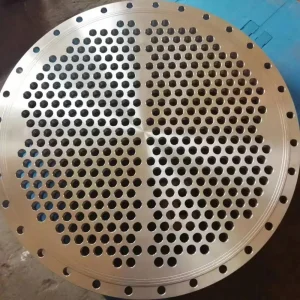
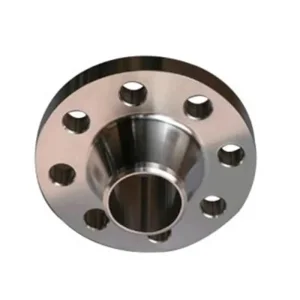
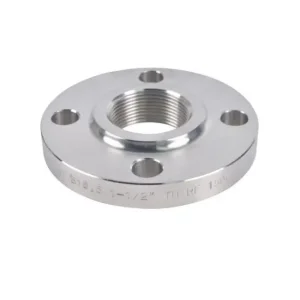
Direct factory supply from China's premier forging cluster. Full material traceability under EN 10204 3.1/3.2.
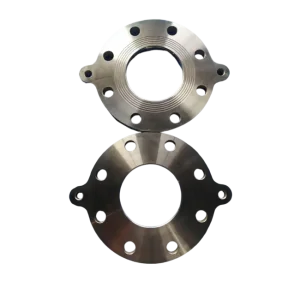
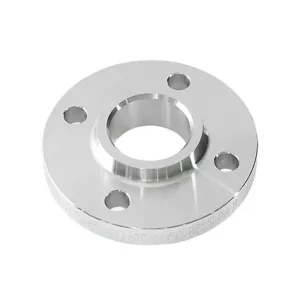
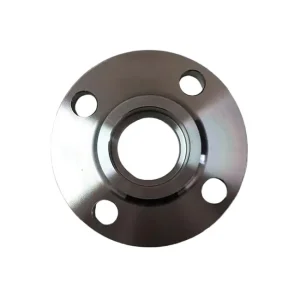
In modern fluid dynamics, process control, and custody transfer applications, accurate fluid and gas volumetric flow rate measurement remains vital to plant safety and fiscal accountability. An Orifice Flange Set serves as the primary element in differential pressure (DP) flow measurement systems across refineries, petrochemical complexes, offshore platforms, steam power stations, and gas transmission networks. Manufactured strictly in accordance with ASME B16.36 and ISO 5167 specifications, an orifice flange set differs fundamentally from conventional pipe flanges (such as ASME B16.5 standard flanges) by incorporating integrated differential pressure tapping holes, jack screws, and precision-machined plate alignment features.
While standard ASME B16.5 flanges are engineered purely for structural mechanical joint integrity, ASME B16.36 orifice flanges feature precise radial pressure tap holes (typically 1/2" NPT or socket weld) drilled directly through the flange hub into the internal pipe bore. Furthermore, orifice flange unions include pair-matched jack screws that allow technicians to mechanically spread the flanges apart during routine inspections, cleaning, or replacement of the delicate orifice plate without distorting the adjacent piping alignment.
The physics underlying an orifice flange assembly is rooted in Bernoulli's principle and the continuity equation for fluid mechanics. When a fluid passes through a concentric constriction (the orifice plate) held between the orifice flange pair, its velocity increases while its static pressure decreases. This creates a measurable differential pressure ($\Delta P$) across the high-pressure (upstream) and low-pressure (downstream) pressure taps. The mass flow rate ($m$) is proportional to the square root of this differential pressure:
$q_m = \frac{C}{\sqrt{1 - \beta^4}} \epsilon \frac{\pi}{4} d^2 \sqrt{2 \rho_1 \Delta p}$
Where C is the discharge coefficient, β is the diameter ratio ($d/D$), ε is the expansibility factor, d is the orifice bore diameter, and ρ1 is upstream fluid density. Because the discharge coefficient relies heavily on smooth, non-turbulent velocity profiles, the inner surface finish, bolt hole alignment, and precision concentricity of the orifice flange set are paramount to preventing flow measurement error.
Selecting the correct metallurgical alloy for an orifice flange set depends on process operating parameters including temperature extremes, fluid corrosivity, erosion velocity, and hydrogen sulfide ($H_2S$) concentration levels. Shanxi Yuxin Casting & Forging Co., Ltd. manufactures orifice flange sets across a complete spectrum of forged carbon steel, low-alloy steel, stainless steel, and nickel superalloys.
| Material Grade | Specification | Temperature Range | Key Industrial Applications | NACE & Compliance |
|---|---|---|---|---|
| Carbon Steel | ASTM A105 / ASME SA105 | -29°C to +425°C | General hydrocarbon processing, non-corrosive steam, utility water lines | Standard / NACE MR0175 upon request |
| Low-Temp Carbon Steel | ASTM A350 LF2 Class 1 | -46°C to +343°C | Cryogenic gas processing, Arctic onshore pipelines, cold climate installations | Charpy V-Notch Impact tested @ -46°C |
| Austenitic Stainless | ASTM A182 F304/304L & F316/316L | -196°C to +815°C | Chemical dosing, sour crude oil, corrosive condensate, offshore platforms | Full Resistance to Pitting & Crevice Corrosion |
| Chrome-Moly Alloy | ASTM A182 F11 / F22 / F91 | Up to +650°C | High-pressure superheated steam, thermal power plants, hydrocracker units | High Creep-Rupture Strength |
| Duplex / Super Duplex | ASTM A182 F51 (UNS S31803) / F53 / F55 | -50°C to +280°C | Subsea manifolds, desulfurization units, high-chloride marine environments | PREN ≥ 40, High Mechanical Tensile Yield |
| Nickel Alloys | Inconel 625 / Monel 400 / Hastelloy C276 | -196°C to +1000°C | Severe acid gas extraction, high-chlorine media, nuclear power generation | Extreme Sour Service NACE MR0175/ISO 15156 |
In upstream oilfield recovery and sour gas refining, hydrogen sulfide causes Sulfide Stress Cracking (SSC) and Hydrogen-Induced Cracking (HIC). YUXIN manufactures orifice flange sets fully compliant with NACE MR0175 / ISO 15156 and NACE MR0103. Carbon steel and alloy forgings undergo strict microstructural control, maintaining maximum hardness levels below 22 HRC through controlled normalizing, quenching, and tempering post-weld heat treatment (PWHT) cycles.
Located in Zhuangli Industrial Zone, Dingxiang County, Shanxi Province—globally renowned as the “Hometown of Forging in China”—Shanxi Yuxin Casting & Forging Co., Ltd. controls the complete forging process lifecycle. Unlike trading brokers or secondary machine shops, YUXIN executes every phase from raw ingot heating to final NDT testing under one roof.
Starting from vacuum-degassed round steel billets, hot forging is executed at 1150°C to achieve a minimum 3:1 forging reduction ratio. This eliminates internal porosity, refines grain structures, and aligns directional flow lines along the flange stress contour.
Forged blanks undergo strict computer-monitored heat treatment cycles—Normalizing (890°C), Quenching & Tempering, or Solution Annealing—to ensure uniform hardness and superior Charpy V-notch impact toughness down to sub-zero temperatures.
Differential pressure tap holes (1/2" NPT or Socket Weld) are precision-drilled on 5-axis CNC machining centers. Tappings are placed exactly 1 inch (25.4 mm) from the flange face per ASME B16.36, ensuring strict dimensional compliance.
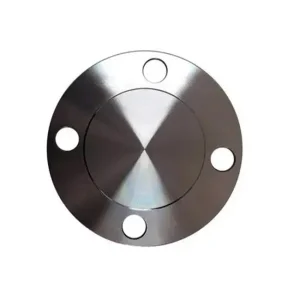
The facing of an orifice flange directly affects joint tightness and sealing integrity under thermal cycling. YUXIN manufactures orifice flange sets with multiple facing options according to project specifications:
Orifice flange sets from YUXIN operate in challenging fluid measurement environments across six continents. Understanding site-specific deployment dynamics enables customized manufacturing solutions tailored to regional operational challenges.
In high-temperature, high-$H_2S$ gas treatment plants in Saudi Arabia and the UAE, YUXIN supplies ASTM A182 F316L and Duplex F51 orifice flange sets. Complete with Inconel 625 cladding inside the pressure taps, these units resist pitting attack and sulfide stress cracking under severe sour gas flows.
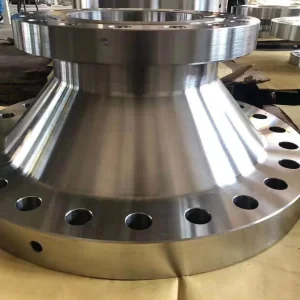
Offshore floating production storage and offloading (FPSO) vessels require lightweight, compact metering skids. YUXIN engineers custom short-neck ASME B16.36 Weld Neck orifice sets with NORSOK M-650 certified Super Duplex materials, guaranteeing zero leakage despite continuous hull vibration and wave movement.
Cryogenic custody transfer measurement at -162°C demands exceptional material ductility. YUXIN provides ASTM A350 LF2 Class 1 and Stainless 316L orifice flange sets with Charpy V-Notch impact testing down to -196°C, ensuring structural integrity during sudden thermal shocks.
Global procurement managers facing tight project schedules and cost pressures benefit significantly from sourcing directly from Shanxi Yuxin's integrated forging facility. Our location in Shanxi provides key structural advantages that translate directly into buyer value:
Dingxiang houses over 30% of China's forged flange production capability. This industrial density provides immediate access to high-grade raw steel billets from domestic steel mills (Baosteel, Taiyang Steel), specialized heat treatment facilities, and rapid tooling makers, dramatically reducing production lead times.
By controlling raw material cutting, open/closed die forging, heat treatment, CNC machining, tapping, and export packing inside a single plant, YUXIN eliminates third-party subcontractor markups and inter-factory transport delays, resulting in a 15–25% cost saving for international buyers.
With an annual output exceeding 10,000 metric tons of forged flanges and 2,000 tons of specialized forged components, YUXIN maintains extensive stock of raw billets and semi-finished orifice blanks. Standard size orders ship within 7–15 days, while custom engineered sets take 20–35 days.
As global processing industries transition toward Industry 4.0 and digital twin plant management, flow measurement hardware must evolve to deliver higher accuracy, predictive maintenance data, and lower total cost of ownership. YUXIN's R&D department leads this technological transition:
Quality control at Shanxi Yuxin Casting & Forging Co., Ltd. is managed under an audited quality management system certified to ISO 9001:2015, PED 2014/68/EU (Pressure Equipment Directive), and AD 2000-Merkblatt W0 by TÜV CERT. Every export shipment of orifice flange sets includes a full documentation package accepted by major European, Middle Eastern, and American inspection bodies (SGS, BV, TUV, DNV).
| Inspection Standard | Test Type | Acceptance Criteria & Scope |
|---|---|---|
| EN 10204 3.1 / 3.2 | Material Traceability | Full Mill Test Certificate covering ladle heat chemistry, mechanical yield/tensile strength, elongation, and heat treatment log. 3.2 witness inspection available upon request. |
| ASTM A388 / EN 10228-3 | Ultrasonic Testing (UT) | 100% volumetric inspection of raw forgings to detect internal voids, inclusions, or laminations prior to final CNC machining. |
| ASTM E709 / E165 | Magnetic Particle (MT) / Liquid Penetrant (PT) | Surface defect inspection on high-pressure flange faces, tap hole threads, weld bevels, and ring grooves. |
| API 6A / ASME B16.36 | Dimensional & Hydrostatic Verification | Laser CMM inspection of tap hole spacing, bolt circle diameter (BCD), flange thickness, and hydrostatic pressure testing up to 1.5x rating. |
| ASTM E1476 | Positive Material Identification (PMI) | 100% XRF alloy elemental analysis on stainless steel, duplex, and nickel alloy components to verify zero material mix-ups. |
Direct export solutions engineered to ANSI, DIN, EN, JIS, and GOST specifications.