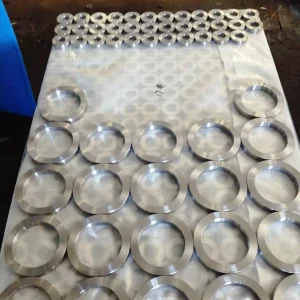
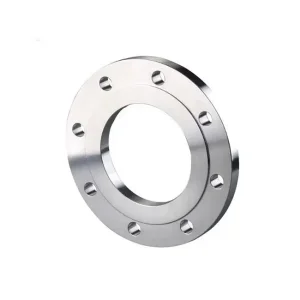
Explore specialized mounting flange variations manufactured under ISO 9001 and PED 2014/68/EU quality frameworks for pressure-critical piping and equipment applications.
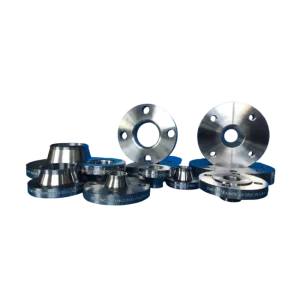
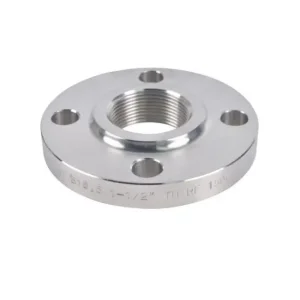
Analyzing technological shifts, procurement requirements, and manufacturing modernization across China's leading forging hubs.
The global mounting flange landscape has transitioned from basic structural connections into highly specialized engineering components critical to mechanical integrity, fluid dynamics control, and pressure containment. Industrial piping systems across petrochemical plants, offshore platforms, power generation units, and heavy machinery OEM facilities demand mounting flanges engineered for extreme service conditions—including cyclic thermal expansion, high mechanical stress, and aggressive corrosive environments.
As the international manufacturing sector prioritizes Total Cost of Ownership (TCO) and zero-defect operational targets, procurement professionals and engineering teams are looking toward established manufacturing clusters in China. Modern Chinese mounting flange manufacturers—particularly those located in world-class forging regions like Dingxiang, Shanxi—have executed massive technology transitions. By replacing legacy forging lines with closed-die hydraulic presses, automated ring-rolling mills, multi-axis CNC machining centers, and digitized heat-treatment lines, Chinese factories deliver flange solutions that match or exceed Western performance metrics at highly optimized economic scales.
Integration of computer-simulated grain flow analysis during hot forging guarantees uniform microstructural density, eliminating internal voids and micro-cracks before rough machining.
Strict chemistry control during electric arc furnace (EAF) ladle refining ensures ultra-low sulfur and phosphorus content, matching low-temperature impact requirements down to -46°C.
100% non-destructive testing (NDT), including automated ultrasonic testing (UT), magnetic particle inspection (MT), and positive material identification (PMI) on high-alloy stock.
Understanding the structural mechanics, pressure ratings, flange facings, and material selection criteria for global engineering projects.
Mounting flanges are designed to couple piping segments, valves, pressure vessels, pumps, and custom industrial machinery. Choosing the right mounting flange architecture requires evaluating dynamic stress, fluid toxicity, pressure-temperature ratings, and installation constraints. Below is an engineering breakdown of the key flange configurations manufactured by China's top forging facilities:
| Flange Type | Primary Standards | Pressure Class / Rating | Facing Profiles | Optimal Industrial Application |
|---|---|---|---|---|
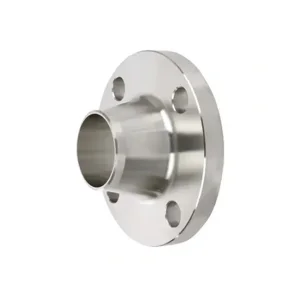
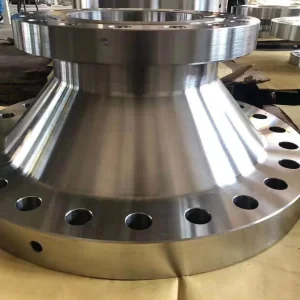
| Weld Neck Flange (WN) | ASME B16.5, EN 1092-1 Type 11, DIN 2633 | Class 150 – 2500 / PN6 – PN400 | RF, FF, RTJ (Ring Type Joint) | High-pressure, high-temperature, cyclic stress lines in oil refining and chemical processing. |
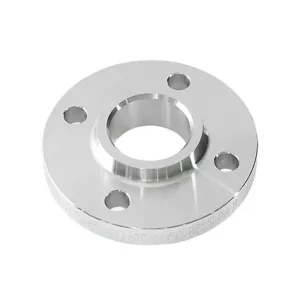
| Slip-On Flange (SO) | ASME B16.5, EN 1092-1 Type 12, DIN 2576 | Class 150 – 1500 / PN6 – PN100 | Raised Face (RF), Flat Face (FF) | Low to medium pressure applications, HVAC, utility lines, ease of alignment during fit-up. |
| Threaded Flange (TH) | ASME B16.5, EN 1092-1 Type 13, NPT / BSPT | Class 150 – 2500 / PN6 – PN100 | RF, FF | Non-welded assembly environments, explosive chemical storage where hot work is prohibited. |
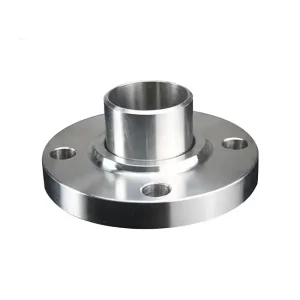
| Lap Joint & Stub End | ASME B16.5, MSS SP-43, EN 1092-1 Type 02 | Class 150 – 600 / PN6 – PN40 | Flat Face with Stub End radius | Corrosive piping systems requiring frequent dismantling and bolt hole realignment. |
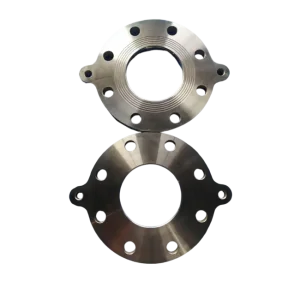
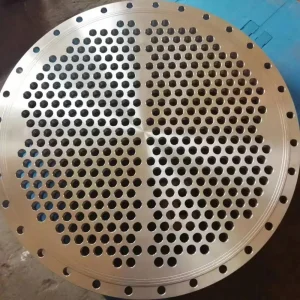
| Tube Sheet & Ring Flanges | TEMA, ASME Sec VIII, EN 1092-1 Type 34 | Custom Engineered to 10,000+ PSI | Machined grooves, clad faces | Heat exchangers, boilers, pressure vessel end plates, heavy rotating machinery mounts. |
| Expansion Joint Flange | EJMA guidelines, Custom Drawing | PN6 – PN40 / Class 150 – 300 | Custom drilled, flat face | Absorbing axial expansion and vibration headers in marine engines, power plants, pump outlets. |
Forged carbon steel flanges (ASTM A105 / Q235B) serve general elevated-temperature services. For sub-zero installations down to -46°C, ASTM A350 LF2 Class 1 or 2 with Charpy V-Notch impact testing is mandatory. In corrosive chemical environments, austenitic stainless steels (ASTM A182 F304/304L, F316/316L) or Duplex stainless (UNS S31803 / S32205) provide exceptional resistance to pitting and crevice corrosion.
How international EPC contractors, stockists, and OEMs optimize their sourcing strategy through Chinese manufacturing partnerships.
Global procurement directors face the double challenge of reducing capital expenditure (CAPEX) while maintaining strict pressure vessel integrity. Partnering directly with Chinese flange mills cuts out intermediary trading markup while keeping tight control over metallurgical quality.
Top-tier Chinese manufacturers implement rigid material tracking from raw steel billet receipt through final export packaging. Every flange is stamped with a unique heat number linked directly to an EN 10204 3.1 Mill Test Certificate detailing chemical analysis and mechanical testing.
Sea freight exposes raw metal to high humidity and oceanic salt air. Leading exporters apply specialized anti-rust treatments—including black rust-preventive paint, yellow varnish, transparent lacquer, or cold galvanizing—and package items inside seaworthy, fumigation-free plywood cases.
Delivering certified mounting flange assemblies across demanding global industrial sectors.
Subsea and offshore platforms demand flanges capable of withstanding extreme hydrostatic pressures and sour gas (H2S) environments. Manufacturers provide heavy-wall Weld Neck and Blind flanges forged from ASTM A182 F51 / F53 Duplex steel, treated to NACE MR0175/ISO 15156 standards. Flange faces feature precision-machined Ring Type Joint (RTJ) grooves (R, RX, BX profiles) to guarantee positive metallic seal integrity under dynamic wave loads.
In high-temperature hydrocracking and catalytic reforming units, thermal cycling can cause bolt torque relaxation and flange joint leakage. Custom high-alloy mounting flanges and stainless steel tube sheets undergo stress-relieving normalizing and tempering heat treatments. Facing surfaces are precision machined with concentric or spiral serrated finishes (AARH 125–250 µin) to optimize gasket seating stresses.
Turbine housings, industrial boilers, and heavy earthmoving machinery require non-standard ring flanges and expansion joint mountings up to 3,000 mm in diameter. Utilizing ring-rolling technology, Chinese suppliers produce seamless forged rings with dense internal structures, minimizing radial deformation under continuous heavy load operations.
Ensuring smooth cross-border integration through rigorous accreditation and local engineering support.
For European Union markets, pressure equipment components must fulfill the Pressure Equipment Directive (PED). Chinese factories certified to AD 2000-Merkblatt W0 supply fully compliant material certificates for European pressure vessel installation.
North American and Middle Eastern markets mandate compliance with ASME Section VIII and ASME B16.5 / B16.47 dimensional standards. Advanced CNC tooling guarantees precise pitch circle diameters (PCD) and bolt hole alignments.
To eliminate compliance risks, manufacturers regularly host third-party inspection agencies on-site—including Lloyd's Register, TÜV Rheinland, Bureau Veritas (BV), DNV, and SGS—for witness testing prior to vessel loading.
How technological advances and sustainability targets are shaping the next decade of mounting flange manufacturing.
The next decade will mark a major shift in how industrial forgings are produced, inspected, and deployed globally. Key drivers shaping the future of China's mounting flange industry include:
In-depth responses to common engineering, procurement, and quality control inquiries regarding Chinese mounting flanges.
While a standard line flange (such as an ANSI B16.5 Weld Neck) connects pipe to pipe, a mounting flange is specifically engineered to mount piping systems or hydraulic lines directly to equipment bodies, pressure vessels, pumps, gearboxes, or custom structural frames. Mounting flanges frequently feature custom bolt hole patterns, threaded ports, counterbores, or integrated stub ends designed for tight spatial tolerances and structural rigidity.
The global standard is an EN 10204 3.1 Material Test Certificate (MTC) issued directly by the manufacturer's quality department. It documents heat number, chemical composition (C, Mn, Si, P, S, Cr, Ni, Mo, etc.), mechanical properties (Yield strength, Tensile strength, Elongation, Hardness), heat treatment history (Normalizing, Tempering, Solution Anneal), and NDT inspection results. For critical projects, an EN 10204 3.2 certificate co-signed by an independent third-party inspector (e.g., TÜV, SGS, BV) can be provided upon request.
Custom drawing flanges undergo CAD/CAM modeling prior to die creation and CNC machining. Modern factories utilize multi-axis CNC vertical lathes and horizontal drilling machines equipped with automatic tool setters. Dimensional verification is performed using 3D Coordinate Measuring Machines (CMM) and laser tracking arms, ensuring tight tolerances down to ±0.1 mm on critical pitch diameters, gasket face depths, and bore dimensions.
For standard Raised Face (RF) flanges utilizing spiral wound or soft graphite gaskets, ASME B16.5 mandates a serrated finish (concentric or spiral) with a roughness of 125 to 250 micro-inches AARH (3.2 to 6.3 micrometers Ra). For flat face or metallic Ring Type Joint (RTJ) grooves, smooth finishes under 63 micro-inches AARH (1.6 micrometers Ra) are specified to ensure zero-leakage metal-to-metal contact sealing.
Standard forged inventory or rough-machined blanks can be finished and shipped within 7 to 15 days. Custom forgings requiring die production and specialized heat treatment typically require 20 to 35 days. Export packaging includes dipping/spraying with anti-rust oil/varnish, attaching plastic cap end protectors on machined faces, wrapping in moisture-barrier plastic film, and securing inside ISPM-15 compliant fumigation-free plywood crates or reinforced steel pallets.
Explore additional high-performance industrial mounting flanges, threaded fittings, ring flanges, and expansion joint solutions directly from our Shanxi manufacturing plant.