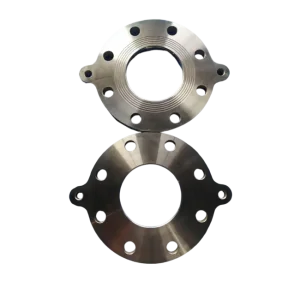
Explore our ISO 9001 & PED certified forged flange product lineup manufactured under rigorous metallurgical controls for high-pressure and low-temperature service.
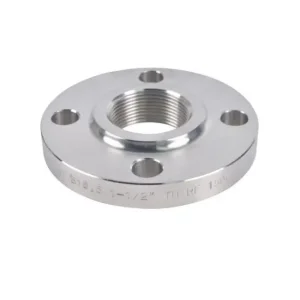
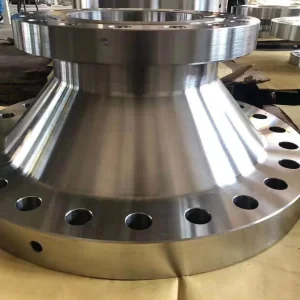
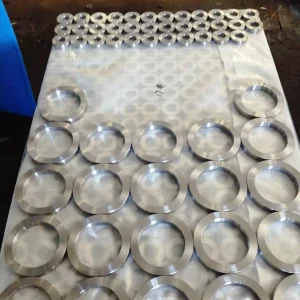
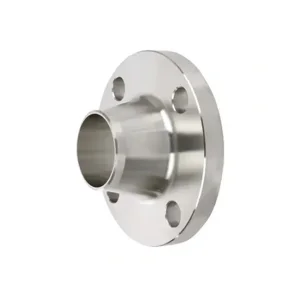
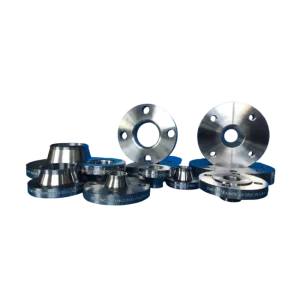
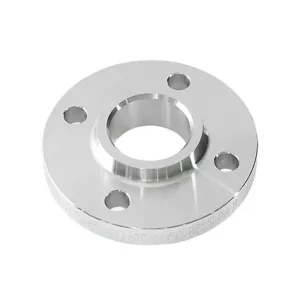
In modern energy systems, sub-zero fluids like Liquefied Natural Gas (LNG at -162°C) and Liquid Hydrogen (LH2 at -253°C) present extreme challenges. At these temperatures, conventional carbon steel experiences a sharp ductile-to-brittle transition (DBTT). Low-temperature flanges must maintain microstructural ductility and high notch toughness to prevent catastrophic brittle fractures under high operating pressures.
The global benchmark carbon-manganese forging steel for general low-temperature service down to -46°C (-50°F). Through precise Normalizing or Quenching & Tempering (Q&T), fine-grained ferrite-perlite microstructures are formed, ensuring excellent Charpy V-Notch absorbed energy levels exceeding ASME B31.3 requirements.
Specifically engineered for sub-zero processing units operating down to -101°C (-150°F), such as ethylene fractionation and LPG transport. Nickel additions stabilize the matrix lattice, suppressing brittle transition mechanisms under severe cyclic pressure differentials.
For extreme cryogenic duty down to -196°C (-320°F) in LNG liquefaction cold boxes and -253°C in LH2 systems, ASTM A182 F304L, F316L, and F347 provide a Face-Centered Cubic (FCC) crystalline structure with no inherent ductile-to-brittle transition temperature.
Direct comparative technical reference for global piping engineers, procurement directors, and EPC specification leads.
| Material Standard | UNS / Grade | Min. Service Temp. | Charpy V-Notch Test Temp. | Min. Impact Energy (Avg/Min) | Heat Treatment Route | Primary Application |
|---|---|---|---|---|---|---|
| ASTM A350 LF2 Class 1 | K03011 | -46°C (-50°F) | -46°C (-50°F) | 20 J / 16 J | Normalized & Tempered / Q&T | Sub-surface oilfield, cold gas transport |
| ASTM A350 LF2 Class 2 | K03011 | -46°C (-50°F) | -46°C (-50°F) | 27 J / 20 J | Quenched & Tempered | High-stress low-temp pressure vessels |
| ASTM A350 LF3 | K32025 (3.5% Ni) | -101°C (-150°F) | -101°C (-150°F) | 20 J / 16 J | Double Normalized & Tempered | LPG storage, ethylene liquefaction |
| ASTM A350 LF6 Class 2 | K21515 | -59°C (-75°F) | -59°C (-75°F) | 27 J / 21 J | Quenched & Tempered | Arctic offshore wellhead manifolds |
| ASTM A182 F316L | S31603 | -196°C (-320°F) | -196°C (-320°F) | 60 J / 48 J | Solution Annealed (>1040°C) | LNG re-gasification, liquid nitrogen |
An examination of structural shifts in global energy architecture, decarbonization projects, and severe-climate engineering requirements.
The global shift toward natural gas as a transition fuel has sparked unprecedented investment in Liquefied Natural Gas (LNG) liquefaction plants, Floating Storage Regasification Units (FSRUs), and receiving terminals across Europe, North America, and Asia-Pacific. Each LNG train requires thousands of ASTM A350 LF2/LF3 weld neck and ring-type joint (RTJ) flanges designed for high pressures and -162°C thermal gradients.
As green hydrogen scales up globally, transporting hydrogen in liquid form at -253°C demands forged components with zero helium-leak rates. Chinese flange manufacturers are adopting specialized vacuum-remelted cryogenic stainless steel (F304L/F316L) and specialized surface finishes (125-250 µin AARH) to mate with engineered spiral wound gaskets.
Supercritical and liquid CO2 transportation pipelines operate under high pressures (above 7.38 MPa) and low temperatures due to Joule-Thomson expansion effects during pressure drops. This requires ASTM A350 LF2 Class 2 flanges with mandatory HIC (Hydrogen-Induced Cracking) and SSC (Sulfide Stress Cracking) testing per NACE MR0175 / ISO 15156 standards.
Offshore oil and gas operations in sub-Arctic environments like the North Sea, Barents Sea, and Alaska North Slope face extreme ambient temperatures. Piping components must endure low temperatures combined with heavy dynamic wave loads, making forged weld neck flanges with full-penetration butt-weld hubs essential over cast components.
How Chinese forging hubs, particularly Dingxiang in Shanxi Province, combine raw material vertical integration, automated ring-rolling technology, and rigorous QA systems to offer high quality at scale.
Modern Chinese forging plants operate 6,000-ton hydraulic forging presses integrated with CNC radial-axial ring rolling machines. This closed-loop process ensures optimum grain flow alignment along the flange contour, enhancing fatigue resistance and structural integrity under cyclic thermal shock.
Thermal processing is crucial for low-temperature toughness. Advanced computer-controlled normalizing, quenching, and tempering furnaces log continuous time-temperature curves per heat lot in compliance with AMS 2750 standards, ensuring consistent grain refinement throughout the flange body.
High-precision multi-axis CNC lathes machine sealing surfaces to exacting tolerances (smooth face 63-125 µin AARH or serrated concentric/spiral 125-250 µin AARH). Dimensional inspections are performed using CMM optical measurement arms to ensure compliance with ASME B16.5 and EN 1092-1.
Where low-temperature forged steel flanges perform critical sealing duties around the globe.
On Floating LNG vessels, piping systems experience dynamic hull deflection alongside cryogenic media (-162°C). High-yield ASTM A350 LF2 Class 2 and A182 F316L weld neck flanges are specified to withstand combined bending moments and cold thermal shock without gasket leakage.
Petrochemical cracking plants utilize cold boxes operating between -50°C and -100°C to separate lighter hydrocarbon fractions. ASTM A350 LF3 (3.5% Ni) stub end and lap joint flanges allow easy alignment in tight structural modules while ensuring impact compliance.
Deepwater injection manifolds operate under high hydrostatic external pressure and low internal gas temperatures. Heavy-wall Ring Type Joint (RTJ) flanges made of ASTM A350 LF6 are paired with metallic ring gaskets (Soft Iron or F5) to maintain long-term zero-emission sealing.
Expert responses to critical engineering, quality compliance, and procurement queries regarding low-temperature flanges.
While both are carbon steel grades with similar tensile strengths, ASTM A105 does not mandate low-temperature impact testing by default and is typically limited to service temperatures down to -29°C (-20°F). ASTM A350 LF2 is specifically refined, heat-treated (Normalized or Q&T), and mandatory Charpy V-Notch impact tested to guarantee a minimum absorbed impact energy (e.g., 20 Joules average) down to -46°C (-50°F).
To maintain mechanical strain compatibility at low temperatures, low-alloy steel stud bolts conforming to ASTM A320 Grade L7 or L7M (for sour service under NACE MR0175) are standard, paired with ASTM A194 Grade 4 or Grade 7L heavy hex nuts. For extreme cryogenic service using stainless steel flanges, ASTM A320 Grade B8 Class 2 bolts are recommended.
Every batch of low-temperature flanges ships with a mill test certificate per EN 10204 Type 3.1, detailing chemical composition, tensile yield/ultramate properties, hardness, and Charpy V-notch values per heat number. Third-party inspection witness certificates (EN 10204 3.2) endorsed by TÜV, DNV, SGS, or Lloyd's Register are routinely supplied upon request.
Leading Chinese manufacturers use vacuum-degassed forged billets and strictly control the forging ratio (typically 4:1 minimum). Post-forging Non-Destructive Testing (NDT) includes 100% Ultrasonic Testing (UT) in accordance with ASME Sec. VIII Div. 1 App. 12 or EN 10228-3, alongside Magnetic Particle Inspection (MT) on raised faces to ensure freedom from linear inclusions.
Ring Type Joint (RTJ) facings per ASME B16.5 (Utilizing R, RX, or BX metallic ring gaskets) are preferred for extreme pressures and severe cyclic thermal fluctuations. For medium-pressure low-temperature systems, Raised Face (RF) with spiral wound stainless steel gaskets containing flexible graphite or PTFE filler provides excellent spring-back recovery during thermal cycles.
Browse our full range of standard ASME/EN/DIN flanges and custom engineered forged components ready for worldwide shipment.