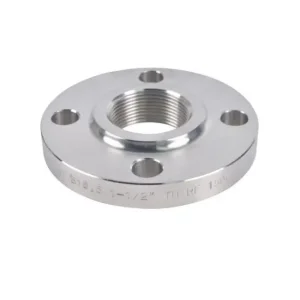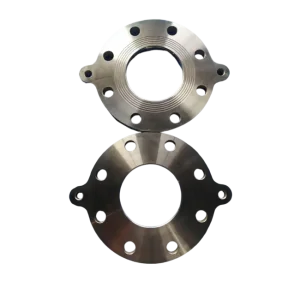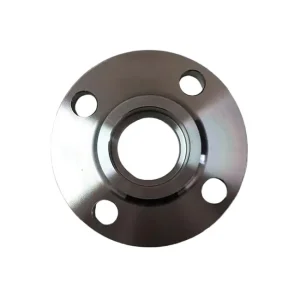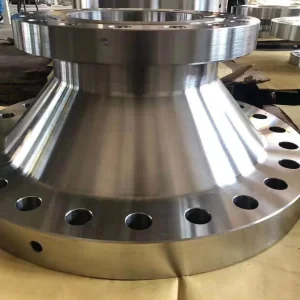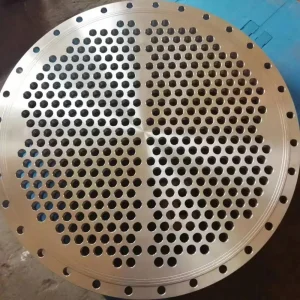
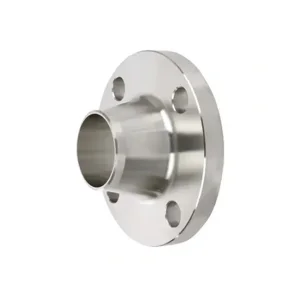
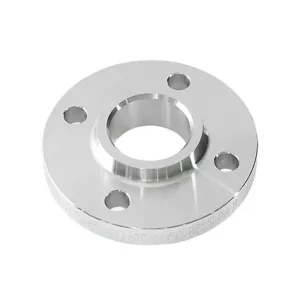
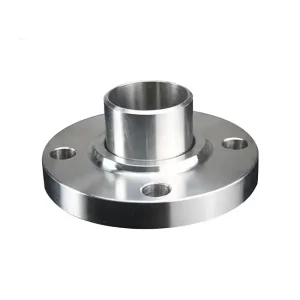
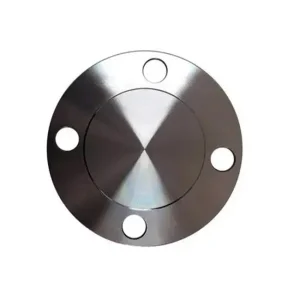
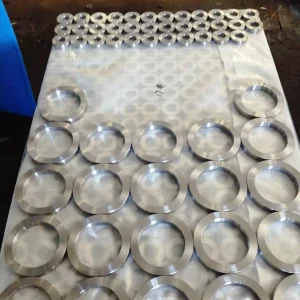
In modern industrial fluid handling, municipal water infrastructure, chemical processing, and marine engineering, Loose Flanges (commonly categorized under European standards as EN 1092-1 Type 02 / Type 04 plate loose flanges and under American standards as ASME B16.5 Lap Joint Flanges) represent one of the most commercially efficient, mechanically versatile pipe-connection architectures available. Unlike integral weld-neck or slip-on flanges where the flange body is directly welded to the pipe wall, a loose flange system uncouples the retaining flange ring from the pressure-containing collar or stub end.
This decoupling mechanism fundamentally changes the financial and mechanical dynamics of industrial piping networks. By allowing the backing ring to freely rotate around the stub end prior to bolt tightening, EPC contractors and facility engineers solve two major engineering challenges: bolt-hole mis-alignment in complex layout geometries and excessive material expenditure in corrosive fluid environments.
Information Gain Metric: In systems utilizing high-alloy or exotic materials (such as Titanium Grade 2, Duplex 2205, Stainless Steel 316L, or Hastelloy C276), utilizing a loose flange assembly yields a total material cost savings of 40% to 60%. The fluid-contact component (the stub end) is forged from exotic alloy, while the thick backing flange is forged from structural carbon steel (ASTM A105 or Q235B/S235JR).
From a global market perspective, the demand for loose flanges is expanding rapidly across capital-intensive sectors. Major global macro-trends driving this demand include:
Understanding the exact technical specifications and standard classifications is imperative for engineering buyers and piping designers. Loose flanges operate under two primary international standard ecosystems: the American ASME/ANSI framework and the European EN/DIN framework.
In ASME B16.5, the loose flange is formally designated as a Lap Joint Flange. It features a unique structural detail: the inside intersection of the flange face and the bore has a specified radius ($r$) designed to accommodate the lap radius of a matching Lap Joint Stub End (manufactured to ASME B16.9 or MSS SP-43 standards). Lap Joint Flanges are manufactured in pressure ratings from Class 150 to Class 2500 and nominal pipe sizes from 1/2" to 24".
European standards provide a more granular breakdown for loose flange engineering:
| Parameter / Feature | ASME B16.5 Lap Joint Flange | EN 1092-1 Type 02 Loose Flange | EN 1092-1 Type 04 Loose Flange |
|---|---|---|---|
| Pressure Rating Scope | Class 150, 300, 600, 900, 1500, 2500 | PN 6, PN 10, PN 16, PN 25, PN 40 | PN 10, PN 16, PN 25, PN 40 |
| Mating Component | Lap Joint Stub End (Type A, B, or C) | Weld-on Plate Collar (Type 32) / Lapped End | Weld-Neck Collar (Type 34) |
| Facing Geometry | Flat Face / Radius Matching Stub End | Flat Ring / Type A or B Raised Collar Face | Formed Neck Collar Face (Type B1/B2) |
| Size Range Availability | 1/2" to 24" (DN15 to DN600) | DN10 to DN2000 (Up to 80") | DN10 to DN1200 |
| Primary Material Pairings | Backing: ASTM A105 / A350 LF2 Stub: A182 F304L/F316L/Duplex |
Backing: S235JR / P250GH Collar: 1.4307 / 1.4404 / 1.4462 |
Backing: P245GH / P280GH Collar: 1.4404 / 1.4571 / Titanium |
| Stress Distribution Profile | Shear load concentrated on stub lap radius | Bending moment carried by plate collar | Smooth fatigue dissipation via tapered neck |
When international EPC companies and global flange distributors seek a reliable, high-volume partner for loose flanges, Shanxi Province—specifically Dingxiang County—stands as the undisputed industrial epicentre. Recognized globally as China's "Hometown of Forging", Dingxiang houses an integrated industrial cluster that accounts for a dominant share of global forged steel pipe flange exports.
Shanxi Yuxin Casting & Forging Co., Ltd. (established in 1992) leverages this unique industrial cluster advantage to offer world-class manufacturing efficiency, vertical supply chain integration, and rigorous Quality Assurance (QA).
Every loose flange and stub end produced in our Dingxiang manufacturing facility undergoes seven strictly controlled manufacturing phases under one unified Quality Management System:
Factory Efficiency Advantage: By operating concentrated high-speed seamless ring-rolling mills capable of forging rings up to 3,000 mm in diameter, Yuxin reduces raw material waste by 22% compared to traditional open-die slab forging. This efficiency directly translates into competitive factory-direct pricing and rapid export production turnaround (15–25 days for standard FCL shipments).
Loose flanges are specified across complex operating environments where rigid monolithic flanged joints present installation risks or financial inefficiency. Below are representative engineering application scenarios:
In Sea Water Reverse Osmosis (SWRO) facilities, high-pressure brine headers cause extreme pitting corrosion on carbon steel. Standard engineering practice dictates using UNS S32750 (Super Duplex Stainless Steel) for all fluid-wetted parts. By specifying EN 1092-1 Type 02 Loose Flanges with Super Duplex stub ends and hot-dip galvanized ASTM A105 carbon steel backing rings, engineering firms maintain total corrosion immunity inside the pipe bore while saving hundreds of thousands of dollars in flange backing material.
Space inside naval engine rooms and commercial vessel hulls is severely restricted. When rigid weld-neck flanges are welded onto pipe spools, aligned bolt holes can rotate out of position during final fit-up due to thermal distortion during welding. ASME B16.5 Lap Joint Flanges solve this completely: the backing flange can be rotated 360 degrees by hand to align perfectly with mating valves, pumps, or heat exchangers, eliminating joint binding and weld reworking.
In gold, copper, and iron ore mineral processing, abrasive slurry lines require regular inspection, rotation (to equalize wear on pipe walls), and replacement of worn pipe spools. Loose flange connections enable rapid unbolting and 90° or 180° spool rotation without cutting or re-welding pipe flanges, reducing maintenance downtime by over 70%.
The industrial flange sector is undergoing rapid technological transformation. Manufacturers in China are transitioning from conventional labor-intensive operations toward smart, digitalized, and ecologically sustainable production practices.
For international procurement officers, engineering managers, and stockists, sourcing loose flanges from China requires a structured quality verification framework. To guarantee compliance with international EPC standards, your RFQ and Quality Control Plan (QCP) should mandate the following verification milestones:
Every shipment must be accompanied by a authentic EN 10204 3.1 MTC issued directly by the forging mill. For critical oil & gas or offshore projects, third-party inspection (TVI) witnessing per EN 10204 3.2 (by bodies such as TÜV Rheinland, Bureau Veritas, DNV, or SGS) must verify:
Inspectors should verify three crucial dimensions on loose flange assemblies:
Direct technical answers provided by Shanxi Yuxin's senior metallurgists and piping application engineers.