Explore our primary range of ASME B16.5, EN 1092-1, and custom engineered forged components manufactured in accordance with strict international metallurgy criteria.
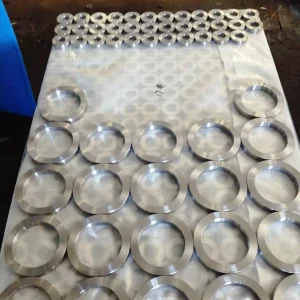
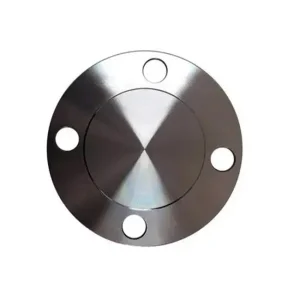
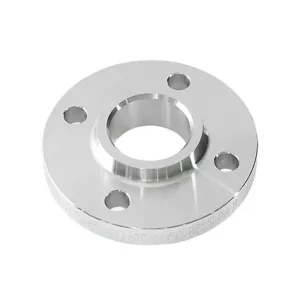
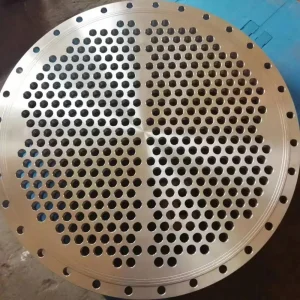
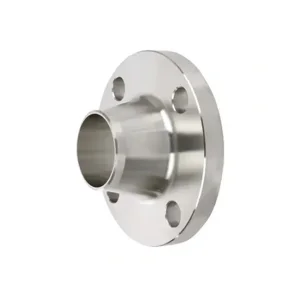
A Lap Joint Flange (LJF) paired with a Stub End represents a two-component piping connection architecture designed to decouple structural clamping pressure from process material compatibility. Widely deployed across chemical processing, power plants, marine engineering, and municipal water networks, this joint mechanism provides immense mechanical flexibility, rapid bolt alignment, and significant capital expenditure savings.
Unlike standard Weld Neck or Slip-On flanges, a Lap Joint Flange freely slides over the outer diameter of a matching Stub End. The backing flange never comes into contact with the internal process fluid. This allows engineers to specify high-grade corrosion-resistant alloys (such as Stainless Steel 316L, Duplex 2205, or Hastelloy) strictly for the Stub End, while utilizing economical carbon steel (e.g., ASTM A105) for the heavy loose flange.
During line assembly, technicians can rotate the outer backing flange 360 degrees. This completely eliminates bolt-hole misalignment problems during field installation—a critical advantage in confined spaces such as offshore platforms, submarine pipe tracks, or complex chemical plant skids where rigid alignment is exceptionally labor-intensive.
In systems requiring frequent cleaning, non-destructive examination (NDE), or rapid section replacement, Lap Joint Flanges drastically reduce total down-time. Because the backing flange is not welded to the pipe spool, it can be drawn back along the pipe to expose the stub end sealing face for cleaning, gasket inspection, or resurfacing without cutting welds.
| Engineering Attribute | Lap Joint Flange (LJF) + Stub End | Weld Neck Flange (WN) | Slip-On Flange (SO) |
|---|---|---|---|
| Fluid Contact Material | Stub End material only (Flange body is isolated) | Entire Flange body contacts media | Entire Flange body contacts media |
| Bolt Alignment Speed | Instantaneous (360° rotational freedom) | Rigid (Requires exact shop alignment) | Semi-rigid (Requires manual rotational adjustment) |
| High Alloy Cost Optimization | High (Saves up to 65% material cost in Titanium/Duplex) | Low (Entire heavy component must be solid alloy) | Moderate (Heavy flange must be alloy) |
| Pressure Rating Capabilities | ASME Class 150 to Class 600 / PN10 to PN100 | ASME Class 150 to Class 2500 / Up to PN400 | ASME Class 150 to Class 300 / Up to PN40 |
| Stress Concentration at Weld | Low (Butt-weld on Stub End transfers stress) | Very Low (Gradual taper neck distribution) | Higher (Fillet welds inside and outside hub) |
| Demountability / MRO Suitability | Exceptional (Ideal for high-maintenance lines) | Moderate (Requires axial piping clearance) | Moderate (Requires axial movement for line separation) |
As the global hub of industrial flange manufacturing, Shanxi Province (specifically Dingxiang County) represents the pinnacle of integrated forging infrastructure. China’s supply chain ecosystem delivers unparalleled production efficiency, strict raw material control, and cost scale that provides global buyers with a decisive market edge.
Located within direct proximity to major state-owned steel producers (such as TISCO and HBIS), China’s premium flange manufacturers benefit from instant access to certified, vacuum-degassed forged billets. This raw material security ensures consistent chemical purity, reduced lead times, and immunity from global steel billet supply shocks.
Modern Chinese forging facilities deploy fully automated hydraulic ring-rolling mills alongside 5-axis CNC machining centers. This technology produces near-net-shape forgings with optimized grain flow alignment, superior tensile strength, and tight dimensional tolerances matching ASME B16.5 and EN 1092-1 Type 02 / Type 32 specifications.
With direct highway corridors connecting manufacturing plants to major ocean ports such as Tianjin, Qingdao, and Shanghai, export shipments benefit from streamlined container consolidation, automated customs clearance, and rapid vessel departure schedules for European, Middle Eastern, and American destinations.
To satisfy the demanding requirements of global Engineering, Procurement, and Construction (EPC) firms, our manufacturing protocols adhere to rigorous quality management regimes. Every flange and stub end undergoes multi-stage non-destructive testing (NDT) and metallurgical verification before release.
Our factory operates under fully audited quality assurance frameworks recognized by international third-party inspection bodies (such as TÜV, DNV, Lloyd’s Register, and SGS):
Every production lot is documented via EN 10204 Type 3.1 or 3.2 inspection certificates covering the following verification steps:
For enterprise procurement officers, purchasing industrial pipe flanges is not merely a transaction of unit price; it is a balance of operational continuity, supply chain risk mitigation, and lifecycle management. Choosing a direct China manufacturer for Lap Joint Flanges and Stub Ends addresses the core levers of Total Cost of Ownership (TCO).
In piping systems handling aggressive chemicals (acidic gas, chlorinated water), standard practice requires Super Duplex or Nickel Alloy piping. Utilizing a Lap Joint assembly allows companies to purchase only the Stub End in expensive Hastelloy C276 or Inconel 625, while the heavy backing flange remains forged Carbon Steel (A105). This results in a 50% to 70% reduction in direct material expenditure per joint.
Field labor is one of the highest cost drivers in EPC construction. Because Lap Joint Flanges rotate freely around the Stub End hub, site alignment of bolt holes takes a fraction of the time required for rigid Weld Neck joints. Contractor reports indicate a 40% reduction in flange fit-up man-hours on large-diameter pipe spools.
To mitigate global supply chain disruptions, Tier-1 EPC contractors establish vendor agreements with validated Chinese direct manufacturers. By holding semi-finished forged blanks in stock, lead times for custom-drilled non-standard flanges are cut from 12 weeks down to under 15 days, securing project commissioning schedules.
Lap Joint Flanges and Stub Ends are specified across demanding industrial sectors where mechanical fatigue, chemical corrosion, and operational maintenance schedules require versatile piping connections.
In FGD absorber towers and acid regeneration units, process streams contain high concentrations of sulfuric acid, wet chlorine, and abrasive slurries. Stainless steel 317L or Nickel Alloy C22 Stub Ends paired with epoxy-coated carbon steel loose flanges provide maximum corrosion protection against aggressive gas condensation while enabling easy flange rotation during tower maintenance.
Offshore FPSO topsides feature ultra-compact piping configurations where bolt-hole access is severely restricted. Specifying ASME B16.5 Class 300 Lap Joint Flanges in Duplex UNS S31803 / S32750 allows technicians to assemble high-pressure spools in tight quarters without inducing torsional stress in the pipeline.
Large-diameter Reverse Osmosis (RO) water plants utilize high-frequency dismantling manifolds to clean filter elements. DN600 to DN1200 EN 1092-1 Type 02 Loose Plate Flanges paired with Type 32 Weld-on Collar Stub Ends allow rapid line breakdown, reducing plant maintenance shut-down cycles from days to hours.
Handling liquified natural gas at -162°C requires materials with exceptional low-temperature notch toughness. ASTM A350 LF2 Class 1 low-temperature carbon steel backing flanges paired with ASTM A182 F304L long pattern stub ends ensure zero embrittlement failures during thermal expansion and contraction cycles.
Driven by global decarbonization mandates and Industry 4.0 digitalization, the international forging sector is undergoing a massive transformation. Leading Chinese manufacturers are setting new benchmarks in green production, automated quality control, and material science.
Transitioning from traditional coal gas producers to clean natural gas and electric induction heating furnaces has significantly reduced carbon intensity per ton of forged steel. Furthermore, waste heat recovery systems capture exhaust gas to preheat billets, aligning flange procurement with corporate ESG directives.
Modern flanges are increasingly laser-etched with unique 2D QR codes linked directly to cloud-hosted Mill Test Certificates. Inspection teams on construction sites can scan the flange body with a smartphone to instantly view original ladle melt analysis, heat-treatment charts, and NDT reports.
To further optimize costs, advanced hot-isostatic pressing (HIP) and weld-overlay cladding technologies are being applied to Stub Ends. A carbon steel core clad with a 3mm surface layer of Inconel 625 delivers identical corrosion resistance to solid nickel alloy components at a fraction of the raw material expense.
Find authoritative answers to common engineering questions regarding Lap Joint Flange specifications, dimensional standards, and supply chain logistics.
Browse our export-grade reducer flanges, plain plate flanges, slip-on flanges, and high-pressure forged solutions.
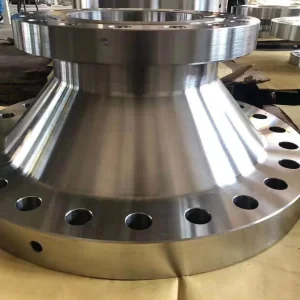
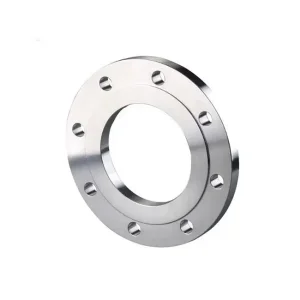
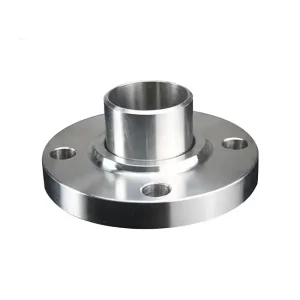
Partner directly with China's leading forged flange manufacturer. Our engineering desk provides 24-hour drawing evaluations, material advice, and competitive project estimates.
