Direct Factory Supply from Dingxiang, Shanxi — ISO 9001 & PED Certified Industrial Solutions
Understanding Load Distribution, Gasket Dynamics, and Metallurgical Compliance in Pressure Vessel Piping
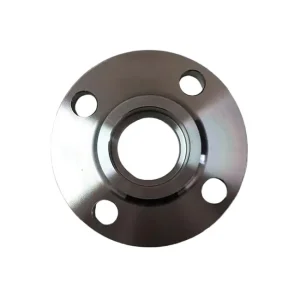
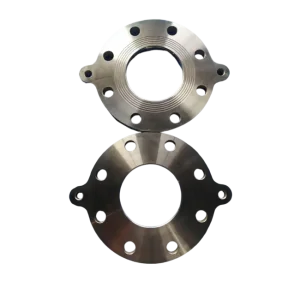
Unlike Raised Face (RF) flanges which concentrate bolt torque over a narrow raised ring, Flat Face Slip-On Flanges feature a flush, smooth surface across the entire flange plane. This design ensures that full-face soft gaskets (such as red rubber, EPDM, or PTFE) contact the entire flange area, preventing bending moments and stress concentration during bolt tightening.
The core mechanical purpose of a Flat Face flange is to mate seamlessly with cast iron equipment, valves, pumps, or plastic/FRP (Fiberglass Reinforced Plastic) piping systems without creating flexural stress. Tightening an RF flange against a brittle cast iron flange frequently results in flange cracking; FF flanges mitigate this risk entirely by transmitting compressional forces evenly.
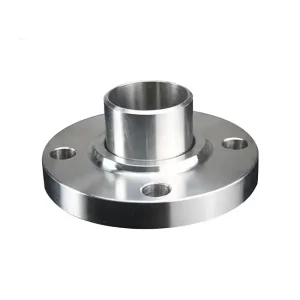
Slip-on flanges fit over the outer diameter of the process pipe. Dual fillet welds are applied—one internal at the flange hub lip and one external at the back of the flange hub. This double-weld architecture yields higher joint stiffness and fatigue endurance in low-to-medium pressure utility headers, water treatment pipelines, and low-temperature chemical lines.
Unrivaled Supply Chain Vertical Integration, Closed-Die Ring Rolling Technology, and Cost Optimization
When engineering procurement contractors (EPCs) and global industrial distributors search for a reliable China Flat Face Slip-On Flange Supplier, the geographical focal point inevitably centers on Dingxiang County, Shanxi Province. Internationally recognized as the “Hometown of Forging in China,” Dingxiang houses an extraordinary industrial cluster combining raw material steel mills, heavy forging hydraulic presses, high-precision CNC machining plants, and accredited non-destructive testing (NDT) laboratories within a 20-kilometer radius.
Shanxi Yuxin Casting & Forging Co., Ltd. leverages direct bulk procurement of carbon steel (ASTM A105, Q235B, A350 LF2), stainless steel (ASTM A182 F304/F316L), and alloy steel (F11/F22) from premier Chinese primary steelmakers (such as Baosteel and TISCO). This localized supply network eliminates intermediate logistics markups and reduces raw billet costs by 12% to 18% compared to Western manufacturers.
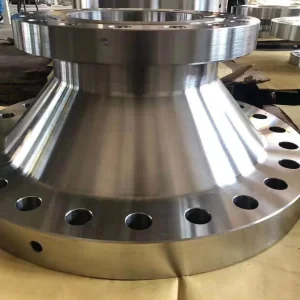
Information Gain Benchmark: Unlike low-grade suppliers who flame-cut flat flanges from commercial steel plates, YUXIN utilizes continuous hydraulic ring rolling mills. Hot forged billets undergo radial-axial deformation, continuous grain flow aligned along the circumference, superior tensile toughness, and absolute freedom from internal lamination defects or gas voids.
All Flat Face slip-on flanges are finished on multi-axis CNC vertical lathes. Facing roughness is strictly controlled according to ASME B16.5 standards (smooth machine finish or serrated concentric/spiral grooves with 125–250 µin AARH/Ra), guaranteeing optimal gasket seating without leakage during pressure testing.
Full Dimensional Range, Pressure Ratings, and Material Selection for International Buyers
| Standard Framework | Nominal Size Range | Pressure Class / PN Rating | Facing Type (FF / RF / RTJ) | Common Material Grades |
|---|---|---|---|---|
| ASME B16.5 | 1/2" to 24" (DN15 - DN600) | Class 150, Class 300, Class 600 | Flat Face (FF), Raised Face (RF) | ASTM A105, A350 LF2, A182 F304/F316L |
| ASME B16.47 (Series A & B) | 26" to 60" (DN650 - DN1500) | Class 75, Class 150, Class 300 | Flat Face (FF), Smooth Finish | Carbon Steel A105, Q235B, S235JR |
| EN 1092-1 (Type 12 Slip-On) | DN10 to DN2000 | PN 6, PN 10, PN 16, PN 25, PN 40 | Type A (Flat Face), Type B1 (Raised Face) | P245GH, P250GH, 1.4301, 1.4404, S235JR |
| DIN Standards (DIN 2576 / 2502) | DN15 to DN1200 | PN 6, PN 10, PN 16 | Form A / Form B (Flat Face) | St37-2, C22.8, Stainless Steel 304/316 |
| JIS B2220 | 10K to 40K (DN15 - DN1000) | 5K, 10K, 16K, 20K | FF (Flat Face), RF | SS400, SF440A, SUS304, SUS316 |
Deploying Flat Face Forged Flanges in Mission-Critical Fluid Control Infrastructure Worldwide
Flat Face slip-on flanges are extensively specified in municipal water treatment plants, reverse osmosis desalination skids, and low-pressure transmission pipelines connecting lined ductile iron valves and cast pumps.
Utilized in cooling towers, low-pressure steam utility mains, chilled water distribution circuits, and non-aggressive chemical containment lines where rapid assembly and budget-conscious piping fit-up are paramount.
Engineered for vessel ballast systems, bilge piping, engine cooling manifolds, and deck utility connections. Galvanized carbon steel and 316L stainless steel FF flanges offer robust resistance against marine salt spray.
Pulp processing lines frequently employ fragile glass-lined steel or FRP piping. Our smooth-faced Flat Face slip-on flanges prevent localized cracking while ensuring complete fluid isolation.
100% Non-Destructive Testing, Positive Material Identification, and TÜV Approved Documentation
Every shipment from Shanxi Yuxin is accompanied by an authenticated EN 10204 3.1 Inspection Certificate detailing melt heat number, chemical composition (C, Mn, Si, P, S, Cr, Ni, Mo), yield strength, tensile strength, elongation, and Charpy V-notch impact values. Third-party 3.2 inspection (SGS, TÜV, BV, DNV) is routinely supported.
100% of alloy and stainless steel forgings undergo X-ray Fluorescence (XRF) Positive Material Identification (PMI) before machining to verify alloy integrity. For heavy-wall and critical pressure flanges, Ultrasonic Testing (UT) per ASTM A388 ensures total freedom from sub-surface inclusions or voids.
Flange sealing faces are coated with transparent rust-preventive oil or yellow anti-rust varnish, protected by plastic end covers, and packed into ISPM-15 compliant fumigation-free solid plywood cases or reinforced iron crates designed for ocean freight endurance.
Addressing Crucial Questions on Standard Alignment, Pressure Ratings, and Installation Best Practices
Explore Extended Flange Types, Specialized Connections, and Custom Tube Sheets