Direct factory manufacturing for ASME, EN, DIN, and custom industrial piping systems with integrated rubber gasket sealing solutions.
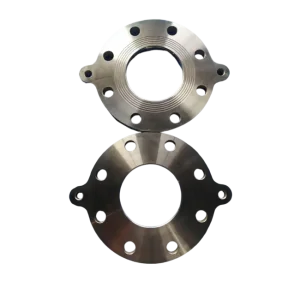
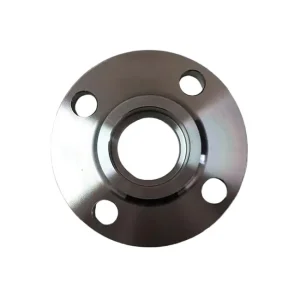
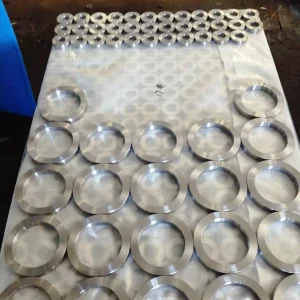
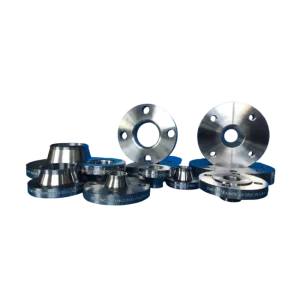
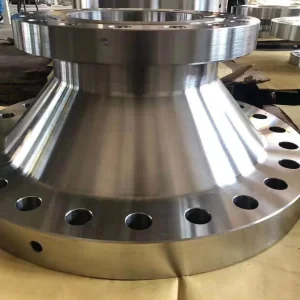
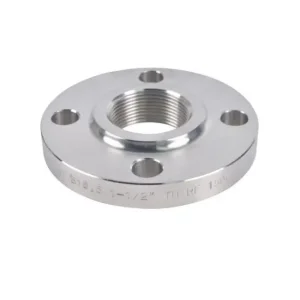
Founded in 1992 in the Zhuangli Enclave Industrial Zone of Dingxiang County, Shanxi—globally recognized as the “Hometown of Forging in China”—Shanxi Yuxin Casting & Forging Co., Ltd. (YUXIN) has spent over three decades establishing the definitive gold standard for fluid sealing interfaces. Operating a fully vertically integrated manufacturing facility with an annual output exceeding 10,000 metric tons of forged flanges and 2,000 tons of specialized elastomeric sealing components, YUXIN bridges the critical engineering gap between forged metallic flanges and elastomeric gasket interfaces.
In modern high-pressure piping, a flange is only as reliable as its elastomeric interface. Modern procurement managers often treat flanges and rubber gaskets as isolated commoditized items. However, field failure analysis reveals that over 78% of joint leaks stem from micro-mismatches between flange surface finish roughness ($R_a$), bolt load relaxation, and rubber gasket compression set properties under thermal cycling. China's leading suppliers now engineer complete bolted flange joint assemblies (BFJA) as unified thermodynamic systems.
As process industries transition toward extreme temperatures, ultra-high pressures, and aggressive green-hydrogen media, elastomeric sealing technology is undergoing a paradigm shift.
Transition from standard NBR (Nitrile) and EPDM compounds to fluorinated matrices (FKM/Viton), Perfluoroelastomers (FFKM), and Hydrogenated Nitrile (HNBR). These next-gen compounds resist explosive decompressions (AED) in high-pressure gas service up to 250°C.
Mechanically bonding micro-thin PTFE (Teflon) shielding layers over soft rubber cores creates a dual-benefit profile: chemical inertness to universal solvents combined with the low bolt-load recovery compliance of elastomeric bases.
Integration of printed micro-piezoelectric sensors within elastomeric gasket layers for real-time monitoring of residual bolt tension, flange face stress distribution, and micro-leakage warnings before catastrophic blowout occurs.
| Elastomer Grade | Temp Range (°C) | Max Pressure (Bar) | Chemical Resistance | Recommended Flange Facing | Primary Industrial Application |
|---|---|---|---|---|---|
| NBR (Nitrile) | -30°C to +110°C | PN 40 (Class 300) | Aliphatic Hydrocarbons, Water, Oils | Flat Face (FF), Raised Face (RF) | Water Infrastructure, General HVAC, Fuel Lines |
| EPDM Peroxide-Cured | -40°C to +150°C | PN 25 (Class 150) | Steam, Dilute Acids, Polar Solvents | Raised Face (RF) | Power Generation, Municipal Water, HVAC Steam |
| FKM / Viton® | -20°C to +230°C | PN 100 (Class 600) | Aromatics, Concentrated Acids, H2S | Raised Face (RF), Tongue & Groove | Petrochemical Refining, Sour Gas Wells |
| FFKM (Perfluoroelastomer) | -15°C to +315°C | PN 250 (Class 1500) | Universal Chemical Resistance | Custom Machined Recesses, RTJ | Semiconductor Fabrication, High-Temp Pharma |
| PTFE-Envelope Rubber | -50°C to +200°C | PN 63 (Class 400) | Aggressive Solvents, Strong Oxidizers | Raised Face (RF), Flat Face (FF) | Chemical Processing Plants, Chlorine Mains |
Engineered combinations of ASME/EN forged steel flanges and elastomeric gaskets customized for sector-specific thermal and mechanical stresses.
Offshore topside piping demands NACE MR0175 compliant ASTM A182 F51 duplex stainless steel flanges coupled with Explosive Decompression Resistant (EDR) FKM Viton gaskets. YUXIN provides fully matched sets designed to withstand continuous 150 bar pressures and marine salt-spray corrosion.
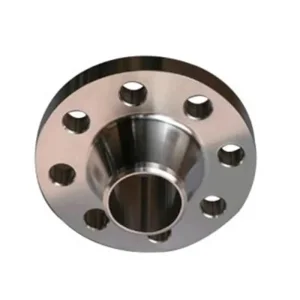
Hydrogen molecules suffer high permeation rates through standard polymers. Our customized EN 1092-1 Type 11 weld neck flanges paired with ultra-dense, low-porosity HNBR elastomers minimize hydrogen migration across transport manifolds at Class 900 pressure ratings.
Corrosive media demands Hastelloy/316L flanges mated with PTFE-encapsulated EPDM full-face gaskets. This design isolates metallic surfaces while maintaining soft seating capabilities under low bolt-torque limitations typical of plastic-lined piping systems.
Integrating Shanxi's heavy industrial cluster advantages with modern Industry 4.0 digital quality verification.
Computer-controlled ring-rolling machines forge flanges up to 3,000 mm diameter with uniform grain refinement. Simultaneously, closed-loop vacuum vulcanizing presses manufacture rubber gaskets with $\pm 0.05\text{ mm}$ thickness tolerance.
Unlike trading companies that outsource machining and rubber molding to disparate workshops, YUXIN performs heating, drop forging, heat treatment, CNC serration, rubber compounding, testing, and packaging inside one facility under unified ISO 9001 supervision.
Direct raw material agreements with top-tier steel mills (TISCO, Baosteel) and global polymer manufacturers ensure raw material price stability, guaranteed heat number traceability, and zero lead-time bottlenecks during global market volatility.
Evaluating the economic impact of flange and gasket procurement beyond initial unit price tag.
While elastomeric rubber gaskets account for less than 0.5% of total plant capital expenditure (CAPEX), a single joint blowout can result in unplanned shutdown costs exceeding $150,000 per day in lost production, environmental fines, and safety hazards. Evaluating suppliers based on TCO requires assessing three fundamental pillars:
Every shipment from YUXIN comes complete with full Mill Test Certificates (MTC) detailing spectroscopic chemical analysis, mechanical tensile/yield testing, Charpy V-notch impact values, and vulcanized rubber batch durometer hardness reports.
Flange facing finish directly determines gasket sealing efficiency. Our CNC lathes maintain spiral or concentric serrated finishes between $3.2 - 6.3\ \mu\text{m}\ R_a$ ($125 - 250\ \mu\text{in}\text{ AARH}$), providing optimum mechanical bite into rubber gasket materials.
Flange faces are coated with rust-preventive varnish or strippable plastic coatings. Bores are covered with durable end-caps, and rubber gaskets are vacuum-sealed in UV-blocking barrier bags to prevent ozone degradation during maritime freight.
Full alignment with regional engineering regulations, environmental directives, and industry standard organizations.
| Standard / Directive | Scope & Coverage | Compliance Significance |
|---|---|---|
| ASME B16.5 / B16.47 | Steel Pipe Flanges & Flanged Fittings (1/2" to 60") | North American standard for pressure boundary integrity across Class 150 to 2500 ratings. |
| ASME B16.21 | Nonmetallic Flat Gaskets for Pipe Flanges | Dimensional standard ensuring exact bolt hole pattern fitment for NBR, EPDM, and FKM cut gaskets. |
| EN 1092-1 / EN 1514-1 | European Flanges & Dimensions for Non-Metallic Gaskets | Mandatory standard for European Union pressure piping networks under PN ratings. |
| PED 2014/68/EU | Pressure Equipment Directive Certification | Required for exporting pressure components into the EU; verified by TÜV Rheinland. |
| AD 2000-Merkblatt W0 | German Pressure Vessel Code Material Approval | Strict quality assurance standard for pressure vessel materials and forged flange components. |
| FDA / WRAS / REACH | Potable Water & Chemical Health Compliance | Ensures rubber gasket compounds contain zero hazardous substances, PAH, or toxic plasticizers. |
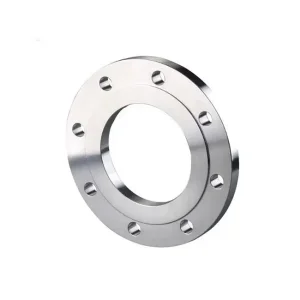
OEM/ODM custom engineered forgings, blind flanges, reducing sets, and ring joints ready for global export delivery.
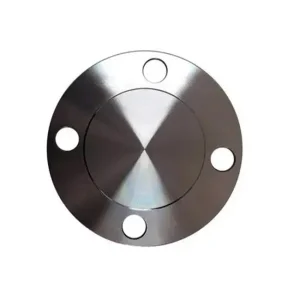
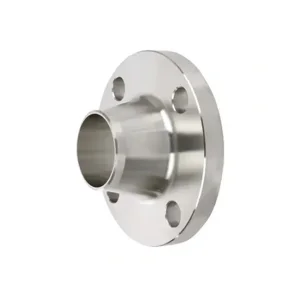
Comprehensive answers compiled by YUXIN’s senior metallurgy and elastomeric sealing specialists.
Selection depends primarily on system design pressure, operating temperature, and chemical medium. Elastomeric rubber gaskets (NBR, EPDM, FKM) are ideal for ASME Class 150 to Class 300 (PN6 to PN40) systems operating under 200°C where low bolt torque seating and elastic recovery are required. For Class 900 to Class 2500 high-pressure/high-temperature applications, metallic Ring Type Joint (RTJ) flanges utilizing forged octagonal or oval ring grooves (ASME B16.20) are necessary. However, composite solutions—such as elastomeric coated metallic cores—are increasingly specified for moderate pressure systems experiencing vibration.
For standard non-metallic rubber gaskets, ASME B16.5 recommends a serrated concentric or spiral finish of $3.2\ \mu\text{m}\text{ to }6.3\ \mu\text{m}\ R_a$ ($125\text{ to }250\ \mu\text{in}\text{ AARH}$). If the flange face is machined too smooth ($< 1.6\ \mu\text{m}\ R_a$), soft rubber gaskets risk extruding or pushing out under bolt compression. If the surface is too rough ($> 12.5\ \mu\text{m}\ R_a$), low-pressure gas media can channel through deep machining grooves beneath the elastomer surface.
Every shipment from Shanxi Yuxin Casting & Forging Co., Ltd. includes a comprehensive EN 10204 3.1 Mill Test Certificate package. This covers raw steel billet heat numbers, chemical ladle analysis, mechanical tension and Charpy impact tests, ultrasonic inspection (UT) reports, heat treatment furnace logs, rubber batch durometer hardness tests, dimensional inspection sheets, and Certificate of Origin (CO). Independent third-party inspection (EN 10204 3.2) by SGS, TÜV, or Lloyd’s Register is available upon contract request.
We utilize Finite Element Analysis (FEA) software to model bolt load deformation, flange hub stress distribution, and gasket seating stress ($y$-factor) prior to tooling production. Our CNC machine shop works from your DWG/STEP files with tolerances held to ISO 2768-m. First-article samples undergo coordinate measuring machine (CMM) dimensional verification and hydrostatic pressure testing before bulk batch release.
Standard catalog carbon steel flanges (ASTM A105) held in semi-finished forged stock ship in 7 to 15 days following final machining and surface treatment. Custom forged alloy rings, large-diameter expansion joint flanges ($\varnothing > 1500\text{ mm}$), or custom molded rubber gaskets typically require 20 to 35 days depending on mold development, raw material billet sourcing, and third-party witness testing schedules.
